Chemistry-challenged

abstract

Dagobah Resident
Hey guys, i've hit a bump in the tobacco research. I don't understand chemistry AT ALL and it'd be a good help if someone could give me some pointers, maybe help me sort some things out.

See, it's easy to understand as a laymen, the gist of it, however if i'm going to prove my points i need actual scientific data to do that with.

For instance, understanding how nicotine in tobacco smoke works on a chemical level, and how it's different from nicotinic acid (niacin) or if it's even different at all.

I just need like, a bit of crash course or something maybe. :P

I realize this might not make total sense.
 
Have you checked wikipedia? :) Well, this information is taught in a very complicated way in mainstream sources, so you'll probably find more useful information in layman sources.

Here is a little bit of background for the nicotine function through the acetylcholine neurotransmitter:

Acetylcholine is a neurotransmitter which controls movement and cognition, it regulates your ability to process sensory input and access stored information. Mark Hyman in the UltraMind Solution talks about its functions in a very enjoyable and understandable way. He says that acetylcholine is one of the major neurotransmitters responsible for memory, motor function, and the function or your autonomic nervous system, which regulates our body functions like breathing, heart rate, digestion, and all your organ functions. Acetylcholine (ACh) is important for learning and remembering. That is why he asks for memory problems when trying to assess an Ach imbalance in his quizzes.

Now, this is from a medical physiology book, I hope it is understandable:

Neurons that use acetylcholine (ACh) as their neurotransmitter are known as cholinergic neurons.

The receptors for ACh, known as cholinergic receptors, fall into two categories, based on the drugs that mimic or antagonize the actions of ACh on its many target cell types.

In classical studies dating to the early twentieth century, the drugs muscarine, isolated from poisonous mushrooms, and nicotine, isolated from tobacco, were used to distinguish two separate receptors for ACh. Muscarine stimulates some of the receptors and nicotine stimulates all the others, so receptors were designated as either muscarinic or nicotinic. It should be noted that ACh has the actions of both muscarine and nicotine at cholinergic receptors; however, these two drugs cause fundamental differences that ACh cannot distinguish.

The nicotinic acetylcholine receptor is composed of five components: two α (alfa) subunits and a β (beta), γ (gamma), and δ (delta) subunit. The two alfa subunits are binding sites for ACh. This might be helpful for recognizing the anti tobacco drug Chantix. The active ingredient in this medication is varenicline, a novel alpha4beta2 nicotinic receptor partial agonist that inhibits nicotine binding but stimulates receptor activity.

So from what Dr. Hyman mentioned, we know that acetylcholine is a key for regulating the autonomous nervous system. Now, thanks to the EE introduction, we know a little bit more about the autonomous nervous system with its fight or flight response through the sympathetic system. But also its parasympathetic system and its relaxing effects and how we stimulate it through our vagus nerve and breathing exercises. The vagus nerve uses the acetylcholine to send relaxing messages to our bodies. (The sympathetic system uses norepiniphrine to send stress responses to our bodies)

More from http://faculty.washington.edu/chudler/auto.html

The organs (the "viscera") of our body, such as the heart, stomach and intestines, are regulated by a part of the nervous system called the autonomic nervous system (ANS). The ANS is part of the peripheral nervous system and it controls many organs and muscles within the body. In most situations, we are unaware of the workings of the ANS because it functions in an involuntary, reflexive manner. For example, we do not notice when blood vessels change size or when our heart beats faster. However, some people can be trained to control some functions of the ANS such as heart rate or blood pressure.

The ANS is most important in two situations:

1. In emergencies that cause stress and require us to
"fight" or take "flight" (run away)

and

2. In nonemergencies that allow us to "rest" and "digest.".

The ANS regulates:

* Muscles
o in the skin (around hair follicles; smooth muscle)
o around blood vessels (smooth muscle)
o in the eye (the iris; smooth muscle)
o in the stomach, intestines and bladder (smooth muscle)
o of the heart (cardiac muscle)
* Glands

The ANS is divided into three parts:

* The sympathetic nervous system
* The parasympathetic nervous system
* The enteric nervous system.


The Sympathetic Nervous System

It is a nice, sunny day...you are taking a nice walk in the park. Suddenly, an angry bear appears in your path. Do you stay and fight OR do you turn and run away? These are "Fight or Flight" responses. In these types of situations, your sympathetic nervous system is called into action - it uses energy - your blood pressure increases, your heart beats faster, and digestion slows down.

sym1.gif


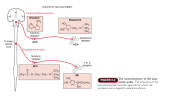
Notice in the picture on the left that the sympathetic nervous system originates in the spinal cord. Specifically, the cell bodies of the first neuron (the preganglionic neuron) are located in the thoracic and lumbar spinal cord. Axons from these neurons project to a chain of ganglia located near the spinal cord. In most cases, this neuron makes a synapse with another neuron (post-ganglionic neuron) in the ganglion. A few preganglionic neurons go to other ganglia outside of the sympathetic chain and synapse there. The post-ganglionic neuron then projects to the "target" - either a muscle or a gland.

Two more facts about the sympathetic nervous system: the synapse in the sympathetic ganglion uses acetylcholine as a neurotransmitter; the synapse of the post-ganglionic neuron with the target organ uses the neurotransmitter called norepinephrine. (Of course, there is one exception: the sympathetic post-ganglionic neuron that terminates on the sweat glands uses acetylcholine.)

The Parasympathetic Nervous System

It is a nice, sunny day...you are taking a nice walk in the park. This time, however, you decide to relax in comfortable chair that you have brought along. This calls for "Rest and Digest" responses. Now is the time for the parasympathetic nervous to work to save energy - your blood pressure decreases, your heart beats slower, and digestion can start.

parasym1.gif
Notice in the picture on the left, that the cell bodies of the parasympathetic nervous system are located in the spinal cord (sacral region) and in the medulla. In the medulla, the cranial nerves III, VII, IX and X [vagus nerve] form the preganglionic parasympathetic fibers. The preganglionic fiber from the medulla or spinal cord projects to ganglia very close to the target organ and makes a synapse. This synapse uses the neurotransmitter called acetylcholine. From this ganglion, the post-ganglionic neuron projects to the target organ and uses acetylcholine again at its terminal.

Here is a summary of some of the effects of sympathetic and parasympathetic stimulation. Notice that effects are generally in opposition to each other.

The Autonomic Nervous System
Structure Sympathetic Stimulation Parasympathetic Stimulation
Iris (eye muscle Pupil dilation Pupil constriction
Salivary Glands Saliva production reduced Saliva production increased
Oral/Nasal Mucosa Mucus production reduced Mucus production increased
Heart Heart rate and force increased Heart rate and force decreased
Lung Bronchial muscle relaxed Bronchial muscle contracted
Stomach Peristalsis reduced Gastric juice secreted; motility increased
Small Intestine Motility reduced Digestion increased
Large Intestine Motility reduced Secretions and motility increased
Liver Increased conversion of
glycogen to glucose
Kidney Decreased urine secretion Increased urine secretion
Adrenal medulla Norepinephrine and
epinephrine secreted
Bladder Wall relaxed Sphincter closed Wall contracted Sphincter relaxed

I'm attaching a diagram which includes the neurochemistry structures for nicotine, acetylcholine, etc in the autonomous nervous system. In the diagram, NE means norepinephrine.

So reviewing this information for smokers purposes...

Persons who smoke may experience mild impairment of cognitive abilities if they stop smoking. This worsening is because nicotine acts as an agonist (An agonist as opposed to an antagonist) for receptors of acetylcholine which is important for learning and memory and cognitive functions among other things.

Laura synthesized all the info of receptors, synapses, agonists, etc in a very nice way in Secret History and I think in the Wave as well. Here is some additional information, but also another good synthesis:

http://www.sott.net/signs/anti-anti-smoking.htm

Aliens Don't Like to Eat People That Smoke!

Now, nicotine is a most interesting drug. Nicotine mimics one of the body's most significant neurotransmitter, acetylcholine. This is the neurotransmitter most often associated with cognition in the cerebral cortex. Acetylcholine is the primary carrier of thought and memory in the brain. It is essential to have appropriate levels of acetylcholine to have new memories or recall old memories.

I cruised the net for sources on acetylcholine and the results were positively amazing as you will see from the following excerpts:

Acetyl-L-Carnitine (ALC) is the acetyl ester of carnitine, the carrier of fatty acids across Mitochondrial membranes. Like carnitine, ALC is naturally produced in the body and found in small amounts in some foods. ...Research in recent years has hoisted ALC from its somewhat mundane role in energy production to nutritional cognitive enhancer and neuroprotective agent extraordinaire. Indeed, taken in its entirety, ALC has become one of the premiere “anti-aging” compounds under scientific investigation, especially in relation to brain and nervous system deterioration.

ALC is found in various concentrations in the brain, and its levels are significantly reduced with aging.(1) In numerous studies in animal models, ALC administration has been shown to have the remarkable ability of improving not only cognitive changes, but also morphological (structural) and neurochemical changes. ...ALC has varied effects on cholinergic activity, including promoting the release(2) and synthesis(3) of acetylcholine. Additionally, ALC promotes high affinity uptake of choline, which declines significantly with age.(4) While these cholinergic effects were first described almost a quarter of a century ago,(5) it now appears that this is only the tip of the ALC iceberg. [Gissen, VRP's Nutritional News, March, 1995]

It turns out that Alzheimer's, a veritable epidemic in our country, is directly related to low levels of acetylcholine. In Alzheimer's disease, the neurons that make acetylcholine degenerate, resulting in memory deficits. In some Alzheimer's patients it can be a 90 per cent reduction! But, does anyone suggest smoking and exercising the brain as a possible cure?

Nope. [...]

Work in the Laboratory of Neurochemistry at the Barrow Neurological Institute principally concerns molecules critically involved in such signaling called nicotinic acetylcholine receptors (nAChR). nAChR act throughout the brain and body as "molecular switches" to connect nerve cell circuits involved in essential functions ranging from vision and memory to the control of heart rate and muscle movement.

Defects in nAChR or their loss cause diseases such as myasthenia gravis and epilepsy and can contribute to Alzheimer’s and Parkinson’s diseases and schizophrenia.

nAChR also happen to be the principal targets of tobacco nicotine. ...nicotine-like medicines show promise in the treatment of diseases such as attention deficit/hyperactivity disorder (ADHD) and Tourette’s syndrome and in alleviation of anxiety, pain, and depression, suggesting involvement of nAChR in those disorders.

...We have shown that numbers and function of diverse nAChR subtypes can be influenced by many biologically active substances, ranging from steroids to local anesthetics, and by agents acting on the extracellular matrix, the cytoskeleton, on second messenger signaling, and at the nucleus. We also have shown that chronic nicotine exposure induces numerical upregulation of many diverse nAChR subtypes via a post-transcriptional process that is dominated by effects on intracellular pools of receptors or their precursors.

Some current studies are testing our hypothesis that chronic nicotine exposure, as occurs with habitual use of tobacco products, disables nAChR and the nerve cell circuits they subserve, thereby contributing to long-lasting changes in brain and body function. [Lukas, 1999]

Now, notice in the above account how tricky they were when they said that nicotine ..." That is jargon for "it increases the number of receptors" as well as the amount of acetylcholine. But, of course, the AMA wouldn't let them get away with any of their work if they weren't adding that they have a hypothesis that "habitual use of tobacco products... disables acetylcholine." Never mind that in the beginning they are proposing it as a therapeutic drug for some of the very problems that have risen to almost epidemic numbers in the present time.

Let's say it again: Research shows, however, that daily infusions of nicotine actually INCREASE the number of acetylcholine receptors by up to 40 %. Some researchers, such as the above, brush this finding off by saying "regardless, their function diminishes." But that is not empirically observed. Most people who smoke find a "set point," and once they have reached it, it does not take more and more and more to satisfy it.

How does nicotine act?

There are two major types (or classes) of acetylcholine receptors in the body, and they are commonly named by the other drugs which bind to them: nicotine and muscarine. Muscarinic acetylcholine receptors (mAChRs) can bind muscarine as well as ACh, and they function to change the metabolism...

Acetylcholine acts on nicotine acetylcholine receptors to open a channel in the cell's membrane. Opening such a channel allows certain types of ions (charged atoms) to flow into or out of the cell. ...When ions flow, there is an electrical current, and the same is true in the nervous system. The flowing of ions, or the passing of current, can cause other things to happen, usually those "things" involve the opening of other types of channels and the passing of information from one neuron to another.

Nicotinic AChRs are found throughout the body, but they are most concentrated in the nervous system (the brain, the spinal cord, and the rest of the nerve cells in the body) and on the muscles of the body (in vertebrates).

We say that nicotine acts like ACh at the receptors to activate them, and both substances are called agonists. The opposite type of drug, something that binds to the receptors and does not allow them to be activated is called an antagonist.

...When a substance comes into the body that can interfere with ACh binding to muscle nAChRs, that chemical can cause death in a relatively short time (because you use muscles to do things like breathe). A class of chemicals in snake and other poisonous venoms, neurotoxins, do exactly that. If you are bitten by a krait or a cobra, for example, and enough venom gets into the blood, there will be enough of their neurotoxin in your body to shut down the diaphragm muscle expands your lungs. Without that muscle functioning, the person ceases to breathe and dies of asphyxiation.

One of the reasons we know so much about these receptors is precisely that--plants and people have used substances [acetylcholine antagonists] which cause paralysis and asphyxiation for a long time. Plants use them to prevent being eaten by herbivores. Animals use similar substances to paralyze their prey. At least one human neuromuscular disease is related to nAChRs, and that is myasthenia gravis...

So, as you can see, nAChRs are important to life. ...All known nicotinic receptors do share some common features. They are composed of 5 protein subunits which assemble like barrel staves around a central pore. ...When the ligand (ACh or nicotine) binds to the receptor, it causes the receptor complex to twist and open the pore in the center. [Pugh]

Now, ... did you notice that it says that "animals use similar substances [acetylcholine antagonists or ANTI-nicotine] to paralyze their prey? We have to wonder about the oft reported conditions of paralysis associated with "alien interactions" and the almost rabid attack on smoking in our society. [...]

Alcohol is a great pretender and can fool at least four types of receptors. It blocks the acetylcholine receptors... However, unlike nicotine which also binds to the acetylcholine receptors, alcohol doesn't do anything useful while there. It simply sits there and blocks the ability to think. It also acts like cocaine in that it blocks the dopamine reuptake, flooding the brain with "feeling good." Alcohol stimulates the release of endorphins, thus resembling morphine and heroin to a greatly lessened extent, and it modifies and increases the efficiency of the seretonin receptors.

All that in one brew! Gee, it almost makes you want to go and have a few beers! [...]

It seems that the key to this is the fact that learning, hard thinking and pondering, requires that certain brain chemicals - usually acetylcholine - be squirted out at just the right place and in the right quantities. It is becoming clear that the molecules of memory are blind to the kind of memory - whether it is conscious or unconscious - that is occurring. What determines the quality of different kinds of memories is not the molecules that do the storing but the systems in which those molecules act. If they act in the hippocampus, the memories that get recorded are factual and accessible to our consciousness. If the chemicals are acting in the amygdala, they are emotional and mostly inaccessible to conscious awareness.

Working memory, or awareness, involves the frontal lobes of the brain just above and behind the eyebrows. This is what we use when we want to remember a new phone number just long enough to dial it, or to remember what we went to the kitchen for long enough to get it! It is also the place where many different kinds of information is held simultaneously while we are comparing one thing to another. We can have all kinds of things going on there at once. We can look at something, hold this image in working memory along with the memory of something that we have pulled out of long term memory which we wish to compare it to; sounds, smells, and even the ongoing physiological input from our system as we are considering this: does it make us feel peaceful, happy, sad, afraid? ...

As it happens, the cortical connections to the amygdala are actually far greater in primates than in other animals. It seems that more balanced cortical pathways are the evolutionary trend. It is my opinion that we will develop them or perish. A more harmonious integration of emotion and thinking would allow us to both know our TRUE feelings, and why we have them, and to be able to use them more effectively.

It seems that this "working memory," or "awareness," is - if not consciousness itself - at least a window to it. ... [Laura Knight-Jadczyk, You Take the High Road and I'll Take the Low Road, from The WAVE]

Niacin which is also called nicotinic acid, is a vitamin but it can be synthesized in the body from the essential amino acid tryptophan. You may know tryptophan from its fame as a source for serotonin.

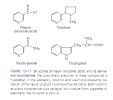
I'm attaching the structures of niacin (nicotinic acid) and its derivative nicotinamide. In the laboratory, nicotinic acid was first produced by oxidation of the natural product nicotine — thus the name. Oxidation is the process that generates energy, the same one that if left unchecked in the body, can produce inflammation.

Both nicotinic acid and nicotinamide cure pellagra (the classical niacin vitamin deficiency disease), but nicotine (from cigarettes or elsewhere) does not has this curative activity.

I hope this was understandable, perhaps others can add more useful information. There is a lot of information in the forum about niacin, I think we have a thread about it.
 

Attachments

  • autonomic nervous system.png
    autonomic nervous system.png
    95.7 KB · Views: 36
  • niacin.png
    niacin.png
    24.7 KB · Views: 45
Interesting!:

Brain cells work differently than previously thought: Nicotine helps to spark creativity

http://www.sott.net/articles/show/138489-Brain+cells+work+differently+than+previously+thought:+Nicotine+helps+to+spark+creativity
 
Thanks, psyche. A very useful contribution! I hope you didn't go to too much trouble for all that.

One other thing: I'm interested in showing how, on a molecular level, nicotine goes from the smoke to the lungs to the blood to the brain and does whatever it does there, but in detail.

Like, for instance, nicotine has a certain chemical composition: C10H14N2

It has ten carbon atoms, 14 hydrogen atoms and two nitrogen atoms. What happens to each of these individually as the substance is transported into the body?

Does something happen to the carbon, hydrogen, and nitrogen along the way that changes the substance so it binds to appropriate receptors?

Both nicotinic acid and nicotinamide cure pellagra (the classical niacin vitamin deficiency disease), but nicotine (from cigarettes or elsewhere) does not has this curative activity.
Hmmm, k , so the substances are similar but different, yes? Does niacin act on aceytlcholine receptors in any way?

Sorry for my machine gun blast of questions but this is all so very interesting! Time for more reading, i suppose.
 
abstract said:
Thanks, psyche. A very useful contribution! I hope you didn't go to too much trouble for all that.

You're welcome! It reminds me of the good old days before the illusion broke into pieces ;)

abstract said:
One other thing: I'm interested in showing how, on a molecular level, nicotine goes from the smoke to the lungs to the blood to the brain and does whatever it does there, but in detail.

Like, for instance, nicotine has a certain chemical composition: C10H14N2

It has ten carbon atoms, 14 hydrogen atoms and two nitrogen atoms. What happens to each of these individually as the substance is transported into the body?

Does something happen to the carbon, hydrogen, and nitrogen along the way that changes the substance so it binds to appropriate receptors?

Ok, so you need more information about the pharmacology of nicotine. To know about the mechanisms you're interested, it will help to review the pharmacokinetics and the pharmacodinamics. Do not hesitate to use a medical dictionary if necessary, there are available on the web.

Nicotine is lipophilic, and this means that it does very well in fat so to speak. When you inhaled it, it passes from your lungs to your bloodstream. Via the bloodstream it crosses the blood brain barrier, which is a double fatty layer, thus it is very easy for nicotine to cross this blood brain barrier since it is made out of fat. The chemical properties of nicotine is what makes it bind to the appropriate receptors (there are nicotinic receptors and they were named like that after studies with nicotine. No need to "deconstruct" its chemical properties)

Here are a couple of pages that might be useful:

http://encyclopedia.stateuniversity.com/pages/15977/nicotine.html
http://www.news-medical.net/health/Nicotine-Pharmacology.aspx

abstract said:
Does niacin act on aceytlcholine receptors in any way?

Sorry for my machine gun blast of questions but this is all so very interesting! Time for more reading, i suppose.

I don't think it does. Niacin has other mechanisms and functions, it acts with other receptors. You can check here some information about these receptors:

http://en.wikipedia.org/wiki/Niacin
http://www.rxlist.com/niaspan-drug.htm

But do a search in the forum about niacin because I'm sure there is a lot that is synthesized in a friendlier way here.
 
Hey Abstract, i found this brief summary of nicotine metabolism in the liver, it lists the products and how things are excreted. May be useful.

_http://www.pharmgkb.org/do/serve?objId=PA2011

nicotine.png


This pathway shows metabolism of nicotine in human liver including all the candidate genes which may be responsible. Nicotine is extensively metabolized to a number of metabolites in liver. Quantitatively, the most important metabolite of nicotine in most mammalian species is cotinine. In humans, about 70 to 80% of nicotine is converted to cotinine. This transformation involves two steps. The first is mediated by the cytochrome P450 system (mainly CYP2A6 and CYP2B6) to produce nicotine iminium ion. Both of these genes have polymorphisms that can effect this process, for more details see VIP gene information for CYP2A6 and CYP2B6. The second step is catalyzed by aldehyde oxidase (AOX). Nicotine N'-oxide (NNO) is another primary metabolite of nicotine, although only about 4-7% of nicotine absorbed by smokers is metabolized via this route. The conversion of nicotine to NNO involves a flavin-containing monooxygenase 3 (FMO3). It appears that NNO is not further metabolized to any significant extent, except by reduction back to nicotine, which may lead to recycling of nicotine in the body. Nicotine glucuronidation results in an N-quaternary glucuronide in humans. This reaction is catalyzed by uridine diphosphate-glucuronosyltransferase (UGT) enzyme(s) producing (S)-nicotine-N-β-glucuronide (Nicotine-Gluc). Recent in vitro experiments suggest that UGT2B10 may be the primary enzyme in liver responsible for this conversion and that gene polymorphisms may influence this. About 3-5% of nicotine is converted to Nicotine-Gluc and excreted in urine in humans. Conversion of nicotine to nornicotine in humans has been demonstrated, and this process has been shown to be mediated by cytochrome P450 system in rabbits.

A number of cotinine metabolites have also been structurally characterized. Indeed, it appears that most of the reported urinary metabolites of nicotine are derived from cotinine. 3'-Hydroxycotinine (3HC) is the main nicotine metabolite detected in smokers' urine. It is also excreted as a glucuronide conjugate (3HC-Gluc). 3HC and 3HC-Gluc account for 40-60% of the nicotine dose in urine. As with NNO, cotinine N-oxide (CNO) can be reduced back to the parent amine in vivo as evidenced by a study in rabbits. Studies with CYP enzyme inhibitors in hamster and guinea pig liver microsomes show, that unlike NNO, CNO is formed by CYP enzymes. Norcotinine has been detected in smokers' urine (about 1% of total nicotine and metabolites). Two pathways for its formation are possible, demethylation of cotinine or oxidative metabolism of nornicotine. Animal and human studies have demonstrated the existence of both of these pathways.

There are additional important metabolites of nicotine that are not formed to any great extent endogenously as shown by experiments with nicotine patches as the drug delivery method, but are formed during the tobacco smoking process.
The most well characterized as carcinogens so far are NNK (4-(methylnitrosamino)-1-(3-pyridyl)-1-butanone) and NNAL (4-(methylnitrosamino)-1-(3-pyridyl)-1-butanol). Although not depicted here these carcinogens are also metabolized by some of the same enzymes that metabolise nicotine including CYP2A6, UGT2B10, UGT1A4 and CYP2A13.

Thought it was funny how they mentioned the differences between metabolism routes when it's absorbed via a patch and immediately jump onto the carcinogenic ones. I wonder what beneficial effects of nicotine you can only get via smoking that won't be produced when you absorb it via gum/patches.
 
Thought it was funny how they mentioned the differences between metabolism routes when it's absorbed via a patch and immediately jump onto the carcinogenic ones. I wonder what beneficial effects of nicotine you can only get via smoking that won't be produced when you absorb it via gum/patches.

Lemme tell ya about the gum and patches, if you don't already know or never used em...THEY SUCK. You don't even feel like there's anything in it, it's just a scam.

So there are certain metabolites formed by smoking that assists the absorbtion of nicotine? The C's touched on that!

They said smoking is the most effective way to infuse nicotine into the brain tissue, and now we've got a 3d indication of that.

YAY!

So we need to show that smoking is ESSENTIAL to the absorbtion of nicotine, which is why they want us to think the patches and gum will do the trick but it does not.
 
just read a little about cotinine.

Cotinine has an in vivo half life of approximately 20 hours, and is typically detectable for several days to up to one week after the use of tobacco. The level of cotinine in the blood is proportionate to the amount of exposure to tobacco smoke, so it is a valuable indicator of tobacco smoke exposure, including secondary (passive) smoke.[8]

K, notice the bold type.

There's all this propaganda about second hand smoke. HAS ANYONE TESTED THESE SUPPOSEDLY SUFFERING PEOPLE FOR HIGH LEVELS OF COTININE???

Because THAT...might actually show if second hand smoke is even being metabolised by the "suffering individual".

Ohhhhhhh wait, i know...they won't even mention that because then we might actually be able to physiologically DISPROVE SECOND HAND SMOKE DANGERS.

Although i feel i'm stretching that a bit, i mean, i did just read it. So i dunno.
 
Back
Top Bottom