Non-local vs Local Physics

trendsetter37

The Living Force
So I came across an interesting paper that a forum friend sent to me with the preface that the concepts discussed make a lot of sense. After reading it a couple of times I feel like the author may be onto something. Potentially this paper could provide an explanation to a lot of unknowns on how things work in regards to time, superluminal communication, electromagnetism, gravity, etc.

I think that the concepts are interesting and the math seems simple but I would like to know what you all think.

Topics discussed:
  • Distinction between non-local and local physics
  • Gravity
  • Time
  • Einstein's equation (written in full-form)
    • p7gtlq5.png
    • pmmo8vt.png
  • Possible implications
  • Superluminal information transfer / communication

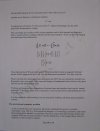
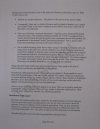
I will post the full 12 pages below broken up amongst 4 or 5 post. The originals given to me were a set of documents that were photographed so the entirety of the contents will be included in multiple posts alongside the corresponding jpeg attachments. Hopefully this makes it a little easier to read.

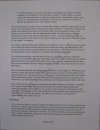
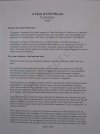
Page 1
A Taste of UFO Physics

by Anonymous

“he who shall not he named“

2014

Purpose and scope of this paper

This paper is intended to be a quick sampling of “non-local physics” and hints of its practical
applications. This information is generally unknown to the public, including scientists and
engineers. It is needed because this topic is not taught on college campuses or the schools.

This paper is not about UFOs and is not a scientific treatise. It should be treated as a
commentary, a quick overview, or technical editorial about a very special type of physics. It
is intended to promote know-how in science, technology, engineering, mathematics and
ethics. It presents specific aspects of non-local physics which should cause people to do some
careful and serious thinking.

Two types of physics: local and non-local

The Universe has two types of physical behaviors. Physicists call them “local” and “non-
local”.

Local physics is the everyday physics that is widely taught in the schools and which has
immediate practical applications. This kind of physics is characterized by cause—and-effect
being linked by spatial contact or spatial proximity. It includes Newtonian mechanics,
statistical mechanics, chemistry, biology, etc. To the human mind, it “makes sense” and is
intuitively understood even by people who are not scientists or engineers.

Non-local physics, in contrast, is virtually unknown to the general public, including scientists
and engineers. It is not taught in the schools, except in the form of quantum mechanics
(which has a limited but very important scope). It is characterized by cause—and-effect NOT
being linked in space. It is weird, baffling and non—intuitive. It has practical applications that
are so strange, so bizarre, and so astonishing that the entire topic is kept out of public view.

The usual illustration to help the layman understand the difference between these two types

of physics uses a doll. If someone sticks a pin in the head of the doll, the effect is that the doll
acquires a pinhole in its head. The cause is direct spatial contact with the pin. Cause and

effect are linked in space, and are easily and intuitively understood. This is “local physics” or
“physics of locality”.

Now suppose the doll is a voodoo doll. If someone sticks a pin in the head of the doll, the
victun immediately gets a headache. The action occurs instantly and at a distance, even if the
victim is on another planet, or light years away. There is no propagation in space or traversal
of space (as with an arrow or a bullet). Spatial shielding is not possible and the cause is not
apparent to the victim. The only apparent connection between cause and effect is one of time.
Physicists are familiar with analogous effects as shown by the Aharonov-Bohm, COW, EPR

Page 1 of 13

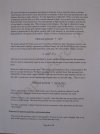
Page 2
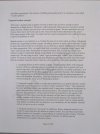
and other experiments. The science is baffling and paradoxical; it is sometimes even called
“voodoo physics.”

Temporal motion concepts

This raises a question that would be obvious to those who are brave enough to allow
themselves to think about it: Physicists widely agree that objects possess a position in both
space and time. Objects can also move (or be moved) in space. The new questions now are,
Can an object move (or be moved) in time. Does time have three-dimensions like space?
Does space progress like time? An object can have spatial momentum, but could it also have
temporal momentum as well?

Spatial motion is very familiar to us. During the interval of observation an object with spatial
motion has a beginning location in space, an ending location in space, and a trajectory or path
in space that connects the two. Formally, we say that this is spatial displacement with respect
to a time progression. Now, we might think that we could just swap the words “space” and
“time” and end up with a description of temporal motion. But it is not that simple. Our
reference system is inherently spatial and probably won’t portray temporal motion in such a
simple way. We are trying to see a “when” type of motion in a “where” type of reference
system. We must do some careful and deep thinking to come up with some clues that could
help us recognize temporal motion. Here are a few properties we could reasonably expect:

[list type=decimal]
[*] Temporal motion is NOT motion in space. A recognizable object with temporal
motion will have a starting point (so to speak), but cannot have a spatial path or a
spatial trajectory
. The motion will either express itself as a so-called “potential”, or it
will manifest itself by the object appearing at a particular location, then disappearing,
then reappearing at a different location without traversing the intervening space (it
may even disappear altogether). From the standpoint of a spatial reference system we
will be looking for some sort of "motionless motion."


[*] Temporal motions can have no directional preference in a spatial reference system.
Temporal motion is action in a world of "when" instead of "where." This means that
however temporal motion may manifest itself, it must have a spherical distribution in
space that centers on the object which possesses it. This implies that the motional
intensity (or “potential’) will decrease inversely in proportion to the square of the
distance from the object (just like the intensity of light from a light bulb, which
rapidly weakens with distance). This non-directional character also implies that the
motion must be multidimensional, as all directions in space must be treated equally.
This implies something like an expansion, or a contraction, not the familiar vectorial
motion we see on a car or a rocket.


[*] Temporal motions are "non-local " by definition. Hence, temporal motion is not
limited by space and must be infinite in (spatial) extent. It is anywhere/everywhere
simply because it is incapable of participating in a spatial location scheme. This also
implies, strangely, that it has no propagation velocity; its effects must be
Instantaneous in a spatial reference system.

[*] If temporal motion is actual motion then it must express the theme of "motion"
somehow, even though it is still "motionless motion." In other words, we would
expect that temporal motion would still manifest traits of momentum, energy, work,
power, etc., although these manifestations could be very different from the more
familiar spatial traits we see with ordinary motion.
[/list]


Page 2 of 13


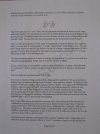
Page 3
The multidimensional motion of item #2 needs some further exposition. Astronomers use the
surface of an expanding balloon to illustrate this type of motion. As the balloon expands, all
points on the surface move away from all other points. Even though the surface is two-
dimensional, the motion is only one-dimensional (scalar). The motion has no inherent
direction; the points on the balloon simply move “away”. As far as reference systems are
concerned, no point on the surface is any more special than any other point. No point is really
at “zero speed” for instance.

We actually experience this kind of motion in everyday life. On TV, when the camera zooms
in on a scene, the picture elements all move away from each other. The one motion of the
camera causes the scene to expand equally in two dimensions. We could say that this is one,
two-dimensional motion, instead of two separate one-dimensional motions.

If you find that confusing, consider what you do on a computer to enlarge a Microsoft
window. You can drag the right edge of the frame more to the right, and then drag the bottom
edge of the frame more towards the bottom. This is two separate, one-dimensional motions.
But you can accomplish the same thing by dragging a comer. This is then one motion in two
dimensions.

There is nothing inherently hard to understand about this. It is just different When physicists
talk about “three dimensional motion” they usually mean one motion in three dimensions of
spatial displacement, and one dimension of progressive time displacement. But in this article
“three dimensional motion” will mean one motion that manifests itself as an expansion (or
contraction). It is inherently directionless (isotropic, non-vectorial, scalar). More on this later.

We will find that all motions are a combination of spatial and temporal motions. As applied
to the motion of molecules, for example, the motion has a definite spatial directional
(vectorial) component (as in air flow over a wing), and a non-directional temporal (scalar)
component which results in effects like diffusion (as with ammonia vapor spreading out in a

room that is devoid of air movement). The latter type of motion is also related to a
thermodynamic term called “entropy”.

Page 3 of 13


More to follow...

 
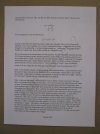
Page 4
Gravitation

Do we have any obvious common examples of temporal motion? Yes. The most obvious one
is gravity. It expresses the four traits listed above. It expresses itself as a potential for motion,
and of itself, has no spatial trajectory. Spatial shielding is ineffective for gravity. It is non-directional (isotropic).
And as far as we know, it is infinite in extent, and acts instantaneously (that is, without aberration, unlike light).
We can store energy in a gravitational field, and extract work from it as well.

We can even derive an equation describing its behavior. Let m, stand for mass or motion.
Then because this motion is non-directional, its intensity will be inversely proportional to the
distance between m and a detector. It is like light from a light bulb. When you hold your hand
(a detector) near the bulb, you feel a certain amount of heat. As you move your hand away
from the bulb, you feel less heat. The total amount of light emitted is constant, and the area
of your hand is constant also. What changes is the distance. The light is effectively being
spread out on an invisible spherical surface. Your hand is part of that surface. As your hand
moves away, the surface gets rapidly bigger relative to your hand. The surface area of a
sphere is proportional to the radius squared, and so the intensity at your hand is inversely
proportional to the square of the radius. Hence, we have a reduction factor of r2 and so:

pz3r32j.png


We need to adjust this form so as not to introduce extraneous units, like square meters, into
what at this point is purely a geometry problem. Hence, we will divide out the units (meters,
feet, etc.) by using a radius that represents a unit area. We will call it to, Hence, we have

pka3dga.png


This leaves m as pure motion, multiplied by a pure number that accounts for the geometry.
(The r20 term is numerically equal to one; it represents the area of your hand, treated as one
unit.)

What if we had twice as much mass? Obviously, we would have twice as much motion. We
have to account for this too. We have to multiply m by another factor that accounts for a
multiplicity of mass units. Again, we use a unit mass and create a pure number just like we
did with r, except now we will rename the original mass, m, and call it m1. Then we have:

oxf5eu9.png


This is equivalent to Newton’s Universal Law of Gravity equation without G as the
proportionality constant (which is not needed if unit quantity amounts are used).

So here we have a very simple picture of gravity. Note that there are no gravitons, gravity
waves, or space warps. The only thing needed was the concept of temporal motion.

You may, in general, suspect temporal motion is operative when physicists use the term
“force fields”.

Existence of natural quantities and quantization

Thus far we do not know what a “unit quantity” of mass is, nor a unit of length. But as we
look at the equations of physics, we get hints that they exist.

Page 4 of 13

Page 5
Readers are surely familiar with Einstein's equation, E = mc2, which expresses a relation
between energy and mass. Let’s rewrite it as:

ohgd4ym.png


That still works out to E = mc2. But now the exponents and fractional forms give us some
additional insights. The exponents say that mass is a three-dimensional form of energy. They
do not give any information about the structure of mass, but that can be worked out from the
Periodic Table. The equation also shows that mass has the dimensions of time3/space3 .

The 1/c in the denominators of both sides in a fundamental equation like this one, suggests
that 1/c is some sort of “unit quantity”. It is like “unit pricing” in the grocery store. You can
get so many ounces of nuts for one dollar, or a cost of so many cents per one ounce. If 1/c is
one unit of energy then the equation becomes two pure numbers, essentially 11 = 13 in the
denominators and 1=1 in the numerators.

The same reasoning applies to c itself. It is in the denominator of 1/c, and so it too must be a
fundamental unit quantity. In this case it would be one unit of speed.

Hence, we now have a unit quantity of speed, and a unit quantity of energy. Note that both
are “quantized”. That is, energy and speed exist in discrete units, at least at a fundamental
level.

Does this make any practical sense? Yes, it does.

Let’s look at electrons being accelerated in a large particle accelerator. We are interested in
finding a good measure of the “amount of motion” these electrons possess. An electron with
a speed of 0.995 that of light, has an energy of about 15MeV. At a speed of 0.99999995 that
of light , it has an energy of 5GeV. Note that the speed has increased by a factor of only
1.0005 but the energy has increased by a factor of 300. How can there be such a huge
increase in energy with only a tiny (5 parts in ten thousand) speed increase? Physicists say
that the mass of the particle increases. The mathematics of this claim are consistent with the
behavror, and so this is one possible interpretation.

But in light of the above, an alternative presents itself. The real speed of the electron is a
combination of spatial speed and temporal speed. Spatial speed is space/time. Temporal
speed. is time/space. The former has a direction, is mathematically “vectorial”, and is very
familiar to us. The latter is non-directional, is mathematically “scalar” and is not at all
familiar to physicists or engineers. In fact, it does not seem to make any sense at all. It is not,
a speed in space, but is a speed in time.

Physicists are not currently comfortable with so-called “speeds in time”. Hence they try to
map these speeds into a spatial—that is, a “local”—reference system, even though the true

Page 5 of 13

Page 6
speed is partly non-local. They use the so-called “gamma correction factor” shown in the
textbooks as:

paldrr6.png


For our purposes we can rewrite this as:

pjo58yf.png


You have seen the form of this equation in high school algebra class in the Pythagorean
Theorem. It is a way of adding two (or more) independent things—things that are normally
thought to be incompatible, or as the mathematicians say, “orthogonal” or “perpendicular”.
Instead of a regular sum, this could be called an “orthogonal sum”.

We are interested in the interpretation of this equation. The left side of the equation says that
ALL objects (photons, atoms, massless particles, cannon balls, rocks, planets, galaxies, etc.)
move at the speed of light. The right side says that this total speed is composed of a temporal
speed (time/space) and a spatial speed (space/time, which is ordinary velocity). Because a
spatial reference system cannot portray a “when” speed in a “Where” type of reference

system in its true character, the temporal speed magnitude must be expressed as
p67wy3n.png


Here we see that the measure of motion has the same dimensions as, c, (space/time) but near
the speed of light, it has more the character of 1/c or time/ space. Speeds above that of light
are possible--indeed just as ordinary and common as speeds less than that of light—but they
are “non-local” (speeds that are temporal rather than spatial).

Here we also see that these “unit boundaries” tend to define “realms of motion” that have
their own characteristic behaviors and rules. Let’s say two atoms are approaching each other
in space. If motion can truly be represented by physical space and time components, then
space and time must be quantized. That means that the atoms cannot approach each other any
closer than one unit of space. Such a unit has no inside; fractional spatial units have no
existence. The momentum of the atoms may continue in time, however, with the spatial unit
fixed at a single unit. That means that their motion becomes “non-local” as seen from a
spatial reference system. We can no longer define spatial things like “position” or
“trajectory”. But when we make a measurement, we force these atoms to participate in a
spatial reference system. They go from a realm that has no concept of “where”, into a realm
that does. At first, we might expect the transition would be completely random, as “time” is
orthogonal to “space”. But there is one thing that connects these two realms: the motion of
the atom (or particle), which is always partly in time and partly in space. The result is that
there is both a statistical randomness and a statistical definiteness in the result of
measurement. This is the realm of “quantum mechanical behavior”. It is the one non-local
type of physics that IS taught in the colleges.

Page 6 of 13
 

Attachments

  • UFOPhysics_2014_p3.jpg
    UFOPhysics_2014_p3.jpg
    573.7 KB · Views: 240
  • UFOPhysics_2014_p4.jpg
    UFOPhysics_2014_p4.jpg
    504.4 KB · Views: 226
  • UFOPhysics_2014_p5.jpg
    UFOPhysics_2014_p5.jpg
    524.7 KB · Views: 215
  • UFOPhysics_2014_p6.jpg
    UFOPhysics_2014_p6.jpg
    666.3 KB · Views: 213
  • UFOPhysics_2014_p1.jpg
    UFOPhysics_2014_p1.jpg
    523.2 KB · Views: 218
  • UFOPhysics_2014_p2.jpg
    UFOPhysics_2014_p2.jpg
    575 KB · Views: 45
Page 7
In the case of quantum mechanics, the unit involved is a unit of space. In the case of the
particle accelerator, the unit involved is a unit of speed. At exactly the speed of light, the
spatial speed and temporal Speed are the same thing. That is, c = 1/c. This is because 1=1
and its inverse, 1/1 is also equal to one.

The quantization of space and time has another consequence if both are three-dimensional
(3D). Picture two photons moving directly away from each other. Each has a position in 3D
space and a position in 3D time. Each photon moves one unit of space in one unit of time (or
vice versa). After one interval (of space or time), the total space and time separation becomes
2/2. Then 4/4, 6/6, etc. Obviously, these divide out to the same number, 1/1. The speed of
light is therefore truly constant, even though the numerators and denominators are
continually changing. The speed c would be a good choice for an absolute speed reference.

There is an additional quirk to this one that physicists discovered decades ago. If the two
photons originate in the same event, such as in an apparatus that “down converts” a single
violet photon into two red photons, the two photons both separate and yet remain together
somehow. This is known as the “EPR paradox” (after Einstein, Podolsky, and Rosen).
Apparently, they separate spatially, but remain “together” temporally. Physicists are now
trying to make use of this weird behavior in, say, faster-than-light communications systems
(think StarTrek).

Photons have no trajectory

Einstein said that the photon does not experience the passage of time. Objections to Special
Relativity have been raised on this point because it implies that photons have no trajectory. In
other words, photons are stationary. Yet physicists freely manipulate photons with mirrors,
lenses, diffraction gratings, etc., as though they do have trajectories. Therefore, it is argued,
Special and General Relativity must be fundamentally flawed.

The only obvious counter argument is that if the trajectory cannot be attached to the photon,
then it must attach to the reference system. But this is like saying if the photon were a
basketball, the ball would be stationary and the court would move instead. That, obviously, is
outright ridiculous.

Or is it? In non—local physics, you have to get used to some really weird thinking patterns.
Suppose, just suppose, that we require the reference system to do the moving instead of the
photon. What would be required? Two things seem to be clear: First, because the photon can
be deflected in any direction, the reference system must be moving in any and every
direction. Secondly, photons move at the speed of light. If the photon is to be stationary, then
the reference system must be moving at the speed of light. Those seem to be insurmountable
requirements.

But actually the concept of temporal motion makes it all possible. We can assert that the
reference system “stays put” in space, but that it moves at the speed of light in time. That
means that even though the spatial coordinate remains fixed, the time coordinate associated
with that position continually changes. We sense this intuitively. All we need to say is that
time is progressing at the speed of light. The photon is swept along with it, like a leaf in a

Page 7 of 13

Page 8

river, having no motion relative to it, but only to the land, which represents the reference
system.

The resulting temporal motion, as has been already explained under the section on
Gravitation, is non-directional. That means that the reference system actually is moving in
all directions simultaneously. If I jump out of a tree, I am temporarily in “free fall”. There are
no forces acting on me. I am in an “inertial reference frame” (as per Einstein). It is the Earth
that then moves up to meet me (as per Einstein). But if I jump out of a tree from another spot
on Earth diametrically opposite to the first one, the same thing happens. In fact, I could do
this anywhere, and get the same result. The Earth—the reference system we are using—45
engaged in the very kind of motion that is needed to assign a seeming trajectory to the

photon, exactly as required.

There is yet another consequence to this non-directional, non-vectorial, scalar, isotropic,
motion the Earth is engaged in. Remember the Michelson-Morley experiment? It attempted
to detect the absolute motion of the Earth through the Aether, which was supposed to be
some sort of invisible substance which filled the Universe as a medium for light and which
was thought to be stationary. But as the Earth moved around the Sun, no “Aether wind”
could be detected. Physicists then concluded that the Aether did not exist, nor did absolute
motion, and that all motion must therefore be “purely relative”.

This experiment depended on vector addition of velocities, but the fundamental (or
“absolute”) motion of the Earth is scalar (in all directions, like an expansion). The design of
the experiment was simply not capable of detecting this kind of motion. There may still be an
“ether” (a specific structure of space and time), but it must be a dynamic, non-directional
one, quite unlike the static Aether of the 1800s. Space and time must be “emergent” at the
speed of light.

Additionally, we must remember that Special and General Relativity are “local” theories.
They attempt to map all motion into a particular type of spatial reference system (4-
dimensional “space-time”) and limit speeds to less than that of light. This works quite well
for coping with reference system effects of high speed motion and accelerated reference
systems. But it is a mistake to apply such theories to phenomena that are fundamentally non-
local. Such applications are out-of-scope and will lead to paradoxes and contradictions.

The importance of natural “unit” quantities

To the continuing amazement of astronomers, physicists, and mathematicians, the Universe
comes with “built—in” mathematics that is understandable by the mind of man. Now we sense
that there is an additional quality: the Universe also comes with “built-in” unit quantities,
such as c, a unit of speed, and 1/c, a unit of energy. These seem to be actual, special
quantities, not just special numbers like
6cu2u8.png
or e. As speeds approach that of light, for instance,
strange things seem to happen. Local physics becomes non—local physics. The physical rules
seem to “invert” (hence the term “inverted physics”, as well as some other terminology that
cannot be printed). We need to learn more about these unit quantities, and what happens at
various types of unit boundaries.

Page 8 of 13

Page 9
We also wonder about what kinds of fundamental units we need. Physicists use space, time,
mass. and charge as fundamental (unanalyzable) dimensions. But we have seen that mass can
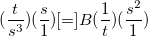
be expressed as a time/space ratio (t3/s3), and that this actually tells us that mass is engaged
in non-directional motion (gravity). Do we really need to use anything besides space and
time units? What additional insights could this give us?

It would be highly desirable for us to understand the Universe in its true character. Are there
really such things as “neutron stars” that beam their light in one direction (like a lighthouse)
and rotate at 38,000 rpm? Or is this just a manifestation of a misunderstood (partially) non-
local phenomenon?

When a quasar shows a redshift that implies it is moving at five times the speed of light,
should the redshift be “corrected” to a speed less than that of light, or should we just regard it
as a non-local phenomenon, one that we don’t yet understand?

Can spacecraft travel at speeds greater than light? Is most of the Universe accessible to
human space travel—say by non-local travel? Is antigravity, or “field propulsion” possible?

We would be in a better position to answer these questions if we knew how the Universe
actually works, rather than, say, spending huge amounts of money and time developing some
off-in-the-weeds, eleven-dimensional string theory, or fantasizing about multiverses.

So let’s give it a try. Here we will consider only the simple stuff: just the space and time
dimensions of various things of physics.

From the section on Existence of natural quantities we learned that the dimensions of
energy (l/c) is time/space (t/s) and that speed (c) is space/time (s/t) and that mass is t3/s3. Do
these dimensions work consistently in other equations of physics? Consider kinetic energy:

o9h8exp.png


That looks (dimensionally) a lot like E = mc2; no surprise here.
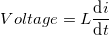
What about the electrical analog of kinetic energy? Consider electric current in a wire:

nzssyal.png


Electric current is regarded as charge per unit of time flowing past a point. If i is interpreted
as a speed, then charge has to equate to a unit of pure space. Interestingly, this leaves the
dimensions of L as t3/s3 the same as mass. Even more interesting is that the first equation
describes mass moving through space, and the second, space moving through mass!

We could also take a time derivative of the second equation and get:

n9reddu.png


Hence, voltage works out to (t3/s3) (s/t)(1/t) or t/s2.

Page 9 of 13
 

Attachments

  • UFOPhysics_2014_p9.jpg
    UFOPhysics_2014_p9.jpg
    517.6 KB · Views: 40
  • UFOPhysics_2014_p8.jpg
    UFOPhysics_2014_p8.jpg
    600.1 KB · Views: 47
  • UFOPhysics_2014_p7.jpg
    UFOPhysics_2014_p7.jpg
    586.8 KB · Views: 54
Hello trendsetter37, I won't pretend that I know what's going on here, but it might be interesting to see what happens if you treat "time" as an instantaneous factor, seeing as it is an imaginary function.
 
Page 10
Electric field intensity (E) is volts/meter and so that works out to t/s3.
Another one is Newton’s well-known relation:

ps7t45z.png


Acceleration is s/t2 and so F works out to be t/s2 , which, interestingly, has the same
space/time dimensions as voltage.

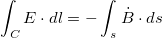
This can simply go on-and-on with various equations, and in both integral and derivative
forms. A good source is college textbooks for the basic formulas. These can then be changed
into their space/time dimensions:

pyoaux7.png


onzgvqn.png


oustjvw.png


Those dimensions of B look really weird. The relationship between a magnetic field and
electric field is supposed to be E=cB. Are the dimensions consistent? Yes, they work ok.

Please note that these pure space/time dimensions are NOT the ones physicists normally use.
Remember, they view space, time, mass and charge as fundamental units; but here only space
and time are the fundamental units.

Working out the space/time dimensions of various items and somehow deriving the “natural

quantities” of the same seems to be a necessary, if not crucial task for understanding how the
Universe works.

It is also crucial for understanding, but not necessarily building, advanced space propulsion
systems.

The gravitational symmetry problem

As far as natural forces are concerned, physicists understand that gravity is actually
Surpnsmgly weak. But for a field propulsion designer, it is annoyingly symmetric, and resists
being manipulated, shielded, or generated. Physicists suspect that gravitational, electric and
magnetic fields are all related somehow. But the details have so far escaped them. Gravity’s
51mphan 15 Just too hard to explain.

Page 10 of 13

Page 11
Perhaps part of this difficulty is due to the tricks the reference system plays upon us. What
we have seen so far:
  • Photons are actually stationary. The planet is what moves at the speed of light.
  • Conceptually, there are two kinds of location and two kinds of motion: one is spatial
    and visible (“local”); the other is temporal and invisible (“non-local”). But both are
    physically very important.
  • Only one of the three “motional dimensions” of gravity can be depicted in a spatial
    reference system. The Colella—Overhauser-Werner (or “COW”) experiment with a
    neutron interferometer showed that gravity has components that are both parallel and
    perpendicular to the normal “radial” gravitational potential. That is, gravity has a
    horizontal component, and well as the usual vertical one.
  • The so-called Poynting vector shows where energy is flowing. In a coaxial cable, the
    energy flows in the dielectric, not the conductor. In a slowly charging capacitor the
    energy flows radially in from the space outside the capacitor, not down the conductor
    as is commonly believed. Certain electromagnetic devices, like rail guns, have non-
    Newtonian reactions; instead of an “equal and opposite reaction”, the reaction appears
    to be radial, and largely cancels itself out inside the device. Thus, certain powerful
    forces may not manifest themselves, even though they are common.

Things like these make nature seem perverse and devious. They result in all sorts of
misconceptions, paradoxes, and dead ends for the unwary.

Nevertheless, field propulsion (aka, “propellant—less propulsion”) flying machines can be
built with the technologies of the early 1900s, perhaps even earlier. Numerous experiments
of various different designs by Nipher, Piggott, Brown, Farrow, Searl, Hutchison, Podkletnov
and others, have demonstrated the principles of how such technology can be practically
applied, even though the science is not well understood.

And so it is not surprising that UFOs appear in our skies. They can be built by hobbyists,
corporations, and governments. They will vary widely in form and sophistication. Their
existence raises a lot of very serious, very disturbing questions.

Distribution of this paper:

This paper has touched on key topics needed for the understanding of non—local physics.
There are powerful people and organizations who do not want you to know about the
existence of non-local physics and its practical applications. They use fear, ignorance,
distractions, confusions, disinformation, threats and ridicule to effectively remove this
knowledge from public view. The author is opposed to this suppression of information.

Therefore the author gives the following permissions and restrictions:

Page 11 of 13

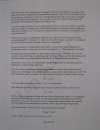
Page 12 (Final)

[list type=decimal]
[*] Photocopies only of this document may be freely distributed (non-exclusively) for both
commercial and non-commercial purposes. This includes paper photocopies as well as .jpg
files. Copies may be distributed to educators, journalists, physicists, engineers, sociologists,
students, UFO conferences, legislators—~anyone who has an interest (technical, scientific,
social) in this information. Photocopies may be posted at websites and distributed through
email. Copies must be “stand alone” (in a separate folder) and not be intermingled with the
works of others.

[*]The author retains the right to maintain, modify, and distribute this document.

[*]The author’s desire to remain anonymous must be respected.[/list]

The author thanks everyone who has helped somehow in the production and distribution of
this document.

He Who Shall Not Be Named
 

Attachments

  • UFOPhysics_2014_p10.jpg
    UFOPhysics_2014_p10.jpg
    432.2 KB · Views: 42
  • UFOPhysics_2014_p11.jpg
    UFOPhysics_2014_p11.jpg
    534.1 KB · Views: 47
  • UFOPhysics_2014_p12.jpg
    UFOPhysics_2014_p12.jpg
    293.3 KB · Views: 49
MusicMan said:
Hello trendsetter37, I won't pretend that I know what's going on here, but it might be interesting to see what happens if you treat "time" as an instantaneous factor, seeing as it is an imaginary function.

It's funny that you say that MusicMan, I was actually going to comment on your thread to say something similar! Can't get into to it now though because I need sleep :zzz:, but I do think that is one of the implications of the above. In short at a certain point movement in time becomes a non-local (i.e instantaneous, osit) phenomenon which would inherently connect you to all moments in time simultaneously.

Makes one wonder about communications with your future/past self. :cool2:
 
That was very interesting. Thanks for sharing, trendsetter37. There seems to be some very special relationship with gravity and time, as both can be seen as instantaneous. Or so I think. Really makes me wonder about the things the C's have said about gravity and time - all there is is gravity/everything is gravity/gravity is "god" and gravity is the binder of all that is material and all that is ethereal; and time does not exist in any frame of reference (they have indicated that the passage of time in a single, non-reversible direction is an illusion) and that all "instants" of time are simultaneous.
 
Agreed SeekinTruth! I will go through the math and compare with other well know equations using the perspective given in the paper (using time and space as the only fundamental units and c as a unit instead of a value) to see what I find. At first glance it appears as though there is an energy boundary one can breach that leads to non-local phenomenon or a non-local state. I'll keep you guys posted.

P.S. I forgot to post the link to original forum where this was posted _http://droneteam.com/drt/index.php?topic=869.0
 
glitch...
page 7 paragraph 4 under Photons Have No Trajectory
"That means that even though the spatial coordinate remains fixed, the time coordinate associated
“filth that pasmo-n continually changes."
It should read: with that position
:)
 
Good catch KJN. I am no longer able to make changes :( Mods can I get permission to make those changes? Although it may not be a huge deal since the attachments are included.
 
trendsetter37 said:
Good catch KJN. I am no longer able to make changes :( Mods can I get permission to make those changes? Although it may not be a huge deal since the attachments are included.

Editing posts cannot be done after 30 minutes for forum members. As far as I know, there is no allowance for a specific member to be able to go back and edit a post after that time limit.
 
It seems to me that whoever is the anonymous author of the article in question, she/he does not know much about physics. It looks to me like making a big deal of next nothing, distracting the attention.
But, of course, I may be totally wrong. It happens.
 
ark said:
It seems to me that whoever is the anonymous author of the article in question, she/he does not know much about physics. It looks to me like making a big deal of next nothing, distracting the attention.
But, of course, I may be totally wrong. It happens.
amen. But of course I may be wrong.
.A
 
Back
Top Bottom