

Liliea
The Living Force
While writing a short investigation into the murder of Nuno Loreiro, I came across a new crime involving renowned scientist Carl Grillmair, which occurred under similar circumstances.
Some excerpts from their website
Grillmair's work had focused on uncovering the structure of the Milky Way, identifying faint stellar streams and substructures that make up the galactic halo surrounding our spiral galaxy, and helping to reshape our understanding of how galaxies evolve.
Grillmair enjoyed his home in remote Antelope Valley, Southern California, largely because it allowed him to easily study the stars at night, Fajardo-Acosta said. Grillmair did so at his home astronomical observatory, equipped with several telescopes.
“He is immortalized because the discovery of these galactic currents is attributed to him,” said Fajardo-Acosta.
For the moment, I would just like to say peace and love wherever you are, and may you have a peaceful transition.

 www.theguardian.com
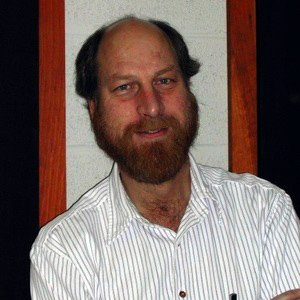
 www.caltech.edu
www.caltech.edu
www.caltech.edu
 www.spitzer.caltech.edu
- An acclaimed Caltech astrophysicist was fatally shot on his porch in Llano early Monday.
- A suspect, Freddy Snyder, 29, was arrested and charged with Carl Grillmair’s slaying as well as carjacking and burglary.
- At the time of his death, he was engaged in studies of comets and asteroids that could pose a threat to Earth.
A renowned California Institute of Technology (Caltech) scientist who studied distant planets and other areas of astronomy for decades was recently shot to death at his home in a rural community outside Los Angeles, authorities said.
Carl Grillmair, 67, died from a bullet wound to the torso on Monday in Llano, an unincorporated community in the Antelope Valley, according to information from the LA county medical examiner’s office. The county sheriff’s department said it had arrested a suspect in Grillmair’s slaying, identifying him as 29-year-old Freddy Snyder.
Snyder faces a count of murder in connection with Grillmair’s death, along with charges of carjacking and burglary pertaining to other cases. He remained in custody on Friday.
The Guardian
(..) While investigating the shooting, deputies arrested a suspect in a carjacking that took place nearby, according to the Sheriff’s Department. That suspect was later identified as Freddy Snyder, 29. He was charged Wednesday with the murder of Grillmair and carjacking. He was also charged with first-degree burglary related to a Dec. 28 incident, according to court records. He is being held in lieu of $2 million. It is unclear what relation, if any, Snyder had with Grillmair.
Los Angeles Times
At the time of his death, he was focused on studying comets and asteroids that could pose a hazard to Earth.
Some excerpts from their website
Grillmair's work had focused on uncovering the structure of the Milky Way, identifying faint stellar streams and substructures that make up the galactic halo surrounding our spiral galaxy, and helping to reshape our understanding of how galaxies evolve.
According to Fajardo-Acosta, his friend and colleague, Grillmair's most notable achievement was detecting signs of water on a distant planet orbiting a star other than the sun. He described it as a “very ingenious discovery” and noted that Grillmair's research was “extremely important” because “water, of course, is a telltale sign of life, or at least conditions favorable to life.”Grillmair's science interests spanned many topics, such as exoplanets and stellar streams, which are remnants from ancient collisions between our Milky Way and other galaxies. He discovered dozens of these streams, with many named by him. In 2007, in one of his most impactful findings, he was lead author on a publication that "captured for the first time enough light from planets outside our solar system, known as exoplanets, to identify molecules in their atmospheres," according to a press release about the work.
And finding signs of life on another planet has been “a quest for all of humanity” throughout history, Fajardo-Acosta said. “It's monumental,” he added; the discovery earned his friend NASA's Exceptional Scientific Achievement Medal in 2011."It was always a pleasure to experience Carl's creativity in doing science. His methods on exoplanets and galactic structure studies were truly detective work, allowing him to infer events that took place many billions of years ago," says Sergio Fajardo-Acosta, a fellow astronomer at IPAC.
Grillmair enjoyed his home in remote Antelope Valley, Southern California, largely because it allowed him to easily study the stars at night, Fajardo-Acosta said. Grillmair did so at his home astronomical observatory, equipped with several telescopes.
Grillmair had been awarded significant observation time as a principal investigator on the Hubble Space Telescope and the Spitzer Space Telescope, and his research earned him numerous awards, including NASA's Exceptional Scientific Achievement Medal.Recently, he began a project to test new instrumentation at Caltech's Palomar Observatory to monitor for meteor impacts on the Moon's surface during an upcoming lunar eclipse. "It is a really exciting project, and I know he was looking forward to seeing what we could learn about the near-space environment from that," says Joe Masiero, NEO Surveyor lead scientist at IPAC, where he was Grillmair's colleague and collaborator.
“He is immortalized because the discovery of these galactic currents is attributed to him,” said Fajardo-Acosta.
For the moment, I would just like to say peace and love wherever you are, and may you have a peaceful transition.
Renowned scientist who studied distant planets fatally shot at his home near LA
Authorities suspect Carl Grillmair was shot by man arrested for carjacking, as friends mourn him as ‘irreplaceable’
Caltech Mourns the Passing of Carl Grillmair (1959–2026)
Carl Grillmair, an astronomer at Caltech's IPAC science and data center for astronomy and planetary science, passed away suddenly on February 16, 2026.
www.caltech.edu
Caltech Mourns the Passing of Carl Grillmair (1959–2026)
Carl Grillmair, an astronomer at Caltech's IPAC science and data center for astronomy and planetary science, passed away suddenly on February 16, 2026.
www.caltech.edu
NASA's Spitzer First To Crack Open Light of Faraway Worlds
www.spitzer.caltech.edu


 I don't know if any such thing exist, somewhere! I am sure it will get plenty of views. Thank you for the knowledge! It is very inspiring. It shows how many concepts me miss, nowadays, in many systems of thoughts. It shows what really matters - it is really scientifically innovative, I believe, I am not qualified to expand on this aspect, but I am sure it is.


