3600 Year Cycle: Where's the evidence?

  • Thread starter Thread starter Rick
  • Start date Start date
The argument for the article was for this data:

View attachment 114999

Further down in the same article, it speaks about ice-free Antarctica at that time.

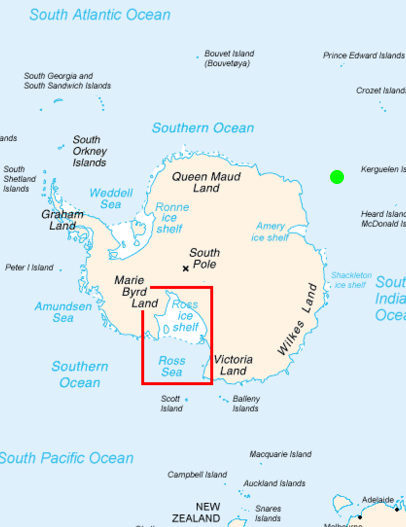
Another piece of evidence comes from Antarctica. A geographic North pole located around Hudson Bay would place the geographic South Pole about seven times farther away from the Ross Sea in Antarctica than it is now. Therefore, the Ross Sea should not have been glaciated at the end of the Pleistocene (c. 13,000BP).
Second, the ancient maps which represent an ice-free Antartica. A group of ancient maps, called "maps of the ancient sea kings" was published in 1531 by the French geographer Oronce Fine, but the maps were far more ancient than 1531. Apparently they were drawn by some very ancient people then preserved by some past civilizations (Greeks, Phoenicians, etc), and finally discovered by Fine.

The truly astounding features of these maps is that they depict a completely non-glaciated Antarctic continent. Remember that at the time of the discovery (1531), Antarctica was not even known about.
One of the Oronce Fine's maps showing an ice-free Antarctica
At first the maps were dismissed, but when scientists started to map the Antarctic continent they found that the ancient maps were too accurate to be the result of random chance:
"In several years of research, the projection of this ancient map was worked out. It was found to have been drawn on a sophisticated map projection, with the use of spherical trigonometry, and to be so scientific that over fifty locations on the Antarctic continent have been found to be located on it with an accuracy that was not attained by modern cartographic science until the nineteenth century."

~ C. Hapgood, The Path to the Poles, p. 258
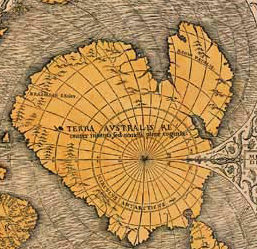
If true, it seems to imply that the C's reference about defrosting of Antarctica by Atlantean civilisation for their polar research was not about the same time period in our past.

There could be factors to ice sheets at a certain period of time that we might not understand well.
And perhaps our linear way of thinking and perceiving time might be clouding some otherwise 'obvious' things that would naturally sort out the confusion about seemingly contradictory 'findings'.

Edit: From the article
Location of the Ross sea. The green dot indicates the antipode of Hudson Bay.
Location of the Ross sea. The green dot indicates the antipodes of Hudson Bay.
 
Last edited:
If true, it seems to imply that the C's reference about defrosting of Antarctica by Atlantean civilisation for their polar research was not about the same time period in our past.
Maps of ice-free Antarctica actually support the theory that Atlanteans defrosted it somehow. The biggest contradiction seem to be the Antarctic ice cores which show seemingly continuous glaciation there for hundreds of thousands of years.
 
Yeah, "plasticity" mentioned in previous post here, minutes before you posted a video about the similar thing happened to South America's western coastal area in another thread.
Some synchronicity, eh? ;-)
Well, it was not minutes but few hours, but as time is selective and variable it's not something of a big difference, right? 😁

Maps of ice-free Antarctica actually support the theory that Atlanteans defrosted it somehow.
Or that it was not (always) a polar ice-covered region, as the article argued, which would have happened if geographic poles shifted significantly from their positions today.

Edit: As mentioned earlier, if Antarctica was not polar region as article suggested, it seems that Atlantean civilisation would have no need to defrost it.

The biggest contradiction seem to be the Antarctic ice cores which show seemingly continuous glaciation there for hundreds of thousands of years.

Regarding the ice cores, used for dating for example, was wondering last night what is used for their calibration? How do we know for certain or why do we interpret that they 'show' continuous history?
Would it not be possible that ice cover didn't exist in some place in certain period of time and then grew (back) copiously giving the impression that it was there much longer than it actually has been, or that there was no discontinuity when there actually has been, maybe even several of them?
How do we really know that for example ice core drilled in Greenland, at such and such depth, corresponds to lets say 540 AD, especially if those several meters of that ice core came out not as one solid block of ice but shattered in numerous smaller pieces?

If there were cometary bombardments in not so distant past relatively speaking, as we think there were, wouldn't that affect the deposition of ice, making it highly irregular function of linear time, with possibly increased build-ups at certain periods and also increased meltdowns at other times, making it very hard if not impossible to apply simple linear relationship all the way back hundreds thousands of years in our interpretations?
 
Edit: As mentioned earlier, if Antarctica was not polar region as article suggested, it seems that Atlantean civilisation would have no need to defrost it.
If the North Pole was close to Hudson Bay, most of Antarctica would have been still in the polar region, so there is no contradiction to the theory that Atlanteans defrosted it.

Plus, the large ice shield build-up in the Northern hemisphere probably means there was a larger ice shield build-up in the Southern hemisphere as well.

Regarding the ice cores, used for dating for example, was wondering last night what is used for their calibration? How do we know for certain or why do we interpret that they 'show' continuous history?
Yes, there can be definitely huge assumptions going into the interpretation of the ice core data.
 
If the North Pole was close to Hudson Bay, most of Antarctica would have been still in the polar region, so there is no contradiction to the theory that Atlanteans defrosted it.

Plus, the large ice shield build-up in the Northern hemisphere probably means there was a larger ice shield build-up in the Southern hemisphere as well.
According to map from the article Gaby provided, current North pole area as in Arctic Sea before YD event was ice-free. The probability that something similar to AMOC brought warmer water in those times all the way up there seems very small. Similar reasoning might be applied to most of Antarctica in those times.

But, the point being that South pole was not on Antarctica shortly before YD event relatively speaking, so Atlanteans looking to do research on and around geographic pole would not have any particular interest in Antarctica itself, especially to extert efforts in technologically defrosting the parts of it that were potentially still covered by ice back then. If they actually went to that trouble, by the same logic they would probably also defrost the land mass around the North pole in those times.

It seems that geographic pole actually being on land and not on sea, otherwise Atlanteans would defrost also the Arctic when the pole was there or Hudson Bay in times shortly before YD event, would make such an expedition and technological feat justifiable, OSIT.
 
Maps of ice-free Antarctica actually support the theory that Atlanteans defrosted it somehow. The biggest contradiction seem to be the Antarctic ice cores which show seemingly continuous glaciation there for hundreds of thousands of years.
How do they know the date of these ice core?
Antarctica Ice Core Dating

Ice core dating in Antarctica involves a combination of methods to establish accurate chronologies for both the ice and the trapped air bubbles, as the ice and gas within the core are not the same age due to the time lag between snow accumulation and air entrapment In the upper layers of ice cores, annual layer counting is a primary method, where seasonal variations in chemical properties such as water isotopes (δ¹⁸O and δD), dust concentration, electrical conductivity, and hydrogen peroxide are used to identify yearly cycles These seasonal signals are analogous to tree rings and allow researchers to count back in time to determine the age of the ice

However, as depth increases, ice flow causes annual layers to thin and eventually become indistinguishable, especially in East Antarctica where snow accumulation rates are low (1 to 5 cm per year), making layer counting impractical for deep ice In such cases, scientists rely on alternative techniques. One approach is to use glaciological modeling, which simulates ice flow and compaction using data on past snow accumulation and temperature derived from isotopic measurements These models estimate the age-depth relationship by accounting for how ice layers are compressed and thinned over time

Another key method involves synchronizing ice cores using distinct, globally identifiable events. Volcanic eruptions leave sulfate deposits that can be detected in ice cores and serve as tie-points for synchronizing records across different cores For example, the 1815 eruption of Tambora and the 72,000-year-old Toba eruption are used as reference markers Similarly, the Laschamp geomagnetic excursion, which occurred about 40,000 years ago, is detectable in ice cores and helps align chronologies

For dating older ice, radiometric techniques are employed. The isotope Krypton-81 (⁸¹Kr) is used to date ice in the range of 0.03 to 1.3 million years before present, providing an absolute dating method for deep ice Argon-40 (⁴⁰Ar) measurements in trapped air also offer dating constraints for very old ice Additionally, cosmogenic nuclides like Beryllium-10 (¹⁰Be), which vary with solar activity and Earth’s magnetic field, can be used to anchor chronologies to known events such as the Laschamp excursion

Gas chronologies are established separately from ice chronologies. Methane (CH₄) concentrations in trapped air are used because methane is well-mixed globally, allowing for precise synchronization between cores from different locations By matching abrupt methane changes across cores, scientists can align gas records and determine the age of the air at a given depth The age difference between ice and gas at the same depth is known as Δage, which is estimated using firn densification models and validated during abrupt climate events

Advanced statistical techniques, such as Bayesian modeling (e.g., the DatIce software), integrate multiple independent dating constraints—including layer counting, volcanic markers, isotopic data, and radiometric measurements—to produce a single, optimized chronology that minimizes uncertainties The most recent Antarctic Ice Core Chronology 2023 (AICC2023) framework exemplifies this multi-method approach, combining ice flow models, gas chronologies, and synchronization points to produce a highly accurate timescale for the EPICA Dome C ice core
It is complex for sure. Whatever the method is used, at some point, some "constant" ( aka assumption that some scientific process doesn't change, so that can be used to project on to past - at least until it is disproved).

Here, the assumption is Antarctica is untouched for all these years and WE are in the advanced civilizational state. If it is dust particles or ice particles or air in it etc. must have come FROM somewhere during the freezing period. There are so many things our instruments can't measure correctly due to the assumption that gravity, EM conditions are same. It makes measuring events very difficulty - like malleability of crust ( 68K BCE), things going into parallel world (Atlantis), water coming from outside planet , technological thawing etc. Any thing that disproves the so called "scientific" methods are suppressed.
 
Here, the assumption is Antarctica is untouched for all these years and WE are in the advanced civilizational state. If it is dust particles or ice particles or air in it etc. must have come FROM somewhere during the freezing period. There are so many things our instruments can't measure correctly due to the assumption that gravity, EM conditions are same. It makes measuring events very difficulty - like malleability of crust ( 68K BCE), things going into parallel world (Atlantis), water coming from outside planet , technological thawing etc. Any thing that disproves the so called "scientific" methods are suppressed
Thank you for this detailed explanation. :flowers:

Maybe the biggest weakest assumption is that there have always been new layers of deposited ice on top of previous older layers, year after year after year. It seems they do not take into account that at certain times, when there was a shift in poles' positions for example, there could have been periods when ice was melting and not growing anually. At other times there could be no or very different seasonal variations if there were no seasons for example or when they were very different than today when rotational axis was tilted by different angle.

And obviously the possibility that in certain periods the area was completely ice-free is completely out of their mental scope. If that would be taken into consideration, basically whole dating business could be tossed out of the window.

Unfortunately, similar state is in many other hard-core scientific branches, overreliance on modelling, simulations and not so solid waterproof assumptions. Cosmic ray research which results directly affect radiocarbon dating is just one example.
 
Back
Top Bottom