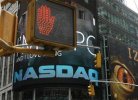
Dow Jones plunges by 1000 points before paring losses

Eboard10

The Living Force
FOTCM Member
_http://www.bloomberg.com/apps/news?pid=20601087&sid=a7r0mxBvotwM

May 6 (Bloomberg) -- U.S. stocks tumbled the most in a year on concern Europe’s debt crisis will halt the global recovery. The selloff briefly erased more than $1 trillion in market value as the Dow Jones Industrial Average fell almost 1,000 points, its biggest intraday loss since 1987, before paring the drop.

The Dow average ended down 347.8 points, or 3.2 percent, at 10,520.32 at the 4 p.m. close of trading in New York. The Standard & Poor’s 500 Index fell as much as 8.6 percent, its biggest plunge since December 2008, before ending at 1,128.15, down 3.2 percent. It was the biggest drop on a closing basis since April 20, 2009, for both measures.

“It’s panic selling,” said Burt White, chief investment officer at LPL Financial in Boston, which oversees $379 billion. “There’s concern that the European situation might cool down global growth and freeze the credit markets.”

New York Stock Exchange spokesman Rich Adamonis said “there were a number of erroneous trades” during the plunge. The NYSE told CNBC that there were no system errors as speculation of erroneous trades swirled through the market. The Nasdaq OMX Group Inc. said it is working with other markets to review the trades during the plunge.

Citigroup Inc. said it found “no evidence” of erroneous trades after CNBC said the bank made a potentially bad transaction that triggered the slide. CNBC cited “multiple sources.”

Procter & Gamble Co. said it’s looking into electronic trading of its stock to determine whether it was made in error. Its shares sank as much as 37 percent and closed down 2.3 percent.


It's intereting how immediately after the sudden panic crash which erased more than $1 trillion in market value on the Dow Jones, they come up with the excuse that there were a number of stock entered errors, regardless of the fact that the NYSE denied the possibility of such an occurrence. This is a typical example of propaganda used to give investors the illusion that everything is under control.


Attachments

  • NYSE and reptile eye.jpg
    NYSE and reptile eye.jpg
    27.9 KB · Views: 9
I wonder if this Senate bill on Financial Reform to audit the FED had anything to do with the drop?

_http://online.wsj.com/article_email/SB10001424052748704370704575228164133105390-lMyQjAxMTAwMDAwNjEwNDYyWj.html

Proposal to Audit Fed Modified to Limit Impact on Monetary Policy

By SUDEEP REDDY and MICHAEL R. CRITTENDEN

Last-minute maneuvering in the Senate allowed the Federal Reserve to sidestep legislation that would have exposed its interest-rate decision-making to congressional auditors.

Pressure from the Obama administration led Senate lawmakers to alter a provision pushed by Sen. Bernie Sanders (I., Vt.) that was gaining momentum despite opposition from the Treasury and the Fed. It would have largely repealed a 32-year-old law that shields Fed monetary policy from congressional auditors.

The compromise, endorsed by Senate Banking Committee Chairman Christopher Dodd (D., Conn.) and the Treasury, would require the Fed to disclose more details about its lending during the financial crisis. It would also require a one-time audit of those loans and a one-time review of Fed governance. A formal vote was scheduled for late Thursday.

Thursday's Senate showdown came after senators on the left and right joined forces to support Mr. Sanders' provision.

"At a time when our entire financial system almost collapsed, we cannot let the Fed operate in secrecy any longer," Mr. Sanders said. "The American people have a right to know."

But Fed Chairman Ben Bernanke, while insisting on a commitment to "openness" at the Fed, said in a letter to Congress the Sanders measure would "seriously threaten monetary policy independence, increase inflation fears and market interest rates, and damage economic stability and job creation."

Journal Community

Deputy Treasury Secretary Neal Wolin, in a statement, endorsed the revisions to the Sanders provision, saying they would provide a comprehensive audit of the Federal Reserve Board's operations in response to the financial crisis, "while preserving the existing protections of the Federal Reserve's independence with respect to monetary policy."

A House bill sponsored by Rep. Ron Paul (R., Texas) that passed in December contains a proposal similar to the original Sanders measure. If the Senate bill passes, it will need to be reconciled in a conference committee. That keeps the pressure on the Fed alive for the coming months.

The original Sanders measure stated that it shouldn't be "construed as interference in or dictation of monetary policy." But the Fed and administration warned that would allow auditors to interview Fed policy makers and staffers about monetary policy, thereby allowing congressional critics to pressure the Fed and undermine its independence.

Like most other capitalist democracies, U.S. politicians have given the central bank considerable latitude to control interest rates on the theory that elected politicians are prone to keep rates too low to get more growth during their terms at the cost of more inflation later. Although sponsors of legislation insisted that wasn't their intent, the Fed and its allies said otherwise.

"It's a chilling kind of circumstance," former Fed Chairman Paul Volcker, an Obama adviser, said in an interview. "The more you have no clear boundaries about what's appropriate and what's inappropriate, you castrate the decision-making process. That's true for any organization, but it's particularly true when you get into the sensitivities of monetary policy that can generate speculative waves in financial markets and speculation in people's minds," said Mr. Volcker, who also urged lawmakers to eliminate the audit provision.

Anil Kashyap, an economist at the University of Chicago's Booth School of Business, stressed that independent central banks need to be insulated from politics and make decisions several months ahead of expected trends.

"There are times when you have to start raising interest rates before the economy's recovering. If you're going to get audited while you do that, you know you're going to be slower—meaning we're going to tolerate higher inflation."

Before the last-minute compromise, the Fed's foes appeared to be winning, and got a major boost when Senate Majority Leader Harry Reid (D., Nev.) said he would side with Mr. Sanders.

Mr. Bernanke, meanwhile, returned to Washington Thursday afternoon after a morning speech in Chicago to continue pressing for changes to the Sanders measure. In the past few days, Mr. Bernanke has spoken to at least a half-dozen senators to argue the Fed's case that the bill would deeply damage the Fed's credibility and ability to make tough decisions about interest rates. Treasury Secretary Timothy Geithner, a former Fed official, made similar arguments.

Mr. Bernanke's predecessor, Alan Greenspan, devoted substantial effort to mollify Congress so that legislation like that sponsored by Mr. Sanders and Mr. Paul would never come to the Senate floor. Mr. Bernanke, though pressing the Fed's case with conviction, lacked Mr. Greenspan's political success in part because of vastly different economic conditions that spurred a backlash from Congress and the public.
 
I posted a couple of interesting videos. Things are getting really bad in the stock market, and yesterdays sudden free fall of the Dow Jones gave us a sign of what can truly happen if other countries and US states follow Greece.

@Nicolas: I find it unlikely that it was the cause behind the sudden panic crash, since the Senate bill didn't pass. However, if that is ever going to happen, then I'm sure the markets will suffer huge losses.

BRIAN WILLIAMS ON WALL STREET'S FREE FALL
http://www.youtube.com/watch?v=SRNrl-858qA

RON PAUL: GREECE IS JUST THE BEGINNIG
http://www.youtube.com/watch?v=lAeO6jLUc4Q

_http://www.bloomberg.com/apps/news?pid=20601087&sid=aNsM0.AO5XzE&pos=1

Stocks Tumble on Greek Debt Woes; Bunds Gain, Commodities Slump

By Mark Gilbert

May 7 (Bloomberg) -- Stocks slumped across the world and commodities plunged on concern Europe’s debt crisis is worsening. Futures on the Standard & Poor’s 500 Index rallied after U.S. stocks dropped by the most in a year, while German bunds gained as investors sought a haven in fixed income.

The Stoxx Europe 600 Index fell 1.9 percent at 9:17 a.m. in London, after touching its lowest intraday level in almost three months. Japan’s Nikkei 225 Index slipped 3.1 percent and the MSCI Asia Pacific Index lost 1.7 percent. Copper and aluminum tumbled, while the 10-year bund yield declined 4 basis points to 2.75 percent. The rout in U.S. stocks briefly erased more than $1 trillion in U.S. market value as the Dow Jones Industrial Average lost 9.2 percent, before closing 3.2 percent lower.

“Anxiety is getting worse,” Bob Parker, a London-based adviser to Credit Suisse Asset Management, which oversees about $414 billion, said in a Bloomberg Television interview. “Markets are highly concerned about the contagion effect. There’s been nothing to calm market fears.”

Stocks were pummeled amid concern European leaders won’t do enough to keep the most indebted nations from defaulting after a 110 billion-euro ($140 billion) rescue package for Greece failed to halt a rise in government borrowing costs. U.S. losses snowballed as computerized trades caused some stocks to briefly lose more than 90 percent of their value. Japanese Finance Minister Naoto Kan said the Group of Seven will hold a conference call to discuss the Greek debt crisis.

Banks Drop

The MSCI World Index dropped for a fourth day, losing 0.8 percent. Europe’s Stoxx 600 index has retreated 11 percent from this year’s high on April 15. Credit Agricole SA led European bank shares lower after saying its corporate and investment bank has 2.4 billion euros at risk in Greek assets. Royal Bank of Scotland Group Plc slid 5.7 percent after reporting a first- quarter loss.

The MSCI Emerging Markets Index dropped 1.6 percent, extending this week’s retreat to 8.5 percent, the biggest decline since Feb. 20, 2009. The benchmark global, European and Asian indexes have all wiped out their 2010 advances.

The yield on Greece’s 10-year note climbed 64 basis points to 12.3 percent, driving the yield premium to German debt to a record 905 basis points. Yields on Spanish, Italian and Portuguese debt also rose, extending a jump in borrowing costs after European Central Bank President Jean-Claude Trichet yesterday held interest rates at a record low of 1 percent and said the bank didn’t discuss whether to purchase government bonds to stem the region’s debt crisis.

Futures Rally

Futures on the S&P 500 gained 0.9 percent, after earlier slumping as much as 0.8 percent. The index yesterday fell as much as 8.6 percent, its biggest intraday drop since December 2008, before closing down 3.2 percent at 1,128.15.

The U.S. Securities and Exchange Commission and the Commodity Futures Trading Commission said they will examine “unusual trading” that contributed to the plunge. Two people with direct knowledge of the matter said regulators plan to examine whether securities professionals triggered the selloff or exploited it for profit. The Nasdaq OMX Group Inc. said it will cancel trades of stocks that moved more than 60 percent.

The euro strengthened against all 16 of its most traded counterparts after Japan’s Kan said at a press conference in Tokyo that European members in the G-7 “will probably explain” steps taken with the International Monetary Fund to assist Greece. The euro gained 0.9 percent against the dollar and 2.5 percent versus the yen.

‘Out of Control’

“Nerves are frayed,” said Prasad Patkar, who helps manage about $1.7 billion at Platypus Asset Management Ltd. in Sydney. “After the global financial crisis, it’s not irrational for investors to shoot first and ask questions later. We need the ECB to come out decisively and put a stop to this before things spin out of control.”

The pound fell to a 13-month low as results from the U.K. election put the Conservatives on course to win the most seats, without gaining an overall majority, fueling concern a new government won’t be strong enough to tackle the budget deficit.

Copper for delivery in three months fell 1.4 percent on the London Metal Exchange, declining for a fourth day. Aluminum, nickel and zinc also retreated. Gold for immediate delivery was 0.5 percent lower at $1,202.60 an ounce in London, having touched $1,210.70 yesterday, within 1.3 percent of the record reached in December. Crude oil for June delivery rose 0.3 percent to $77.32 a barrel in New York trading, paring some of yesterday’s 3.6 percent slump.

Money-Market Rates

The bond and stock market turmoil is spilling over into money markets. The cost of borrowing dollars between banks for three months in London may climb to the highest level in nine months, according to Marc Ostwald, a fixed-income strategist at Monument Securities Ltd. in London.

The London interbank offered rate, or Libor, for such loans may rise about 8 basis points to 0.45 percent, he said. Libor rose 1 basis point to 0.37 percent yesterday, according to the British Bankers’ Association.

The stock-market turmoil battered initial public offerings. Ron Burkle’s Americold Realty Trust postponed the largest U.S. initial public offering of 2010, with a mooted size of $660 million, while Hong Kong’s Swire Properties Ltd. shelved its $2.7 billion sale.
 
Nicolas said:
I wonder if this Senate bill on Financial Reform to audit the FED had anything to do with the drop?

_http://online.wsj.com/article_email/SB10001424052748704370704575228164133105390-lMyQjAxMTAwMDAwNjEwNDYyWj.html

I would think there is a pretty solid chance that these two events are closely related.


[quote author= Wall Street Journal] Proposal to Audit Fed Modified to Limit Impact on Monetary Policy

Last-minute maneuvering in the Senate allowed the Federal Reserve to sidestep legislation that would have exposed...

Pressure from the Obama administration led Senate lawmakers to alter a provision pushed by Sen. Bernie Sanders (I., Vt.) that was gaining momentum despite opposition from the Treasury and the Fed
...
A formal vote was scheduled for late Thursday.

...
Before the last-minute compromise, the Fed's foes appeared to be winning, and got a major boost when Senate Majority Leader Harry Reid (D., Nev.) said he would side with Mr. Sanders.

...
Mr. Bernanke's predecessor, Alan Greenspan, devoted substantial effort to mollify Congress so that legislation like that sponsored by Mr. Sanders and Mr. Paul would never come to the Senate floor.[/quote]


A number of questions came to mind as I read this yesterday, and I've been thinking about it all day, as well as trying to read other articles, research, and learn more about what really happened yesterday.

It all seems to be a little to conveniently timed to be a coincidence at first glance, osit. A bill to audit the Federal Reserve, something that has been attempted before, but was not even allowed to be considered, let alone voted on (see: http://www.youtube.com/watch?v=ZEPfM6DPqkM ).

So now, a bill requiring the Federal Reserve to become "transparent," (that is, being subject to an objective review, or audit) not only passes the House, but makes it to the Senate, despite Alan Greenspan's every attempt, past and present, to prevent this from occurring.

Not only did it make it all the to the Senate floor, but it gained true bipartisan support. It appeared to have an unstoppable momentum, and was going to be voted on right then and there yesterday afternoon! Suddenly, we came to a point where 32 years of shrouded secrecy of the most interesting type might actually end, right then and there, and it seemed like there was no stopping it! I mean, am I reading that correctly?

But then, "Something Happened."

Not as readily readily apparent to me is, what that "Something" was.

The article, and others I've read today, all suggest that "this person or that person asked real nice at the last second, and suddenly they threw the whole thing out, by substantially altering the portions requiring any actual "transparency" to ever occur, and giving them 1 full year to come up with a plan to answer the questions that were going to be asked, none of which will actually shed any light on anything anymore anyhow. Anyways...

Am I the only one sees a possible connection between the "market glitch" and the "sudden reversal of unstoppable support to expose the Federal Reserve" from the Senate? It's like I can almost picture the key figures being told or manipulated in advance that if they didn't drop this, AND FAST, all hell would break loose. And then, suddenly, 1 trillion US dollars disappeared, just like that. And then suddenly, the bill as it stood died, just like that.

Posted yesterday by Ron Paul: Senate Sellout Threatens Ron Paul's Audit the Fed Bill by Ron Paul http://www.youtube.com/watch?v=iuVBAMQ0j4A
[quote author=Ron Paul]I'm not a bit surprised that the Federal Reserve got to the Senate," Paul said. "At the last minute, [Sanders] switched it and watered it down, and really it adds nothing. It's a possibility that it even makes the current conditions worse."[/quote]

Also yesterday was a key vote on placing limits on large banks. This vote would've caused the largest banks to shrink, put limits on the percentage of deposits they could carry/borrow against/create wealth with, and put caps on how big any one bank could ever be. Not surprisingly, that vote did not pass, but that it was even considered, and out there as a possibility to occur (I mean it made it all the way to a vote on the Senate Floor), and that this happened on the same day as the Fed Reserve vote, and the "market glitch" again just makes me scratch my head.

I've also been asking myself, "Who benefits?" from all that occurred yesterday.

1 - The Federal Reserve, and all of international banking interests

2 - Whoever "knew" the plunge was coming. The stock exchange DID today reverse about 30 minutes worth of trades yesterday from almost 700 companies, and called them all "errors" despite NYSE saying no such errors occurred, or even could have. But only trades that were wrong by more than 60% were cancelled. All the rest stayed. Including the monster Proctor & Gamble, whose stock "erroneously" traded for almost 40% under value.

High Frequency Traders use algorithms to places thousands of trades per second, in and out, short selling and long. How many times was that 1 trillion dollars traded, how much profit distribution did this create (I'm no financial expert, but I'm assuming it is an exponential figure at thousands of trades per second). So long as your stock was erroneously traded at 59.9% or less, your trade (or thousands of trades) was (were) not retroactively cancelled, and you get to keep every penny you made. This is really quite unbelievable to me in almost every way, but sure enough that's what they decided today. Of course in reality, none of this is any more unbelievable than the fact that they're calling it all a "glitch" but hey...

http://www.marketwatch.com/story/exchanges-play-defense-amid-trade-cancellations-2010-05-07?reflink=MW_news_stmp
[quote author= MarketWatch] The Nasdaq announced cancellation of all trades made between 2:40 p.m. and 3 p.m. Eastern that were "greater than or less than 60% away from the consolidated last print in that security at (2:40 p.m.) or immediately prior.
...
Reports said the NYSE would also cancel some trades. (edit: I'm seen this many times, but never an indication of which trades they might be cancelling)
...[/quote]

It basically give the gist that they don't know what happened, and will be making decisions about who gets to profit or not from yesterdays fiasco in the days and weeks to come, whenever and however they feel like doing that. Pretty creepy.
So, my guess is, and I'm hoping somebody who knows what they're talking about can assure me that I'm wrong lol, this was an incredibly creative way to add several trillions of dollar to the money supply from thin air.


http://blogs.wsj.com/economics/2010/05/07/audit-the-fed-whats-next-for-the-central-bank/
Audit-the-Fed: What’s Next for the Central Bank?

[quote author=WSJ blog] Why did a bill that’s acceptable to Sen. Sanders and top Democrats — along with the Obama administration and the Fed — get postponed anyway for a full vote? Because at least one Republican lawmaker objected to having a vote Thursday on the substitute amendment. Of the 24 co-sponsors of the pre-modified Sanders amendment, 14 were from the GOP. Sen. David Vitter (R., La.), a fierce Fed critic who has long backed the audit-the-Fed movement, wants a side-by-vote on the pre-modified bill that calls for more oversight of the central bank. If he succeeds, that vote would come Tuesday at the earliest. (Given the White House involvement, and the agreement with Sen. Sanders, it’s unlikely that the pre-modified bill would pass.)

That’s the Senate. The House already passed a stringent audit-the-Fed measure — authored by Rep. Ron Paul (R., Texas), the leading Fed foe in Congress — as part of its financial regulation bill in December. That makes it yet another provision that would need to be reconciled with a Senate bill when the House and Senate move to a conference committee (assuming the full Senate passes a financial regulation overhaul). Anything can happen behind closed doors in a conference committee. But the scaled-back version of the audit-the-Fed provision in the Senate makes it easier for the Fed and Obama administration to get their way.

...
Now the debate is turning to the Fed’s $1.1 trillion in holdings of mortgage-backed securities. Some Fed officials want them offloaded sooner than others to increase the Fed’s flexibility.[/quote]

There's that number again lol. Even more telling, in the 15 hours that article has been posted at WSJ's site, there have been 10 comments, and every one of them has the exact same viewpoint - that something is terribly wrong with this picture. Seems even the standard cointel ops that post ridiculous replies on such high volume sites are too backlogged to keep up. :) :) :)

Anyhow, those are my ramblings and thoughts on the matter, I felt an urgent need to express them as to me it seems the "dots are easy to connect" on this one, but haven't seen anyone else say it yet. :)

I would of course greatly appreciate any constructive or critical analyses of anything I've said here.

Cheers everyone,
Jason in California
 
http://www.google.com/hostednews/ap/article/ALeqM5gL9RvenuJVxJcP4mde51rouHQMbgD9FIAGQ00
[quote author=AP] Regulators scour trades for clues to market plunge

By STEVENSON JACOBS and BERNARD CONDON (AP) – 2 hours ago

NEW YORK — Regulators and Wall Street officials scoured millions of trades one by one Friday and canceled thousands as they sought to explain a record plunge in the stock market, undo the damage and keep it from happening again.

It wasn't clear how long the laborious process would take or if it would even solve the mystery behind Thursday's harrowing trading session that saw the Dow Jones industrial average fall hundreds of points and then recover, all in a matter of minutes. The chaotic slide — some stocks briefly fell to near zero — brought back memories of the darkest days of the financial crisis.

The Securities and Exchange Commission and the Commodity Futures Trading Commission were investigating but on the day after, there were more questions than answers:

_ Did a single trader mistakenly punch in the wrong number of shares when making a sell order, maybe mistyping "billion" instead of "million" and setting off a market-wide panic that at one point pulled the Dow down almost 1,000 points?

_ Did high-speed computerized trading systems that are supposed to make markets work smoothly go haywire, sending stocks into a nosedive?

_ Most important to anyone with money in the stock market: Could it happen again?
Maybe the scariest part was that no one could unravel what happened. That left executives at the major stock exchanges pointing fingers at each other, and the public wondering if the hidden world of high-frequency, computerized trading that fed the panic posed a threat to their 401(k)s.

"It could be awhile before they figure it out because they have to sift through everything trade by trade," said San Diego State University finance professor Dan Seiver, who has followed the markets for 52 years. "And humans are a lot slower than machines."

High-frequency trading uses mathematical models and computers to buy and sell huge numbers of shares in milliseconds. It accounts for two-thirds of all stock trading in the U.S., and proponents say it makes the stock market run more smoothly by efficiently connecting buyers and sellers.

One theory for Thursday's decline was that high-frequency traders pulled out of the market briefly. But Jeff Wecker, chief executive of Lime Brokerage, which caters to more than 100 high-frequency trading firms, said his clients bought and sold stocks more — not less — during the steepest drop.
"They're the reason the market rebounded as rapidly as it did," he said.

While the cause remained unknown, market officials said thousands of trades made during the plunge were being canceled because they were "clearly erroneous." Some companies, including consulting firm Accenture, saw their share prices briefly fall to as low as a few cents.

New York Stock Exchange Euronext CEO Duncan Niederauer told CNBC that his exchange canceled 4,000 trades.

At Direct Edge, the third-largest U.S. exchange, employees worked through the night reviewing some of the 10 million trades made Thursday and found 2,000 that had to be canceled, said chief executive William O'Brien.

BATS Global Markets, one of the largest U.S. trading networks, had to cancel 540 trades.
Nasdaq declined to give a number.

The turbulence continued Friday. Amid anxiety about the unexplained plunge and a growing debt crisis in Europe, the Dow was down as much as 280 points and up briefly before closing down almost 139.

Thursday's trading was enough to stir fear among even the most seasoned market veterans.
The Dow had already fallen nearly 400 points by around 2:40 p.m. EDT. Yet the damage only got worse. The Dow tumbled 600 points in seven minutes, giving it a record intraday loss of 998.50, or 9.2 percent. Minutes later, the index inexplicably turned up again, erasing most of the losses.

Among the hardest hit: Procter & Gamble and 3M, among the highest priced of the 30 stocks in the Dow industrials average. Their big drops took the Dow down sharply because it only measures price, not percentage — a $1 drop has the same impact whether the price started at $100 or $2.

On Thursday, at 2:42 p.m., P&G was trading at $61.73. Within seven minutes, it fell 36 percent to $39.37. That drop alone accounted for 169 points that the Dow lost.

Similarly, 3M shares, which fell 17 percent from $83.38, took about 100 points off the Dow.

How did it happen? Speculation on trading floors initially centered on a computerized selloff possibly caused by a typographical error. One theory was that a trader trying to sell millions of shares accidentally sold billions, a move that would have triggered a wave of automatic selling.

The SEC was poring through trading data containing millions of transactions to try to identify what might have caused the disruption, according to two people familiar with the matter.

The two major markets, the NYSE and Nasdaq, were also examining audits of completed trades, according to the people, who spoke on condition of anonymity because the investigation is ongoing.

At Nasdaq, Thursday's plunge set off MarketWatch, an internal system that alerts regulators to trading problems. Regulators were still sifting through the day's trading data for irregularities, and a Nasdaq spokesman declined to comment on when the investigation will be completed.

NYSE spokesman Raymond Pellecchia said the Big Board is working with regulators but declined to comment further.

BATS CEO Joe Ratterman said SEC officials called him at his Kansas City, Mo., office late Thursday and again Friday seeking information on what might have gone wrong.

Ratterman said the SEC has called a meeting of all exchanges on Monday in Washington.

The SEC said one possible cause it was studying involved conflicting trading rules for different exchanges.

On Capitol Hill, Sens. Ted Kaufman, D-Del., and Mark Warner, D-Va., called for the SEC and the Commodity Futures Trading Commission to conduct a thorough study of high-frequency trading and other tools that move markets in milliseconds.

"We saw a living, breathing, real-time example today of the potential catastrophe that takes place if we don't have an ability to make sure we adequately use this technology," Warner said late Thursday.

"Right now, there is no way to know what is happening in this marketplace," Kaufman said.

AP Business Writer Daniel Wagner and Associated Press Writer Jim Kuhnhenn contributed to this report from Washington.

Copyright © 2010 The Associated Press. All rights reserved.[/quote]

Yup, one person hit the "zero" key accidentally and the whole market crashed. This article seems to stress repeatedly that even after every single trade is examined, and every piece of data gathered, that we will still not have the answer as to what happened. Why are they so certain of this conclusion so forcefully and so soon? It's like a room full of executives all shrugging their shoulders, and the world is playing "Where's Waldo" to see who isn't shrugging, but just grinning incessantly.

One of the comments I read said the the BATS exchange quoted above had been in bed with the Madoff crew, this was pretty easy to verify, and it's actually a pretty interesting story imo:

http://money.cnn.com/2008/12/18/news/companies/madoff.stockexchange.fortune/index.htm
Madoff tentacles ensnare exchange

One of Madoff's nieces is married to Eric Swanson, a former SEC lawyer who was key to BATS Trading
winning official exchange status.

...
Founded three years ago, BATS has quickly become a major player: It now trades one out of every ten U.S. shares, about $35 billion of transactions, every day. In October, BATS was approved by the SEC as an official stock exchange, the first since Nasdaq began in the 1970s.

BATS hired Swanson in January 2008, in part to help win exchange status with the SEC.

And then this:
http://kansascity.bizjournals.com/kansascity/stories/2009/02/16/daily22.html

BATS Exchange gets subpoena in Madoff case

BATS Exchange is one of 14 firms subpoenaed by the trustee charged with liquidating suspected Ponzi scheme mastermind Bernard Madoff’s investment company, Bernard L. Madoff Investment Securities LLC, according to filings with the U.S. Bankruptcy Court for the Southern District of New York.
Lenexa-based BATS Exchange Vice President Randy Williams on Wednesday declined to comment about the subpoena.
The other entities that trustee Irving Picard subpoenaed Monday:
• Chicago Board of Trade
• Jeffries & Co.
• Timber Hill LLC
• Knight Capital Group Inc.


Read more: BATS Exchange gets subpoena in Madoff case - Kansas City Business Journal:

It makes the head spin I tell ya. :)
 
Jason, did the proposal of the Senate Bill coincide timewise with the free fall of the Dow Jones Index?
 
Jason Best said:
_http://www.google.com/hostednews/ap/article/ALeqM5gL9RvenuJVxJcP4mde51rouHQMbgD9FIAGQ00
[quote author=AP] Regulators scour trades for clues to market plunge

By STEVENSON JACOBS and BERNARD CONDON (AP) – 2 hours ago

NEW YORK — Regulators and Wall Street officials scoured millions of trades one by one Friday and canceled thousands as they sought to explain a record plunge in the stock market, undo the damage and keep it from happening again.

It wasn't clear how long the laborious process would take or if it would even solve the mystery behind Thursday's harrowing trading session that saw the Dow Jones industrial average fall hundreds of points and then recover, all in a matter of minutes. The chaotic slide — some stocks briefly fell to near zero — brought back memories of the darkest days of the financial crisis.

{...snip...}
_ Did high-speed computerized trading systems that are supposed to make markets work smoothly go haywire, sending stocks into a nosedive?

_ Most important to anyone with money in the stock market: Could it happen again?
Maybe the scariest part was that no one could unravel what happened. That left executives at the major stock exchanges pointing fingers at each other, and the public wondering if the hidden world of high-frequency, computerized trading that fed the panic posed a threat to their 401(k)s.

{...snip...}
High-frequency trading uses mathematical models and computers to buy and sell huge numbers of shares in milliseconds. It accounts for two-thirds of all stock trading in the U.S., and proponents say it makes the stock market run more smoothly by efficiently connecting buyers and sellers.

{...snip...}
BATS CEO Joe Ratterman said SEC officials called him at his Kansas City, Mo., office late Thursday and again Friday seeking information on what might have gone wrong.

Ratterman said the SEC has called a meeting of all exchanges on Monday in Washington.

{...snip...}
"Right now, there is no way to know what is happening in this marketplace," Kaufman said.

{...}

Yup, one person hit the "zero" key accidentally and the whole market crashed. This article seems to stress repeatedly that even after every single trade is examined, and every piece of data gathered, that we will still not have the answer as to what happened. Why are they so certain of this conclusion so forcefully and so soon? It's like a room full of executives all shrugging their shoulders, and the world is playing "Where's Waldo" to see who isn't shrugging, but just grinning incessantly.

One of the comments I read said the the BATS exchange quoted above had been in bed with the Madoff crew, this was pretty easy to verify, and it's actually a pretty interesting story imo:

http://money.cnn.com/2008/12/18/news/companies/madoff.stockexchange.fortune/index.htm
Madoff tentacles ensnare exchange

One of Madoff's nieces is married to Eric Swanson, a former SEC lawyer who was key to BATS Trading
winning official exchange status.


...
Founded three years ago, BATS has quickly become a major player: It now trades one out of every ten U.S. shares, about $35 billion of transactions, every day. In October, BATS was approved by the SEC as an official stock exchange, the first since Nasdaq began in the 1970s.

BATS hired Swanson in January 2008, in part to help win exchange status with the SEC.

And then this:
http://kansascity.bizjournals.com/kansascity/stories/2009/02/16/daily22.html

BATS Exchange gets subpoena in Madoff case

BATS Exchange is one of 14 firms subpoenaed by the trustee charged with liquidating suspected Ponzi scheme mastermind Bernard Madoff’s investment company, Bernard L. Madoff Investment Securities LLC, according to filings with the U.S. Bankruptcy Court for the Southern District of New York.
Lenexa-based BATS Exchange Vice President Randy Williams on Wednesday declined to comment about the subpoena.

The other entities that trustee Irving Picard subpoenaed Monday:
• Chicago Board of Trade
• Jeffries & Co.
• Timber Hill LLC
• Knight Capital Group Inc.


Read more: BATS Exchange gets subpoena in Madoff case - Kansas City Business Journal:

It makes the head spin I tell ya. :)
[/quote]

Yup. Many not-so-unusual "unusual" things going on, for sure. Notice the BS about high frequency trading being a way of "making markets work smoothing." From my understanding there's A WHOLE LOT MORE to it than that. The high frequency traders are all the usual suspects -- the biggest fraudsters -- who make money on everything on the way up and on the way down while setting the next stage of their sick games in motion.

But the whole thing does have that flavor of sending messages about who's really in control -- that special art of blackmail, etc. -- to all the right pawns and the pathological "fun and games" that have several targets to "kill with one stone."
 
Eboard10 said:
Jason, did the proposal of the Senate Bill coincide timewise with the free fall of the Dow Jones Index?

The proposal of the Senate Bill happened some time ago, this has been in the works for some time, so no.

The amendment of the proposed bill, and suspension of voting on it however, does seem to coincide with the market crash. The last minute decision to amend the bill, and suspend the vote came "late Thursday." The originally proposed bill was set to be passed into law on Thursday. The market crash occurred also "late Thursday," 80 minutes before the market closed at 4PM.

I did spend some time yesterday looking for specifically what time the "last minute decisions" occurred, but was unable to find any clear statements to that effect. I guess one would have to track the times of the updates of the various news articles, and when they were released, to figure this out more exactly. Seems pretty darn close to me though. :)
 
They crashed the market like this to force the congress to approve 700 billion bailout bill couple of years back. For me to this sounds like a signal to resisting Greece's population and in general to the european's and subsequently to the US population what will happen , if they resist austerity measures.
 
Eboard10 said:
_http://www.bloomberg.com/apps/news?pid=20601087&sid=a7r0mxBvotwM

May 6 (Bloomberg) -- U.S. stocks tumbled the most in a year on concern Europe’s debt crisis will halt the global recovery. The selloff briefly erased more than $1 trillion in market value as the Dow Jones Industrial Average fell almost 1,000 points, its biggest intraday loss since 1987, before paring the drop.

The Dow average ended down 347.8 points, or 3.2 percent, at 10,520.32 at the 4 p.m. close of trading in New York. The Standard & Poor’s 500 Index fell as much as 8.6 percent, its biggest plunge since December 2008, before ending at 1,128.15, down 3.2 percent. It was the biggest drop on a closing basis since April 20, 2009, for both measures.

“It’s panic selling,” said Burt White, chief investment officer at LPL Financial in Boston, which oversees $379 billion. “There’s concern that the European situation might cool down global growth and freeze the credit markets.”

New York Stock Exchange spokesman Rich Adamonis said “there were a number of erroneous trades” during the plunge. The NYSE told CNBC that there were no system errors as speculation of erroneous trades swirled through the market. The Nasdaq OMX Group Inc. said it is working with other markets to review the trades during the plunge.

Citigroup Inc. said it found “no evidence” of erroneous trades after CNBC said the bank made a potentially bad transaction that triggered the slide. CNBC cited “multiple sources.”

Procter & Gamble Co. said it’s looking into electronic trading of its stock to determine whether it was made in error. Its shares sank as much as 37 percent and closed down 2.3 percent.


It's intereting how immediately after the sudden panic crash which erased more than $1 trillion in market value on the Dow Jones, they come up with the excuse that there were a number of stock entered errors, regardless of the fact that the NYSE denied the possibility of such an occurrence. This is a typical example of propaganda used to give investors the illusion that everything is under control.


I posted the photo below but did not get the source in, it's from Reuters the day it occurred...so now there will be more limits on electronic trading...i can't help associating the "stormy market weather" (my phrase) with the actual climate storm/disruption.

peace out,

abbyo
 
herondancer said:
Ellen Brown did a nice analysis tying a lot of these events together. See the Signs page here.

Thanks for that...I did not see story that on my own.

& from her article..."On Thursday*, when the U.S. stock market suddenly lost 999 points, and just as suddenly recovered two-thirds of that loss..." (666)…hopefully ECB will make its move…mishugina!!!

I was just reading about Od...Odeim...Ad Odium...lesson perhaps not to "bank on" others' suffering? In a way, a positive message. I avoid TV news but recall Diane Sawyer dismissing it as a case of heartburn-caused-by-computer error.... and then going right onto the next story without missing a beat.

the photo if i forgot to put the source is from Reuters and I think the same billboard is still up there in Times Sq., judging from other news photos i've seen this week.

*Thor’s day right before the German election!

peace/namaste/shalom,

abbyo
 
I was putting together one link in my brain do not know if it is important...i sometimes feel most creative around 3 am...

Davide Noakes, in his summary of Celtic history from caveman-present day Britain describes a process where one world power takes over the banking/money. ECE made its move, because Greece had no option but to disappear like Atlantis...only it would be an economic erasure...would dissipate the Greeks nonetheless...he talks about DVD and EU moving in to erase Britons, and it is kind of creepy...like the Dow cooperated somehow in setting up this stage for a necessary rescue...not to actually plummet the USA/world market into a real depression, but to give us a preview of what will happen to Greece and the EU if the world bank does not come to the rescue, which it did...Noakes calls this the "German Bank" set up by Hitler in 1945, I did not research that. The rest of the prophecies are rather dire...nuclear war, etc.

Seeing a pre-programmed drama play out is creepy, but it is still one probable reality, one possible future, and there is still room for light to come in as long as we are in these bodies...that is where i come to the end of Mr. Noakes call for Britons to wake up...I am not sure why I think of myself as a fellow Briton...but I understand very well he's trying to do what I hoped someone would do in California...wake people up before all the ensouled people are gone...replaced...by something like Borgs?
 
Back
Top Bottom