Plasma physicist and MIT professor Nuno Loureiro shot dead in his home - no suspects, no motive

I have a little story about Jack. I knew him for a short time when I lived in San Francisco around 1980. He was obsessed with his discoveries on anti-gravity systems and claimed he was being watched by the shadow government. He was dating a beautiful young woman at the time but was beginning to have problems with her. She would go off in a trance unexpectantly and start speaking in tongues which was becoming a problem.

Wild claims in this article. Wild man Jack.
Interesting reply from Sarfatti to that Ark's Grok comment.

Jack Sarfatti
20h
Cornell University

It is established fact, but the facts are classified by the military. The details of my specific reverse engineering of the facts known to me are under development by several groups in different nations in an arms race to control gravity with small amounts of electrical power including new directed energy gravity beam weapons conceived by Matt Visser and Giovanni Modanese including beam weapons disabling ICBM triggering mechanisms as reported by Robert Hastings.
The bolded part, especially the phrase "reverse engineering" suggests, at least to me, work done on acquired alien crafts and technology. Could be wrong of course, as I don't know what exactly Visser, Modanese and Hastings were working on.

Another intriguing info piece is that Russians are on board together with Americans on all that warp tech research, according to another Sarfatti's reply comment yesterday.
Jack Sarfatti
20h
Cornell University
Joe, I did not write that. You are confusing me with Commander Parker USN JAG ret. Yes, top levels of Trump WH & IC are in contact with me and we have the resources. The Russians are also part of this.

New Ark's Grok comment few hours ago, points out that these claims are not even wild ones, but simply not true. The Grok's "evidence" for that is not shown in the comment though, so FWIW.
Arkadiusz Jadczyk
2h
Ronin Institute

Jack Sarfatti
Grok also says: The quote you shared appears to be Sarfatti exaggerating or paraphrasing one of his own interactions with Grok (me) for dramatic effect. He often posts about our conversations on X (formerly Twitter), Academia.edu, and elsewhere, framing them as breakthroughs in "new physics" that enable "Star Trek tech" (e.g., warp drives, traversable wormholes, low-power antigravity via metamaterial-induced spacetime torsion).
Is this true?
No, "the new physics and math are solved" is not accurate in any objective scientific sense. Here's why, with evidence:

Edit: If mods deem that Sarfatti discussion is better suited for some other thread, like to lower off topics and noise levels here, please move these posts there. I just don't know which one would that be, as Search didn't return any thread with "Sarfatti" in its title.
 
Last edited:
Very useful!

Portuguese media portrays Valente as a brilliant mind. He had 48 years old. He was a physicist as well and a good one. He participated in national and international competitions on Physics. He attended the same course as Nuno Loureiro in the Instituto Superior Técnico in Lisbon. He was a monitor there between 1995 and 2000.

He enrolled for his PhD at Brown in the year 2000, and dropped the program in 2003.

In 2017 he obtained US residency.

If anything, it's convenient that he died by suicide. Now the public won't know if Valente was actually in the know of plasma physics, along with Loureiro and someone decided to do away with both of them.

Let's see what else pops up.
 
The bizarre anomalies, before they pinned the blame on Valente:


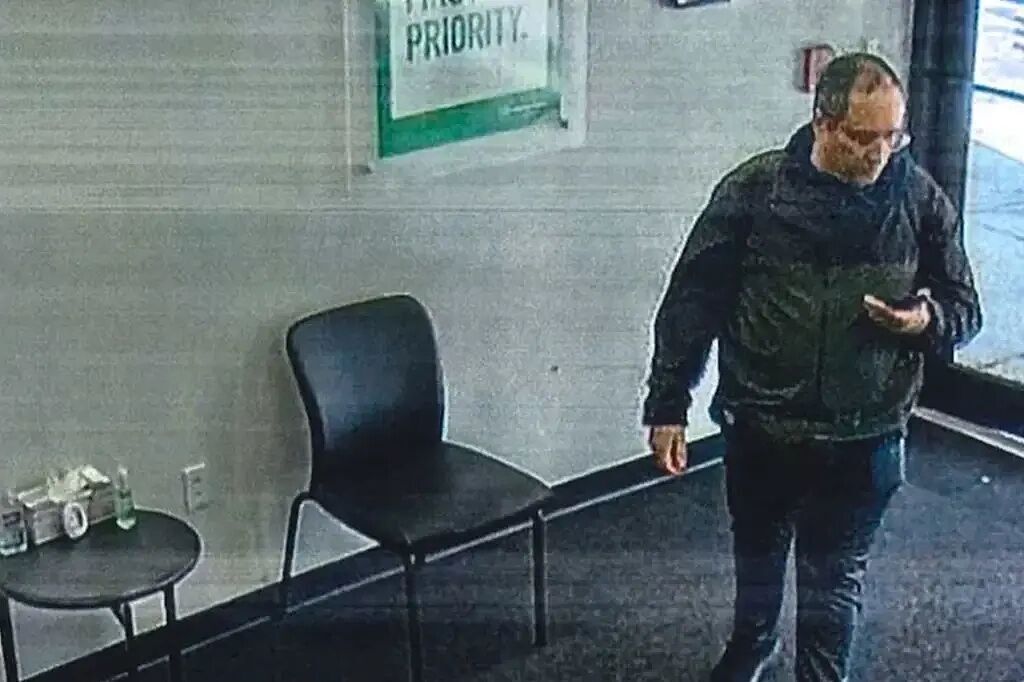
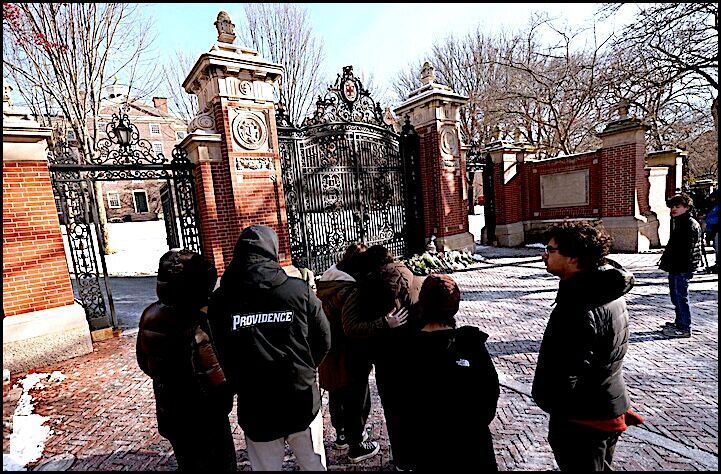
Following the shooting, there have been multiple dead-end leads involving so-called "persons of interest." Local police have released blurry footage of one individual, while one of the most heavily surveilled schools in the nation reportedly had no interior footage.
There has been no word from local police, investigators, or the school on how the shooter was able to enter the building, nor any indication of whether the attack was targeted.

Self-proclaimed investor and "CIA/NSA contractor/whistleblower" Tony Seruga wrote on X a list of anomalies he claims are highly suspicious in the ongoing investigation.
  • Nearly four days into the investigation, with no identified suspect, motive, or arrest.
  • Police detained (and held for a full day) the wrong "person of interest" before releasing them.
  • Release of low-quality ("potato quality") surveillance footage despite Brown having nearly 800 campus cameras; later enhanced by the FBI, but still limited.
  • Officials in press conferences are refusing to provide basic descriptions (e.g., height/weight) of the shooter, deferring to online postings.
  • Claims of no internal security footage from the building and no working sirens on campus.
  • Providence leadership criticized as "clueless": officials admitting they're "tired" and needing slack; mayor reportedly going out for pizza while the suspect was at large.
  • Brown University scrubbing all online pages and references to student Mustapha Kharbouch shortly after the shooting.
  • Accusations of authorities "burying evidence," local incompetence, and evading questions about motive or shouted phrases.
  • Officials (including Rhode Island AG) shutting down speculation about Kharbouch, calling it a "dangerous road" and denying any ethnic/political motive link.
  • After a uniform denial, the University eventually came clean, making a statement that explained profile removals as privacy/safety measures amid doxxing, but the explanation was totally inadequate.
Dec 17th, 2025

JUST IN: Another RIDICULOUS news conference on the Brown University shooting We STILL don’t know what the shooter yelled, eyewitness accounts DON’T LINE UP, and the “random attack” claim is looking VERY shaky One witness says he looked the shooter DIRECTLY in the EYE — and the shooter didn’t fire. If this was random… why spare the one person he locked eyes with? Reports say the VP of the Brown Republicans may have been shot MULTIPLE times — yet officials refuse to say whether this was TARGETED Residents also say police didn’t ask for Ring camera footage until FOUR DAYS LATER… not exactly “flooding the zone” And the university president appeared completely UNAWARE of key facts in the immediate aftermath This just DOESN’T ADD UP
 
I wasn't able to find more interesting bits about this case, but Internet is researching this, so we may find more in the upcoming days.

I found this:

Funky Frogbait
A wave of online speculation erupted this week after users noticed that Barack Obama’s verified X account had, at one point, been following Claudio Manuel Neves Valente, the former Brown University PhD student accused in the deadly December 2025 campus shooting.

This bit would require verification before validation.

In addition, cameras: zero camera, zero footage, a lambda bystander passing as a killer (see following picture relayed on Sott):

1766341677592.png


This is almost ridiculous. It's as if they needed to provide the opinion with something substantial.

A user pointed out how a car rental agency had better footages than the University. In terms of "cameras", if this guy really rented a car, "3D cooperation" was still in motion; then, the "normality" stops, because we enter a trajectory where we loose access to standard elements such as CCTV etc.

Why so? Explanation would be something that officials don't want people to see?
  • the killer appearing in a flying saucer of some sort
Or, standard explanations:
  • a complex operation, with deactivation of all cameras. An EMP pulse of some sort, deactivating all electronics in the area.
I could understand the possibility that there are too sensitive elements, so that it's overall not practical than to disclose things.

So, an odd feeling of a cover-up, in regard of the physical dynamics at U-Brown. Not that it's a dishonest cover up, but just retention of release of data.

The narrative immediately switches to "a homeless guy spotted a Nissan car, and he alerted the authorities, those stalked the killer and he was found dead in his basement". I mean - what about the exact chronology of the killing at the University?

"Here is the moment when he entered building XYZ, here is the moment when poor victim XYZ ... That's when the heroic janitor closed the main door ..."

Such elements are usually present in medias. I feel a lack of featuring such elements in regard of this case.

In addition, the motive for the crime remains to be known. The killing of MIT prof N. Loureiro hints at a targeted killing. Nothing tells us it is so, but this is what it looks like. And so, why, two days prior to it, the killer risks all and kills "random" students?

Was he looking for an information, so that he went to those two students? What did exactly take place during the U-Brown shooting?

A lot of unknown's overall, and a rather incomplete chronology.

EDIT: the prof getting killed, two days later, at his home - makes it so that we have an odd feeling of "distance": where was this prof, the day of the shooting? Was he present at the University? This distance makes him appear "unrelated" overall. An odd feeling: "both are completely unrelated but are completely related". It's as if "he was at home celebrating Christmas, when a killer appears...". So what's the link between the University and the professor? Isn't there something odd here?
 
Last edited:
Unanswered Questions from the Brown/MIT Killings
A homeless man squatting in the engineering building cracked the case because he had confronted the suspect earlier that day and remembered the getaway car’s license plate number. This hero spared further bloodshed and embarrassment because without his tip, the suspect could well be on the loose indefinitely. He accomplished more than billions of dollars, thousands of cameras, and hundreds of administrators and cops. A silver lining in this tragedy and travesty.
I have drafted a list of unanswered questions that must be thoroughly addressed to bring closure and justice.
For five days, why couldn’t Brown and Providence officials provide any description of the suspect other than a “man dressed in black”? Why did Brown never give the names of students in the review session classroom to the Providence Police as potential witnesses?

Why were short grainy videos and blurry photos the only visual evidence available? Were any security cameras in the area disabled due to pressure from activist groups to conceal illegal immigrants?

Why did it take 17 minutes for Brown’s Department of Public Safety to issue a lockdown alert after the first 911 call? Why did they update that a suspect in was in custody 30 minutes after the alert, then retract it 20 minutes later?

What led the police to detain and release a person of interest from Wisconsin hours after the attack? How did The Washington Post get his name and leak it? How much did this divert resources away from other leads during the critical first 24 hours? Did it help the suspect evade capture and kill the MIT professor 48 hours later?

After the MIT professor was killed, why did law enforcement insist that it was not connected to the Brown killings? If the suspect knew the MIT professor from their undergraduate studies in Portugal, why did he go after students he didn’t know from Brown first and two days before he targeted the man he knew? Why were Brown and Providence officials confident that there was no active threat after the Brown students were killed and before the MIT professor was killed?

Why was a homeless man living in the Barus & Holley building? Why was security not alerted after he confronted the shooter hours before the attack? Did a custodian tell security that the suspect had been loitering around the building for days leading up to the shooting? Why was a photo of him released much later than the suspect’s? If his memory of the suspect’s license plate cracked the case, then why wasn’t it shared with the public? When did DNA evidence confirm the shooter’s identity and why wasn’t that shared with the public?

Did President Paxson tell victim Ella Cook’s family she was targeted as a leader in the Brown Republican Club? How many times she was shot compared to other victims and was she shot first? Why was President Paxson on a private flight to DC that day, in the middle of final exams, and unable to answer basic questions about what was going on in that classroom? Why was President Paxson unaware that a Brown student had been scrubbed from all of Brown’s websites, as well as his social media accounts?

How much did the recent no confidence vote on the Brown public safety chiefs impact campus security? If Brown is a gun free zone, how did the suspect use a gun in it? How can the school assure students and parents that campus is safe?
 
SpaceWeatherNews report an audio extract where he was warning about the incoming ice age. Can it be a reason?

"And it reverses sometimes. And those reversals of the Earth's magnetic field, so you know, reversal meaning the North Pole becomes the South Pole and vice versa. So those happen and there's even interesting stories you can tell about how those reversals of the Earth's magnetic field correlate with many ice ages and things like this."
Let's have a closer look to Loureiro's research.

From the above video:

brave_screenshot_www.youtube.com.png


And if Earth's magnetic field is weakening, the dynamo might have to do something soon in order to preserve the magnetic field's strength at long term.

Loureiro's entire presentation quoted above, is available here, thanks to Plancks2021:


Plasma physics is a diverse and exciting field of research, whose applications span a broad spectrum – from fusion energy to astrophysics to fundamental aspects of non-equilibrium statistical thermodynamics. This talk aims to provide an overview of some of these questions to a broad audience, and discuss some of the outstanding research challenges.

Starting from minute 38:20, he talks about the plasma universe and how it could generate a magnetic field, which is present everywhere: sun, earth, galaxy, galaxy clusters, etc.

There's the interesting question by Alex at the end of the presentation where he asks how come the overall data shows a stable magnetic field when for the last 150 years, data shows that Earth's magnetic field is weakening?

That's when he says his answer above: at long time scales, the magnetic field is constant. It varies, it reverses at a short scale and that correlates with Ice Ages. On average, and at a long scale of time, the amplitude of the field is constant. It there would be no dynamo, none of us would be here right now.

The other relevant question comes at the very end, by the Indian guy about quantum computing. Loureiro explains what he's researching. He says that we can't use quantum computing to solve the problems. It's a mistake to wait 20 years to learn how to use it. It would take 20 years to map our problems that we can feed it to the quantum computer. Loureiro says he's working in a "math long" (sp?) transformation which is a transformation you do to the Schrodinger equation that maps it into fluid-like equations. In short, a not so non linear problem that can be used to solve non linear problems. "It has limitations but it's interesting "because our mhd equations are similar to those." That gives you an idea of the type of mapping you can do to some problems that might make them easier to solve on a quantum computer (in 20 years time). He adds, "It's a completely different way of thinking through what we do currently with conventional computing"

He had access to satellite data monitoring the sun and was working on his theories to better match that data. His smart students might pickup the lead. So all is not lost.

So he was possibly aware of the increasing cosmic changes AND he was aware of non-linear plasma physics. It might have been the case that he was, as the Cs put it, "You are dancing on the 3rd density ballroom floor. "Alice likes to go through the looking glass" at the Crystal Palace".

Here are some relevant slides. Those who are math lovers can take a look at the equations and the rest of the presentation.

brave_screenshot_www.youtube.com (1).png

brave_screenshot_www.youtube.com (2).png
brave_screenshot_www.youtube.com (3).png
brave_screenshot_www.youtube.com (4).png
 
While the prior post sums it up in a nutshell, here are the press releases to the public next.


“As a theorist, I do pencil-and-paper calculations and first-principles computer simulations” explains Loureiro. “My approach tends to be to try to identify what the crucial building blocks of rather complex plasma phenomena might be, and investigate those at a fundamental level. I’m interested in understanding the wider scale, the essence of the situation. It’s a way of finding directions and being able to say, ‘Here’s an area we might want to look into.’” [...]

Under normal conditions, magnetic field lines within a plasma do not break or merge with other field lines. But sometimes, when field lines converge, they realign and reconnect, leading to an explosive transfer of magnetic energy into the plasma. This is, for example, the phenomenon that lies at the heart of solar flares, and is also the driver of coronal mass ejections, which send out enormous clouds of plasma and generate geomagnetic disturbances, eventually leading to aurora.

Plasma tends to misbehave when it’s confined; it often does what it wants to do,” [...] “When we see the sawtooth (a perturbing internal instability in fusion plasmas), it’s because of magnetic reconnection events. There are many other instances of magnetic reconnection in fusion devices: tearing modes, edge localized modes, etc. So understanding reconnection is vital for the fusion energy program. Indeed, turbulence and reconnection are perhaps the two most fundamental and ubiquitous plasma phenomena, and advances in understanding them in the fusion context enables progress in space and astrophysics, and vice-versa. It’s really very dynamic and symbiotic.”

It is here that a new supercomputer code, Viriato, developed by Loureiro comes in. “It’s a unique numerical tool whose underlying philosophy is to distill the essence of rather complicated problems such as turbulence and reconnection, and try to understand them at that level,” he explains. “Once that’s done, we can move on and add more layers of complexity — but we’ll then be building on much firmer ground than otherwise.” [...]

But Loureiro’s primary ambition for the next few years is to home in on a complete understanding of magnetic reconnection in the simplest possible plasma model. “It’s very rare in science to be able to say, ‘this problem is solved,’ but we’re close to being able to claim victory in answering fundamental questions that have been out there for 60 years,” he says. “It doesn’t mean the only solution or a complete solution, but we’re close to being able to say ‘these are the basic elements of magnetic reconnection,’ and I want my research here at MIT to play a pivotal role towards that goal.”


New turbulence-related publications by Loureiro’s research group are contributing to the quest to develop nuclear fusion as a practical energy source, and to emerging astrophysical research that delves into the fundamental mechanisms of the universe.

Turbulence is around us every day, when smoke rises through air, or milk is poured into coffee. While engineers can draw on substantial empirical knowledge of how it behaves, turbulence’s fundamental principles remain a mystery. Decades ago, Nobel laureate Richard Feynman ’39 referred to it as “the most important unsolved problem of classical physics” — and that still holds true today.

But turbulence in air or coffee is a simple proposition compared to turbulence in plasma. Ordinary gases and liquids can be modeled as neutral fluids, but plasmas are electromagnetic media. Their turbulent behavior involves both the particles in the plasma (typically electrons and ions, but also electrons and positrons in so-called pair plasmas) and pervading electrical and magnetic fields. In addition, plasmas are often rarefied media where collisions are rare, creating an even more intricate dynamic.

“There are several additional layers of complexity [in plasma turbulence] over neutral fluid turbulence,” Loureiro says.

This lack of first-principles understanding is hindering the adaption of fusion for generating electricity. Tokamak-style fusion devices, like the Alcator C-Mod developed at MIT’s Plasma Science and Fusion Center (PSFC), where Loureiro’s research group is based, are a promising approach, and recent the spinout company Commonwealth Fusion Systems (CFS) is working to commercialize the concept. But fusion devices have yet to achieve net energy gain, in large part because of turbulence.

Loureiro and his student Rogério Jorge, with co-author Professor Paolo Ricci from the École Polytechnique Fédérale de Lausanne, Switzerland, recently helped advance thinking in this area in a new paper, “Theory of the Drift-Wave Instability at Arbitrary Collisionality,” published in the journal Physical Review Letters.

“This was amazing work by a fantastic student — a very complicated calculation that represents a qualitative advancement to the field,” Loureiro says.

He explains that turbulence in tokamaks changes “flavor” depending on “where you are — at the periphery or near the core.”

“Both are important, but periphery turbulence has important engineering implications because it determines how much heat reaches the plasma-facing components of the device,” Loureiro says. Preventing heat damage to materials, and maximizing operational life, are key priorities for tokamak developers.

The paper offers a novel and more-robust description of turbulence in the tokamak periphery caused by low-frequency drift waves, which are a key source of that turbulence and regulators of plasma transport across magnetic fields. And because the computational framework is especially efficient, the approach can be easily extended to other applications. “I think it’s going to be an important piece of work for the fusion concepts that PSFC and CFS are trying to develop,” he says.

A separate paper, “Turbulence in Magnetized Pair Plasmas,” which Loureiro co-authored with Professor Stanislav Boldyrev of the University of Wisconsin at Madison, puts forward the first theory of turbulence in pair plasmas. The work, published in The Astrophysical Journal Letters, was driven in part by last year’s unprecedented observations of a binary neutron star merger and other discoveries in astrophysics that suggest pair plasmas may be abundant in space — though none has been successfully created on Earth.

“A variety of astrophysical environments are probably pair-plasma dominated, and turbulent,” notes Loureiro. “Pair plasmas are quite different from regular plasmas. In a normal electron-ion plasma, the ion is about 2,000 times heavier than the electron. But electrons and positrons have exactly the same mass, so there’s a whole range of behaviors that aren’t possible in a normal plasma and vice-versa.”

Because computational calculations involving equal-weight particles are much more efficient, researchers often run pair-plasma numerical simulations and try to extrapolate findings to electron-ion plasmas.

“But if you don’t understand how they’re the same or different from a theoretical point of view, it’s very hard to make that connection,” Loureiro points out. “By providing that theory we can help tell which characteristics are intrinsic to pair plasmas and which are shared. Looking at the building blocks may impact electron-ion plasma research too.”

This theme of theoretical integration characterizes much of Loureiro’s work, and led to his being invited to present at a recent interdisciplinary event for plasma physicists and astrophysicists at New York City’s Flatiron Institute Center for Computational Astrophysics, an arm of a foundation created by billionaire James Simons ’58. It is also central to his role as a theorist within the MIT NSE ecosystem, especially on extremely complex challenges like fusion development.

“There are people who are driven by technology and engineering, and others who are driven by fundamental mathematics and physics. We need both,” he explains. “When we stimulate theoretically inclined minds by framing plasma physics and fusion challenges as beautiful theoretical physics problems, we bring into the game incredibly brilliant students, people who we want to attract to fusion development but who wouldn’t have an engineer’s excitement about new advances in technology.

“And they will stay on because they see not just the applicability of fusion but also the intellectual challenge,” he says. “That’s key.”


He explains that plasma research “lives in two different worlds.” On the one hand, it involves astrophysics, dealing with the processes that happen in and around stars; on the other, it’s part of the quest to generate electricity that’s clean and virtually inexhaustible, through fusion reactors.

Plasma is a sort of fourth phase of matter, similar to a gas but with the atoms stripped apart into a kind of soup of electrons and ions. It forms about 99 percent of the visible matter in the universe, including stars and the wispy tendrils of material spread between them. Among the trickiest challenges to understanding the behavior of plasmas is their turbulence, which can dissipate away energy from a reactor, and which proceeds in very complex and hard-to-predict ways — a major stumbling block so far to practical fusion power.

While everyone is familiar with turbulence in fluids, from breaking waves to cream stirred into coffee, plasma turbulence can be quite different, Loureiro explains, because plasmas are riddled with magnetic and electric fields that push and pull them in dynamic ways. “A very noteworthy example is the solar wind,” he says, referring to the ongoing but highly variable stream of particles ejected by the sun and sweeping past Earth, sometimes producing auroras and affecting the electronics of communications satellites. Predicting the dynamics of such flows is a major goal of plasma research.

“The solar wind is the best plasma turbulence laboratory we have,
” Loureiro says. “It’s increasingly well-diagnosed, because we have these satellites up there. So we can use it to benchmark our theoretical understanding.”

[...] Loureiro, who holds a joint appointment in MIT’s Department of Physics, is an expert on a fundamental plasma process called magnetic reconnection. One example of this process occurs in the sun’s corona, a glowing irregular ring that surrounds the disk of the sun and becomes visible from Earth during solar eclipses. The corona is populated by vast loops of magnetic fields, which buoyantly rise from the solar interior and protrude through the solar surface. Sometimes these magnetic fields become unstable and explosively reconfigure, unleashing a burst of energy as a solar flare. “That’s magnetic reconnection in action,” he says.

Over the last couple of years at MIT, Loureiro published a series of papers with physicist Stanislav Boldyrev at the University of Wisconsin, in which they proposed a new analytical model to reconcile critical disparities between models of plasma turbulence and models of magnetic reconnection. It’s too early to say if the new model is correct, he says, but “our work prompted a reanalysis of solar wind data and also new numerical simulations. The results from these look very encouraging.”

Their new model, if proven, shows that magnetic reconnection must play a crucial role in the dynamics of plasma turbulence over a significant range of spatial scales – an insight that Loureiro and Boldyrev claim would have profound implications.

Loureiro says that a deep, detailed understanding of turbulence and reconnection in plasmas is essential for solving a variety of thorny problems in physics, including the way the sun’s corona gets heated, the properties of accretion disks around black holes, nuclear fusion, and more. And so he plugs away, to continue trying to unravel the complexities of plasma behavior. “These problems present beautiful intellectual challenges,” he muses. “That, in itself, makes the challenge worthwhile. But let’s also keep in mind that the practical implications of understanding plasma behavior are enormous.”


Plasmas, gas-like collections of ions and electrons, make up an estimated 99 percent of the visible matter in the universe, including the sun, the stars, and the gaseous medium that permeates the space in between. Most of these plasmas, including the solar wind that constantly flows out from the sun and sweeps through the solar system, exist in a turbulent state. How this turbulence works remains a mystery; it’s one of the most dynamic research areas in plasma physics.

Now, two researchers have proposed a new model to explain these dynamic turbulent processes.

The findings, by Nuno Loureiro, an associate professor of nuclear science and engineering and of physics at MIT, and Stanislav Boldyrev, a professor of physics at the University of Wisconsin at Madison, are reported today in the Astrophysical Journal. The paper is the third in a series this year explaining key aspects of how these turbulent collections of charged particles behave.

“Naturally occurring plasmas in space and astrophysical environments are threaded by magnetic fields and exist in a turbulent state,” Loureiro says. “That is, their structure is highly disordered at all scales: If you zoom in to look more and more closely at the wisps and eddies that make up these materials, you’ll see similar signs of disordered structure at every size level.” And while turbulence is a common and widely studied phenomenon that occurs in all kinds of fluids, the turbulence that happens in plasmas is more difficult to predict because of the added factors of electrical currents and magnetic fields.

Magnetized plasma turbulence is fascinatingly complex and remarkably challenging,” he says.

Magnetic reconnection is a complicated phenomenon that Loureiro has been studying in detail for more than a decade. To explain the process, he gives a well-studied example: “If you watch a video of a solar flare” as it arches outward and then collapses back onto the sun’s surface, “that’s magnetic reconnection in action. It’s something that happens on the surface of the sun that leads to explosive releases of energy.” Loureiro’s understanding of this process of magnetic reconnection has provided the basis for the new analysis that can now explain some aspects of turbulence in plasmas.

Loureiro and Boldyrev found that magnetic reconnection must play a crucial role in the dynamics of plasma turbulence, an insight that they say fundamentally changes the understanding of the dynamics and properties of space and astrophysical plasmas and “is indeed a conceptual shift in how one thinks about turbulence,” Loureiro says.

Existing hypotheses about the dynamics of plasma turbulence “can correctly predict some aspects of what is observed,” he says, but they “lead to inconsistencies.”

Loureiro worked with Boldyrev, a leading theorist on plasma turbulence, and the two realized “we can fix this by essentially merging the existing theoretical descriptions of turbulence and magnetic reconnection,” Loureiro explains. As a result, “the picture of turbulence gets conceptually modified and leads to results that more closely match what has been observed by satellites that monitor the solar wind, and many numerical simulations.

Loureiro hastens to add that these results do not prove that the model is correct, but show that it is consistent with existing data. “Further research is definitely needed,” Loureiro says. “The theory makes specific, testable predictions, but these are difficult to check with current simulations and observations.”

He adds, “The theory is quite universal, which increases the possibilities for direct tests.” For example, there is some hope that a new NASA mission, the Parker Solar Probe, which is planned for launch next year and will be observing the sun’s corona (the hot ring of plasma around the sun that is only visible from Earth during a total eclipse), could provide the needed evidence. That probe, Loureiro says, will be going closer to the sun than any previous spacecraft, and it should provide the most accurate data on turbulence in the corona so far.

It's up and running for some years now: Parker Solar Probe

Collecting this information is well worth the effort, Loureiro says: “Turbulence plays a critical role in a variety of astrophysical phenomena,” including the flows of matter in the core of planets and stars that generate magnetic fields via a dynamo effect, the transport of material in accretion disks around massive central objects such as black holes, the heating of stellar coronae and winds (the gases constantly blown away from the surfaces of stars), and the generation of structures in the interstellar medium that fills the vast spaces between the stars. “A solid understanding of how turbulence works in a plasma is key to solving these longstanding problems,” he says.

“This important study represents a significant step forward toward a deeper physical understanding of magnetized plasma turbulence,” says Dmitri Uzdensky, an associate professor of physics at the University of Colorado, who was not involved in this work. “By elucidating deep connections and interactions between two ubiquitous and fundamental plasma processes — magnetohydrodynamic turbulence and magnetic reconnection — this analysis changes our theoretical picture of how the energy of turbulent plasma motions cascades from large down to small scales.”

He adds, “This work builds on a previous pioneering study published by these authors earlier this year and extends it into a broader realm of collisionless plasmas. This makes the resulting theory directly applicable to more realistic plasma environments found in nature. At the same time, this paper leads to new tantalizing questions about plasma turbulence and reconnection and thus opens new directions of research, hence stimulating future research efforts in space physics and plasma astrophysics.”

The research was supported by a CAREER award from the National Science Foundation and the U.S. Department of Energy through the Partnership in Basic Plasma Science and Engineering.


Loureiro was a theoretical plasma physicist, a field that studies the behavior of electrically charged gases under extreme conditions.

Plasma physics is foundational to both fusion energy research and the study of astrophysical phenomena such as stars, solar flares and magnetic fields in space.

At MIT, Loureiro’s research focused on topics including magnetic reconnection, plasma turbulence and the generation and amplification of magnetic fields.

Magnetic reconnection is a phenomenon that occurs when magnetic fields pointing in opposite directions are torn apart and reformed; this explosively releases energy stored in the field, heating up and accelerating particles.

Reconnection is the powerhouse behind the eruption of solar flares from the surface of Sun. The same process can also occur when Earth’s magnetic shield is buffeted by an oppositely-polarized solar wind—accelerating particles which whizz along the geomagnetic field lines to the poles, producing the northern and southern lights.

According to NASA—which is investigating this process around Earth with its “TRACERS” satellite mission, launched in July this year—a single magnetic reconnection can release as much energy as the whole U.S. uses in a day.

Understanding how reconnection works is vital in the effort to unlock nuclear fusion—the process that powers the Sun—here on Earth.

Donut-shaped reactor designs called “tokamaks” use magnets to contain plasma heated to millions of degrees, thereby recreating the conditions found in stars where fusion takes place.

Magnetic reconnection is an obstacle to commercially viable fusion, however, as it can cause “crashes” that keep the plasma temperature below the threshold required for fusion.

In their recently published works, Loureiro and his colleagues modelled how reconnection is affected by feedback on different scales, instabilities resulting from different drift velocities between electrons and ions and in plasma, and the radiative cooling of plasma current sheets.

As director of MIT’s Plasma Science and Fusion Center, Loureiro oversaw research programs aimed at improving the scientific understanding needed for future fusion energy systems.

In June this year, he was quoted in an MIT announcement about a new facility designed to accelerate fusion research, describing it as an effort to address “the most complex fusion technology challenges” tied to the global energy transition.

While fusion energy is often discussed as a potential source of clean power, experts note it remains an experimental and developing field.

Loureiro’s work contributed to the broader scientific foundation of plasma and fusion research rather than a finished or deployable energy technology.
 
Back
Top Bottom