At least five killed in massive wave of Russian strikes across Ukraine, officials say
Officials said the attacks were among the worst in ten days, with damage reported in eleven regions across the country.
 www.bbc.com
Jessica Rawnsley and Vitaly Shevchenko, Chief Analyst, BBC Monitoring, Kyiv
At least five people have been killed in Russian strikes across Ukraine, after a massive overnight aerial bombardment targeted several regions across the country.
A 61-year-old woman was killed when a drone hit an electric train in Kharkiv early on Tuesday, authorities said, while other deaths were reported in Zaporizhzhia, Kherson and Poltava
Officials said the attacks were among the worst in ten days, and came hours after Ukrainian President Volodymyr Zelensky had warned of a forthcoming "massive strike" in his nightly address.
Russian strikes targeting energy infrastructure also disconnected Moldova's key power link with Europe, President Maia Sandu said, warning the situation remained "fragile".
Sirens wailed across Ukraine on Monday night as Russia launched a barrage of missiles and drones at the country. Seven ballistic missiles, 23 cruise missiles, four air-launched guided missiles and 392 drones were used in the attack, the Ukrainian Air Force said in a statement on Telegram.
Air defence units intercepted 25 missiles and 365 drones, it added.
In a post on X on Tuesday, Zelensky said: "These numbers clearly show that more protection is needed to save lives from Russian strikes. It is important to continue supporting Ukraine."
Attacks of this scale have been occurring roughly once a week or every ten days in recent months, and there had been mounting fears in the past few days that another wave of strikes was imminent.
"Please pay attention to air raid sirens tonight," Zelensky said earlier in his video address to the nation on Monday. "Intelligence says Russia may be preparing a massive strike."
This time the attack focused on cities other than the capital, Kyiv. Damage was reported in eleven regions, Zelensky said.
Among the worst affected was the south-eastern city of Zaporizhzhia, which was struck by six drones followed by six ballistic missiles. One person was killed and nine injured after a residential high-rise building was hit, local authorities said.
Local resident Dymtro Zaiets told Reuters news agency that his family was woken by a "very loud explosion".
"We quickly gathered our things and ran downstairs, everything was on fire on our floor," he said. "There was smoke, and we took our three-month-old child and ran quickly to the underground shelter. My car is destroyed. All our windows were blown out."
Elsewhere, at least two people were killed and 12 injured when strikes hit residential buildings and a hotel in the north-eastern Poltava region, governor Vitaliy Dyakivnych said on Telegram.
In Kherson, a civilian was killed when his house came under Russian shelling, the head of the city's military administration, Yaroslav Shanko, said.
A 75-year-old woman was injured and hospitalised after a Russian attack on the Dnipropetrovsk region, authorities said, and a 65-year-old bus driver was injured when his vehicle was hit by a drone in Sumy.
Moldova's government condemned the strike on energy infrastructure in the Odesa region, which led to the disconnection of the Isaccea-Vulcanesti power line, used by Moldova to import electricity from neighbouring Romania.
"Alternative routes are in place, but the situation remains fragile," President Sandu wrote on X. "Russia alone bears responsibility."
In a post on Telegram, Moldova's foreign ministry said the attacks "undermine regional energy security and endanger critical civilian infrastructure".
Moscow's overnight attack took place as the pace of the Russian advance in eastern Ukraine has slowed down significantly, with Ukrainian forces reporting minor counteroffensives in some areas.
Russia's defence ministry said its air defences had intercepted "55 Ukrainian fixed-wing unmanned aerial vehicles" over various regions overnight.
Zelensky has previously warned that Russia will attempt to "exploit the war in the Middle East to cause even greater destruction" in Ukraine.
Air-defence systems critical to Ukraine's ability to defend itself against Russian missile attacks are being rapidly expended in the US-Israel war with Iran.
In an interview with the BBC earlier in March, the Ukrainian President said Putin wanted a "long war" in the Middle East because it would weaken Kyiv, with US resources and focus directed elsewhere.
He said that peace negotiations were being "constantly postponed", adding: "There is one reason - war in Iran."
Ukrainian and US officials held talks over the weekend over how to end Russia's full-scale invasion of Ukraine - the first such negotiations since the US and Israel launched strikes on Iran last month.
Following talks on Sunday, Zelensky said it was clear that US attention was focused on Iran, but that "this war of Russia against Ukraine must also be brought to an end".
Several rounds of talks mediated by the US have so far failed to stop the fighting in Ukraine or change Russia's maximalist demands.
The Trump administration's decision to ease its sanctions on countries buying Russian oil earlier this month was welcomed by the Kremlin, but has sparked deep concerns among Ukrainians.

Today's global conflicts make it look like WWIII has started already: Lavrov’s remarks
According to the Russian top diplomat, developments in Latin America and the Middle East are a direct result of the West’s attempts to preserve the remnants of its dominance
 tass.com
According to the Russian top diplomat, developments in Latin America and the Middle East are a direct result of the West’s attempts to preserve the remnants of its dominance
MOSCOW, March 24. /TASS/. The events in Latin America and the Middle East directly stem from the West’s attempts to preserve the remnants of its dominance, Russian Foreign Minister Sergey Lavrov said at a meeting of the Gorchakov Fund’s Board of Trustees.
He noted that some international relations experts have already begun to refer to the conflicts unfolding around the world as World War III.
TASS has compiled the foreign minister’s key statements.
Foreign policy
Western elites continue to "invest in confrontation" with Russia: "The Western minority, or rather the elites of Western countries, continue to invest whatever political and economic resources they have left in their confrontation with our country."
The Russian side, "together with its African friends," is preparing for the next Russia-Africa summit, which will take place in Moscow this October.
Has World War III already started?
Some international relations experts have already begun to characterize the conflicts unfolding around the world as World War III: "Some specialists, including those in Russia who study the history of international relations, have already begun to describe and characterize these events as World War III."
Developments in Latin America and the Middle East are a direct result of the West’s attempts to preserve the remnants of its dominance: "Events that directly stem from the attempts of the Western minority of states to preserve the remnants of their dominance on the international stage using crude methods of force, regardless of any previously signed and ratified obligations under international law."
Middle East conflict
Russia "is concerned about what is happening in relations between Iran and its neighbors."
"Harsh military aggression by the US and Israel" against Iran risks destabilizing international trade and global energy security: "The situation threatens to destabilize not only the Gulf region, which has already happened, and not only the entire Middle East, which is also happening, but also global trade, global energy security, and international transport and business communications."
Russia is sharing its assessments of the current situation with both Iran and the member states of the Gulf Cooperation Council: "We are currently discussing all these issues and, of course, sharing our assessments and the evolution of our views with both the Iranians and the member states of the Gulf Cooperation Council."
Russia is convinced that "the path of negotiations, the path of unity and balancing interests is the one that serves the interests" of the Middle East.
The International Atomic Energy Agency’s (IAEA) response to threats to nuclear security in the Middle East is inappropriate: "The IAEA leadership is responding in a very inappropriate manner to the direct threats to nuclear security created by the unleashed aggression."
Cuba situation
External pressure on Cuba is intensifying: "The escalation of tensions surrounding Cuba, which is facing increasing external pressure, is a cause for serious concern. We reaffirm our solidarity with our Cuban friends and their right to pursue a sovereign path of development."
Russia will continue to provide Cuba with "necessary help and support, including material assistance": "Humanitarian aid is extremely relevant for our Cuban friends at this stage."
Palestine
Russia, together with its Arab partners, will strive to ensure that justice prevails in resolving the Palestinian issue: "This is unjust, and together with our Arab and Muslim friends, we will strive to ensure that justice prevails in full accordance with the resolutions of the UN General Assembly and the Security Council."
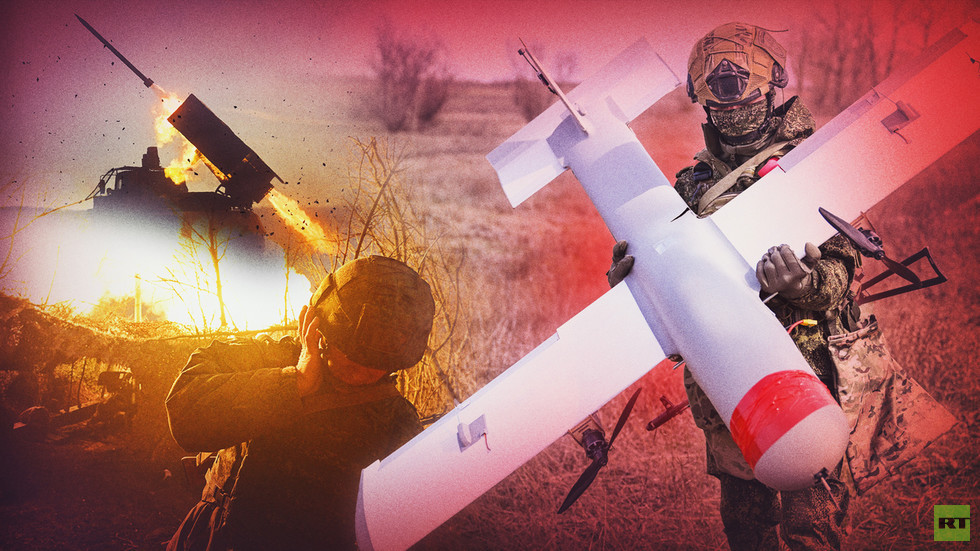
Ukraine counteroffensive 2026 falls short as Russian advances continue
Ukraine’s 2026 counteroffensive delivers limited gains, failing to halt Russian advances across key fronts as Moscow prepares for a major spring campaign.
Russian Armed Forces Hit Transport and Infrastructure Facilities of Ukraine
57 minutes ago
MOSCOW (Sputnik) - The Russian armed forces have carried out a massive retaliatory strike on Ukrainian transport facilities, enterprises producing various types of missiles and components, as well as military airfields, the Russian Defense Ministry said on Tuesday.
"The operational-tactical aviation, strike unmanned aerial vehicles, missile forces, and artillery of the troop groupings of the Armed Forces of the Russian Federation struck Ukraine's transport infrastructure facilities, sites for the preparation and launch of long-range unmanned aerial vehicles, as well as temporary deployment points of Ukrainian armed formations and foreign mercenaries in 142 areas," the ministry said in the statement.
Ukraine lost over 330 soldiers in combat against Russia's Tsentr battlegroup
Up to 235 Ukrainian soldiers were eliminated over the past day by Russia's Sever battlegroup, over 280 by the Vostok battlegroup
Up to 190 Ukrainian soldiers were eliminated by the Zapad battlegroup, up to 180 by the Yug battlegroup, and over 50 by the Dnepr battlegroup
The FSB thwarted a Ukrainian plan targeting Moscow, which also involved saboteurs attempting to purchase drones.
https://tass.com/society/2106099
Employees of the Russian Federal Security Service, the Interior Ministry, and the Federal National Guard Service were put on high alert
MOSCOW, March 24. /TASS/. The Russian Federal Security Service (FSB) reported thwarting a series of potential high-profile terrorist attacks in Moscow and the Moscow Region.
https://www.rt.com/russia/635944-another-setback-for-kiev/
In addition, the FSB has seized a shipment of heated shoe insoles rigged with explosives, which arrived from Poland and was destined for the special military operation zone.
TASS has compiled the main information known at this moment.
Thwarting plotted terrorist attacks in Moscow
- The FSB received information that the Ukrainian special services are preparing to carry out sabotage and terrorist acts in Moscow and the Moscow Region against critical facilities, government officials, Russian Defense Ministry servicemen, and law enforcement personnel, the press office reported.
- In order to thwart these criminal plots, employees of the Russian Federal Security Service, the Interior Ministry, and the Federal National Guard Service were put on high alert.
Thwarting an enemy plot to buy drones
- The FSB has stymied an attempt by the Ukrainian special services to purchase fiber-optic drones from a Moscow enterprise for use in terrorist attacks in the capital.
- The Russian Armed Forces use these UAVs to procure units and destroy enemy equipment. These fiber-optic drones can carry up to 20 kilograms of cargo.
- The FSB emphasized that, had the Ukrainian special services succeeded, they would have equipped the drones with explosives, turning them into a powerful terrorist weapon to be used against designated Moscow facilities.
Seized shipment of explosive-laden heated shoe insoles
- The Russian Federal Security Service has intercepted a shipment of heated shoe insoles rigged with explosives, which arrived from Poland and was destined for the special military operation zone.
- According to the press office, a foreign national born in 1994 has been detained in Russia. He was involved in the smuggling of weapons to Russia from Poland through Belarus, organized by Ukrainian intelligence agencies.
- A Ukrainian handler ordered the man to receive a shipment of 504 improvised explosive devices disguised as heated shoe insoles through a logistics company in Moscow.
- The shoe insoles were supposed to be sent to Russian troops stationed in the special military operation zone disguised as humanitarian aid.
- The FSB’s bomb experts have concluded that every explosive device contains the equivalent of 1.5 grams of TNT.
- The FSB explained that when connected to a power source, the shoe insoles would have detonated, maiming soldiers.
- The press office released a video showing the foreign national's detention. He was detained following a car inspection.
- According to the detainee, he works in logistics and came to Moscow because a client ordered six boxes of shoe insoles to be delivered there.
FSB warning
- The Ukrainian special services camouflage explosives as household items, the FSB press office warned.
- According to its information, the explosives were previously disguised as electric stoves, manicure instruments, beauty products, perfume kits, power banks, speakers, religious icons, church utensils, car parts, paving slabs, and goggles for FPV drones.
- In this regard, the FSB once again advised citizens to be watch out for suspicious objects and contact authorities if they find out their personal data has been leaked, or if email accounts, social media accounts, messaging apps, and other internet services are hacked.
Budapest’s Spring Of Discontent: Foreign Powers Align To Topple Hungary’s Leader
23.03.2026 - Video opening Snip:
Hungary’s April 12 parliamentary elections have become a flashpoint in a broader geopolitical confrontation. Prime Minister Viktor Orbán, a close ally of Donald Trump, faces a well-funded opposition backed by a coalition of foreign powers. The EU leadership views Orbán as an obstacle to European unity and is determined to replace him with a more compliant figure. If Orbán retains power, Brussels may lose its ability to enforce a unified European policy. If he falls, Hungary could pivot sharply toward the EU, delivering a major blow to Trump’s influence in the region.
The main challenger is Péter Magyar, leader of the centrist “Respect and Freedom” party, known as TISZA. Recent polls show the two parties running neck and neck. With the right level of external intervention, Brussels believes it can tip the scales in its favor. If Orbán wins, however, the EU may be forced to escalate, potentially triggering a political crisis.
Marine Le Pen visits Budapest to show support for Viktor Orbán's re-election.
Le France 24 goes with the Far Right slant like "They" always do

European far-right leaders gather in Budapest ahead of Hungarian elections • FRANCE 24 English
Far-right leaders of Europe are gathering in Budapest for the so-called European Parliament group Patriots' grand assembly. The gathering is not only a show of force for Europe's populists: it's also a show of support for Hungarian Prime Minister Viktor Orban, ahead of national elections on April 12. FRANCE 24's Gulliver Cragg tells us more from Budapest.#farright #europe #hungary