I have little questions about bibliography.
Does Albert Pike's “Morals and Dogma” give a deep, valid and complete introduction to Freemasonry? Why does it contradict Yarker's “The Arcane Schools?”
Arthur Edward Waite (1857–1942) has written “A New Encyclopedia of Freemasonry,” a big one should I say, and another book: “The Brotherhood of the Rosy Cross.” Do you know if he was in both Orders?
@Possibility of Being: In the former book, on p. xxxv of the introduction it says:
We thus enter into a curious contradiction with what I.F.H. claims about the membership of the Liberators, unless we make the bold assumption that José de San Martín was the only Rosicrucian and Bolívar the
Latomi.
@LVX in Tenebris: in the latter book, with vast chapters dedicated to Alchemy, it does not name Fulcanelli, Pierre Dujols and ignores the guiding Adept behind the plural author. Could it have something to do with Canseliet's suggestion that Fulcanelli was a Knight Templar?
BTW, is it known the authorship of “A Proposal for Humbling Spain?” It was a British pamphlet wrote by a “Person of Distinction,” outlining a strategic plan for Great Britain to seize control of Buenos Aires and the Río de la Plata region to cripple Spanish power, dominate South American trade, and control the routes from Potosí, significantly weakening Spain's economic and colonial dominance.
Hi
@panoptix,
There are so many questions here, so I will do my best to answer them all.
1) Albert Pike’s Morals and Dogma
Albert Pike’s
Morals and Dogma is only about the
AASR (Ancient and Accepted Scottish Rite) in the United States. In Freemasonry, it is well known that there are
two AASR jurisdictions in the US that oversee different states: the
Northern Jurisdiction, which oversees 15 states, and the
Southern Jurisdiction, which oversees the remaining 35 states. To my knowledge, Pike’s
Morals and Dogma relates to the
Southern Jurisdiction, and it must be remembered that although the AASR is broadly similar worldwide, there are certain differences not only between countries but also between jurisdictions.
For example, an AASR Mason in the Northern Jurisdiction may have experienced Freemasonry slightly differently from an AASR Mason in the Southern Jurisdiction.
Also, in the US it is known that the AASR system in general differs from what we have in the UK or Europe. Therefore, I don’t think it would be my place to comment on how complete Pike’s work is. However, since he is a “popular” Mason in the US, I hope his work is helpful and relevant to the
truth.
There is one more important point that everyone interested in Freemasonry should know:
Freemasonry is NOT only about the AASR. For example, in England and Wales there are many other orders that differ from the AASR (
or what is called the Free and Accepted Rite here):
https://upload.wikimedia.org/wikipe...nic_appendant_bodies_in_England_and_Wales.jpg
Therefore, another reason why Pike’s work does or can not give an overall perspective on Freemasonry is simply because his work is heavily focused on the AASR. Lastly, another reason I believe Pike’s work may not provide a complete introduction to Freemasonry is that
the AASR or Free and Accepted Rite is not part of Antient and Pure Masonry. I know the Cs told us that the 33rd degree is over 7,000 years old, but still that means only the
7th class (Supreme Council) is that old:
AASR
This means (in my opinion) that
since the AASR is not part of Pure and Antient Masonry and was officially introduced in the 1800s, Pike’s work may not give an overall picture of Pure and Antient Masonry. Simply put, the
AASR is not as old as the Craft or the Holy Royal Arch. Hence, a book about AASR will not cover Pure and Antient Masonry.
Regarding John Yarker’s book (
The Arcane Schools), as I understand it, he talks about how Freemasonry was formed and its history. Since I haven’t read his book, I can’t comment directly on his work,
but he seems a bit “romantic,” as we call it. This usually means a Mason who believes Freemasonry is related to Ancient Egypt or even older traditions. If that is the case, it is always recommended to be careful, as there is a lot of speculation about the ancient antiquity of Freemasonry.
FYI, there are different types of historians within Freemasonry. Although not official terms,
Romantics are those who link Freemasonry to ancient mystery schools of Egypt, Sumer, Greece, and so on—and some even go further back to Atlantis, Lemuria, etc. These claims should be taken with a grain of salt (
as you would agree).
The
rational or academic historians usually trace Freemasonry back to the medieval guilds of operative masons and their written records, such as the
Regius Poem or
Cooke Manuscript. This makes more sense, as most of the earliest teachings and records of Masonry come from these operative guilds (
There are still some older ones, but we aren't sure if they are Masonic or not).
There are also, if I remember correctly,
Revisionists, who argue that Freemasonry as we know it today was formed in the 18th century with the 1723 Constitutions (as
@MJF would probably agree). They claim that modern Speculative Masonry
has little or nothing to do with the ancient operative masons.
So, long story short: I haven’t read
The Arcane Schools, but if you do, keep in mind that there are many competing claims about the origins of Freemasonry—and as you and many others would agree, the further back you go, the blurrier it becomes.
2) About A. E. Waite and his affiliations
A. E. Waite was a member of the
Hermetic Order of the Golden Dawn, and as you probably know better than I do, he was one of the creators of the famous
Rider–Waite Tarot deck.
Since he was part of the HOGD, we can reasonably conclude that he was a Rosicrucian, and based on his work and mindset, that assumption would not be wrong.
Also, based on information available online, he was a member of
SRIA (Societas Rosicruciana in Anglia), which only accepts Master Masons. This means he must also have been a Freemason.
Regarding the books you mentioned, I haven’t read them, but again, I would advise caution—especially when it comes to claims about the history of Freemasonry. Do not forget that he was also a Rosicrucian of the SRIA (
which is a small and relatively unpopular Masonic order in England and Wales), and his writings may be heavily influenced by his personal views rather than strict historical facts. You may find more information suggesting he is a bit “shady” here:
The Masonic Career of A. E. Waite
Lastly, since the Cs have said that
Rosicrucians and Illuminati are essentially the same, we should be extra vigilant about what Rosicrucians say:
Cassiopaean Session Transcripts Search
Q: (L) Are the Rosicrucians connected to the Masons?
A: In a roundabout way.
Q: (L) Are the Illuminati connected to the Rosicrucians in any way?
A: Same.
Interestingly, the Rosicrucian–Illuminati connection is also known among Masons, and as I mentioned in my reply to
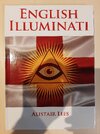
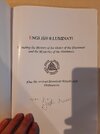
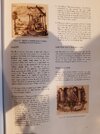
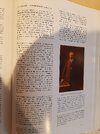
@MJF, more Masons are aware of and admit this than people might expect. Below are screenshots from one of my favourite books, written by
Alistair Lees, a member of my Mother Lodge and also a member of SRIA.
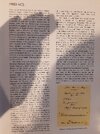
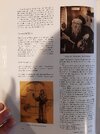
Please see the screenshots below to understand what he says about
Freemasonry, SRIA, the Illuminati, and Theosophists (
apologies for the image quality).
Even as a Freemason and Rosicrucian, my brother Alistair admits the connections of Illuminate and Rosicrucians and how much influence they had in Freemasonry.
Lastly, remember what the Cs said about how the Illuminati were corrupted (infiltrated) by Frankish Cabalists (also
note that they said "yes" to some Freemason lodges being infiltrated, but NOT all):
Cassiopaean Session Transcripts Search
Q: (Pierre) About the French Revolution: behind it, was the main ideological force Frankish Cabalism?
A: Yes
Q: (Pierre) Did Frankish Cabalists infiltrate Weishaupt’s Illuminati and some Freemason lodges?
A: Yes
Lastly, although I sometimes disagree with him (
and find him weird, LOL), you may wanna watch the video of Leo Zagami on Youtube. He was a Freemason too (
and still is I think) and he talks about how many times and how the Freemason lodges were derailed or infiltrated by the Illuminati. For example, wathc this one:
and
here is his English channel
3) About South American “Liberators” and esoteric orders
I don’t have much knowledge about Latin American liberators or how they were connected to Freemasonry or the Illuminati.
That said, in my humble opinion, Latin America seems to have a much more active esoteric scene than people would expect—especially Brazil (
for example, research the mindset of Dom Pedro II). I also believe the Illuminati mindset is quite active in Latin America, with many Hermetic, Rosicrucian, and other so-called mystery schools.
Therefore, I wouldn’t be surprised if some of these so-called “liberators” were actually
agents of the Control System, and that their actions helped shape Latin America into its current state (
again, Cs would probably agree as I remember from some of the transcripts- "they are in kahoots").
4) About Fulcanelli’s absence in Waite’s work
I haven’t read Waite’s books, so I can’t comment definitively on why Fulcanelli is missing. However, it may simply be because Waite did not know of him at the time. Waite lived from 1857 to 1942, whereas Fulcanelli only began to appear in the 1920s. Also consider Fulcanelli’s secrecy, his lack of concern for fame, and the fact that his first book was published in 1926 by Eugène Canseliet.
Since Fulcanelli has no confirmed real name, no image, only two books, and originally wrote in French, it’s not surprising that Waite may not have known about him—especially since Fulcanelli is not as historically established as figures like Agrippa or Flamel.
Lastly, since Waite appears “a bit” shady and perhaps even a con artist, similar to Count St Germain (
as Laura has suggested), it may simply be that he didn’t know what he was talking about in this area. If so, it’s not surprising that he lacked knowledge of the “real alchemists.”
As for the claim that Fulcanelli was a Knight Templar,
I truly have no idea. However, if we assume Fulcanelli was a genuine alchemist (
as suggested in The Secret History of the World), then even if he wasn’t a Templar, he probably had some knowledge of them.
That said, I’m also unsure how we should view the Templars themselves.
According to some non-Masonic and Masonic historians, the Templars were founders of the Illuminati. So I don’t know whether it would be good or bad if Fulcanelli was a Templar—but that’s another topic entirely.
5) Author of “A Proposal for Humbling Spain”
Sorry, mate — I have no idea about that one.