Watch the skies and land and oceans

In Peru, intense storms with heavy rains, hail, and lightning strikes were recorded, causing severe consequences, especially in the southern part of the country.

The most affected region has been Arequipa, where the rainfall triggered violent flows of water, mud, and rocks.

Since Thursday afternoon, February 19, the storms caused severe urban flooding in districts such as Cayma, Yanahuara, Cercado, Mariano Melgar, Paucarpata, and Cerro Colorado. At least two fatalities have been confirmed: a woman swept away by mud and a man struck by lightning.
Cars were swept away by a flash flood in Arequipa, Peru, after heavy rain this afternoon....​

People are being swept away by the torrents affecting Arequipa, Peru.

Shocking images of the rising waters, overflows, and floods this afternoon in Arequipa, Peru Overflowing torrents and vehicles swept away by powerful currents of water.

● Malaysia

Severe flooding following heavy rains in Paitan, Beluran District, Sabah, Malaysia. A total of 406 people (124 families) have been evacuated and are being housed in temporary relief centers.
 
East coast US residents need to prepare to face another round of extreme winter.

“Potentially Worst Blizzard In Decade” Set To Hammer Mid-Atlantic And Northeast​

USA 2026-02-22 Blizzard forecast


As of Sunday morning, 35 million people are under Blizzard Warning alerts from the Mid-Atlantic through New England, according to a post on X from the National Weather Service Prediction Center.

Meteorologists are already labeling the nor’easter as potentially historic and warn it could be the most intense blizzard to hit the Mid-Atlantic and Northeast in a decade.
Source

And the MSN article:
 
In the last weeks of February 2026, several regions of South America are experiencing heavy to torrential rains, mainly associated with the end of the wet season in the southern hemisphere, cold fronts, severe weather systems, and the climate transition following a period of La Niña that is weakening.

● Peru​
FLOODING IN AREQUIPA, PERU 🇵🇪
The death toll from flooding in Arequipa, southern Peru, has risen to 15.​

● Brazil
28 dead and 40 missing after heavy rains and landslides in Minas Gerais, Brazil.

Heavy rains and severe flooding today in Ubá, Minas Gerais, Brazil 🇧🇷 After intense rains, the Ubá River overflowed, causing severe flooding and sweeping away several vehicles in Ubá, Minas Gerais.February 24, 2026

Ecuador
Very active winter season: at least 10 dead, 17 injured, and more than 9,000 people affected by floods, landslides, and river flooding. Several provinces on red alert, with heavy rains and persistent thunderstorms in areas such as the coast and mountains.

Colombia
Unusual and intense rainfall linked to a cold front from the Caribbean and dust from the Sahara, which is aggravating the situation. At least 15-22 deaths, tens of thousands of families affected (more than 69,000 at one point), massive flooding in departments such as Córdoba, Cesar, Antioquia, Chocó, Cauca, and Nariño.

Argentina
Alerts for a "storm of the century" in provinces such as Tucumán, Salta, and areas of Buenos Aires, with forecasts of more than 48 hours of torrential rain, large hailstones, and strong winds.

● USA

Historic winter storm hits the northeastern United States 🇺🇸 New York City, Boston, and Providence are experiencing historic snowfall. Providence has just broken its all-time record with nearly 38 inches of snow. Travel cancellations, power outages, and shocking scenes in Times Square, NYC.

● Powerful magnitude 7.1 Earthquake hit Malaysia
M 7.1 - 55 km NNW of Kota Belud, Malaysia
2026-02-22 16:57:46 (UTC)
6.829°N 116.264°E. 619.8 km depth
USGS earthquake alert
The magnitude 7.1 earthquake was the first of that magnitude this year. It was also the first event of such magnitude to occur in Malaysia.
Strongest in 126 years

The earthquake was the strongest to hit this part of Malaysia since at least the beginning of the previous century (our records start in 1900). No other quake of equal or greater strength had occurred near the present epicenter since then. Volcanodiscovery​


Debris Impact of what? Meteoroid?
"It did not provide details about where and when Shenzhou 20 was likely hit, but it did say an impact analysis and risk assessment are underway. It did not set a new date for the return mission.

Recent analysis by the China Manned Space Agency (CMSA) shows that a micro-particle of space debris caused the damage to the porthole, or so they say.

By Leonard David published 17 hours ago

Crew members of China's Shenzhou-20 mission recently detailed their reactions upon finding cracks in their spacecraft's viewport during the nation's first spaceflight emergency.

It has been billed as China's first emergency operation in the country's human spaceflight program. The three astronauts (or taikonauts) of China's Shenzhou-20 mission were originally slated to return to Earth last Nov. 5, but after discovering cracks in the viewport of their spacecraft, their landing was postponed.

Chen Dong, commander of the Shenzhou-20 crew, first noticed the damage to the window while conducting final checks on the return capsule. The believed culprit: space debris striking the window. The incident meant the crew had to ride back to Earth in an alternative spacecraft, the Shenzhou-21 vehicle that their relief crew rode to orbit. The crew returned safely, and their spacecraft was eventually brought back to Earth uncrewed after another was sent up to the Tiangong Space Station for the other three astronauts aboard.

Crew members of the Shenzhou-20 mission recently detailed their reactions in finding cracks on their return capsule viewport. In a detailed interview with China Media Group, aired by China Central Television (CCTV), the astronauts elaborated on how they discovered the crack on the viewport one day before their planned return.

Window anomaly

China rocketed the Shenzhou-20 crew — Chen Dong, Chen Zhongrui and Wang Jie — into Earth orbit on April 24, 2025. Sent spaceward on a projected six-month mission, the trio linked up with the country's Tiangong space station.

As mission commander for Shenzhou-20, Chen said he was the one who went for checking out the return craft. During that work, "I spotted something like a triangular on the viewport," he said.

"My first thought was whether a small leaf had somehow stuck to the outside of the window," said Chen. "But then I quickly realized that couldn't happen because we were in space. How could there possibly be a fallen leaf there?"

Chen pointed out the window anomaly to his two other colleagues also in ready mode for the return trek to Earth.

Analysis and experiments

Wang, who served as the flight engineer on the Shenzhou-20 mission, had previously worked as an aerospace technician involved in the construction of China's space station before becoming an astronaut.

"I wasn't really nervous, actually. The outermost layer of the viewport is a protective layer, and inside it there are two pressure-bearing layers, and we are safe as long as the cabin pressure doesn't change," said Wang.

"I also know well about our ground team that no matter what happens, they will go through analysis and experiments to determine whether we can return safely," Wang added, "and whether the crack affects our safety before making a final conclusion. So I wasn't too worried."

Action plan

Meanwhile, ground teams began to appraise the situation, deciding to rearrange the crew's return. Both mission planners and engineers put into action emergency response measures based on the principle of "putting the safety of astronauts first," stated the China Manned Space Agency (CMSA).

The emergency action plan called for hurriedly preparing an uncrewed, cargo-loaded Shenzhou-22 spaceship, successfully launched on Nov. 25, 2025. That craft, without a three-person crew aboard, was filled with space food, medical supplies, fresh fruit and vegetables, as well as devices for treating the cracked window on the Shenzhou-20 spaceship.

In unpiloted mode, Shenzhou-22 docked with the front port of China's Tiangong space station's Tianhe core module.

Small cracks

How best to determine exactly what was on the return capsule's viewport?

The crew used every piece of equipment available inside the space station to photograph and document the abnormal area, including a work pad, a work phone and a magnifying glass. They eventually confirmed the crack using a 40-times microscope.

"It was a pen-shaped microscope. One end is the lens, connecting to a tablet — the device we use to inspect the extravehicular suits, especially to check whether there is any damage in the sealed areas," said Chen Dong.

"We could see very clearly the small cracks [with the microscope]. Several were relatively long, and one was shorter, added Chen. "We could also see that some of the cracks had penetrated through."

Porthole repair device

Crew, ground control, and technical engineers concluded the need to use the Shenzhou-21 spacecraft, while the damaged Shenzhou-20 return craft would remain attached to the Chinese space station.

China purposely delayed the return of its Shenzhou–20 crew for roughly a week due to the suspected encounter with space debris that compromised the crew's return vessel's window.

"Furthermore, in conjunction with the emergency launch of the Shenzhou-22 spacecraft, a porthole crack repair device was expedited and sent to the launch site," said the China National Space Administration (CNSA). "Astronauts installed it inside the Shenzhou-20 capsule, effectively improving the spacecraft's heat protection and sealing capabilities during reentry."

Fresh spacecraft

The trio of taikonauts did return to Earth in the fresh but "borrowed" Shenzhou-21 spacecraft on Nov. 14.

However, that left the other on-orbit, three-person space station crew with a damaged and docked vehicle that had been deemed unsafe for reentry.

With the Nov. 25 launch of the uncrewed Shenzhou-22 at China's orbital outpost, the now in Earth orbit team of Zhang Lu, Wu Fei, Zhang Hongzhang have a fresh spacecraft for their transit back to terra firma.

China's first emergency operation in its human spaceflight program came to an end when the astronaut-empty Shenzhou-20 return capsule parachuted into the Dongfeng landing site in north China's Inner Mongolia Autonomous Region on Jan. 19 of this year.

Extreme conditions

At the capsule's Dongfeng Landing Site, search and recovery teams had to cope with extreme weather conditions in the area. Frigid temperatures and strong winds posed challenges in retrieving the return craft.

"This marks the first time the Dongfeng Landing Site has carried out a spaceship recovery mission during the coldest season of the year, with cold weather posing a test for both our search and rescue teams and equipment," said Xu Peng, the on-site commander at the touchdown locale.

"We made special cold-protection preparations in advance to ensure that both personnel and the equipment remained in good condition throughout the mission," Xu told CCTV.

Xu added that, since the Shenzhou-20 return capsule was not crewed, there was no astronaut to manually separate the parachute.

"As a result, the main parachute did not automatically detach upon landing, and in strong winds, it could have dragged the return capsule along the ground. This requires our ground personnel to reach the landing point and cut the parachute as quickly as possible," Xu said.

On-site inspection

Recovery personnel quickly took steps to protect the damaged porthole on the return capsule upon its landing. That action was driven by a post-landing assessment on the damage the Shenzhou-20 capsule sustained in space.

An on-site inspection confirmed that the exterior of the Shenzhou-20 return capsule was "generally intact" after its fiery reentry with items inside the craft in good condition, CMSA reported.

Overall, the Shenzhou-20 spacecraft spent a total of 270 days in orbit, "validating its long-term docking capability," CCTV reported, with engineers saying the follow-up work will also provide "an important basis for China's space program to continually refine operating procedures."

Good responsiveness

What a coincidence that both the U.S. and Chinese programs have had issues with human-rated reentry capsules within about a year of each other, said Jan Osburg, a senior engineer within the RAND engineering and applied sciences department in Pittsburgh, Pennsylvania. RAND is a leading think tank on policy and decision-making.

Osburg said the recent revelations regarding the Boeing-built Starliner capsule, albeit with a different failure mode, that in both cases the affected capsule was still able to return to home planet Earth safely.

In Osburg's opinion, "the Chinese demonstrated pretty good responsiveness, being able to launch a backup spacecraft within a few weeks." The U.S. eventually also got their "not-stranded" astronauts back to Earth after the Starliner issue, Osburg told Space.com, "but did not demonstrate the same kind of responsiveness in action.""

Osburg said that, in the case of Starliner, there may have been a way to also send a new SpaceX Crew Dragon up within a few weeks, "but the details were never really discussed publicly and thus we don't know if SpaceX could have done it."

For Osburg, "both cases underline the importance of having space rescue capabilities in place before something happens," he concluded.
 

Attachments

  • leaf crack .jpg
    leaf crack .jpg
    12.6 KB · Views: 16
● Colombia

Volcano erupts in Antioquia, spewing mud, sludge, and lava from the crater; Civil Protection issues warning
An eruption of a mud volcano, located next to the main road, caused alarm on the afternoon of February 25 in the municipality of San Juan de Urabá, Antioquia, in northwestern Colombia, spewing mud near the municipal aqueduct treatment plant.
Videos released by residents show mud and gases being expelled from the crater, located on the side of the road that connects the town center with the village of Sanjuancito. The images capture the intense flare that rose above the area, lighting up the night sky, and the columns of muddy material.

WARNING!
Violent mud volcano eruption in Antioquia, Colombia 🇨🇴

A mud volcano has erupted, causing alarm among local residents. This phenomenon releases pressurized mud, water, and gases (not lava). The bursts of fire are methane or expelled gases exploding.
Evacuations are underway for nearby residents as a precautionary measure.
February 25, 2026

● Brazil

Tragedy in Minas Gerais, Brazil 🇧🇷
Heavy rains caused flooding, landslides, and building collapses in the municipalities of Juiz de Fora and Ubá. In a climate of despair, rescuers and neighbors searched Wednesday for 33 people missing after torrential rains that have already left 36 dead, according to a new official toll.
 
Cool moon halos, literally.


moondogs_strip.jpg

In this one photo, Weatherly captured a 22-degree moon halo, a pair of moondogs, a circumscribed halo, and a complete paraselenic circle--all caused by moonlight shining through ice crystals in the air.

"With air temperatures below -30° C, the atmosphere was full of ice crystals, refracting light to create true art out of physics," says Weatherly.

Readers, be alert for Moon halos this week. The Moon will be full and very bright. This plus cold winter air sets the stage for a variety of arcs, dogs, and other halos around the glaring lunar disk.​
 
A recent World Collage by the Associated Press. Given the current Session "They" unwittingly nailed it 🎯
War, political upheaval and extreme weather defined 2025, alongside rare moments of resilience and global attention.
This is 2025. 02:58

Sorry about the message above; it didn't appear as posted.

Major Faultlines Have Begun Rupturing Before the Blood Moon Tonight...
Mar 2, 2026 #spaceweather #NASA #solaractivity
Earthquake swarms in Japan, Fiji, and the USA are signs that a bigger earthquake may soon be about to rupture, and the Blood Moon is just 24 hours away. Geophysicist Stefan Burns reports...Earth Evolution Energy Analytics:https://www.earthevolution.com/energy...
 
Last edited:

Attachments

  • Screenshot 2026-03-02 124053.png
    Screenshot 2026-03-02 124053.png
    1.2 MB · Views: 35
  • Screenshot 2026-03-02 124331.png
    Screenshot 2026-03-02 124331.png
    1.2 MB · Views: 35
  • Screenshot 2026-03-02 124754.png
    Screenshot 2026-03-02 124754.png
    970.4 KB · Views: 36
  • Screenshot 2026-03-02 124240.png
    Screenshot 2026-03-02 124240.png
    954.6 KB · Views: 33
  • Screenshot 2026-03-02 122804.png
    Screenshot 2026-03-02 122804.png
    1 MB · Views: 34
  • Screenshot 2026-03-02 122435.png
    Screenshot 2026-03-02 122435.png
    1.2 MB · Views: 35
  • Screenshot 2026-03-02 124331.png
    Screenshot 2026-03-02 124331.png
    1.2 MB · Views: 32
  • Screenshot 2026-03-02 124554.png
    Screenshot 2026-03-02 124554.png
    857.7 KB · Views: 36
● This is how the blood moon looked from Mexico City

This morning, March 3, we saw the "Blood Moon," the Total Lunar Eclipse, from Colonia Condesa in Mexico City.

● From Cuernava Morelos Mexico


● Earthquakes

According to the Solar System Geometry Survey (SSGEOS) forecast, the eclipse or blood moon would bring an increase in seismic activity. Between March 2 and 3, there were two M6+ earthquakes, while Alaska is recording a seismic swarm in the Aleutian Islands.
M 6.1 - Volcano Islands, Japan region
2026-03-02 03:55:22 (UTC)
22.950°N 144.302°E. 10.0 km depth
USGS earthquake alert

This earthquake was adjusted to M6.2.
M 6.1 - 65 km SE of Sinabang, Indonesia
2026-03-03 04:56:47 (UTC)
2.034°N 96.773°E. 26.2 km depth
USGS earthquake alert

M 5.6 - 65 km NW of Hirara, Japan
2026-03-02 10:39:23 (UTC)
25.256°N 124.885°E. 10.0 km depth
USGS earthquake alert

Screenshot_20260302-235307_Chrome.jpg

● Italy

Explosions and small lava flows continue on Mount Stromboli in southern Italy 🇮🇹

Small lava overflows continue from the northern crater area along the Sciara del Fuoco, accompanied by bubble-like explosions.
 
Nevada Earthquake swarm stirring back up this evening. Thursday Night EQ update.
Mar 5, 2026
Solar Weather Updates.. Solar flares and sunspots..Volcano and earthquake updates.https://streamlabs.com/theearthmaster... or https://the-earthmaster-shop.fourthwa...Current World Earthquake Map https://earthquake.usgs.gov/earthquak...Recent California and Nevada Earthquakes http://scedc.caltech.edu/recent/Geologist with the facts.

TWO DOOMSDAY FISH Wash Ashore Mexico ⚠️ All Signs Point to a Something BIG Coming Soon...
12 hours ago UNITED STATES
The world's largest acidic geyser located at Yellowstone has started erupting after 5 years of dormancy, a magnitude 4.9 earthquake hit Louisiana of all places, a M6.4 earthquake hit Alaska, and TWO DOOMSDAY FISH washed ashore Cabo San Lucas, Mexico last February the exact same day as the Saturn-Neptune Conjunction in Pisces (constellation).

All of this taken together could be a warning indication of something novel/big coming to North America soon.

Then from March 7-8th we have a period of critical planetary geometry with a Mercury inferior conjunction and an Earth-Venus-Saturn-Neptune alignment. Geophysicist Stefan Burns reports...

10 DAYS OVERVIEW | QUADRUPLE CONJUNCTION WITH EARTH | QUAKE WATCH
Mar 5, 2026
The video has subtitles for many languages. Go to the video settings to select your preferred language.


From the distant realms of possibilities, an observation and opinion by India on underground testing in Nevada. 🤷‍♀️🤷‍♂️

US Nuclear Site Quake: Over 100 Tremors Within 80 Kilometers of Tonopah Test Range
Mar 5, 2026

A series of mysterious earthquakes has been recorded near one of America's most secretive bases used for nuclear testing.

Over the last day, the US Geological Survey (USGS) has detected 16 moderate tremors, all stronger than 2.5 in magnitude, in the vicinity of Tonopah Test Range in Nevada, better known as 'Area 52.'

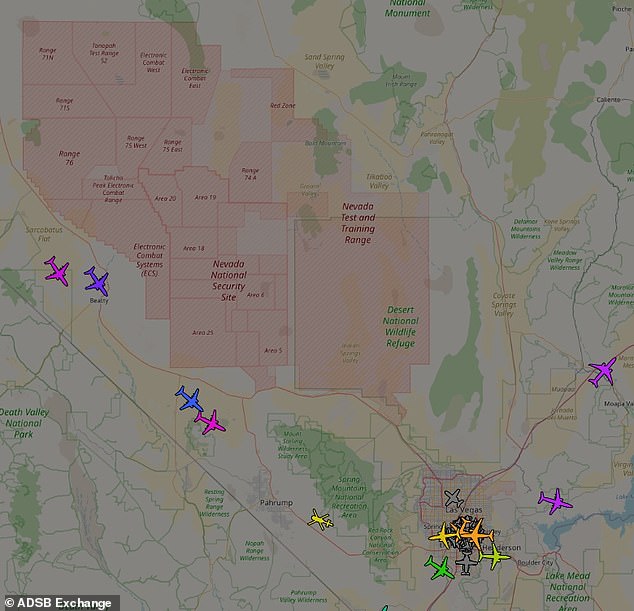
Both Area 52 and its more famous neighbor, Area 51, sit on a massive complex just north of Las Vegas called the Nevada Test and Training Range (NTTR).

For decades, it has been believed that the US military has carried out experimental aircraft testing as well as nuclear weapons research in this remote area.

Now, scientists have monitored over 100 seismic events within 50 miles of the Tonopah Test Range in just the last week.

These earthquakes have ranged from very small shockwaves between 1.0 and 1.9 in magnitude to minor earthquakes stronger than 3.0, which could be felt by anyone at ground level nearby.

The outbreak of earthquake swarms near the nuclear testing site has also come as the US launches a massive bombing campaign against Iran, and President Donald Trump has warned that the 'biggest wave' hasn't even happened yet.

At the same time, the final remaining nuclear weapons treaty between the US and Russia expired earlier in February, just weeks before USGS started picking up this concentrated swarm underground.

1772791746727.png

The US Geological Survey has detected over 100 small and moderate earthquakes near Tonopah, Nevada, just miles from Area 52, a nuclear testing site
The strongest of these recent earthquakes took place Sunday at 11.37am ET when a magnitude 4.3 shockwave rattled a remote point of the Nevada desert roughly 48 miles northeast of Tonopah.

Quakes between magnitude 2.5 and 4.9 typically cause considerable shaking that can be felt by residents for several miles, but no severe damage to buildings or property. No injuries have been reported.

The shockwaves were reported by Nevada residents as far away as Carson City, over 180 miles to the west, and Las Vegas, 175 miles south of Sunday's earthquake.

There has been no announcement from the US government that full-scale nuclear explosive testing has resumed, meaning the earthquakes may be a prolonged stretch of normal geological activity in the region.

The swarms have taken place in an area called the Central Nevada Seismic Zone, a long, narrow strip of land running roughly north-to-south through the middle of Nevada for about 200 to 300 miles.

The Earth's crust has been slowly stretching and pulling apart in this area as the western US gets tugged in different directions by tectonic plate movements.

That has created several small faults and cracks in the rock instead of one big one, like California's San Andreas Fault.

As stress builds up along these small faults, it gets released as earthquakes, often in clusters (swarms) that typically stay under 5.0 in magnitude.

However, this region of Nevada also has a long history of being used for testing America's weapons of mass destruction, a process that can also cause the same types of seismic tremors being experienced over the last week.

Area 52 is a highly classified US military installation operated by the Department of Energy and the Department of War.

It has primarily been used for nuclear weapons stockpile maintenance, testing delivery systems, fusing and firing research and related classified activities.

The experiments at the base have sparked controversy in recent years as former military personnel have claimed that their work exposed them to toxic radioactive material, which led to cancer and other illnesses.

There is extensive evidence that underground nuclear tests generate seismic waves that seismic instruments record as earthquake-like events.

These signals are initially cataloged and studied similarly to natural earthquakes by the USGS National Earthquake Information Center (NEIC), but can later be distinguished from natural quakes based on certain characteristics that reveal them to be explosions.

Key differences include nuclear explosions releasing energy near the surface, with real earthquakes typically involving deeper fault slippage and producing more shear waves.

However, the seismic signals from a nuclear test still look very similar to natural quakes and can even trigger small aftershocks or fault movements in some cases.

Area 52 (Top Left) sits on the Nevada Test and Training Range, several miles north of the infamous top secret facility known as Area 51

+6 View gallery Area 52 (Top Left) sits on the Nevada Test and Training Range, several miles north of the infamous top secret facility known as Area 51
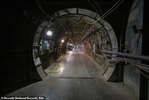
US government officials recently provided a tour of America's most sensitive nuclear weapons research, conducted in a lab deep underground in Nevada

+6 View gallery US government officials recently provided a tour of America's most sensitive nuclear weapons research, conducted in a lab deep underground in Nevada

The US government recently provided a tour of a secret nuclear lab at an undisclosed location in Nevada, which from the outside looked like a bunch of harmless factory buildings and an old mining shaft.

Last year, officials with the US National Nuclear Security Administration (NNSA) warned America may soon have no choice but to restart its weapons testing programs amid reports that both Russia and China were expanding their programs.

During the tour, officials revealed that new, top-secret devices were being installed at the underground lab in late 2025 to contain microscopic explosions - simulating the blast of an atom bomb.

Live nuclear testing moved underground in the 1960s, but all of these experiments ended in 1992 when the US implemented a unilateral moratorium on nuclear explosive testing.

The Trump Administration allowed those restrictions to lapse during the president's first year since returning to office, officially ending the New START treaty on February 5, 2026.

Trump's October 2025 directive to resume nuclear testing 'on an equal basis' with Russia and China sparked preparations and rhetoric about potentially ending the long-standing voluntary moratorium on explosive tests. As of early March 2026, however, no full-scale nuclear explosive detonations have occurred.

Prior to the strikes in Iran, President Trump called that nation's alleged work towards creating nuclear weapons 'a red line' that could not be crossed.
 

Attachments

  • 1772791849991.png
    1772791849991.png
    405.1 KB · Views: 3
Back
Top Bottom