Poland struck by meteorite after fireball lights up skies on April 17, impact crater and rock found on April 22
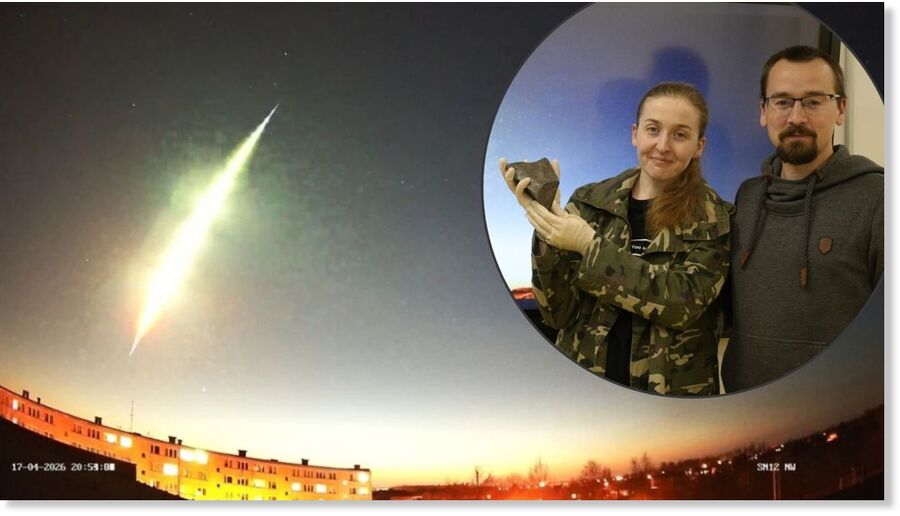 The meteorite was found when two researchers, Anna and Paweł Walczak, spotted a 40-centimeter-deep crater. © Koluszkowska Stacja Kosmiczna
Scientists in central Poland have recovered a rare iron meteorite believed to be the remnant of a spectacular fireball that streaked across the sky on April 17.
The 2.9-kilogram meteorite was
discovered near Łódź in the village of Zadzim on Wednesday, just five days after it flew over Poland.
The rapid recovery makes it the first iron meteorite in Poland to be found so quickly after an observed fall, and one of only a handful worldwide with a precisely reconstructed orbit, the Skytinel meteor research network said on Friday.
A fireball is an exceptionally bright meteor that forms when a meteoroid enters Earth's atmosphere, often culminating in a meteorite impact.
Using observational data, experts at Skytinel were able to determine not only the
atmospheric path of the object but also its previous orbit around the Sun, allowing them to narrow down the impact zone.
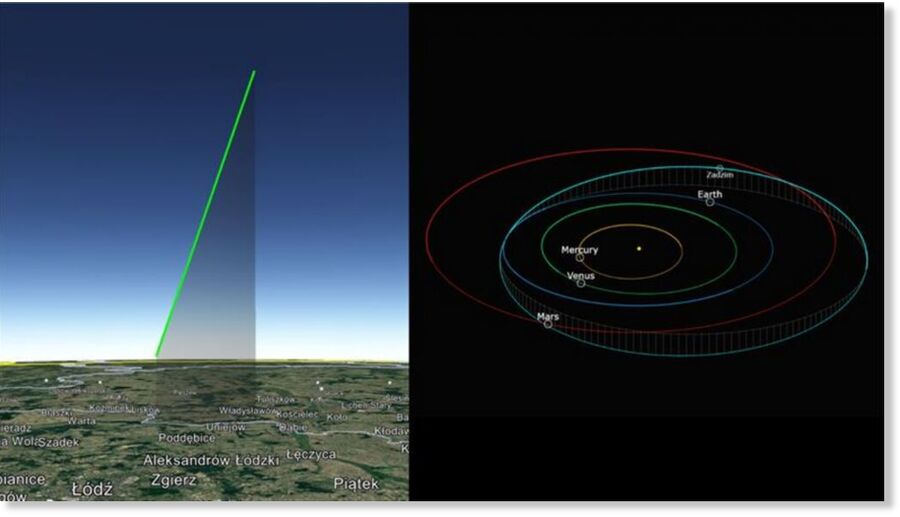 Experts were able to quickly determine an impact zone. © Skytinel meteor network/Facebook
Initial searches began almost immediately. Teams equipped with drones and metal detectors combed the area, but early searches yielded no results.
It was only after further collaboration with Czech scientists, who refined the impact model, that the search area was reduced to a 300-by-200-meter zone.
Skytinel's eventual discovery on April 22 came when two researchers, Anna and Paweł Walczak, spotted a 40-centimeter-deep crater and recovered the meteorite.
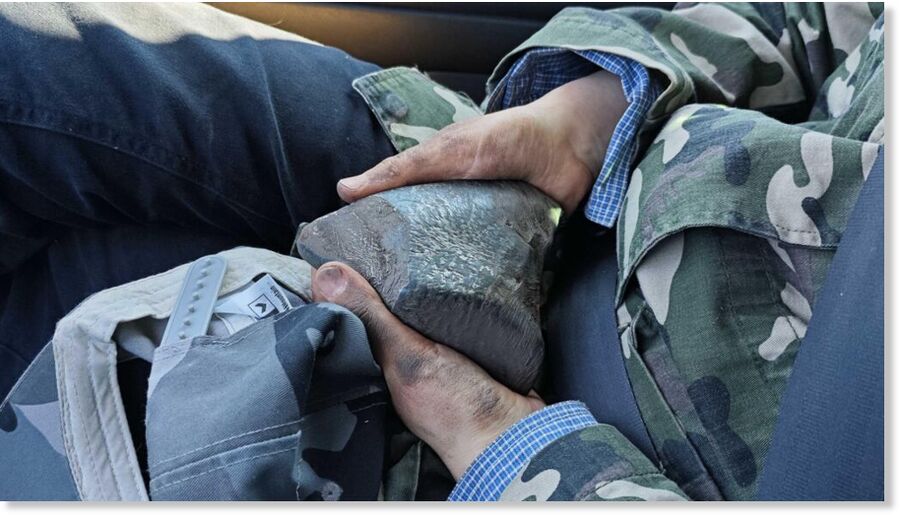 The recovered meteorite weighs nearly three kilograms. © Skytinel meteor network/Facebook
Preliminary analysis confirms the specimen is an iron meteorite, most likely an octahedrite, a type characterized by distinct crystalline patterns formed over millions of years inside asteroids.
Skytinel said the freshly recovered meteorite provides "unique research opportunities—from radioactive isotope analysis to reconstructing the history of this piece of space."
The network added that the first tests would begin on Saturday. Once all procedures are completed, the meteorite is expected to appear on display at a museum, "where it will be able to delight future generations of space enthusiasts," Skytinel said.


