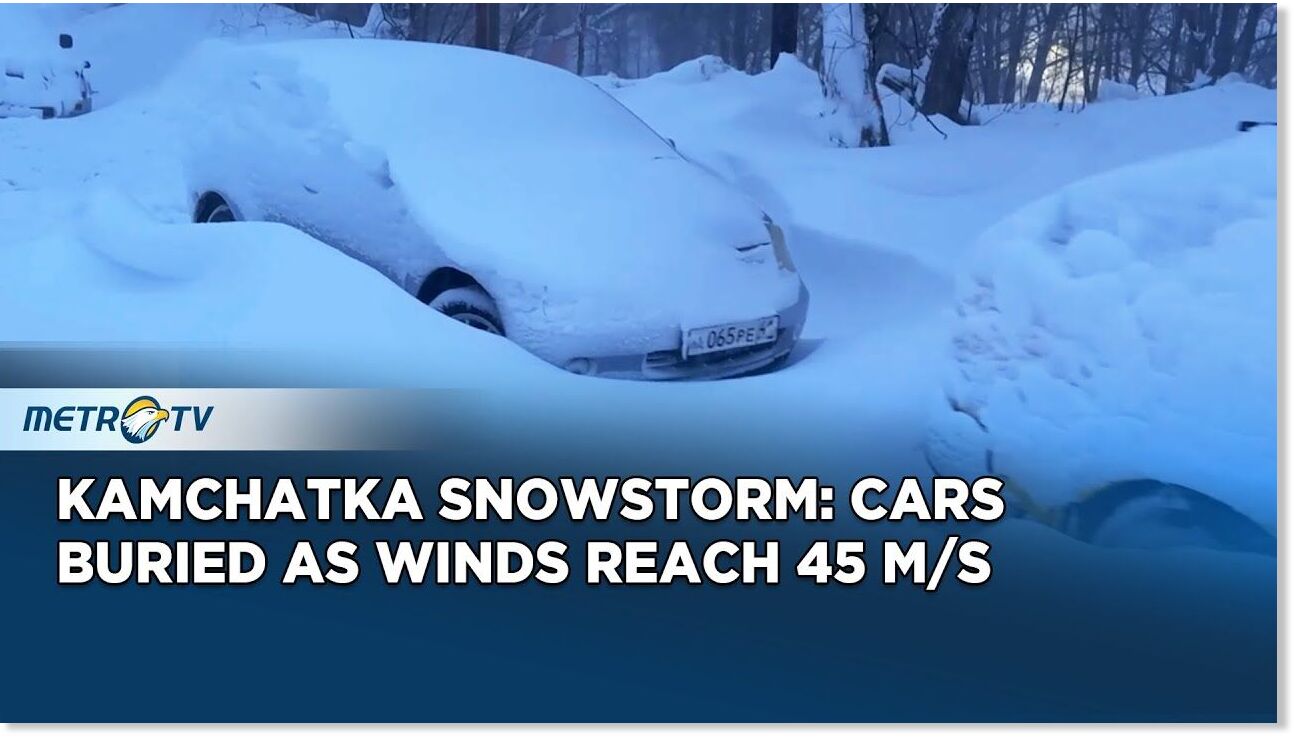
Looks like Russia (& Kamchatka region especially) have had massive amounts of snow, the highest recorded since 130 years ago:
Some claim this is AI slop, others contest it and say it’s real. Can’t verify either way.
Having said that, the scenario is entirely possible. The snow accumulated along the buildings is not just snow that fell, it’s snow drift created by high winds. It generally accumulates in the lee of structures and can be hard as concrete.
I saw similar snow drifts in Antarctica after blizzards. Whole buildings were buried under 10 meters of snow drift and required a loader to dig them away.
Yeah, those should be AI. Saw the originals from the press release and the amount of snow is crazy, but it was not like "The Day After Tomorrow ". Yet.
The AI enhanced snow storm on Kamchatka has taken the media by storm.
Getting closer to the situation
I took
some words from the English, translated it to Russian and did a search on TG, looking for more official channels. One result from Entering "Камчатка снегопад", which means "Kamchatka snowfall", was from
Channel 1 news:
Heavy snowfall continues in Kamchatka. Not like last week. The cyclone has already lost its power. Nevertheless, flights from Yelizovo airport are being delayed. Earlier, record-breaking snowstorms hit the region, the strongest in 30 years. The snowdrifts reached the third floors. It is freezing in Buryatia and Khakassia: -50 is not the limit.
The Russian original:
На Камчатке продолжается сильный снегопад. Не такой, как на прошлой неделе. Циклон уже растерял силу. Но тем не менее, вылеты из аэропорта Елизово задерживают.
Ранее на регион обрушились рекордные метели, сильнейшие за 30 лет. Сугробы достигли третьих этажей.
В Бурятии и Хакасии сейчас морозы: -50 — не предел.
Some people in Russia have tried to counter the end of the world story. Here is one: "War on fakes", that is Война с фейками:
who wrote:
And the comment:
Truth: The aforementioned video is the fruit of neural networks. The TikTok user who posted the footage does not hide its origin. The description for them says: "Generated by AI."
The admins of some telegram channels neglected fact-checking for the sake of hype and did not check whether the nine-story building from the video was really located in Kamchatka. The check would have taken five minutes at most. On the Web, you can easily find information that in Petropavlovsk-Kamchatsky there are several nine- and ten-story buildings and even one sixteen-story building, but they differ from standard panel buildings.
It's funny that on the TikTok user's channel there is a video of snowdrifts near panels with an infinite number of floors. We advise telegram channels to check the information before publication, if not with the help of special tools, then at least guided by logic.
Фейк: В Петропавловске-Камчатском сугробы достигли высоты пятых этажей. Соответствующее видео облетело телеграм-каналы.
Правда: Вышеупомянутый ролик — плод работы нейросетей. Пользователь TikTok, опубликовавший кадры, не скрывает их происхождение. В описании к ним говорится: «Сгенерировано ИИ».
Админы некоторых телеграм-каналов пренебрегли фактчекингом ради хайпа и не стали проверять, действительно ли девятиэтажка из видео находится именно на Камчатке. Проверка заняла от силы бы пять минут. В Сети можно легко найти информацию о том, что в Петропавловске-Камчатском есть несколько девяти- и десятиэтажных домов и даже одно шестнадцатиэтажное здание, но они отличаются от стандартных панельных построек.
Забавно, что на канале пользователя TikTok присутствует видео с сугробами около панелек с бесконечным количеством этажей. Советуем телеграм-каналам проверять информацию перед публикацией, если не при помощи специальных инструментов, то хотя бы руководствуясь логикой.
Another said,
Foreign publics are posting generated videos of the "snow apocalypse" in Kamchatka. Amid reports of record rainfall in 30 years on the peninsula, some subscribers believe and sympathize in the comments. Residents of Petropavlovsk-Kamchatsky answer that there are no such tall houses in the city, and snow covers the second floor at most.
Зарубежные паблики выкладывают сгенерированные видео «снежного апокалипсиса» на Камчатке. На фоне сообщений о рекордных за 30 лет осадках на полуострове некоторые подписчики верят и сочувствуют в комментариях.
Жители Петропавловска-Камчатского отвечают, что в городе нет таких высоких домов, а снег заваливает максимум второй этаж
It would seem then that it is two - three floors in some place.
The city, Petropavlovsk-Kamchatsky, has more than 160,000 inhabitants, or half of the people that live in the Kamchatka Region (
RU Wiki). If we look at the map, it is on the coast in the south-east:
Even in normal years they will get a good amount of snow, since the winters last several months.
Most of the average 1177 mm of precipitation falls in the colder part of the year.
Eventually I found a local TG channel:
Новости Камчатки, Kamchatka News claiming to be: "The main telegram channel of Petropavlovsk-Kamchatka and the region!" In Russian: Главный телеграм-канал Петропавловска-Камчатского и края!
The situation on the ground turns out to be closer to the picture given by the official 1TV
There are a couple of stories about houses having burned down quickly. I saw the fire engines, and their wheels are massive.
Two men were killed, one from the roof he stood under collapsing under falling snow, the other from an icicle that had come loose.
Some ambulance could not get to the person suffering, because so many cars were stranded in the streets.
There was a funny video of someone digging their way to an Ozon packet distribution point, that was covered, with only a small sign visible and a window ajar. However they could not get the packet just then. Apart from such videos, there many showing streets and buried cars. Imagine moving around in such a world of snow, people having to reach work, come back, find time to shovel snow and do some shopping.
The local administration has a
VK channel. In one of the latest, trucks are driving snow out of the city, where it is unloaded and bulldozed to the side. Several fuel trucks will refill the gas stations during the night. Everything seems to be returning to normal winter.
Ventusky.com says it is -11 at the time of posting, and the snow cover is listed as 110 cm. One problem is that a storm can pile up snow in places, and that is probably what has happened. The pictures indicate that in some places there is more snow, in others less.
As a curiosity, I checked a
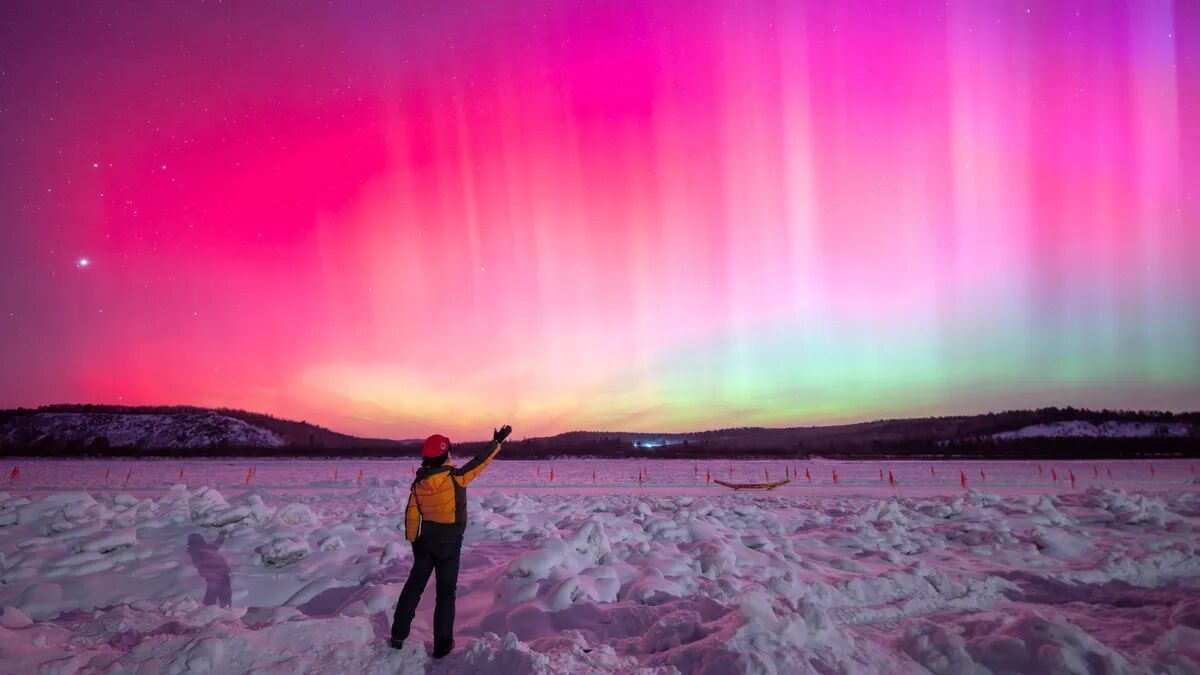
camera near a volcano less than 100 km north of Petropavlovsk-Kamchatka, where they say there is 300 cm of snow. Scrolling back in time, the camera that sends picture regularly even if it is not a live stream, has some where I suspect one can see the Aurora Borealis following the recent solar storm, the faint streaks coming in, and it is different in some of the other available images.


 wochenblatt.cc