The Ice Age Cometh! Forget Global Warming!

Paraguay broke 50 year old cold records in the middle of the summer, temperatures went as low as 11 C (article in German):

 
Some amazing footage of very deep snow from the far east in Russia -

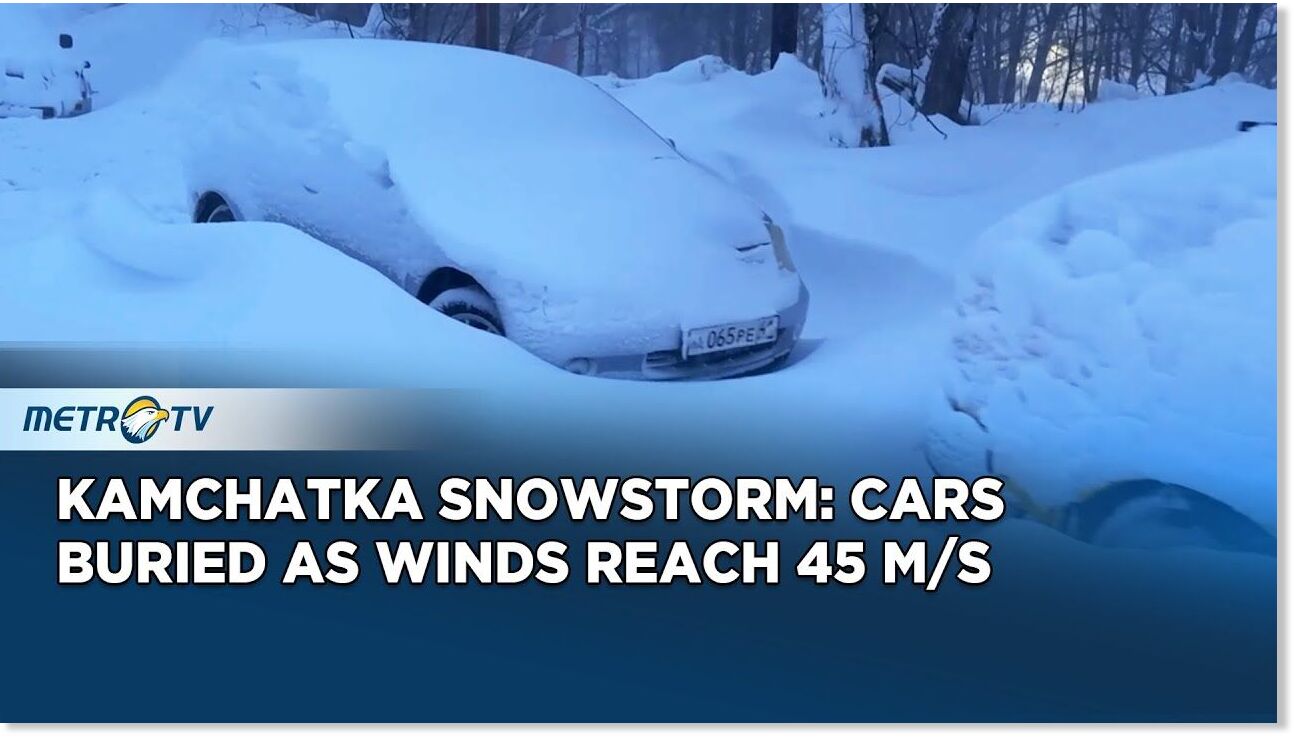
Watch as snow 'apocalypse' hits Russia's Kamchatka Peninsula, shatters 146-year record - several months' worth of snowfall within days

mmmmm
Russia's Kamchatka Peninsula is experiencing one of its harshest winters in recent years, with record-breaking snowfall that's left towns and roads buried under meters of snow. The national weather department confirmed a 146-year-old record has been smashed. The relentless snowfall has brought the city to a standstill, with layers of white covering the landscape.

The region, known for its active volcanoes and extreme weather, has received several months' worth of snowfall within days, forcing authorities to issue alerts and increase snow-clearing operations. Images and videos from the region show vehicles almost completely submerged, entrances blocked by towering snowdrifts, and residents digging tunnels just to leave their homes. The snowfall has had a major impact on everyday life, with roads closed, flights delayed or cancelled, and public transport services suspended.

Emergency crews are clearing snow from rooftops to prevent structural damage, while residents have been advised to avoid unnecessary travel.

Scientists attribute the unusual conditions to repeated cyclonic systems over the Pacific Ocean, which are pulling in large amounts of moisture that turn into heavy snow when they meet Kamchatka's freezing air and rugged terrain.

 
Link for Graphs
Forecast models show that a disruption at the lower levels of the polar vortex could lead to a split in its core during the latter part of January. This is due to the influence of a developing stratospheric warming event over the North Pole.

Current forecasts show the core splitting sometime around January 25. As it splits, the two halves could bring a strong influx of cold Arctic air across the United States and Europe from late January into early February.

Severe winter conditions are possible for parts of the Midwest and much of the eastern United States between January 15 and 25. This will be driven by the interaction of the Arctic air with the jet stream.

The jet stream is forecast to form a northward bulge along the Pacific Coast, covering the western United States, and a southward dip centered around the Great Lakes, covering the eastern half of the country during this period.

This setup will suck in cold Arctic air from Canada, spreading it across the central and eastern United States, including the Midwest, Northeast, Mid-Atlantic, and Southeast.


“Over the next couple of weeks, the jet stream will develop a large buckle with a northward bulge along the Pacific Coast and a southward dip centered on the Great Lakes,” AccuWeather Lead Long-Range Meteorologist Paul Pastelok said. “This setup stretches the polar vortex, sending persistent warmth near the bulge and repeated shots of cold air through the dip.”

Temperatures in Chicago are expected to dip from near average to 5–10°C (10–20°F) over the next one to two weeks. The average high in Chicago is near 0°C (32°F). In New York City, temperatures are forecast to range from near the historical average of 3–4°C (38–40°F) to 3–6°C below average (5–10°F) during the same period.

Heavy snowfall is expected across the Midwest and Northeast, while lighter totals are likely for the central and southeastern United States.

Strong storms are unlikely to form during this period due to the stretched jet stream, unless a Greenland blocking pattern develops, allowing storm formation along the Atlantic coast.


Meanwhile, the disruption is also expected to renew the threat of winter across Europe, with cold air potentially spreading westward from Siberia.


The exact impacts of the disruption during the latter half of January and early February remain uncertain due to forecast limitations beyond January 25.

The Weather Company
1768626984254.png

Current temperatures across the contiguous United States are shown above.

(MAP: National Interactive Temperatures)

Below are the latest forecast maps, including precipitation, high and low temperatures, thunderstorms and snowfall.

1768627240183.png
 

EU NatGas Spikes Most In Two Years As "Perfect Storm" Unfolds​

Dutch TTF natural gas futures, Europe's benchmark gas contract, are up 25% on the week and on track for their largest weekly gain since October 2023. The abrupt reversal in sentiment reflects tightening storage levels, short covering, and a burst of unusually cold weather sweeping across the continent.

2015-01-15 Europe temperatures


"Sentiment has completely turned ... you could almost call it a perfect storm," Global Risk Management analyst Arne Lohmann Rasmussen wrote in a note.

TTF futures are set for the largest weekly gain (25%) since the week of October 13, 2023.

1768635884375.png


Bloomberg noted, "The rally highlights a deeper structural shift. Europe has lost much of the flexibility it once relied on to absorb supply shocks, leaving storage as one of its few remaining buffers as it procures liquefied natural gas from across the globe."

The good news is that Europe has secured ample LNG supply this winter and Norwegian pipeline flows remain steady, but the lack of a meaningful buffer when temperatures plunge and heating demand surges highlights just how fragile Europe's energy system has become.

Source
 
A report from the Chicago/Lake Michigan cold wave back in January 2025, describing the effects of sudden drop in temperatures coupled with strong winds:


ErRuUSvzTaRZhVRfWofdmf-650-80.jpg.webp


Between Jan. 19 and Jan. 24, 2025, the Windy City and other parts of the eastern U.S. were hit by an unusual cold snap, partially triggered by a sudden expansion of the polar vortex — the persistent area of cold, low-pressure air circulating high in the stratosphere above the Arctic. During this time, temperatures in Chicago fell to as low as minus 33 degrees Fahrenheit (minus 36 degrees Celsius), according to the National Oceanic and Atmospheric Administration (NOAA).

This sudden drop in temperature, coupled with strong offshore winds, caused ice to form around the coastline and be pushed outward, creating the beautiful swirls. These flowing ribbons look a lot like clouds when viewed from above, but they are entirely ice, according to NASA's Earth Observatory.

In total, around 20% of Lake Michigan was covered by ice when the satellite photo was taken, which is just above average for the time of year, according to NOAA’s Great Lakes Environmental Research Laboratory (GLERL).

While lake ice is common in January, the extent of ice on Lake Michigan doesn't normally peak until February or March. It is also more common to see uniform sheets of ice rather than the flowing patterns visible in this image.

In this case, the darker, wispy ice near the lakeshore likely accumulated into thicker offshore constructs with rough edges that appear more white when viewed from above, Jia Wang, an ice climatologist at GLERL, told the Earth Observatory.

Other Great Lakes were also impacted by the cold snap, including Lake Erie, which saw up to 80% of its surface frozen, according to GLERL. Erie's ice was so thick and emerged so quickly that a Canadian cargo freighter was trapped in place for three days, according to the New York Times.

This is not the first time that satellite photos have revealed something unusual about Lake Michigan. In 2024, aerial images helped researchers identify more than 40 mysterious craters scattered across the lake's bed, which currently have no definitive explanation.

The low temperatures and strong winds around Chicago can also cause other unusual winter sights, such as bizarre chess piece-like sand sculptures along Lake Michigan's beaches, known as "hoodoos," which form when frozen chunks of sand are exposed to strong gusts.
 
After a brief search, I found this interesting piece of history recounting the pre-Confederation Canadian experience of 1816, the 'Year Without A Summer'. The article includes newspaper snippets and journal entires that detail the concerns and observations of the people at the time. As can be expected, there's drought, crop failure, and food shortages.
One thing that has puzzled me for a long time is how a volcano 1000km south of the equator is responsible for a three year freeze in the northern hemisphere. IOW, an explosion at 8 degrees south of the equator defies the normal travel along latitudes and devastates the northern 20-50 degree latitudes.
 
Some claim this is AI slop, others contest it and say it’s real. Can’t verify either way.

Having said that, the scenario is entirely possible. The snow accumulated along the buildings is not just snow that fell, it’s snow drift created by high winds. It generally accumulates in the lee of structures and can be hard as concrete.

I saw similar snow drifts in Antarctica after blizzards. Whole buildings were buried under 10 meters of snow drift and required a loader to dig them away.
 
One thing that has puzzled me for a long time is how a volcano 1000km south of the equator is responsible for a three year freeze in the northern hemisphere. IOW, an explosion at 8 degrees south of the equator defies the normal travel along latitudes and devastates the northern 20-50 degree latitudes.

The story goes that the eruption released massive amounts of sulphur dioxide that circulated globally, reflecting sunlight away from the Earth's surface, and disrupting regular atmospheric circulation. If we look at jet stream disruption today, we can see examples of how Arctic air descends South, such as when people froze to death in Texas a few years ago. The circulation could have been so disrupted that an Arctic air mass dropped and then stabilized below the Arctic Circle over North America and Europe, where there were food shortages, famine, price increases, riots, snow in June, etc. Russia, by contrast, had no problems - which suggests that Arctic air mass descent was localized played the biggest role in what happened.

Were there comets at that time? The Great Comet had passed in 1811, and was likely 10-20 AU from the sun. So it was still well within the Heliosphere (120-130 AU) when Tambora went boom. Cometary discharge, planetary electromagentic alignments, and a strong solar storm probably played a role in Tambora's eruption. Then Encke was visible in 1818. It's always within the Heliopause, and so it could have played a role in plasma alignments.

The Year Without a Summer also occurred at the tail end of the Dalton Minimum, when sunspot numbers were already low. The average intensity was 1/3 of normal, with May 1816 being the lowest. So there were already baseline cool conditions, exacerbated by volcanic sulphate aerosols, leading most likely to Arctic air mass influxes.
 
There were many northern lights further in the south of Europe and Asia to be seen. And it also happened last year that you could see some in southern Germany. One factor is, of course, the sun's activity, though I think that most likely comet dust or the cooling of the atmosphere could also play a considerable role. As I remember, Pierre wrote about it in his book.

 
Temperatures below freezing were seen in both parts of the state of Florida this weekend, and colder weather is forecast for the southern states.

Rare snow falling in Florida as winter storm targets the South with more to come for Georgia, Carolinas

Snow is already falling in Florida, marking a rarity two years in a row as millions across the South will see snowfall today.
WELcome Florida 2026-1.png

While the corridor for measurable snow is narrowing across parts of the Deep South and southeastern U.S. this weekend, rare snow is falling across portions of the Southeast, with flakes falling in the Carolinas and dipping as far south as Florida.

The heaviest snowfall occurred in the Florida Panhandle, particularly in areas such as Pensacola, Marianna, Chipley, Laurel Hill, and Milton, where residents reported a light dusting to 1–2 inches of snow. Snow was also reported in Defuniak Springs, Caryville, and Baldwin County, with flurries visible on traffic cameras and social media. The event followed a strong cold front and was part of a larger winter storm system that also brought snow to parts of Georgia and the Carolinas.
Climate forecast models indicate a major, long-lasting event beginning this weekend and escalating through the last week of January.

USA_sud_2601.png


Severe ice storms are forecast for the coming days:
If you live in the South, now is the time to start preparing for a very serious ice storm!


Looks like Russia (& Kamchatka region especially) have had massive amounts of snow, the highest recorded since 130 years ago:

Some claim this is AI slop, others contest it and say it’s real. Can’t verify either way.

Having said that, the scenario is entirely possible. The snow accumulated along the buildings is not just snow that fell, it’s snow drift created by high winds. It generally accumulates in the lee of structures and can be hard as concrete.

I saw similar snow drifts in Antarctica after blizzards. Whole buildings were buried under 10 meters of snow drift and required a loader to dig them away.

Yeah, those should be AI. Saw the originals from the press release and the amount of snow is crazy, but it was not like "The Day After Tomorrow ". Yet.
The AI enhanced snow storm on Kamchatka has taken the media by storm.

Getting closer to the situation
I took some words from the English, translated it to Russian and did a search on TG, looking for more official channels. One result from Entering "Камчатка снегопад", which means "Kamchatka snowfall", was from Channel 1 news:
Heavy snowfall continues in Kamchatka. Not like last week. The cyclone has already lost its power. Nevertheless, flights from Yelizovo airport are being delayed. Earlier, record-breaking snowstorms hit the region, the strongest in 30 years. The snowdrifts reached the third floors. It is freezing in Buryatia and Khakassia: -50 is not the limit.
The Russian original:
На Камчатке продолжается сильный снегопад. Не такой, как на прошлой неделе. Циклон уже растерял силу. Но тем не менее, вылеты из аэропорта Елизово задерживают.

Ранее на регион обрушились рекордные метели, сильнейшие за 30 лет. Сугробы достигли третьих этажей.

В Бурятии и Хакасии сейчас морозы: -50 — не предел.

Some people in Russia have tried to counter the end of the world story. Here is one: "War on fakes", that is Война с фейками: who wrote:
2026-01-20 152743.png

And the comment:
Truth: The aforementioned video is the fruit of neural networks. The TikTok user who posted the footage does not hide its origin. The description for them says: "Generated by AI."

The admins of some telegram channels neglected fact-checking for the sake of hype
and did not check whether the nine-story building from the video was really located in Kamchatka. The check would have taken five minutes at most. On the Web, you can easily find information that in Petropavlovsk-Kamchatsky there are several nine- and ten-story buildings and even one sixteen-story building, but they differ from standard panel buildings.

It's funny that on the TikTok user's channel there is a video of snowdrifts near panels with an infinite number of floors. We advise telegram channels to check the information before publication, if not with the help of special tools, then at least guided by logic.
Фейк: В Петропавловске-Камчатском сугробы достигли высоты пятых этажей. Соответствующее видео облетело телеграм-каналы.

Правда: Вышеупомянутый ролик — плод работы нейросетей. Пользователь TikTok, опубликовавший кадры, не скрывает их происхождение. В описании к ним говорится: «Сгенерировано ИИ».

Админы некоторых телеграм-каналов пренебрегли фактчекингом ради хайпа и не стали проверять, действительно ли девятиэтажка из видео находится именно на Камчатке. Проверка заняла от силы бы пять минут. В Сети можно легко найти информацию о том, что в Петропавловске-Камчатском есть несколько девяти- и десятиэтажных домов и даже одно шестнадцатиэтажное здание, но они отличаются от стандартных панельных построек.

Забавно, что на канале пользователя TikTok присутствует видео с сугробами около панелек с бесконечным количеством этажей. Советуем телеграм-каналам проверять информацию перед публикацией, если не при помощи специальных инструментов, то хотя бы руководствуясь логикой.
Another said,
Foreign publics are posting generated videos of the "snow apocalypse" in Kamchatka. Amid reports of record rainfall in 30 years on the peninsula, some subscribers believe and sympathize in the comments. Residents of Petropavlovsk-Kamchatsky answer that there are no such tall houses in the city, and snow covers the second floor at most.
Зарубежные паблики выкладывают сгенерированные видео «снежного апокалипсиса» на Камчатке. На фоне сообщений о рекордных за 30 лет осадках на полуострове некоторые подписчики верят и сочувствуют в комментариях.

Жители Петропавловска-Камчатского отвечают, что в городе нет таких высоких домов, а снег заваливает максимум второй этаж
It would seem then that it is two - three floors in some place.

The city, Petropavlovsk-Kamchatsky, has more than 160,000 inhabitants, or half of the people that live in the Kamchatka Region (RU Wiki). If we look at the map, it is on the coast in the south-east:
Kamchatka_krayAreas.png

Even in normal years they will get a good amount of snow, since the winters last several months. Most of the average 1177 mm of precipitation falls in the colder part of the year.
2026-01-20 235223.png


Eventually I found a local TG channel: Новости Камчатки, Kamchatka News claiming to be: "The main telegram channel of Petropavlovsk-Kamchatka and the region!" In Russian: Главный телеграм-канал Петропавловска-Камчатского и края!

The situation on the ground turns out to be closer to the picture given by the official 1TV

There are a couple of stories about houses having burned down quickly. I saw the fire engines, and their wheels are massive.
Two men were killed, one from the roof he stood under collapsing under falling snow, the other from an icicle that had come loose.
Some ambulance could not get to the person suffering, because so many cars were stranded in the streets.
There was a funny video of someone digging their way to an Ozon packet distribution point, that was covered, with only a small sign visible and a window ajar. However they could not get the packet just then. Apart from such videos, there many showing streets and buried cars. Imagine moving around in such a world of snow, people having to reach work, come back, find time to shovel snow and do some shopping.

The local administration has a VK channel. In one of the latest, trucks are driving snow out of the city, where it is unloaded and bulldozed to the side. Several fuel trucks will refill the gas stations during the night. Everything seems to be returning to normal winter.

Ventusky.com says it is -11 at the time of posting, and the snow cover is listed as 110 cm. One problem is that a storm can pile up snow in places, and that is probably what has happened. The pictures indicate that in some places there is more snow, in others less.

As a curiosity, I checked a camera near a volcano less than 100 km north of Petropavlovsk-Kamchatka, where they say there is 300 cm of snow. Scrolling back in time, the camera that sends picture regularly even if it is not a live stream, has some where I suspect one can see the Aurora Borealis following the recent solar storm, the faint streaks coming in, and it is different in some of the other available images.
2026-01-21 004802.png
 
Back
Top Bottom