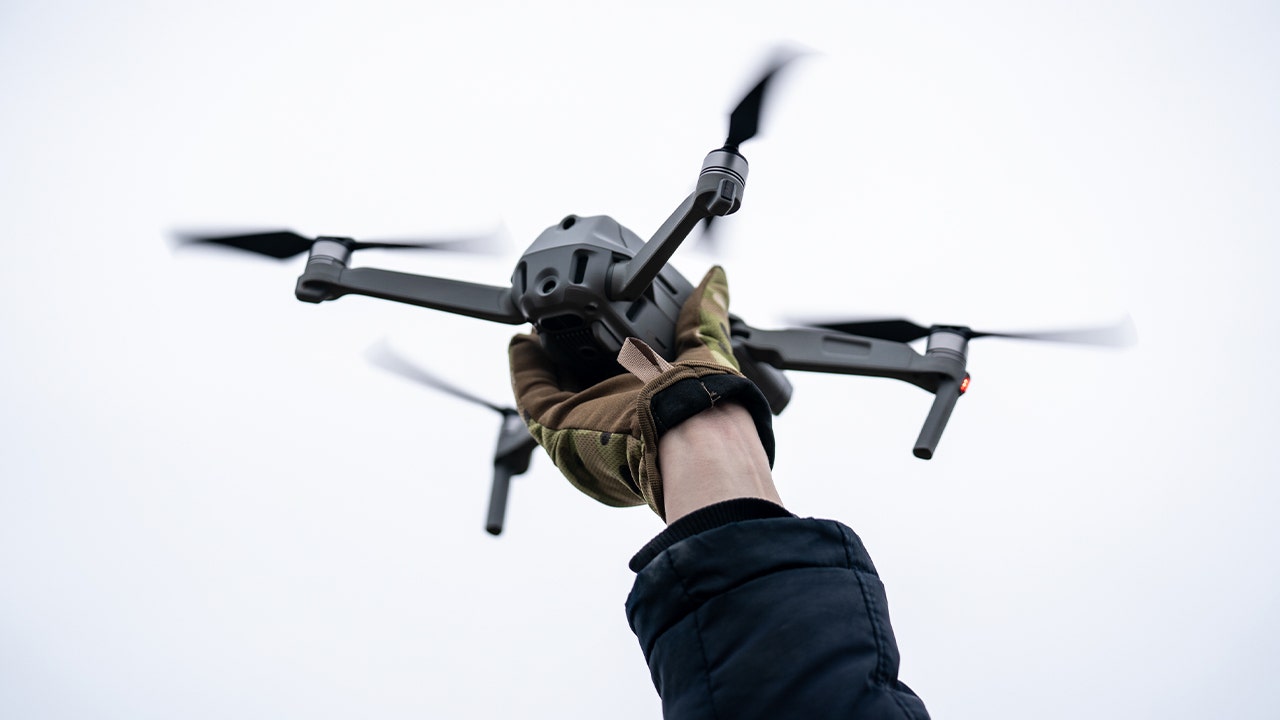
Recent Cartel activities in El Paso, TX. by the New York Times and a Video By Fox News below
The secretary of transportation said the military had neutralized a drug cartel drone. Two officials said testing of counter-drone technology prompted the closure. The F.A.A. initially said it would last 10 days.

www.nytimes.com
Feb. 11, 2026Updated 4:18 p.m. ET
The secretary of transportation said the military had neutralized a drug cartel drone. Two officials said testing of counter-drone technology prompted the closure. The F.A.A. initially said it would last 10 days.
Officials on Wednesday offered conflicting explanations for a temporary closure of airspace over El Paso, after the Federal Aviation Administration rescinded an order issued hours earlier to ground flights for 10 days.
Sean Duffy, the Secretary of Transportation, and officials from the White House and the Pentagon said Mexican cartel drones breached U.S. airspace, prompting the temporary closure of airspace over El Paso. But two people briefed by Trump administration officials said the shutdown was prompted by the Defense Department’s use of new counter-drone technology and concerns about the risks it could pose to other aircraft in the area.
Initially, the agency cited “special security reasons” late Tuesday night, halting all flights to and from El Paso International Airport for 10 days and isolating a major American metropolitan area from air travel. The closure, which appeared to surprise state and local officials, went into effect at 11:30 p.m. local time on Tuesday and was lifted a little before 7 a.m. on Wednesday.
“There is no threat to commercial aviation,” the agency said on social media. “All flights will resume as normal.”
Representative Veronica Escobar, an El Paso Democrat, pushed back on the drone explanation given by Trump administration officials, saying at a news conference it was “not the information that we in Congress have been told.”
She added: “There was not a threat, which is why the F.A.A. lifted this restriction so quickly. The information coming from the administration does not add up.”
Renard Johnson, the mayor of El Paso, said at a news conference that many local officials remained unclear why the agency took such a drastic action, and that the “failure to communicate is unacceptable.” He said it resulted in a series of chaotic events around El Paso, including medical evacuation flights forced to divert to Las Cruces, N.M., a city about 45 miles to the northwest.
“This unnecessary decision has caused chaos and confusion in the El Paso community,” Mr. Johnson said. “I want to be very, very clear that this should’ve never happened. You cannot restrict air space over a major city without coordinating with the city, the airport, the hospitals, the community leadership.”
Here’s what else to know:
Cartel drones: Drones have become a prominent tool and weapon used by Mexican cartels across Mexico in recent years, according to cartel operatives, security analysts and some government officials on both sides of the border. While Trump administration officials have warned for months about cartels using them near the U.S.-Mexico border, Mexican officials have publicly been more skeptical, downplaying the threat drones pose at the border.
Read more ›
- Counter-drone program: In July, Steven Willoughby, deputy director of the counter-drone program at the Homeland Security Department, testified before Congress and asked lawmakers to continue the program. He said that 27,000 drones had flown within about 1,650 feet of the border over six months in 2024, piloted by organizations hostile to law enforcement. He did not go into detail on the nature of the anti-drone technology the department was testing.
- Airport: The airport in El Paso, the 23rd-most populous city in the nation according to the 2020 census, serves a vast swath of West Texas and eastern New Mexico and offers direct flights to hubs across the southwestern United States, as well as to cities like Atlanta, Chicago, Denver, Los Angeles and Seattle. The nearest major U.S. airport is in Albuquerque, about 270 miles away.
- Disrupted travel: Alex Torres, 42, was among the travelers who arrived at the airport unaware that flights had been grounded. Ms. Torres, who was expecting to fly to New York for business, said she spoke with an American Airlines representative on the phone who had yet to hear the news. “They didn’t know anything about the airport being closed,” she said.
A U.S. official says the military shot down a party balloon near El Paso, Texas, after initially suspecting it was a foreign drone, prompting a temporary airspace closure.

www.foxnews.com
A U.S. official confirmed to Fox News that the U.S. military earlier this week shot down what was later determined to be a party balloon near El Paso, Texas, after initially assessing it as a possible foreign drone.
The misidentification eventually led to a total shutdown of airspace around the El Paso airport.
A separate U.S. administration official had told Fox News that
Mexican cartel drones breached U.S. airspace near El Paso and that counter-drone measures were taken to disable them.
The Pentagon has been testing out new counter-drone technology, including a high-energy laser, near the Army base at Fort Bliss, Texas. That laser was used to shoot down what appeared to be foreign drones — and was later identified as a balloon — prompting the airspace closure by the Federal Aviation Administration (FAA), an official told Fox.
AMERICA'S SKIES ARE WIDE OPEN TO NATIONAL SECURITY THREATS, DRONE EXPERT WARNS: 'WE HAVE NO AWARENESS'
It's unclear whether the cartel drones were related.
Transportation Secretary Sean Duffy said earlier Wednesday the FAA and Department of War had "acted swiftly to address a cartel drone incursion."
"The threat has been neutralized, and there is no danger to commercial travel in the region," he said.
Mexican President Claudia Sheinbaum said Wednesday her government has no information indicating
drone activity along the U.S.-Mexico border following the temporary airspace restriction in Texas that U.S. officials linked to counter-drone measures.
"We have no information indicating drone activity along the border," she said in a news conference. "If the FAA or any U.S. government agency has relevant information, they can ask directly the Government of Mexico."
She said Mexican airspace had not been closed.
"We will look into the specific reasons behind the
temporary closure," she said.
President Claudia Sheinbaum said Mexican airspace had not been closed. (Henry Romero/Reuters)
"There’s no place for speculation," she said. "We will wait for the information and continue to uphold what we have consistently maintained: permanent, open communication."
The FAA temporarily restricted flights in and out of
El Paso International Airport for what it described as "special security reasons" Wednesday morning. The restriction initially was valid for 10 days, through Feb. 20 — an unusually lengthy timeframe for airspace limitations affecting a major commercial airport.
The Federal Aviation Administration temporarily restricted flights in and out of El Paso International Airport for what it described as "special security reasons" Wednesday morning. (Raul Arboleda/AFP via Getty Images)
PENTAGON EXPLORING COUNTER-DRONE SYSTEMS TO PREVENT INCURSIONS OVER NATIONAL SECURITY FACILITIES
Temporary flight restrictions are typically used for presidential travel, emergency response operations or specific, time-limited national security events. It is uncommon for such restrictions to be issued near a busy border airport absent a significant security concern.
Shortly after the restriction was put in place, however, the FAA and the Department of War reopened the airspace and determined "there is no threat to commercial travel," according to the administration official.
U.S. officials have warned in recent months that drug cartels increasingly are deploying unmanned aerial systems for surveillance, smuggling coordination and reconnaissance along the southern border.
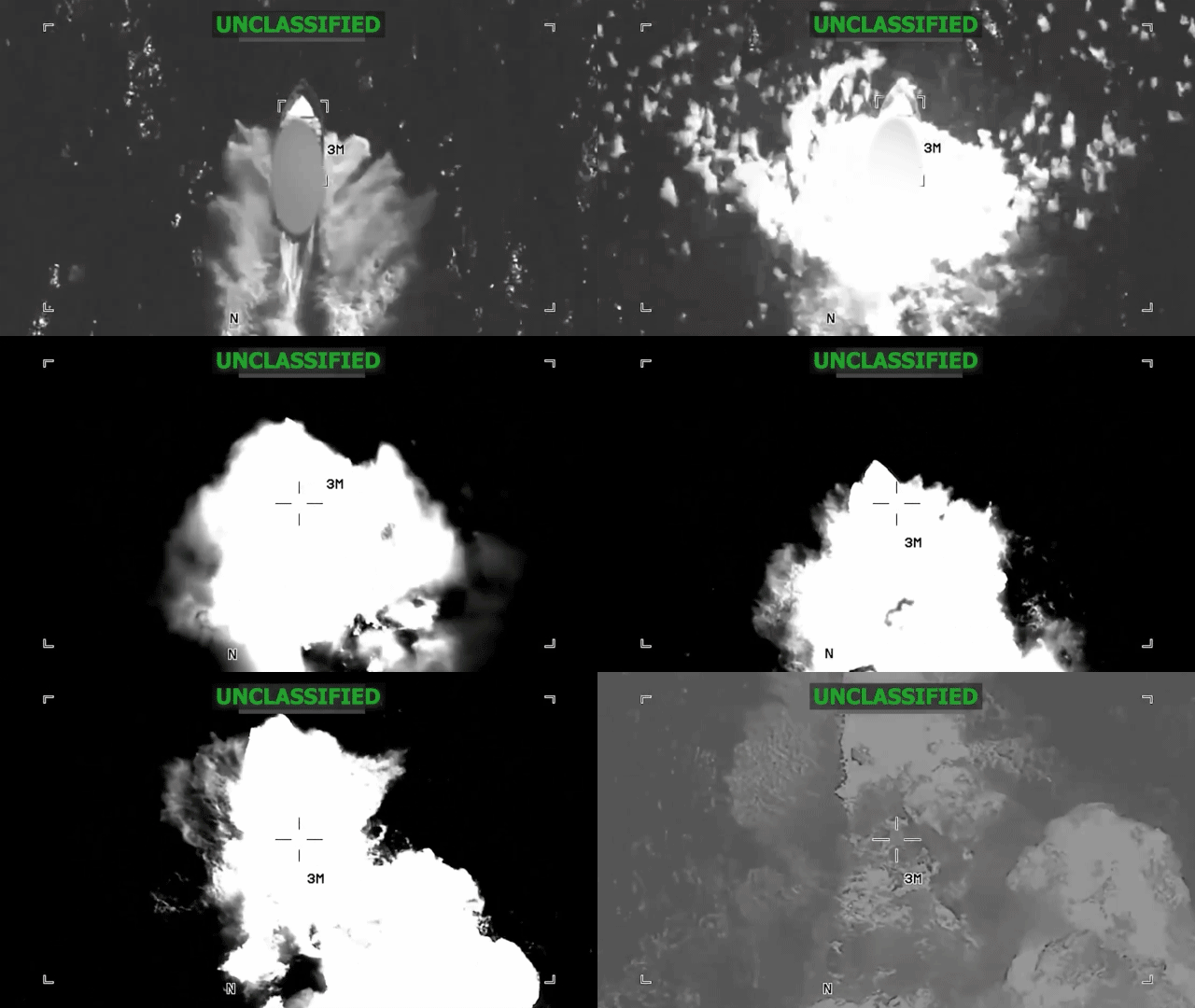
Joint Task Force Southern Spear conducted a lethal strike in the Eastern Pacific, according to a post made on Dec. 12, 2025. ( U.S. Southern Command/X)
The episode comes amid heightened cross-border security tensions as the Trump administration presses regional governments to intensify cooperation against drug cartels and fentanyl trafficking networks that U.S. officials describe as a direct homeland security threat.
Birnbaum has rejected repeated U.S. offers to intervene and strike cartels on Mexican territory.
Recounting a conversation where Trump offered to help militarily in the fight against cartels, Sheinbaum said in January, "We told him, so far it’s going very well, it’s not necessary, and furthermore, there is Mexico’s sovereignty and territorial integrity, and he understood."


 Cuba yesterday in support of Fidel Castro, José Martí, and Cuban pride.