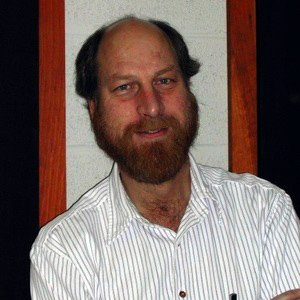
Another top astrophysicist killed 'randomly'

While writing a short investigation into the murder of Nuno Loreiro, I came across a new crime involving renowned scientist Carl Grillmair, which occurred under similar circumstances.
  • An acclaimed Caltech astrophysicist was fatally shot on his porch in Llano early Monday.
  • A suspect, Freddy Snyder, 29, was arrested and charged with Carl Grillmair’s slaying as well as carjacking and burglary.
  • At the time of his death, he was engaged in studies of comets and asteroids that could pose a threat to Earth.
A renowned California Institute of Technology (Caltech) scientist who studied distant planets and other areas of astronomy for decades was recently shot to death at his home in a rural community outside Los Angeles, authorities said.
Carl Grillmair, 67, died from a bullet wound to the torso on Monday in Llano, an unincorporated community in the Antelope Valley, according to information from the LA county medical examiner’s office. The county sheriff’s department said it had arrested a suspect in Grillmair’s slaying, identifying him as 29-year-old Freddy Snyder.
Snyder faces a count of murder in connection with Grillmair’s death, along with charges of carjacking and burglary pertaining to other cases. He remained in custody on Friday.

The Guardian

(..) While investigating the shooting, deputies arrested a suspect in a carjacking that took place nearby, according to the Sheriff’s Department. That suspect was later identified as Freddy Snyder, 29. He was charged Wednesday with the murder of Grillmair and carjacking. He was also charged with first-degree burglary related to a Dec. 28 incident, according to court records. He is being held in lieu of $2 million. It is unclear what relation, if any, Snyder had with Grillmair.
Los Angeles Times
At the time of his death, he was focused on studying comets and asteroids that could pose a hazard to Earth.

Some excerpts from their website

Grillmair's work had focused on uncovering the structure of the Milky Way, identifying faint stellar streams and substructures that make up the galactic halo surrounding our spiral galaxy, and helping to reshape our understanding of how galaxies evolve.
Grillmair's science interests spanned many topics, such as exoplanets and stellar streams, which are remnants from ancient collisions between our Milky Way and other galaxies. He discovered dozens of these streams, with many named by him. In 2007, in one of his most impactful findings, he was lead author on a publication that "captured for the first time enough light from planets outside our solar system, known as exoplanets, to identify molecules in their atmospheres," according to a press release about the work.
According to Fajardo-Acosta, his friend and colleague, Grillmair's most notable achievement was detecting signs of water on a distant planet orbiting a star other than the sun. He described it as a “very ingenious discovery” and noted that Grillmair's research was “extremely important” because “water, of course, is a telltale sign of life, or at least conditions favorable to life.”
"It was always a pleasure to experience Carl's creativity in doing science. His methods on exoplanets and galactic structure studies were truly detective work, allowing him to infer events that took place many billions of years ago," says Sergio Fajardo-Acosta, a fellow astronomer at IPAC.
And finding signs of life on another planet has been “a quest for all of humanity” throughout history, Fajardo-Acosta said. “It's monumental,” he added; the discovery earned his friend NASA's Exceptional Scientific Achievement Medal in 2011.
Grillmair enjoyed his home in remote Antelope Valley, Southern California, largely because it allowed him to easily study the stars at night, Fajardo-Acosta said. Grillmair did so at his home astronomical observatory, equipped with several telescopes.
Recently, he began a project to test new instrumentation at Caltech's Palomar Observatory to monitor for meteor impacts on the Moon's surface during an upcoming lunar eclipse. "It is a really exciting project, and I know he was looking forward to seeing what we could learn about the near-space environment from that," says Joe Masiero, NEO Surveyor lead scientist at IPAC, where he was Grillmair's colleague and collaborator.
Grillmair had been awarded significant observation time as a principal investigator on the Hubble Space Telescope and the Spitzer Space Telescope, and his research earned him numerous awards, including NASA's Exceptional Scientific Achievement Medal.

“He is immortalized because the discovery of these galactic currents is attributed to him,” said Fajardo-Acosta.

For the moment, I would just like to say peace and love wherever you are, and may you have a peaceful transition.💫


It's one thing to 'disappear' top astrophysicists, as they did to Tom Marsh in the desert in Chile in 2022, but having two of them 'randomly shot dead', in quick succession, smacks of recklessness and 'urgency'.

This is Grillmair's home in the middle of nowhere in CA:

grillmair_home_desert.webp
 
This is Grillmair's home in the middle of nowhere in CA:

From The Times of India:
''His legacy will live on forever,' Farjardo-Acosta added. He told the publication that Grillmair loved living in the remote area of Antelope Valley so he could watch the stars at night. Grillmair even built a an observatory with several telescopes in his home and flew airplanes in his spare time.

Grillmair was awarded the Nasa Exceptional Scientific Achievement Medal. According to his biography, his work focused on dark matter, galactic structure, stellar populations, and exoplanets.

Edit: (afterthought):

Grilmair's background:

Overview​

Carl J. Grillmair is affiliated with the California Institute of Technology in the United States and works primarily in the field of Physics and Astronomy.

Their work has led to publications across several main research topics, including:

  • Stellar, planetary, and galactic studies
  • Gamma-ray bursts and supernovae
  • Astronomy and Astrophysical Research
  • Galaxies: Formation, Evolution, Phenomena
  • Astrophysics and Star Formation Studies
  • Adaptive optics and wavefront sensing
  • Astrophysical Phenomena and Observations


The subfields of study covered in their research encompass:

  • Astronomy and Astrophysics
  • Instrumentation
  • General Health Professions
  • Atomic and Molecular Physics, and Optics
  • Philosophy


The scientist has contributed to various publications. Notable recent papers include:

  • Properties of globular cluster systems in nearby early-type galaxies (2024), OPAL (Open@LaTrobe) (La Trobe University)
  • HST imaging of the globular clusters in the Fornax cluster: NGC 1399 and NGC 1404 (2024), OPAL (Open@LaTrobe) (La Trobe University)
  • Hubble Space Telescope Imaging of Antlia B: Star Formation History and a New Tip of the Red Giant Branch Distance (2020), The Astrophysical Journal
  • Spitzer IRAC Photometry of JWST Calibration Stars (2021), The Astronomical Journal
  • The Extended Tidal Tails of NGC 7089 (M2) (2022), The Astrophysical Journal


Their research has been published most frequently in the following venues:

  • The Astrophysical Journal
  • arXiv (Cornell University)
  • OPAL (Open@LaTrobe) (La Trobe University)
  • The Astronomical Journal
  • Bern Open Repository and Information System (University of Bern)


Carl J. Grillmair has collaborated with several coauthors on multiple occasions, including:

  • Schuyler D. Van Dyk
  • R. M. Cutri
  • S. B. Fajardo-Acosta
  • J. Masiero
  • Jean P. Brodie
 
All these murders are tragic evidence of what is approaching. Those who run the farm are capable of doing anything to keep people away from the truth. I think they can't tolerate even a small fraction of humanity getting close to the truth.

Yeah, it feels completely desperate from their part.

Not to worry, though, the truth will come out.

Help is on the Way: Cosmic Reset Mechanism
 
Yeah, it feels completely desperate from their part.

Not to worry, though, the truth will come out.

Help is on the Way: Cosmic Reset Mechanism
Hello @Gaby, I've just read the article and I must say that I am very impressed by it, its quality and richness. It gathers many concepts that were only discussed in posts and I am amazed to see those gathered in one article. I find the result more than great. I would like to read it in French because there are many technical aspects and the understanding would be more fluid to me! Many technical aspects are chained one after another and all are big independent basics per se - so when I have to translate it from English in my head - I would like to access the understanding straight! It would become like reading Tolkien, a fascinating ride! I hope that it will be translated!

(There's a typo in one of the pictures (tetiary <> tertiary). Another idea, to your discretion: "the Oort cloud" appears out of nowhere, while other concepts are carefully brought by with some basics. Something like " ... and, in addition, we all know in our solar system, the Oort cloud, exists and constitutes a barrier of some sort - illustration" - would create a fluid reading)

Well - again, congratulations and a big thank you for this article! :-):cool2::clap: I don't know if any such thing exist, somewhere! I am sure it will get plenty of views. Thank you for the knowledge! It is very inspiring. It shows how many concepts me miss, nowadays, in many systems of thoughts. It shows what really matters - it is really scientifically innovative, I believe, I am not qualified to expand on this aspect, but I am sure it is.
 
(There's a typo in one of the pictures (tetiary <> tertiary). Another idea, to your discretion: "the Oort cloud" appears out of nowhere, while other concepts are carefully brought by with some basics. Something like " ... and, in addition, we all know in our solar system, the Oort cloud, exists and constitutes a barrier of some sort - illustration" - would create a fluid reading)
Glad you like it. Unfortunataly, the typo is in the original video of Seeing the Pattern, so it will stand. Those guys work hard making videos, I think we can forgive them.

Oort cloud is introduced in the picture. So hopefully people pay attention to the details.
 
Glad you like it. Unfortunataly, the typo is in the original video of Seeing the Pattern, so it will stand. Those guys work hard making videos, I think we can forgive them.
Hello, that's what I thought - yes it's no that problematic of course!

I hope the article will have many views! I am curious as to its popularity, really. I am wondering if the topic is of interest to people. Too, the scientific community.

Because - for once - there is "objective truth". And a sociological experiment could be performed, ie "how is objective Truth welcomed, spread & welcomed - in this world"... Simply by analyzing the reactions to the article, perhaps the views only.

I am sure it will attract much attention! Many people read articles without expressing words on them. :-)
 
Yeah, it feels completely desperate from their part.

Not to worry, though, the truth will come out.

Help is on the Way: Cosmic Reset Mechanism


Help is on the way... If this time the comet swarm is truly accompanied by waves, it means the playing field can be leveled amidst the chaos. Thanks also to Gaby for this insightful article. Perhaps a day will come when truth can transform into freedom...
 
An update on Grillmair's murder from the LA Times:

The deepening mystery of Caltech astrophysicist killed on the porch of his remote desert compound

26 February
Situated deep in the Mojave desert, Llano is secluded — and that’s always been one of its biggest selling points.

More than a century ago, the hamlet was home to a storied Socialist cooperative that historians described as one of America’s most significant Utopian societies. The Llano Del Rio Cooperative Colony is long gone, but its stone remains are perhaps the biggest attraction in a place marked by vast open spaces dotted with homes on sprawling lots.

One of those homes was Carl Grillmair’s. To him, the remoteness of Llano was its prime attraction. Grillmair, 67, was a Caltech astrophysicist, and colleagues said he was drawn there because, unobstructed by city lights, the desert offered clear views of the cosmos at night.

Freddy Snyder was another member of the community, a married 29-year-old father of two living with his mother just two miles from Grillmair.

On Feb. 16, authorities allege, their lives collided on Grillmair’s front porch when Snyder arrived at the home and fatally shot the astrophysicist.

The killing shocked both the Caltech community, where Grillmair was a beloved researcher, and the sparsely populated community.

“Out in the country, we don’t deal with those kinds of issues,” said one Llano resident who recalled his own run-in with Snyder but asked to not be identified for fear of his safety. “We got away from all those, or at least we thought.”

Now, Los Angeles County Sheriff’s Department detectives are trying to unravel what sparked the deadly shooting.

Officials and court documents indicate that weeks earlier, Snyder had had a run-in with Grillmair.

On Dec. 20, Lt. Michael Modica of the Los Angeles County Sheriff’s Department said, the scientist spotted someone possibly trespassing on his property and called law enforcement.

When deputies arrived and found Snyder in the area, Modica said, he was carrying a rifle and explained that he was on his way to the post office.

Grillmair’s home and the local post office are in opposite directions from Snyder’s home, property records show.

According to the Los Angeles County district attorney’s office, Snyder told deputies he was carrying the rifle just in case he ran into wild animals. But deputies noted that the rifle was loaded and not registered to Snyder, so they took him into custody.

In addition to one felony count of carrying a loaded firearm, the criminal complaint against Snyder charged him with trying to escape from the Palmdale station jail the day after he was arrested.

A spokesperson for the Sheriff’s Department told The Times that deputies at the Palmdale station have no record of an attempted escape that day.

When Snyder appeared in court Dec. 23, he was released on his own recognizance and ordered to complete a hunters safety course and obtain a hunting permit.

At his next court hearing Feb. 5, prosecutors asked the judge to drop the charges.

“The defendant had no prior criminal record,” a spokesperson for the district attorney’s office said in a statement. “The case was dismissed after the defendant complied with conditions that were part of an agreed upon disposition.”

Snyder’s public defender on the case declined to discuss it.

But between that initial court appearance in December and the charges being dropped in February, authorities say, Snyder continued to show up on local law enforcement’s radar.

On Dec. 28, a resident in the nearby community of Valyermo spotted Snyder on his property, the resident told The Times when reached by phone.

“We threw him out,” said the resident, who asked not be identified out of fear for his safety. “He squeezed through a gate and … the door wasn’t locked and he got in. We’re in a big property out here, and he got in the house.”

Snyder has since been charged with first-degree burglary in connection with that incident, court records show.

“This guy does this sort of thing around the neighborhood,” Modica said.

Investigators have not yet determined what Snyder was doing at Grillmair’s property last week and haven’t found any indication that anything was taken, Modica said.

“I don’t think our victim knew Freddy Snyder,” Modica said.

After the shooting, Snyder allegedly threatened his mother and took her car, Modica said. He was stopped and arrested on suspicion of carjacking and then identified as a suspect in Grillmair’s slaying, authorities said.

He is due in court March 26 for his arraignment.

Meanwhile, Grillmair’s loved ones and colleagues are mourning the sudden death of a man who was fascinated with exoplanets, stellar streams and the remnants of ancient collisions between the Milky way and other galaxies.

Born in Alberta, Canada, Grillmair was interested in astronomy at an early age, according to a statement released by Caltech. He had earned a doctorate from Australian National University.

He joined Caltech’s IPAC Science & Data Center for Astrophysics & Planetary Sciences in 1997, and was a member of NASA’s Spitzer Space Telescope Infrared Spectrograph and Infrared Array Camera instrument support teams, according to the university.

“He was part of IPAC’s bedrock for many years, and his passing impacts all of us across IPAC,” Tom Greene, IPAC’s executive director, said in a statement.

Grillmair — who had discovered and named several stellar streams, star associations that orbit a galaxy — was also an avid pilot of small aircraft and gliders. Friends said he loved the outdoors and kept a small observatory with several telescopes in his home in Llano.

“It was always a pleasure to experience Carl’s creativity in doing science,” said Sergio Fajardo-Acosta, a fellow astronomer who worked alongside Grillmair at IPAC for more than 20 years. “His methods on exoplanets and galactic structure studies were truly detective work.”
 
Back
Top Bottom