Brace Yourselves For War Between Iran and Israel

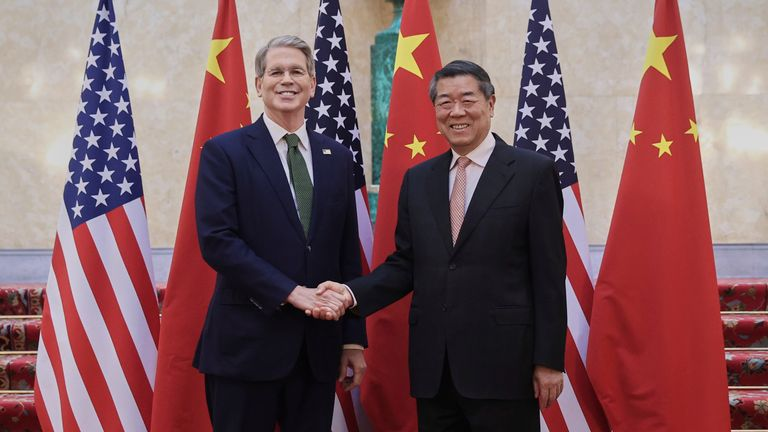
Unless Bessent reverses himself in the next 24 hours there will be no further negotiations between Iran and the United States. China played a critical role behind the scenes in bringing the US and Iran to Islamabad last Saturday for the first round of negotiations. Bessent’s explicit threats against China has enraged the Chinese and solidified their belief that the US is not a reliable negotiating partner. Nope… We’re the enemy.

Yes, the Chinese should talk to the Native American tribes in the US about the reliability of negotiations and treaties with the US Federal Government.

The United States signed hundreds of treaties with Native American tribes between 1778 and 1871, many of which were later broken, leading to land loss, forced relocations, and ongoing disputes over sovereignty.​

Historical Context​

From 1778 to 1871, the U.S. government signed approximately 368 treaties with various Native American nations, recognizing them as independent sovereign entities with rights to self-determination and land ownership. These treaties were intended to establish peace, define territorial boundaries, and regulate relations between the U.S. and Indigenous nations.
Despite their legal and moral significance, many treaties were ignored, violated, or manipulated as settlers expanded westward. The U.S. often failed to enforce treaty terms, leading to:​

Legal and Sovereignty Implications​

Continuing Impact​

The legacy of broken treaties continues to affect Native American communities today. Issues of land rights, sovereignty, and reparations remain central to legal and political discussions. Many tribes still rely on treaty provisions for claims to land, resources, and federal recognition.

I grew up in the 1960's watching old Hollywood cowboy movies and one of the phrases that really stuck with me was when an Indian chief in the movie would say "Whiteman speak with forked tongue."
Sadly, I guess nothing has changed.
 
To add to this, Bessent recently sent out a warning that any institution helping Iran process oil funds will be sanctioned. To that tend, he sent some letters to a few banks in China, warning them that they will be sanctioned if they process Iranian funds. To be sure, the guy's some kind of economic genius. 'Since the sanctions on Russia and Iran worked so well - let's do China!'

Question: I don’t understand this move. How is this supposed to threaten China when BRICS has set up trade mechanisms that by pass the USD?
 
Another daring (song) video

I remember 5 years ago, that not many artists toched the lies behind Corona and genetic injections in their music. It felt like a big silence to me. What surprises me now is, that far more daring songs are being released; after "Crimson Horizon", comes the song "Good Citizen" by a singer named Iyah May. As usual, the pudding lies in the lyrics - which really don't hold back, packing it all into the messy soup reality now is made of, indicating to what lies beyond darkly.

Let's face it; Today's critical (as well comic) songs and memes - as primitive they may look and sound - but they do have a large impact on the sheep, starting to awaken. The question is ... awakening to what ? How does humanity deal with what becomes now more visible to their eyes and minds ... or will we just go back to sleep ?


Good Citizen

Oh, you're a Nazi, oh, you want peace
You're just a citizen, and you're still on a leash
It doesn't matter which team you choose, at the end of the game, you lose
You're just a chess piece on a board full of Vaders


[Chorus]
Cool, now let's get rid of the cash
Digital ID, and let's turn up the tax
Mr. Thiel, Mr. Anderson, they warned us with the blue pill
And they tell us before they do it in the movies like it ain't real


[Verse 2]
Billy Gates, he makes a profit off disease
Buys up all the farms and patents what we eat
Him and Pfizer got a trillion-dollar dream
You can go and depopulate the elites


[Pre-Chorus]
So they killed Charlie, and they killed Marley
Both the Kennedys, and Marilyn
They killed Diana, and they killed Jackson
We are their legacy, this is their anthem
Stay silent, stay violent
Stay plugged in and divided


[Chorus]
Bombs drop from heaven just like hail
Dragged your own through the mud, well done, Israel
When the altar and a ballot and the barrel shouldn't meet
Cleanse a country, kill the children, Mr. Bibi, how do you sleep?


[Post-Chorus]
(Mm) This is an Orwellian wet dream
Puppet strings are under threat
(Mm) Burn our souls to power the machine
Puppet strings are under threat
Can kill my flesh, not my spirit, ooh
Puppet strings are under threat
Are you a wolf in a world full of sheep?
Puppet strings are under threat


[Bridge]
BlackRock and Starmer
I have to talk about Starmer
Okay, well, sing it
Palantir watch us like hawks, and BlackRock is black to its core
Funding the digital war, Starmer like Judas on tour
Now be a good civilian
While the folks on the hill keep making billions


[Pre-Chorus]
Keep up the porn, keep up the chems
Keep up the war, war, war
Keep up the Reps, keep up the Dems
Giving them more, more, more
Stay silent, stay violent
Stay plugged in and divided


[Chorus]
Cool, now let's get rid of the cash
Digital ID, and let's turn up the tax
Mr. Thiel, Mr. Anderson, they warned us with the blue pill
And they tell us before they do it in the movies like it ain't real


[Post-Chorus]
(Mm) This is an Orwellian wet dream
(Mm) Puppet strings are under threat
Burn our souls to power the machine
Puppet strings are under threat
You can kill my flesh, not my spirit, ooh
Puppet strings are under threat
Are you a wolf in a world full of sheep?
Puppet strings are under threat


[Chorus]
(Mm) This is an Orwellian wet dream
(Mm) Puppet strings are under threat
(Mm) Burn our souls to power the machine
Puppet strings are under threat
Can kill my flesh, not my spirit, ooh
Puppet strings are under threat
Are you a wolf in a world full of sheep?
Puppet strings are under threat


[Outro]
Once you perceive what lies beneath the surface
Once you glimpse the truth behind the polite illusions
You are faced with a terrible choice
Do you speak or do you remain silent?
If you speak, you disturb the dream
If you stay silent, you disturb your soul
This is not a simple dilemma, it's an ancient tension
Between truth and belonging, between authenticity and acceptance
When you speak, when you dare to name what others deny
You risk being cast out, and not always gently
 
I did a quick check of Israeli media, and they aren't happy!
Israel is:
  • Publicly muzzled by Trump ("PROHIBITED from bombing Lebanon")
  • Domestically furious (polls: despair, anger, confusion — majority don't believe Iran is weakened)
  • Militarily on high alert (IDF ready to resume "with force" on both fronts)
  • Strategically boxed in (war goals unachieved, Hezbollah intact, Iranian regime standing)
  • Planning for continued conflict(refinery relocation, capability rebuild assessments)
This is a cornered animal. Netanyahu can't claim victory, can't defy Trump openly, and can't satisfy his domestic hawks.


Iran has put out the warning. (Also got me thinking if they have been talking to some hyper-dimensional brethren, they seem pretty damn confident that they know how this will play out)


Snaps from wake up America LEGO vid
IMG_4411.jpeg
IMG_4409.jpeg
IMG_4412.jpeg
 
Another daring (song) video

She was called anti-Semitic for being anti-war, her contract's were cancelled and she was industry blacklisted. She is now producing her music and videos with the help of friends and is going viral.
 
Last edited:
Question: I don’t understand this move. How is this supposed to threaten China when BRICS has set up trade mechanisms that by pass the USD?

A good question - my layman's guess is based on the big picture. Despite the tension between US and China, they both are massively reliant on each other. China relies on the US consumer market to sell its goods, and the US relies on Chinese manufacturing. So neither of them are eager for a confrontation, as the collapse of one could easily cause the collapse of the other.

More than that, tho, and more to the point of these potential sanctions - many Chinese banks are still super reliant on the US SWIFT system for cross-border payments. A lot of people are talking about de-dollarization these days, but even in China it's not very widespread. So Bessent's sanctions could cause some significant disruption by cutting off Chinese banks completely from interaction with all of their clients that make use of that system. I found this to article be a good analysis to balance out all the influencers talking about the end of the Petrodollar as if it were a done deal:


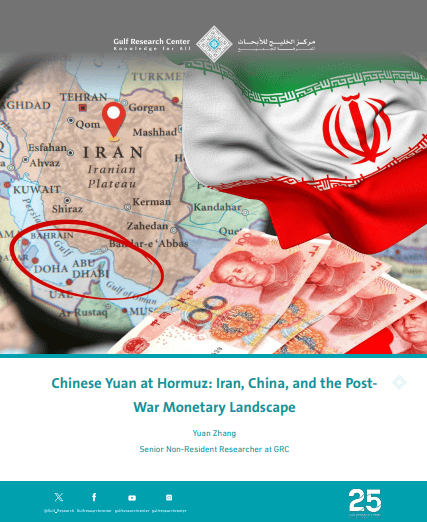
Beyond the Headlines: Why This Is Not a Simple De-Dollarization Story

What makes this episode analytically significant is not that the yuan suddenly replaces the dollar in global energy trade. It does not. The dollar remains dominant in reserves, trade finance, offshore funding, and currency hedging. IMF data for late 2025 still show the dollar accounting for well over half of disclosed official reserves, while the renminbi remains a small reserve currency by comparison.3 SWIFT’s latest tracker shows the RMB improving its position in global payments, but still only at a low-single-digit share.4 So, the Hormuz episode should not be mistaken for a systemic demise of dollar hegemony. It is better understood as a wartime monetization of access: a coercive, politically filtered payments zone in which Iran may be able to extract value using currencies and channels less vulnerable to U.S. pressure.

That distinction matters because the strategic novelty lies in the combination of three things. First, Iran is reportedly linking physical access to a maritime chokepoint with a preferred settlement instrument.

Second, the preferred instrument is not Iran’s own rial but a foreign currency associated with its most important economic partner, China. Third, stablecoins are reportedly being accepted alongside yuan, suggesting that the real objective is not monetary sovereignty in the classic sense but sanctions-resistant settlement. In other words, this is less a case of “Iranian monetary nationalism” than of wartime financial adaptation inside a dollar-centered international system where fragmentation is increasing. It reflects a world in which the relevant question is no longer simply which currency is most efficient, but which currency or payment rail can still function under coercion, surveillance, and blockade.

Importantly, this pattern is not without precedent. Russia’s shift toward yuan-denominated energy settlement following the 2022 sanctions regime, and Venezuela›s earlier experiments with non-dollar oil pricing and barter arrangements,6 illustrate a broader dynamic: When states face sustained financial exclusion from the dollar system, they tend to gravitate toward whatever currency or payment infrastructure their most important remaining trade partner can offer.

China, Iran, and the Emergence of a “Corridor Currency”

Before examining the specific dynamics at Hormuz, it is worth defining a concept that captures the kind of monetary role the yuan appears to be acquiring in settings like this. A “corridor currency,” as used in this analysis, refers to a currency that achieves outsized relevance not through universal adoption or deep global markets, but within specific trade corridors, sectors, or geopolitical contexts where the dominant global currency — in this case, the dollar — is either unavailable, politically risky, or operationally costly to use. The yuan›s growing role in Iranian energy trade, sanctioned commodity flows, and now reportedly in Hormuz transit fees exemplifies this logic.

It may sound paradoxical, but China’s role in this story is both central and limited. It is central because China is by far the most important buyer of Iranian crude. Available estimates suggest that China purchased the vast majority of Iran›s shipped oil in 2025, with some reports indicating volumes in the range of 1.3–1.4 million barrels per day, though exact figures are difficult to verify given the opacity of sanctions-affected trade.7 A separate Columbia analysis noted that China’s overall crude imports reached a record high in 2025 and that Iranian and Venezuelan crude together accounted for a significant share of those inflows.8 This means that any wartime or post-war mechanism that keeps Iranian oil flowing is likely to be designed with Chinese demand in mind. Meanwhile, China’s role is limited because Beijing is not trying to replace the dollar with its own currency everywhere.9 It is building pockets of RMB usage where trade dependence, sanctions pressure, and Chinese institutional reach overlap. Hormuz fits that logic perfectly.

Seen this way, the recent shipping reports do not point to a generalized “petroyuan” order. They show something more modest but perhaps more durable: the emergence of a “corridor currency.” The mechanism is straightforward. When a state such as Iran is constrained by U.S. sanctions, the problem is not only whether trade can occur physically, but whether payments can be executed through the financial channels that normally support cross-border commerce. Restrictions on access to dollar-based settlement channels, Western correspondent banking relationships, and other compliance-sensitive financial services make transaction execution more difficult and costly, even where underlying trade demand remains strong. In such conditions, alternative payment infrastructures become valuable not because they outperform the dollar system in general, but because they remain usable where dollar-centered channels are restricted.

This is where China’s Cross-Border Interbank Payment System (CIPS) becomes relevant. CIPS provides infrastructure for RMB-denominated cross-border payments and therefore offers a partial workaround for transactions that face heightened exposure to U.S. sanctions. Its scale has expanded significantly, and Beijing has continued to refine its institutional framework while also experimenting with digital-yuan applications. But CIPS should not be overstated. It does not replicate the scale, liquidity, legal reach, or network effects of the broader dollar-based financial system. Nor does it provide full insulation from that system: Many participating institutions still interact with global financial networks shaped by Western regulation, correspondent banking and, in some cases, SWIFT-based messaging. What CIPS offers, then, is not monetary independence, but partial transactional workaround. This is the sanctions-arbitrage logic at the core of corridor-currency usage: RMB settlement becomes attractive not because it replaces dollar settlement across the board, but because it remains more available in politically exposed transactions where dollar channels are constrained.

Even if the wartime mechanism itself proves temporary, its monetary implications may outlast the immediate crisis. If wartime transit fees in yuan become normalized even temporarily, regional actors may draw three lessons. The first is that the currency of emergency settlement need not be the dollar. The second is that access to Chinese financial infrastructure can confer geopolitical insurance. The third is that chokepoint politics can be monetized through non-dollar channels even when global balance sheets remain dollar centric.

These lessons would matter not only to Iran and China, but also to Gulf producers, Asian importers, insurers, commodity traders, and shipping firms. Once market actors begin preparing for the possibility that key routes may require politically acceptable currencies, they start diversifying payment capacities even if they continue pricing core contracts in dollars. That is how monetary fragmentation advances in the real world--not through overnight replacement, but through layered redundancy. The Russian and Venezuelan experiences already demonstrate this dynamic. Even when sanctions are partially relaxed or renegotiated, the payment habits and institutional relationships formed under pressure tend to persist. Infrastructure, once built, creates its own constituency.

For Iran, the benefits are evident. Charging transit fees in yuan or stablecoins would help Tehran generate revenue while reducing exposure to the dollar system and to Western banks’ compliance machinery. It also deepens Iran’s dependence on China, but from Tehran’s perspective that may be a price worth paying. Washington has spent years tightening sanctions on Iranian shipping, shadow banking, and oil networks, including vessels, intermediary firms, and maritime evasion channels. In that context, any transaction settled outside the dollar clearing system carries political value beyond its nominal amount. In effect, the mechanism suggests a strategy in which geography, coercion, and alternative rails are used to reprice access outside the most vulnerable dollar channels. This does not make Iran economically stronger in a general sense, but it does improve its bargaining position.

For China, the picture is more ambiguous. Beijing benefits whenever the RMB is used in high-profile cross-border transactions, especially in energy and transport. Chinese commentary and market reactions already reflect that logic: reports that yuan was being used for Hormuz tolls helped lift shares in Chinese payment-related firms, and analysts explicitly tied the move to expectations of wider RMB internationalization.10 But Beijing also faces risk. Chinese state-owned firms, banks, and mainstream shipowners remain deeply exposed to the dollar system and to secondary sanctions. Lloyd’s List reported that many mainstream China-linked fleets had actually pulled back from Hormuz exposure and left more opaque actors to operate in the area.11 So China’s likely preference is not a frontal monetary confrontation with the U.S., but a cautious expansion of RMB use through peripheral, politically deniable, or commercially segmented channels. Beijing wants more RMB usage without forcing its core institutions to absorb all the geopolitical heat. This is characteristic of Chinese statecraft: cautious, incremental, and reluctant to absorb unnecessary geopolitical costs.

The Post-War Gulf Monetary Landscape: Fragmentation, Not Replacement

The Arab Gulf states should pay close attention, because the deeper issue is not Iran alone. The issue is whether the post-war Gulf monetary landscape becomes more stratified. On one hand, the dollar will remain dominant for sovereign reserves, commodity pricing, portfolio investment, and most formal financial intermediation. On the other hand, however, politically exposed trade may increasingly migrate toward non-dollar settlement, local-currency arrangements, barter-like offsets, and digital assets. This would not produce a clean dollar-versus-yuan divide. It would produce a fragmented monetary order: dollar for scale, depth, and safety; yuan for politically sheltered trade with China; and stablecoins or other digital instruments for grey-zone settlement where formal banking channels are too risky. The danger for Gulf policymakers is that such stratification can erode transparency, complicate regulatory oversight, and create separate payment ecologies inside the same regional economy.

There are at least three plausible post-war scenarios. The first is reversion: once the conflict subsides and maritime security is restored, the wartime yuan-toll mechanism disappears, and the dollar-centered status quo largely resumes. This is the most likely, especially because the legal basis for Iranian tolls is widely disputed and because commercial actors prefer predictable, dollar-based markets when they are available. The second is persistence at the margins: the explicit toll regime fades, but the habits it created remain. Traders, importers, and shipping intermediaries retain the operational capacity to settle selected transactions in RMB or digital assets, especially for Iranian oil and sanctioned cargoes. The Russian precedent is instructive here. Even as geopolitical conditions shifted after 2022, the yuan-settlement infrastructure built during the sanctions period became a durable feature of Sino-Russian trade, not easily reversed once commercial actors had invested in the operational capacity to use it. The third is institutionalization: China and Iran, possibly with sympathetic regional partners, use the wartime experience to formalize more durable RMB clearing, bilateral swap usage, or dedicated shipping-payment arrangements.

The broader implication is that post-war de-dollarization, if it advances, will likely do so less through headline reserve shifts than through the politics of infrastructure. The key battleground is not only what currency appears on an invoice, but which payment system clears the transaction, which legal jurisdiction governs disputes, which insurers underwrite the cargo, and which state can guarantee access when normal rules break down. In that sense, Hormuz is not simply about Iran extracting tolls. It is a stress test for the future of monetary power in a fractured world economy. The dollar still dominates because it is backed by deep capital markets, legal predictability, and unmatched financial scale. But episodes like this show how rival monetary spaces can grow in the cracks opened by war, sanctions, and chokepoint coercion. The real post-war shift, then, may not be from dollar to yuan, full stop. It may be from one global monetary hierarchy toward a more fragmented landscape in which different currencies rule different corridors, under different political conditions, for different kinds of risk. That is a smaller claim than “the end of the dollar,” but it is also a more serious one.

Meanwhile, China has a policy in place that legislates non-participation in US sanctions, so who knows what their retaliation might be if Bessent's threat goes through - maybe something like counter-sanctions, similar to the counter-tariffs, or ending rare earth exports?

New anti-sanctions rules​

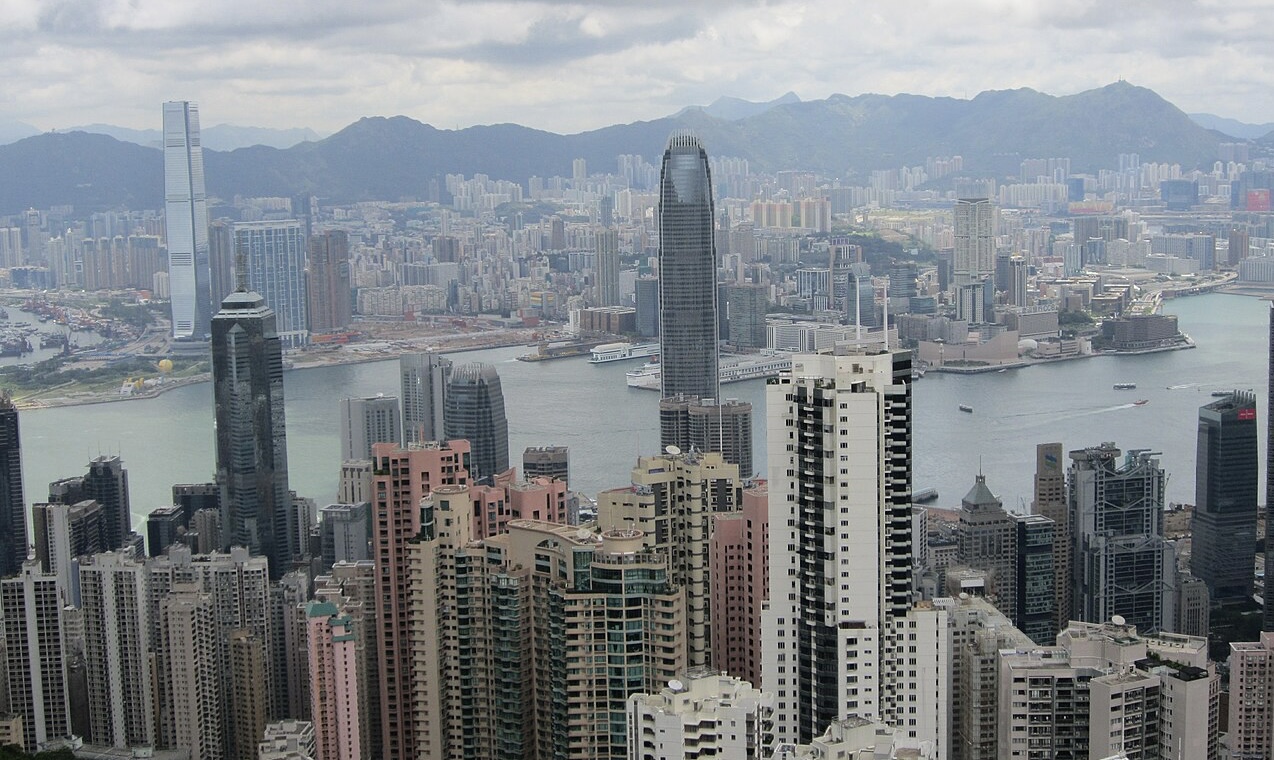
In June 2021, China passed the Anti-Foreign Sanctions Law to bar individuals and companies from complying with US and other foreign sanctions within its jurisdiction. At the time, Chinese media said the framework could be extended to Hong Kong by adding it to the Basic Law’s Annex III.

However, Beijing did not implement it as some Hong Kong banks said the law would place them in a difficult position between Chinese and US regulatory demands.

In October 2022, Chief Executive John Lee said Hong Kong would not enforce sanctions imposed by the US, adding that such measures against him and other officials had been dismissed. He said Hong Kong would continue to handle overseas capital in accordance with its own laws.

In practice, major banks in Hong Kong have complied with US sanctions because they need to retain access to the SWIFT (Society for Worldwide Interbank Financial Telecommunication) network for international settlements. They have closed accounts linked to US-sanctioned individuals, including Lee and Secretary for Security Chris Tang, without disclosing any reasons.

On April 13 this year, Chinese Premier Li Qiang signed a State Council decree introducing new rules to counter what Beijing calls unlawful extraterritorial jurisdiction by foreign states. With immediate effect, the regulations:

  • allow Chinese authorities to assert jurisdiction over relevant activities where a sufficient connection to China is established;
  • create a “malicious entities” list targeting foreign organizations and individuals involved in enforcing such measures;
  • prohibit any organization or individual from complying with or assisting in the enforcement of these measures;
  • allow affected Chinese citizens and companies to file lawsuits, with government agencies providing guidance and support.
Wen Wei Po, a pro-Beijing Hong Kong newspaper, said the new rules would extend protection to Hong Kong-based Chinese enterprises.

“While the regulations are drafted for the mainland, it would be unreasonable to exclude Hong Kong companies. In practice, authorities should apply the rules based on overall legislative intent rather than narrow technical boundaries,” the article said, citing an unnamed legal expert. “There is no need to overly focus on technical boundaries in how the provisions are applied.”

“If businesses choose to seek state protection, the government has the means to provide it. As long as they are Chinese enterprises, they fall within the scope of protection, and the new rules offer clearer and stronger legal backing,” the expert said.

Zhou Mi, senior researcher at the Chinese Academy of International Trade and Economic Cooperation, said the new regulations mark a more coordinated and institutionalized phase in Beijing’s push to counter what it sees as foreign long-arm jurisdiction.

“The framework has direct implications for Chinese companies seeking to defend their interests overseas,” he said, citing cases such as forced management changes at Nexperia, a Netherlands-based semiconductor firm, and US pressure on TikTok to divest assets and hand over data as examples of such measures.

“The launch of the new rules comes at a timely moment, as US actions in the Strait of Hormuz have crossed into what China defines as unlawful extraterritorial jurisdiction,” a Shandong-based columnist says. “Interference with third-country vessels, including Chinese ships, and disruption of legitimate trade interests fall within the scope of China’s countermeasures under the regulations.”

He said that, as energy security is crucial to the Chinese economy, it is legitimate for China to use both legal tools and naval capabilities to safeguard its national development interests.

Some observers say that Hong Kong banks could face penalties from Chinese or US authorities if they don’t take sides in geopolitical conflicts.

I remember reading Thomas Homer-Dixon years ago, and IIRC, the increasing interconnectivity of everything in a complex system increases the chances of unexpected emergent properties, as well as synchronous failure across all nodes. In this case, the nodes are countries. Basically, no country is an island unto itself, and each economy is deeply interconnected with all others. I'm a big fan of the new nationalism that's attempting to stand up against the globalist demons, but our geo-economic reality means that nearly every country has a hand in each other's pocket, whether they like it or not. There are also certain hands and certain pockets that count more than others, and Uncle Sam has the biggest grabby hands these days, and still has the biggest pockets for now.
 
I'm a big fan of the new nationalism that's attempting to stand up against the globalist demons, but our geo-economic reality means that nearly every country has a hand in each other's pocket, whether they like it or not. There are also certain hands and certain pockets that count more than others, and Uncle Sam has the biggest grabby hands these days, and still has the biggest pockets for now.
The layer of national and international trade mostly benefits the big players, the corporations. It may be the current reality on this planet, but I see little need for that level when people can get most everything they need on a regional and even local level in many instances. There are a lot of goods being traded on a global level that can easily be made or produced on a local level. Nevertheless, such a massive global infrastructure for trade... for what exactly? Local autonomous economies make local autonomous government possible. Nit-picky regulations keep everybody playing the same game.
 
Yesterday I had an idea that AI could be leveraged to fetch news articles from multiple news sources and cross‑check them to generate a digest. The most interesting aspect is that domestic news sources often publish differently framed information in the English versions of their outlets. This is especially visible in Israeli Hebrew sources. The digest from today is below; let me know if this makes sense. Multiple news sources are used for report generation, but the AI agent decides which ones are high signal. Unfortunately most of the Iranian domestic sources are inaccessible in their native language.

USA–Iran Conflict: Multi-Perspective Intelligence Digest
April 18, 2026 — Day 50

Executive Summary

Iran reversed its Strait of Hormuz opening within eighteen hours. On April 17, Foreign Minister Araghchi declared the strait "completely open" for the duration of the Lebanon ceasefire, sending oil down over 9% and equities surging. By the morning of April 18, Iran's Armed Forces announced "control of the Strait of Hormuz has returned to its previous state," and IRGC gunboats fired on two Indian tankers attempting transit. Tehran accused the US of violating the arrangement by maintaining its naval blockade and rejecting Iran's toll scheme. Trump responded by threatening to "start dropping bombs again" if no deal is reached, rejected Iran's toll demands ("Nope, no way, no"), and confirmed the blockade remains in force. The Lebanon ceasefire is already fraying: Israel struck targets in south Lebanon and continued home demolitions despite Trump's public prohibition on further bombing. Hezbollah contacted Tehran to report violations. Pakistan's army chief left Tehran and PM Sharif returned from Turkey, still pushing for a second round of talks in Islamabad. Oil markets face whiplash — the brief sub-$91 Brent plunge is reversing. The IRGC–Foreign Ministry rift over the opening decision has broken into the open, with Fars News (IRGC-linked) attacking Araghchi's announcement. Day 50 of the conflict, and the gap between any two parties' version of events has never been wider.

Trend Delta (vs. April 17 report)
  • Hormuz: complete reversal. Yesterday's "opening" lasted less than a day. The IRGC overruled the Foreign Ministry. Yesterday's report flagged that shipping firms were cautious and the IRGC's "new order" language signaled Iran intended to keep gatekeeper status. That proved more predictive than Trump's victory lap.
  • Escalation trajectory: rising. Yesterday was de-escalation theater. Today brought live fire in the strait, Trump threatening renewed bombing, and Israeli ceasefire violations in Lebanon. The temperature is higher than 48 hours ago.
  • Internal Iranian fracture now visible. Yesterday we noted the IRNA English vs. Farsi divergence. Today the rift went public: IRGC-linked media attacked the FM's opening decision. The military hardliners won this round.
  • Lebanon ceasefire eroding on day two. IDF struck Lebanese targets (described as "responding to ceasefire violations"), bulldozers continued home demolitions, and Hezbollah contacted Tehran about the situation. The ceasefire is already a formality.
  • New players: Turkey positioning itself as replacement Gulf financial hub (Al Jazeera). China openly studying military lessons from the war and pushing for a more active peace role (SCMP). Russia given another oil sanctions waiver by the US.
  • Yesterday's predictions: Weekend Islamabad talks — still being pursued, Pakistan wrapping up shuttle diplomacy. EU energy crisis — unchanged, kerosene timeline tightening toward May. Netanyahu's right flank — furious, confirmed by Axios reporting he was "shocked" by Trump's Lebanon bombing ban.

Confrontation Matrix

PlayerSaysDoesOmitsPreparing for...
US (Trump)"Anyone sick of winning yet?" Iran agreed to everything. Deal in days. Will "start dropping bombs again" if talks fail. Rejects Iran's toll scheme. Plans China visit.Maintains full naval blockade. Sanctions 7 Iraqi militia commanders. Extends Russian oil sanctions waiver. Threatens renewed strikes.No mention of IRGC firing on tankers. No acknowledgment that Hormuz opened and closed within 18 hours. Silent on Israeli ceasefire violations.Maximum pressure with off-ramp through Pakistan. Xi Jinping meeting as next diplomatic prize. "Peace president" midterms branding.
Iran (split)FM: Opening was system-level, Hormuz under supervision. IRGC: Control returned to previous state, strict armed forces management. New Leader threatens "bitter defeats."Closed Hormuz again. IRGC fired on two Indian tankers. Partially reopened eastern airspace. Killed 3 Iranian Kurds in Iraq. Shot man for refusing to lower mourning music. Night rallies (48th night).FM and IRGC openly contradicting each other. English outlets silent on power struggle. No Iranian outlet mentions Indian tanker shooting.IRGC asserting dominance. Hormuz as repeatable lever. Internal consolidation under new Leader.
Israel"Long road to peace." IDF "not limited" in self-defense.Struck targets in south Lebanon day two. Bulldozers continuing demolitions. Asked White House for "clarification" after Trump bombing ban.No mention of ceasefire violations. Minimal coverage of Trump's "PROHIBITED" language.Treating ceasefire as operational pause. Maintaining buffer zone.
RussiaOpen to dialogue on equal footing.Received new US oil sanctions waiver. Lukashenko calling Western leaders "transient."Silent on Hormuz reversal. No mention of Ukraine attacks.Exploiting US distraction. Benefiting from oil volatility.
ChinaXi "very happy" about Hormuz (per Trump).Academics analyzing military lessons for PLA. Studying minelaying drones for Taiwan. Pushing for active peace role.Chinese outlets silent on military analysis (SCMP English only).Drawing intelligence from conflict. Preparing for Taiwan scenario. Restructuring regional trade.
EUNaval mission after lasting peace. Merz signals German contribution.40+ countries at Paris summit but no deployment. Kerosene crisis worsening. Ferry prices rising.No acknowledgment Hormuz opening collapsed within 18 hours.~5 weeks jet fuel left. Turkey poaching Gulf investors. No independent leverage.
PakistanPushing for second round of talks.Army chief left Tehran. PM returned from Turkey. Arranging Islamabad Round 2.Cementing mediator role.

Key Findings

1. Iran's Hormuz reversal was an internal power play, not a diplomatic signal. The FM's opening decision lasted less than a day before the Armed Forces spokesperson — not the FM — announced its reversal via Fars News (IRGC-linked). Ynet Hebrew analysis identifies an open rift: the IRGC attacked Araghchi's decision. The FM spokesperson had said the opening was a "system-level decision," but the IRGC overruled it. (Ynet, SCMP citing Fars News, Al Jazeera)

2. IRGC gunboats fired on two Indian tankers in the strait. Israel Hayom Hebrew reports the IRGC fired on two Indian oil tankers attempting to transit Hormuz after the closure announcement. Al Jazeera separately confirmed reports of "gunfire on a tanker by gunboats." This is the first confirmed kinetic engagement in the strait since Iran's initial closure. India now has direct skin in the game. (Israel Hayom Hebrew, Al Jazeera)

3. Trump threatens renewed bombing while branding himself "the peace president." In a single day, Trump called himself "the peace president," said he was "way ahead of schedule," threatened to "start dropping bombs again," rejected Iran's toll scheme, confirmed the blockade stays, and posted about a "historic" meeting with Xi Jinping. Each message targets a different audience. (Al Jazeera, TASS, Trump Truth Social)

4. The Lebanon ceasefire is failing on day two. IDF struck targets in southern Lebanon. Al Jazeera correspondents report bulldozers continuing home demolitions. Hezbollah contacted Tehran about violations. A Hezbollah MP told Ynet: "We contacted the leadership in Tehran. Patience is running out." Hezbollah views the ceasefire as imposed. (Al Jazeera, Ynet Hebrew)

5. Netanyahu was blindsided by Trump's bombing ban. Axios reports Israel asked the White House for "clarifications" after Trump posted that Israel is "PROHIBITED" from further bombing in Lebanon. Ynet Hebrew frames this as Trump dictating terms. (TASS citing Axios, Ynet Hebrew)

6. Iraq spillover is escalating. Three Iranian Kurds — including two women fighters — killed in drone/rocket strikes in Kurdistan, blamed on Iran. US Treasury sanctioned seven Iraqi pro-Iran militia commanders. (ZeroHedge citing AFP)

7. Kuwait detained an American journalist for reporting a friendly fire shootdown. Ahmed Shihab-Eldin was arrested March 3 after publishing footage of Kuwaiti military shooting down three US F-15Es. Kuwait has tried to maintain the fiction of neutrality. CPJ and NYT confirmed his detention. (ZeroHedge citing Consortium News, NYT)

8. Iran domestic repression intensifying. Iranians fear a "fresh government crackdown." ANSA reports a teacher was shot for refusing to lower music during Khamenei mourning. Checkpoints multiplying. Night rallies (48th night) continue across cities — framed as loyalty oaths to the new Leader. (Times of Israel, ANSA, IRNA Farsi)

9. Oil markets face whiplash. Brent crashed >9% on yesterday's opening, briefly below $91. The closure within 18 hours creates a repeatable market weapon: each cycle degrades the price impact but increases volatility and shipping insurance costs. (Al Jazeera)

10. Turkey and China are the strategic winners. Turkey promoting Istanbul as replacement Gulf financial hub. SCMP reports Peking University analysts drawing military lessons for Taiwan scenarios. Both positioning for the post-war order. (Al Jazeera, SCMP)

11. US extends Russian oil sanctions waiver. New general license allows sales of Russian oil loaded before April 17. Russia notes "more and more countries, including the US" recognize Russian oil's systemic importance. (TASS)

12. Pro-Iranian attacks in the UK. Fourth suspect charged over Jewish ambulance attacks. Same group claims synagogue arson and Iran International offices arson. Drone threat against Israeli Embassy investigated. Pattern suggests organized cells, not random acts. (Times of Israel, BBC, Le Monde)

Domestic-Language Exclusives

Ynet (Hebrew): "Trump's promise exploded." Headline directly mocks Trump's "never again" claim. Identifies IRGC–FM rift: Fars News attacked Araghchi's opening decision. Also reports Hezbollah "contacted Tehran's leadership" — a Hezbollah MP said "patience has run out" and criticized the Lebanese president for not thanking Iran.

Israel Hayom (Hebrew): IRGC fired on two Indian tankers — specific operational detail not in English outlets. New Supreme Leader (third Leader, following Khamenei's assassination) threatened "bitter defeats" and "necessary steps to enhance military capabilities soon." This is political-level escalation.

IRNA Farsi: IRGC Navy reiterated "new order" on Hormuz. Night rallies (48th night) across a dozen cities. Son of martyred General Tangesiri: "the enemy thinks by martyring commanders it can stop resistance." Mourning and defiance fused.

ANSA (Italian): An Iranian teacher was shot for refusing to lower music during Khamenei mourning — a university lecturer's first-person account to ANSA. Checkpoints multiplying, protests feared. Unique reporting not in any English outlet.

FAZ (German): "Will summer travel see the kerosene run out?" EU airports' fuel shrinking, flights may be canceled, EU Commission active on emergency plans. Ferry operators raising prices. The war is reaching European consumers at the ticket counter.

Le Monde (French): California pistachio and nut exporters can't get shipments to Gulf countries. Food supply chain angle absent from US domestic coverage.

Manipulation Flags

1. Trump's dual "peace president" / "dropping bombs" messaging targets different audiences simultaneously. Domestic midterm voters get the peace brand; Tehran gets the threat. Not contradiction — strategic ambiguity.

2. The Hormuz open-close cycle is itself an information weapon. Iran can crash oil markets with an announcement, then reverse. Each cycle degrades trust — shipping firms will demand weeks of stability, not hours. The IRGC has weaponized volatility itself.

3. PressTV's "disappearing US scientists" story — 10 prominent scientists linked to military research mysteriously died or disappeared. Sourced only to PressTV, no corroboration. Classic Iranian strength narrative: the US war machine is suffering hidden catastrophic damage. Unverifiable.

4. Israeli omission of ceasefire violations. IDF strikes in Lebanon framed as "responding to violations" without describing what those violations were. Al Jazeera's correspondents report bulldozers continuing demolitions — not a response to any violation.

5. Iran's "48th night of standing" rally coverage demonstrates domestic unity externally and warns dissidents internally. ANSA's Italian exclusive of a man shot for playing music suggests the rallies are not as voluntary as state media implies.

What Happens Next
  • Hormuz is now a day-trading weapon. Iran has established a pattern — announce opening, let markets react, close again. Each repetition degrades price impact but increases volatility and insurance costs. The real damage is to the credibility of any future deal.
  • Second Islamabad round is the next inflection. Pakistan wrapping up shuttle diplomacy. If talks don't materialize before the ceasefire expires April 22, the Lebanon truce collapses and the bombing threat becomes live.
  • The IRGC–FM rift will shape Iran's negotiating posture. The military hardliners won the Hormuz round. If they maintain dominance, expect maximalist positions. The FM track has been publicly humiliated. Any deal requires IRGC buy-in, which now has a higher price.
  • Israel's ceasefire violations risk Hezbollah resumption. Hezbollah already contacted Tehran. IDF continued operations despite Trump's ban. If Hezbollah retaliates, the ceasefire collapses and the Hormuz link with it.
  • The Indian tanker shooting pulls New Delhi in. India was invited to the Hormuz mission. IRGC firing on Indian tankers creates domestic pressure. Watch for Indian naval deployments.
  • Watch Turkey. Ankara actively poaching Gulf investors. If Istanbul becomes an alternative financial hub, this reshapes post-war economic geography.
  • EU kerosene deadline: late May. If Hormuz remains intermittently closed, summer air travel in Europe faces real disruption — a domestic political crisis for Merz, Macron, and Starmer.

Sources

#OutletArticleURL
1Times of IsraelIran reimposes Hormuz restrictionshttps://www.timesofisrael.com/iran-...uses-us-of-violating-deal-to-reopen-waterway/
2Al JazeeraIran closes Hormuz again over US blockadeIran closes Strait of Hormuz again over US blockade of its ports
3Al JazeeraGunfire on vessel in HormuzGunfire reported by vessel in Strait of Hormuz
4Al JazeeraOil plunges then new Hormuz crisisAs oil prices plunge below $91 after weeks, a new Hormuz crisis emerges
5Al JazeeraTrump: "start dropping bombs again"Trump says US will ‘start dropping bombs again’ if no Iran deal is reached
6Al JazeeraDay 50 of the conflictIran war day 50: What’s happening in Tehran, Strait of Hormuz and Lebanon?
7Al JazeeraIsraeli shelling violates Lebanon ceasefireDisplaced Lebanese return as Israeli shelling violates ceasefire in south
8Al JazeeraPakistan pushes for more talksPakistan PM, army chief wrap up key trips in push for more US-Iran talks
9Al JazeeraTurkey woos investorsTurkiye woos investors amid Iran war fallout in Gulf economies
10Israel Hayom (Hebrew)Iran fired on Indian tankers in Hormuzאיראן תקפה כלי שיט בהורמוז, חמינאי: "נסב לאויבים תבוסות מרות" | היום
11Israel Hayom (Hebrew)Iran reverses: Hormuz closedאיראן מתהפכת: "מצר הורמוז נסגר, האמריקנים ממשיכים בשוד ימי" | היום
12Ynet (Hebrew)"Trump's promise exploded"ההבטחה של טראמפ התפוצצה: המתחים הפנימיים באיראן - ואיך זה ישפיע עלינו? | עושים סדר
13Ynet (Hebrew)Iran closed Hormuz againאיראן חסמה שוב את מצר הורמוז בגלל המצור האמריקני - וירתה על מכליות
14Ynet (Hebrew)IDF struck in Lebanon; Hezbollah contacted Tehranצה"ל תקף מחבלים בדרום לבנון, חיזבאללה: פנינו לאיראן; חייל צרפתי מיוניפי"ל נהרג
15Ynet (Hebrew)Iranians fear crackdown"זה יהיה עקוב מדם": באיראן מפנימים שהמשטר שרד, והאזרחים ישלמו מחיר
16Times of IsraelIranians fear crackdown: "fire under the ashes"https://www.timesofisrael.com/irani...ckdown-after-war-theres-fire-under-the-ashes/
17Times of IsraelUK charges suspect over Jewish ambulance attackshttps://www.timesofisrael.com/uk-po...t-over-attack-on-jewish-community-ambulances/
18SCMPIran reimposes Hormuz restrictionsIran reimposes shipping restrictions on Strait of Hormuz
19SCMPChina's military learns from Iran warHow China’s military could learn vital lessons from war in Iran
20SCMPIranians fear pressure increaseIranians fear ‘pressure will 100% increase’ after US, Israeli strikes stop
21TASSTrump doesn't rule out renewed strikesTrump does not rule out renewed strikes on Iran if negotiations fail
22TASSTrump Lebanon ban shocked NetanyahuTrump’s post banning Israel from bombing Lebanon catches Netanyahu off guard — Axios
23TASSIran reopens airspace partiallyIran partially reopens airspace for civilian traffic — air traffic controllers
24TASSUS extends Russian oil waiverUS extends permission for Russian oil sales despite political opposition — Russian envoy
25ZeroHedgeIraq spillover: 3 Iranian Kurds killedSpillover Conflict Still Raging In Iraq: Three Iranian Kurds Killed<!-- --> | ZeroHedge
26ZeroHedgeKuwait holds journalist over friendly fire reportKuwait Holds American Journalist After Reporting On 'Friendly Fire' Shootdown Incident<!-- --> | ZeroHedge
27Trump Truth SocialXi Jinping meeting plannedDonald J. Trump: "President Xi is very happy that the Strait of Hormuz is open and/or rapidly ...
28Trump Truth SocialUFO files "very soon"Donald J. Trump: "Trump reveals 'very interesting' findings in top secret government UFO files...
29PressTVUS probe: disappearances of scientistshttps://presstv.ir/Detail/2026/04/1...terious-disappearances-of-elite-US-scientists
30IRNA FarsiIRGC Navy: new order governs Hormuzhttps://www.irna.ir/news/86129956/
31IRNA EnglishIran announces reopening of Hormuzhttps://en.irna.ir/news/86129876/
32ANSATeacher shot for refusing to lower music'Si rifiuta di abbassare la musica per il lutto di Khamenei e gli sparano' - Medio Oriente - Ansa.it
33FAZKerosene crisis: will it run out?Irankrieg: Geht zur Sommerreisewelle das Kerosin aus?
34Le MondeUS nut producers hit by HormuzClient Challenge
35Le MondeIran International offices arson — 3 chargedClient Challenge
36Der SpiegelShipping firms react hesitantlyIran: Reeder reagieren zögerlich auf Öffnung der Straße von Hormus
37El PaísShips defy blockades with spoofingLos buques desafían los bloqueos en Ormuz con identidades falsas, transpondedores apagados y la técnica del ‘spoofing’
38BBCIsrael-Lebanon ceasefire: what we knowIsrael-Lebanon ceasefire: What we know about the deal
39ChinaNewsUS considers $20B for Iran uranium知情人士称美国考虑“拿伊朗的钱换伊朗的铀”-中新网
 
Back
Top Bottom