Putin Recognizes Donbass Republics, Launches 'SMO' to 'Denazify' Ukraine

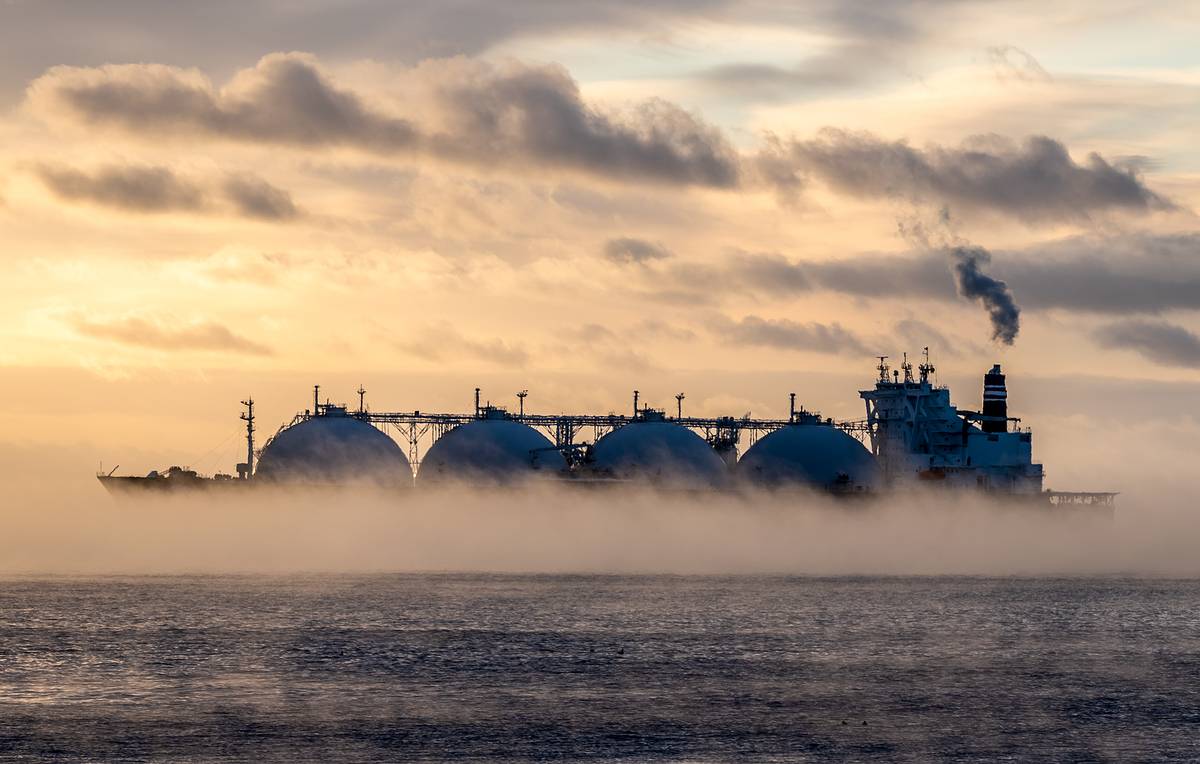
A suspected Ukrainian assault has hit a Russian LNG gas carrier, the Arctic Metagaz, near Malta's territorial waters. I'll bet Britain, along with the Pentagon and possibly France, was involved in this act of terrorism against Russia, but that's obviously just my speculation.

March 3, 2026
An LNG carrier identified as the Arctic Metagaz, part of Russia’s emerging shadow fleet transporting sanctioned liquefied natural gas, was reportedly on fire early Tuesday in the central Mediterranean off the coasts of Malta and Libya.

Footage circulating on the platform X appeared to show a large LNG carrier engulfed in flames following what several social media accounts described as explosions. The authenticity of the video could not immediately be verified. However, preliminary visual analysis suggests the imagery does not match previously documented LNG carrier fire incidents that have circulated online in recent years.

A representative of the Diaplous Group, a maritime security and risk management firm based in Greece, confirmed to gCaptain by phone that the vessel was indeed on fire. “We can confirm it happened, but we do not know any further details at this time,” the representative said.

EOS Risk Group and Bloomberg are now also reporting on the incident. EOS’ alert reads: “At approximately 0400LT a tanker, ARCTIC METAGAZ (IMO: 9243148) is reported to have suffered a drone attack while in transit eastbound in the Mediterranean, SE of Malta. Local reporting indicated a fire onboard. There was no distress signal by the vessel and no information on the status of the crew or cargo…. ARCTIC METAGAZ, which is under US and UK sanctions since 2024, had departed Murmansk, Russia, on 24 February after loading cargo at an FSU and was likely in transit toward Suez.

According to vessel tracking data, the Arctic Metagaz loaded LNG at the Saam floating storage unit (FSU) on February 18 before transiting around the United Kingdom and Spain into the Mediterranean. The vessel’s Automatic Identification System (AIS) signal was reportedly lost yesterday while it was approximately 30 nautical miles off Malta’s northeastern coast.

1772651963585.png

Arctic Metagaz’s recent AIS track off the coast of Malta (Source: MagicPort Maritime Intelligence)

Data from Flightradar24 showed a Turkish Navy ATR 72-600 maritime patrol aircraft circling the area near the last known position of the vessel, suggesting regional authorities were actively monitoring the situation.

1772652033643.png

Screenshot of Turkish Navy patrol circling near Arctic Metagaz’s last known location. (Source: Flightradar24)

Greek media outlets reported that the sanctioned vessel may have been struck around 4:00 a.m. local time, followed by multiple explosions. These claims remain unconfirmed.

Photos have since begun circulating online showing the initial explosion:

1772652185301.png


The Armed Forces of Malta (AFM) Maritime Squadron, the country’s primary maritime safety, law enforcement, and search and rescue entity, did not immediately respond to requests for comment.

It remains unclear whether the incident was the result of an accident, mechanical failure, or a deliberate attack by air or sea. There is also no confirmation at this stage whether the event is linked to escalating tensions involving Iran or represents a targeted Ukrainian operation.

The Arctic Metagaz is among roughly a dozen vessels used to transport sanctioned LNG from Russia’s Arctic LNG 2 facility to buyers at China’s Beihai Terminal. These vessels have drawn increased scrutiny amid Western sanctions targeting Russia’s energy exports.

Ukraine has previously demonstrated an ability to strike Russian naval and logistics assets far beyond the Black Sea. Ukrainian intelligence and special operations units have claimed responsibility for sabotage and explosive attacks against Russian-linked vessels and infrastructure in European waters.

The first confirmed Ukrainian attacks on a vessel in the Mediterranean occurred just over two months ago when the Qendil, an Omani-flagged “shadow fleet” tanker was struck between Crete and Malta

Update:

March 4, 2026
1772651069501.png

An LNG carrier central to Russia’s sanctioned Arctic gas trade was rocked by an explosion around 4 a.m. on March 3 roughly 150 nautical miles southeast of Malta, in an incident Moscow said was a Ukrainian attack and that could ripple through the Kremlin’s fragile LNG shadow fleet logistics network.

Photos taken after the blast show at least one cargo compartment fully blown open, with extensive fire damage visible across much of the hull and deck.

Satellite images earlier on March 4 showed the vessel still afloat, but according to Libyan port officials the vessel has now sunk.

All 30 crew members escaped via life rafts and were rescued, according to Russian and Maltese authorities.

Russia’s Ministry of Transport said in a statement that “on March 3, the Russian gas carrier Arctic Metagaz was attacked in close proximity to the territorial waters of the European Union member state of Malta.”

The tanker was en route from Murmansk “carrying cargo cleared in accordance with all international regulations,” the ministry said, adding that “the attack was carried out off the coast of Libya by unmanned Ukrainian boats.”

“Thanks to the coordinated efforts of Maltese and Russian rescue services, all 30 crew members, all Russian citizens, were rescued,” it said.

“We classify this incident as an act of international terrorism and maritime piracy, a gross violation of the fundamental norms of international maritime law,” the statement added, alleging the attack was carried out “with the connivance of the authorities of EU member states.”

Ukraine has not publicly commented.

The vessel, currently sailing as Arctic Metagaz and previously known as Everest Energy, has been one of the most closely tracked ships involved in exports from Russia’s Arctic LNG 2 project, majority owned by Novatek.

On Aug. 25, 2024, under its former name, it became the third vessel to load LNG from the sanctioned Utrenniy terminal at Arctic LNG 2. It returned to the terminal on Sept. 6 and Oct. 5, 2024, making three liftings during the project’s first export season.

In September 2024, the vessel also became the first ever conventional, non-ice-class LNG carrier to transit the Northern Sea Route (NSR), a high-risk passage typically reserved for specialized Arc7 ice-class tankers.

The decision underscored the extent to which Russia was prepared to stretch operational norms to keep gas flowing despite Western sanctions that have limited access to ice-class tonnage, insurance and buyers.

The risks became evident in August 2025 when Arctic Metagaz again attempted an NSR transit but became stuck near the ice edge, halting and reversing course in heavy sea ice.

The episode highlighted the hazards of deploying non-ice-class vessels in Arctic waters and the logistical strain facing Arctic LNG 2, which lacks sufficient purpose-built carriers.


During the 2024 season, the vessel offloaded at the Saam floating storage unit (FSU) on August 29 and at the Koryak FSU on September 22.

After the initial Arctic campaign, Arctic Metagaz spent much of the winter and spring of 2024/25 circling the eastern Mediterranean loaded with cargo, reflecting the difficulty of placing sanctioned LNG in stable end markets.

It returned north near Kola Bay on May 24, 2025, preparing to resume shadow fleet operations for the summer navigation window.

Following its 2025 ice entrapment it discharged a cargo at China’s Beihai terminal on October 13, 2025 – the ninth Arctic LNG 2 delivery to that facility.

On November 25, 2025, the vessel loaded LNG from the Saam FSU and returned to Asia via the Suez Canal, offloading at Beihai on January 3, 2026.

It loaded again on Feb. 18 during a rare triple ship-to-ship (STS) transfer near Murmansk – the cargo believed to have been aboard when the explosion occurred.

That triple STS marked the first known simultaneous LNG transfers from both Yamal LNG and Arctic LNG 2 onto separate conventional carriers, underscoring Russia’s increasingly complex maritime choreography to sustain exports.

If the incident is confirmed as a deliberate attack, it could significantly complicate logistics for Novatek.

The company has just 11 shadow fleet LNG carriers at its disposal, according to shipping data – already too few to carry the project’s full nameplate capacity. Arctic LNG 2 is currently operating at roughly 30% of that level of 3mtpa, constrained largely by shipping limitations.

The loss or long-term sidelining of even one vessel would represent a meaningful blow to the project’s transport capacity.

The blast also raises immediate routing questions. Seven Arctic LNG 2 shadow fleet vessels have continued using the Mediterranean, Suez Canal and Red Sea corridor despite regional instability.

One of them, Arctic Pioneer, is currently holding outside Port Said after a northbound Suez transit. The vessel delivered Arctic LNG 2 cargo to Beihai on February 11 and was likely returning toward Murmansk to reload.

Its pause near Egypt may signal that Moscow is reassessing whether to continue risking Mediterranean passages – or whether to reroute via the Cape of Good Hope, adding weeks to voyages and further tightening available tonnage.

For a project already operating below capacity due to sanctions and shipping constraints, the explosion off Malta underscores the vulnerability of Russia’s Arctic LNG shadow fleet – and the mounting risks facing vessels that form the backbone of its sanctioned gas exports.

MOSCOW, March 4. /TASS/. A Russian gas carrier was attacked in the Mediterranean Sea, the Russian Transport Ministry reported.

TASS has gathered the key facts about the incident.

About the incident

- The Russian gas carrier Arctic Metagaz was attacked on March 3 in the Mediterranean Sea.

- The incident occurred in close proximity to the territorial waters of the European Union member state of Malta.


- According to the Transport Ministry, the tanker was en route from the port of Murmansk carrying cargo documented in full compliance with international regulations.

- The attack was carried out from the Libyan coast using Ukrainian unmanned boats, the ministry said.

Legal assessment

- The Transport Ministry described the attack as an act of international terrorism and maritime piracy.

- The ministry called the incident a gross violation of the fundamental norms of international maritime law.

- Such actions, carried out with the connivance of the authorities of EU member states, must not remain without assessment by the international community, the ministry said.

Crew

- All crew members were rescued thanks to coordinated efforts by Maltese and Russian rescue services.

- There were 30 crew members on board, all Russian citizens.

About the tanker

- The gas carrier Arctic Metagaz was built in 2003, according to data from the Russian Maritime Register of Shipping.

- The carrier is registered in the Port of Sochi.

MOSCOW, March 4. /TASS/. A Russian gas carrier was attacked in the Mediterranean Sea by Ukrainian unmanned boats, and all 30 Russian crew members have been rescued, the Russian Transport Ministry reported.

"On March 3, a Russian vessel — the gas carrier Arctic Metagaz — was attacked in close proximity to the territorial waters of the European Union member state of Malta. The tanker was carrying cargo documented in full compliance with all international regulations and was en route from the port of Murmansk," the statement said. The attack was carried out from the Libyan coast using Ukrainian unmanned boats, the ministry added.

Thanks to coordinated actions by Maltese and Russian rescue services, all 30 crew members, who are Russian citizens, were rescued, the ministry said.

The Russian Transport Ministry described the attack as an act of international terrorism and maritime piracy.

"We qualify what happened as an act of international terrorism and maritime piracy, a gross violation of the fundamental norms of international maritime law. Such criminal actions, carried out with the connivance of the authorities of European Union member states, must not remain without assessment by the international community," the ministry said.


MOSCOW, March 4. /TASS/. Two sailors were injured in the attack on the Russian gas carrier Arctic Metagaz in the Mediterranean Sea on March 3, the Russian Transport Ministry’s official spokesman Nikolay Shestakov told TASS.

"According to updated information, two sailors suffered burns as a result of an incident with the Russian gas tanker Arctic Metagaz. They were taken off the ship by a lifeboat and taken to a hospital in Benghazi. They will be given necessary medical assistance. The remaining 28 people are on their way to Murmansk," he said.

Earlier reports said that the Russian gas carrier was attacked by Ukrainian unmanned boats from the Libyan coast. The incident occurred in close proximity to the territorial waters of the European Union member state of Malta. The Transport Ministry said that the tanker was en route from the port of Murmansk carrying cargo documented in full compliance with international regulations.

The Transport Ministry described the attack as an act of international terrorism and maritime piracy.
 
There is one post from Viktor Orban on X that he could use force to reestablish the friendship-pipeline. The EU tried to get an inspection, which was denied by Ukraine as I read. Then there is a threat from Zelensky, if Hungary doesn't vote for the 90 billion credit/ loan, that they will use military force.

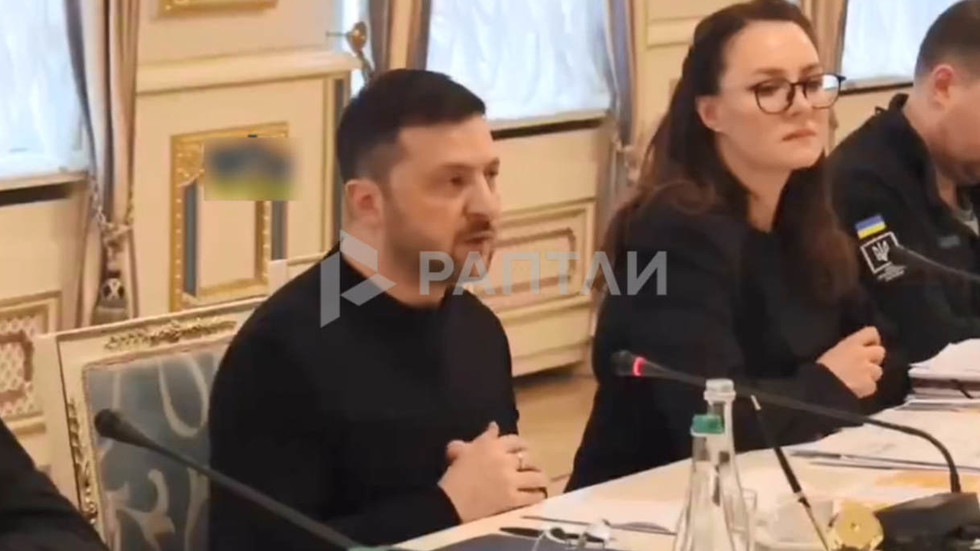
We hope that one person in the EU will not block the €90 billion… Otherwise, we will give the address of this person to our armed forces, to our guys, so that they call him and communicate with him in their own language.


There is one post from Viktor Orban on X that he could use force to reestablish the friendship-pipeline. The EU tried to get an inspection, which was denied by Ukraine as I read. Then there is a threat from Zelensky, if Hungary doesn't vote for the 90 billion credit/ loan, that they will use military force.


Freedom and democracy, Zelensky-style.
 
Exchange comes amid a deadlock in US-brokered negotiations to end the four-year war between the two countries.
Screenshot 2026-03-06 065828.png


Ukraine and Russia have freed 200 prisoners of war (POWs) each, officials from the two countries said, as efforts to reach a deal to end their four-year conflict appear to have stalled.

Thursday’s release is part of an exchange agreed during talks in Geneva last month that will see a total of 500 POWs freed by each side, Ukrainian and Russian officials said, with the remaining 300 expected to be released on Friday.

Recommended Stories

list of 3 items
“Today, 200 Ukrainian families received the most-awaited message – their loved ones are coming home,” Ukrainian President Volodymyr Zelenskyy said in a social media post.

“And this is always good news for all of us, for the entire country: the return of our people to their homeland,” added Zelenskyy, thanking the United States “for its support in making this exchange possible”.

Video footage shared by Ukrainian Human Rights Commissioner Dmytro Lubinets showed servicemen leaving buses, wrapped in Ukrainian flags and shouting “Glory to Ukraine!”, before embracing loved ones who came to welcome them.

The Russian Defence Ministry also published footage showing its soldiers boarding a bus and cheering while draped in Russian flags.

5 Mar, 23:22
According to a strike UAV operator with the 1251st Motorized Rifle Regiment, call sign "Znakhar", the enemy’s unmanned aerial vehicles are currently suffering considerable losses
TOKMAK, March 6. /TASS/. The Russian Armed Forces have an advantage in unmanned aerial vehicles (UAV) in the Zaporozhye Region over Ukrainian troops, a strike UAV operator with the 1251st Motorized Rifle Regiment, call sign "Znakhar," told TASS.

"Currently, the Ukrainian UAVs aren’t as successful. We have the advantage in the air. They have to retreat, they lose a lot of ‘birds’ because they are being downed all the time. We don’t let them approach our positions, so it’s difficult for them," the serviceman said.

According to him, the enemy’s unmanned aerial vehicles are currently suffering considerable losses.

6 Mar, 00:09
An FPV drone operator lets civilian vehicles pass freely, the Volunteer Corps operating within Russia’s Battlegroup South said
MOSCOW, March 6. /TASS/. Russian unmanned aerial vehicle (UAV) units have begun active combat operations in Kramatorsk in the Donetsk People’s Republic, consistently identifying and destroying Ukrainian military equipment on city streets, the Volunteer Corps operating within Russia’s Battlegroup South reported.

"UAV units of the Defense Ministry’s Volunteer Corps operating within the Battlegroup South are already conducting active operations in Kramatorsk itself. <…> Our FPV drones are methodically identifying and destroying enemy military hardware on city streets," the statement reads.

A Russian FPV drone approaches a busy road at a low altitude and hovers at its side. An FPV drone operator lets civilian vehicles pass freely. However, as soon as an off-road vehicle of the Ukrainian army comes within the drone’s sight, it immediately delivers a strike, the Volunteer Corps said.

"Commanders of UAV units say themselves that this is how our UAVs operate, while letting civilians move past freely," it said.

The Volunteer Corps also shared a video of operations by its Bars-31 unit.

"The video shows the eastern part of Kramatorsk, the areas of a thermal power plant and an airport," a fighter of the Volunteer Corps told TASS.

Maria Zakharova is on point and is a ❤️‍🔥

Russia on Zelensky’s Offer to Send Drone Interceptors to the Middle East
Mar 5, 2026 #Russia #Zelensky #IsraelIran
Russian Foreign Ministry spokesperson Maria Zakharova comments on statements made by Ukrainian President Volodymyr Zelensky regarding a possible ceasefire and Ukraine’s proposed role in helping Middle Eastern countries counter drone threats.

Zakharova criticizes Zelensky’s remarks about sending Ukrainian drone operators to the Middle East and calls the proposal unrealistic while Ukraine continues requesting additional air defense systems from Western allies.Zakharova also questions Kiev’s call for a temporary ceasefire and accuses the Ukrainian leadership of trying to remain in the international spotlight amid escalating tensions in the Middle East.

Hungary Detains 7 Ukrainians With $82M Cash & Gold in Suspected Money Laundering Case | APT
Mar 6, 2026 #Hungary #Ukraine #BreakingNews
Authorities in Hungary have detained seven Ukrainian citizens suspected of money laundering after seizing around $82 million in cash and gold being transported in armored vehicles.

According to the Hungarian National Tax and Customs Administration, the convoy was carrying $40 million, €35 million, and nine kilograms of gold from Austria to Ukraine.

The detentions come amid rising tensions between Hungary and Ukraine over oil shipments and financial transit routes. Hungarian Foreign Minister Péter Szijjártó said Kyiv must explain the movement of large cash sums across Hungarian territory.

Ukraine’s Foreign Minister Andrii Sybiha said the detained individuals were employees of the state bank Oschadbank and demanded their immediate release, escalating the diplomatic dispute.

Another feel-good story for the sad souls of the Ukrainian army


Thomas Newdick
Published Mar 5, 2026 1:1 Snip:
For more than three weeks, Ukraine was left with only “a handful” of U.S.-made AIM-9 Sidewinder air-to-air missiles for its F-16 fleet, after the supply of the weapons dried up. This is the conclusion of a Reuters report, citing three sources, all of whom are said to have direct knowledge of the situation. It also comes as Kyiv is increasingly in competition with the U.S. military and its Gulf allies as they come under continued pressure from Iranian drones and missiles in the Middle East.

The shortage of infrared-guided air-to-air missiles occurred between late November and mid-December of last year, the three sources said. This was a critical time, just before Russia began its winter campaign of bombardment against Ukrainian cities and infrastructure.

According to one of the sources, during the period when AIM-9s were in short supply, F-16 pilots were forced to fly daytime sorties and instead try to shoot down drones with their internal 20mm M61 Vulcan cannon. This is hardly ideal, since the Russian drone attacks normally come at night, but gunning down targets in the hours of darkness is judged too dangerous.

Skipping Down:

The Ukrainian Air Force flew its first F-16 combat sorties against aerial targets in August of 2024.

According to one Ukrainian F-16 pilot, on one occasion, one of his squadrons destroyed six cruise missiles and seven attack drones in a single sortie. This is a remarkable tally, by any measure, and would have required extremely precise use of the gun, even if all available missiles were successfully expended.

On the way to the F-16: an exclusive story from a Ukrainian pilot
 
Hungary Detains 7 Ukrainians With $82M Cash & Gold in Suspected Money Laundering Case | APT

So Hungary detained a retired Ukrainian special services general and six other Ukrainians suspected of money laundering. They planned to transport 40 million dollars, 35 million euros, and 9 kg of gold from Austria to Ukraine. The Ukies are saying it's a Ukrainian bank transfer and all above board but the Hungarians don't believe them and are investigating, or so they say.

This is getting interesting.
 
Back
Top Bottom