Putin Recognizes Donbass Republics, Launches 'SMO' to 'Denazify' Ukraine

55 minutes ago
Jessica Rawnsley and Vitaly Shevchenko, Chief Analyst, BBC Monitoring, Kyiv
At least five people have been killed in Russian strikes across Ukraine, after a massive overnight aerial bombardment targeted several regions across the country.

A 61-year-old woman was killed when a drone hit an electric train in Kharkiv early on Tuesday, authorities said, while other deaths were reported in Zaporizhzhia, Kherson and Poltava

Officials said the attacks were among the worst in ten days, and came hours after Ukrainian President Volodymyr Zelensky had warned of a forthcoming "massive strike" in his nightly address.

Russian strikes targeting energy infrastructure also disconnected Moldova's key power link with Europe, President Maia Sandu said, warning the situation remained "fragile".

Sirens wailed across Ukraine on Monday night as Russia launched a barrage of missiles and drones at the country. Seven ballistic missiles, 23 cruise missiles, four air-launched guided missiles and 392 drones were used in the attack, the Ukrainian Air Force said in a statement on Telegram.

Air defence units intercepted 25 missiles and 365 drones, it added.
In a post on X on Tuesday, Zelensky said: "These numbers clearly show that more protection is needed to save lives from Russian strikes. It is important to continue supporting Ukraine."

Attacks of this scale have been occurring roughly once a week or every ten days in recent months, and there had been mounting fears in the past few days that another wave of strikes was imminent.

"Please pay attention to air raid sirens tonight," Zelensky said earlier in his video address to the nation on Monday. "Intelligence says Russia may be preparing a massive strike."

This time the attack focused on cities other than the capital, Kyiv. Damage was reported in eleven regions, Zelensky said.
Among the worst affected was the south-eastern city of Zaporizhzhia, which was struck by six drones followed by six ballistic missiles. One person was killed and nine injured after a residential high-rise building was hit, local authorities said.

Local resident Dymtro Zaiets told Reuters news agency that his family was woken by a "very loud explosion".

"We quickly gathered our things and ran downstairs, everything was on fire on our floor," he said. "There was smoke, and we took our three-month-old child and ran quickly to the underground shelter. My car is destroyed. All our windows were blown out."

Elsewhere, at least two people were killed and 12 injured when strikes hit residential buildings and a hotel in the north-eastern Poltava region, governor Vitaliy Dyakivnych said on Telegram.

In Kherson, a civilian was killed when his house came under Russian shelling, the head of the city's military administration, Yaroslav Shanko, said.

A 75-year-old woman was injured and hospitalised after a Russian attack on the Dnipropetrovsk region, authorities said, and a 65-year-old bus driver was injured when his vehicle was hit by a drone in Sumy.

Moldova's government condemned the strike on energy infrastructure in the Odesa region, which led to the disconnection of the Isaccea-Vulcanesti power line, used by Moldova to import electricity from neighbouring Romania.

"Alternative routes are in place, but the situation remains fragile," President Sandu wrote on X. "Russia alone bears responsibility."
In a post on Telegram, Moldova's foreign ministry said the attacks "undermine regional energy security and endanger critical civilian infrastructure".

Moscow's overnight attack took place as the pace of the Russian advance in eastern Ukraine has slowed down significantly, with Ukrainian forces reporting minor counteroffensives in some areas.

Russia's defence ministry said its air defences had intercepted "55 Ukrainian fixed-wing unmanned aerial vehicles" over various regions overnight.

Zelensky has previously warned that Russia will attempt to "exploit the war in the Middle East to cause even greater destruction" in Ukraine.

Air-defence systems critical to Ukraine's ability to defend itself against Russian missile attacks are being rapidly expended in the US-Israel war with Iran.

In an interview with the BBC earlier in March, the Ukrainian President said Putin wanted a "long war" in the Middle East because it would weaken Kyiv, with US resources and focus directed elsewhere.

He said that peace negotiations were being "constantly postponed", adding: "There is one reason - war in Iran."

Ukrainian and US officials held talks over the weekend over how to end Russia's full-scale invasion of Ukraine - the first such negotiations since the US and Israel launched strikes on Iran last month.

Following talks on Sunday, Zelensky said it was clear that US attention was focused on Iran, but that "this war of Russia against Ukraine must also be brought to an end".

Several rounds of talks mediated by the US have so far failed to stop the fighting in Ukraine or change Russia's maximalist demands.
The Trump administration's decision to ease its sanctions on countries buying Russian oil earlier this month was welcomed by the Kremlin, but has sparked deep concerns among Ukrainians.

24 Mar, 04:23
According to the Russian top diplomat, developments in Latin America and the Middle East are a direct result of the West’s attempts to preserve the remnants of its dominance
MOSCOW, March 24. /TASS/. The events in Latin America and the Middle East directly stem from the West’s attempts to preserve the remnants of its dominance, Russian Foreign Minister Sergey Lavrov said at a meeting of the Gorchakov Fund’s Board of Trustees.

He noted that some international relations experts have already begun to refer to the conflicts unfolding around the world as World War III.

TASS has compiled the foreign minister’s key statements.

Foreign policy

Western elites continue to "invest in confrontation" with Russia: "The Western minority, or rather the elites of Western countries, continue to invest whatever political and economic resources they have left in their confrontation with our country."

The Russian side, "together with its African friends," is preparing for the next Russia-Africa summit, which will take place in Moscow this October.

Has World War III already started?

Some international relations experts have already begun to characterize the conflicts unfolding around the world as World War III: "Some specialists, including those in Russia who study the history of international relations, have already begun to describe and characterize these events as World War III."

Developments in Latin America and the Middle East are a direct result of the West’s attempts to preserve the remnants of its dominance: "Events that directly stem from the attempts of the Western minority of states to preserve the remnants of their dominance on the international stage using crude methods of force, regardless of any previously signed and ratified obligations under international law."

Middle East conflict

Russia "is concerned about what is happening in relations between Iran and its neighbors."

"Harsh military aggression by the US and Israel" against Iran risks destabilizing international trade and global energy security: "The situation threatens to destabilize not only the Gulf region, which has already happened, and not only the entire Middle East, which is also happening, but also global trade, global energy security, and international transport and business communications."

Russia is sharing its assessments of the current situation with both Iran and the member states of the Gulf Cooperation Council: "We are currently discussing all these issues and, of course, sharing our assessments and the evolution of our views with both the Iranians and the member states of the Gulf Cooperation Council."

Russia is convinced that "the path of negotiations, the path of unity and balancing interests is the one that serves the interests" of the Middle East.

The International Atomic Energy Agency’s (IAEA) response to threats to nuclear security in the Middle East is inappropriate: "The IAEA leadership is responding in a very inappropriate manner to the direct threats to nuclear security created by the unleashed aggression."

Cuba situation

External pressure on Cuba is intensifying: "The escalation of tensions surrounding Cuba, which is facing increasing external pressure, is a cause for serious concern. We reaffirm our solidarity with our Cuban friends and their right to pursue a sovereign path of development."

Russia will continue to provide Cuba with "necessary help and support, including material assistance": "Humanitarian aid is extremely relevant for our Cuban friends at this stage."

Palestine

Russia, together with its Arab partners, will strive to ensure that justice prevails in resolving the Palestinian issue: "This is unjust, and together with our Arab and Muslim friends, we will strive to ensure that justice prevails in full accordance with the resolutions of the UN General Assembly and the Security Council."
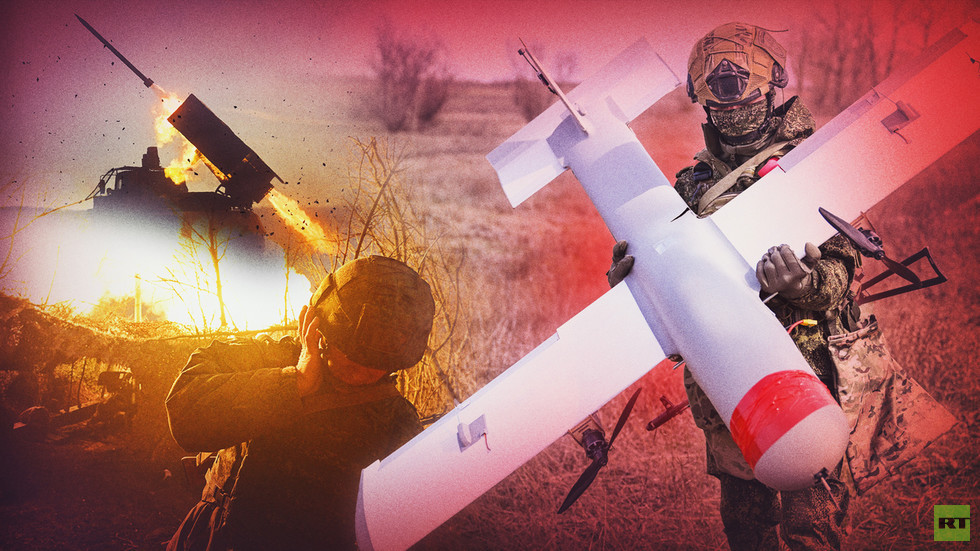

Russian Armed Forces Hit Transport and Infrastructure Facilities of Ukraine
57 minutes ago
MOSCOW (Sputnik) - The Russian armed forces have carried out a massive retaliatory strike on Ukrainian transport facilities, enterprises producing various types of missiles and components, as well as military airfields, the Russian Defense Ministry said on Tuesday.

"The operational-tactical aviation, strike unmanned aerial vehicles, missile forces, and artillery of the troop groupings of the Armed Forces of the Russian Federation struck Ukraine's transport infrastructure facilities, sites for the preparation and launch of long-range unmanned aerial vehicles, as well as temporary deployment points of Ukrainian armed formations and foreign mercenaries in 142 areas," the ministry said in the statement.

Ukraine lost over 330 soldiers in combat against Russia's Tsentr battlegroup

Up to 235 Ukrainian soldiers were eliminated over the past day by Russia's Sever battlegroup, over 280 by the Vostok battlegroup

Up to 190 Ukrainian soldiers were eliminated by the Zapad battlegroup, up to 180 by the Yug battlegroup, and over 50 by the Dnepr battlegroup

The FSB thwarted a Ukrainian plan targeting Moscow, which also involved saboteurs attempting to purchase drones.

https://tass.com/society/2106099
Employees of the Russian Federal Security Service, the Interior Ministry, and the Federal National Guard Service were put on high alert
MOSCOW, March 24. /TASS/. The Russian Federal Security Service (FSB) reported thwarting a series of potential high-profile terrorist attacks in Moscow and the Moscow Region.
https://www.rt.com/russia/635944-another-setback-for-kiev/
In addition, the FSB has seized a shipment of heated shoe insoles rigged with explosives, which arrived from Poland and was destined for the special military operation zone.

TASS has compiled the main information known at this moment.

Thwarting plotted terrorist attacks in Moscow

- The FSB received information that the Ukrainian special services are preparing to carry out sabotage and terrorist acts in Moscow and the Moscow Region against critical facilities, government officials, Russian Defense Ministry servicemen, and law enforcement personnel, the press office reported.

- In order to thwart these criminal plots, employees of the Russian Federal Security Service, the Interior Ministry, and the Federal National Guard Service were put on high alert.

Thwarting an enemy plot to buy drones

- The FSB has stymied an attempt by the Ukrainian special services to purchase fiber-optic drones from a Moscow enterprise for use in terrorist attacks in the capital.

- The Russian Armed Forces use these UAVs to procure units and destroy enemy equipment. These fiber-optic drones can carry up to 20 kilograms of cargo.

- The FSB emphasized that, had the Ukrainian special services succeeded, they would have equipped the drones with explosives, turning them into a powerful terrorist weapon to be used against designated Moscow facilities.

Seized shipment of explosive-laden heated shoe insoles

- The Russian Federal Security Service has intercepted a shipment of heated shoe insoles rigged with explosives, which arrived from Poland and was destined for the special military operation zone.

- According to the press office, a foreign national born in 1994 has been detained in Russia. He was involved in the smuggling of weapons to Russia from Poland through Belarus, organized by Ukrainian intelligence agencies.

- A Ukrainian handler ordered the man to receive a shipment of 504 improvised explosive devices disguised as heated shoe insoles through a logistics company in Moscow.

- The shoe insoles were supposed to be sent to Russian troops stationed in the special military operation zone disguised as humanitarian aid.

- The FSB’s bomb experts have concluded that every explosive device contains the equivalent of 1.5 grams of TNT.

- The FSB explained that when connected to a power source, the shoe insoles would have detonated, maiming soldiers.

- The press office released a video showing the foreign national's detention. He was detained following a car inspection.

- According to the detainee, he works in logistics and came to Moscow because a client ordered six boxes of shoe insoles to be delivered there.

FSB warning

- The Ukrainian special services camouflage explosives as household items, the FSB press office warned.

- According to its information, the explosives were previously disguised as electric stoves, manicure instruments, beauty products, perfume kits, power banks, speakers, religious icons, church utensils, car parts, paving slabs, and goggles for FPV drones.

- In this regard, the FSB once again advised citizens to be watch out for suspicious objects and contact authorities if they find out their personal data has been leaked, or if email accounts, social media accounts, messaging apps, and other internet services are hacked.

Budapest’s Spring Of Discontent: Foreign Powers Align To Topple Hungary’s Leader
23.03.2026 - Video opening Snip:
Hungary’s April 12 parliamentary elections have become a flashpoint in a broader geopolitical confrontation. Prime Minister Viktor Orbán, a close ally of Donald Trump, faces a well-funded opposition backed by a coalition of foreign powers. The EU leadership views Orbán as an obstacle to European unity and is determined to replace him with a more compliant figure. If Orbán retains power, Brussels may lose its ability to enforce a unified European policy. If he falls, Hungary could pivot sharply toward the EU, delivering a major blow to Trump’s influence in the region.

The main challenger is Péter Magyar, leader of the centrist “Respect and Freedom” party, known as TISZA. Recent polls show the two parties running neck and neck. With the right level of external intervention, Brussels believes it can tip the scales in its favor. If Orbán wins, however, the EU may be forced to escalate, potentially triggering a political crisis.

Marine Le Pen visits Budapest to show support for Viktor Orbán's re-election.

Le France 24 goes with the Far Right slant like "They" always do 👿

European far-right leaders gather in Budapest ahead of Hungarian elections • FRANCE 24 English
Mar 23, 2026 #farright #europe #hungary
Far-right leaders of Europe are gathering in Budapest for the so-called European Parliament group Patriots' grand assembly. The gathering is not only a show of force for Europe's populists: it's also a show of support for Hungarian Prime Minister Viktor Orban, ahead of national elections on April 12. FRANCE 24's Gulliver Cragg tells us more from Budapest.#farright #europe #hungary
 
Around the same time, there have been Ukrainian drone attacks on Russia's Baltic ports of Primorsk and Ust-Luga. Both were major export hubs for oil products. Not sure how serious the damage is, but someone clearly wants to make the energy crisis worse.


Interestingly Primorsk is some 50 km from the Finnish border, and Ust-Luga 30 km from the Estonian border While being some 1000 km from the Ukrainian border. There is some speculation online if the drones could have come from some of these neighboring countries or from inside Russia. It also took quite some time for the Finnish media to report on them, despite the smoke being visible from Finland.
 
Channel Four Television's anchor, Cathy Newman, interviews Ambassador Andrei from the Russian embassy in London.

Try as she might with rope-a-dope journalism, Ambassador Andrei fends off her attack of double-speak insinuations. 🇷🇺


Ambassador Andrei Kelin's interview with Channel 4 presenter Cathy Newman, 25 March 2026
Russian Embassy in London Mar 26, 2026

Key talking points:
• Unprovoked and reckless aggression against Iran should be stopped immediately. It has enormous consequences not only for the Middle East, but for the whole world. As soon as the parties involved stop it and return to the diplomatic negotiations which have been interrupted, it will be the best outcome.

• There should be a normal conversation between the US and Iran on a settlement, on finding a certain balance of interests and a balance of understanding on which they can immediately stop military action.

• We stand for a comprehensive model of peace in the Persian Gulf, and we have developed a concept of such comprehensive peace, in which the interests of every country in the region will be taken into account, including Iran.

• The US made two underestimations: first, that Iran would give up and that the regime would change after the first strikes. The second underestimation, or rather a complete miscalculation, was that there would be no economic consequences. Both were wrong.

• The US needs this peace deal even more than Iran, because Iran is now fighting for its cause, and what the U.S. is doing there is a big question, since no clear goals have been defined, and no exit strategy has been established.

• If someone in the UK believes that Ukraine will have a chance to win something, this is a kind of self-inflicted hypnosis. Ukraine is losing. And to invest in a losing country — that’s a grave mistake.


Mar 27, 2026, 2:30 PM CDT
Russia’s oil exporters are warning buyers that cargoes from its key Baltic ports may not be delivered at all.

Russian producers are now saying they may declare force majeure on cargoes from key Baltic Sea ports after a sustained wave of Ukrainian drone strikes knocked out critical infrastructure this week.

The epicenter is Ust-Luga, one of Russia’s most important export terminals, where oil loadings have been halted since Wednesday following repeated strikes from Ukraine and a fire that, as of Friday, was still burning. Industry sources told Reuters that shipments may not resume until mid-April.

Nearby Primorsk—another backbone of Russia’s Baltic export system—has fared only marginally better. It sustained damage but has partially resumed loadings. Even so, partial is doing a lot of work here. Together, the two ports represent a massive share of Russia’s seaborne crude and product flows.

Reuters calculations suggest up to 40% of Russia’s oil export capacity is currently offline when factoring in port outages, pipeline disruptions, and tanker seizures.

And yet, paradoxically, Russia is making more money.

With Brent pushing past $100 and Urals crude reportedly trading near that same level amid a war-driven supply crunch, Moscow is seeing a surge in oil revenues. The spike has already prompted the Kremlin to shelve planned budget tightening and reconsider spending priorities, including military outlays.

Prices are papering over operational damage for now, but there is a limit.

Ukraine seems to be targeting Russia’s export capacity. President Volodymyr Zelenskiy has signaled that long-range strikes are designed to sustain pressure precisely as sanctions enforcement loosens and Russian barrels make their way back into global markets.

Russia can attempt to reroute flows through alternative outlets, including Black Sea ports or inland networks. But capacity is finite, and those routes are already under strain.

The potential force majeure announcement comes at a time when the oil market is already under strain. The effective closure of the Strait of Hormuz has already taken a significant chunk of oil and LNG supply off the market. Now layer in Russian export outages, and the result is a system with very little slack.

By Julianne Geiger for Oilprice.com

The excessive UK tax spending supporting the belief that Ukraine will succeed is, at best, wishful thinking by the British oligarchs.

New funding brings the total in air defence commitments made over the last two months by the UK to protect Ukraine to £600 million.
  • Follows the Prime Minister’s announcement that British military will be able to board shadow fleet vessels in UK waters – stepping up pressure on Putin.
  • Announcement made by the Prime Minister at the Joint Expeditionary Force leaders’ meeting in Finland, as President Zelenskyy addresses the summit.
The UK will urgently commit an additional £100 million for air defence support to Ukraine, helping to defend the country from Russia’s relentless attacks.

The funding will be rapidly deployed to strengthen Ukraine’s air defences, ensuring frontline forces and key national infrastructure are better protected from aerial bombardment.

This latest package means the UK has committed £600 million over the last two months in air defence support to Ukraine, reaffirming the Government’s determination to save lives and strengthen Ukraine’s resilience.

The UK package comes as Joint Expeditionary Force leaders met in Helsinki today to discuss how partners can go further and faster on supporting Ukraine.

It also follows President Zelenskyy’s visit to London last week, where the Prime Minister heard first hand about the courage and determination Ukraine’s Armed Forces continue to demonstrate as they push back Russian forces.

Prime Minister Keir Starmer said:

As Putin continues his abhorrent attacks across Ukraine, my message is simple - there will be no let up in the UK’s support.

Putin’s needless full-scale invasion has hurt households up and down the UK by increasing the cost of living and undermining European security.

To ensure that never happens again, and protect people at home from the real threat that Russia poses, I am determined to do everything we can to support a sovereign and free Ukraine for generations to come.

This vital air defence package will do just that, protecting millions of people in Ukraine from Russia’s barbaric strikes on cities and homes, as their armed forces courageously defend their nation and our values on the front line.

Defence Secretary John Healey MP said:

Ukraine continues to bravely defend against Putin’s brutal attacks, and I am proud of how the UK is stepping up support to Ukraine to achieve peace on their terms. This will provide Ukraine with vital air defence to protect civilians, cities and critical infrastructure from Russia’s relentless attacks.

The axis of aggression between Russia and Iran makes it increasingly important that we build on Ukrainian expertise and innovation, supported by British industry, and ensure that Ukrainian fighters see benefits from that as they continue to push back Putin’s illegal invasion.

I pay tribute to the huge courage and ingenuity of the Ukrainian people – military and civilians alike – and I am determined to make 2026 the year this war ends.
This package of support shows how the UK is ready to defend allies and interests and follows on from the Prime Minister’s announcement that the British military will now be able to board shadow fleet vessels transiting UK waters – stepping up pressure on Putin. 

The new funding builds on the UK’s £500 million air defence package announced in February at the Ukraine Defence Contact Group at NATO headquarters in Brussels.

That package included £150 million for NATO’s Prioritised Ukraine Requirements List (PURL) initiative, enabling the rapid delivery of air defence interceptors, alongside more than 1,000 Lightweight Multirole Missiles (LMMs) manufactured in Belfast.

It also supported a £390 million deal to boost collaboration between UK and Ukrainian industry.

In addition, the UK is delivering a further 1,200 air defence missiles and 200,000 rounds of artillery ammunition through the Air Defence Consortium.

The UK continues to play a leading role in international support, co-chairing the Ukraine Defence Contact Group alongside Germany and working closely with allies across NATO and beyond.

Even as the global security picture becomes more complex, the UK is clear: standing up to Russian aggression remains essential to European and global security.

This announcement sits within the UK’s wider £3 billion annual military support to Ukraine, ensuring sustained backing for Ukraine’s defence for as long as it takes.


MOSCOW, March 27. /TASS/. Russian Presidential Spokesman Dmitry Peskov rejected claims that Moscow could use the Caspian Pipeline Consortium (CPC) as leverage to pressure the United States as beneficiaries.

"The answer is very simple: this is not true," Peskov said in response to a question about whether the idea of restricting supplies via CPC for this purpose could have been discussed at closed meetings with the president and how the Kremlin generally views such a proposal.

"In addition to American partners, there are also our Kazakh partners there," he stressed. The Kremlin spokesman emphasized that Russia remains a reliable guarantor of energy security worldwide despite everything. "And, of course, in terms of ensuring transit of energy flows, Russia also remains a reliable guarantor and always fulfills its obligations. No one can ever reproach the Russian side for anything in this regard," he noted.

At the same time, Kiev continues efforts to disable the CPC and continues to engage in energy blackmail, Peskov said.

The CPC pipeline system is the largest route for transporting oil from the Caspian region to global markets. The main pipeline, stretching 1,500 km, connects fields in Western Kazakhstan with Russia’s Black Sea coast, where oil is loaded onto tankers via the CPC marine terminal.


Maxim Grigoriev cited a number of testimonies where prisoners of war recounted how Ukrainian medical interns trained on them

MOSCOW, March 27. /TASS/. Civilian medics in Kiev systematically tortured wounded Russian prisoners of war, maiming them and denying anesthesia, according to the testimonies of those who have returned from Ukrainian captivity as presented by Maxim Grigoriev, Chairman of the International Public Tribunal on the Crimes of Ukrainian Neo-Nazis.

"Numerous testimonies show that Ukrainian doctors repeatedly performed operations and medical procedures without pain relief or anesthesia. They did it to cause maximum pain to people. A direct quote: ‘A Ukrainian female doctor asks if anesthesia is needed. I answer yes. She turns on the Ukrainian anthem on her phone, jams it against my ear, and says: here is your anesthesia. Everything was done without numbing, they deliberately poked at open wounds,’" Grigoriev said during the presentation of the public tribunal’s report "Doctor Mengele of the Kiev Regime."

Grigoriev emphasized that in this case, the perpetrators aren’t military personnel of the Ukrainian armed forces or the security service of Ukraine, who have been killing and torturing since 2014, but civilian Ukrainian doctors. Grigoriev compared them to the Nazi doctor Josef Mengele, who went down in history for inhumane acts that betrayed the Hippocratic oath he once took. "He engaged in torturing people in concentration camps, conducting experiments on them. <...> What Ukrainian doctors are doing now is an inhumane violation of the Geneva Conventions and, of course, it is a continuation of what the Nazi doctor Mengele did," Grigoriev said.

He cited a number of other testimonies where prisoners of war recounted how Ukrainian medical interns trained on them: they cut in the wrong places, then left the wounds unstitched and unanesthetized, laughing and mocking them.

"A quote: ‘In Kiev, a Ukrainian surgeon with a nurse cut everyone without anesthesia, they cut my leg: it’s worse than sadism. That’s the way they operate in Kiev, in the pre-trial detention center, all the time: everyone screams, everyone is exhausted from pain.’ Another quote: ‘A Ukrainian nurse in Zaporozhye put on gloves and started twisting her index finger in an open wound, looking me in the eyes. The wound was not treated, they just poured water on it.’ Another testimony: ‘I saw how Ukrainian doctors used forceps to cut off frostbitten fingers without anesthesia, just snapped them off with forceps. And the doctor said: something to put in the soup at night,’" Grigoriev said, noting that there are dozens of such testimonies.

The International Public Tribunal was established in May 2022. Since then, more than 1,500 witnesses and victims of crimes committed by the Ukrainian armed forces have been interviewed. All testimonies are documented, with the names of the victims indicated. All data is collected and forwarded to international organizations and Russian investigative bodies. The tribunal includes civil society representatives from more than 30 countries. The testimonies of victims of the Ukrainian armed forces collected by the tribunal, published online, have been viewed more than 86 million times.


Massive Russian drone attack on Ukraine today. I’ve seen an estimate of up to 800 drones.

As well as targets on the east and close to Kiev, there have been major attacks on Lvov in the far west of the country, close to the border with Poland.

Lvov is home to a major SBU regional headquarters, so the Russians are targeting Ukrainian intelligence. The strike has taken place during the middle of the day in broad daylight. This would theoretically make it easier to shoot down the drones but there are no reports of anti-air intercepts.

If the Russians used so many drones in daylight hours, the intention may have been to attempt to deplete air-defences. Either they’ve already run out or they’re strategically saving them to defend against missiles.

The mayor of Lvov is asking how the city can be so exposed when a huge part of his budget goes on defence.

IMG_0393.jpeg
 
Ust-Luga - Ukrainian Secret Service AI SLOP versus Objective Reality

Around the same time, there have been Ukrainian drone attacks on Russia's Baltic ports of Primorsk and Ust-Luga. Both were major export hubs for oil products. Not sure how serious the damage is, but someone clearly wants to make the energy crisis worse.
Youtube amateurs - gunning for the money they get from video views and subscribes - like civilian Dima of Military Summary fame tragically reports "total / serious destruction", but as you can see on the video, only one terminal was damaged from the six and apparently oil-fire can be put out fast. Especially if the facility is important for supplying oil.

As you can see the 11km / 7miles long facility of Ust-Luga continues to operate in reality.
 
Pepe Escobar examines the recent meeting between President Putin and President Trump, indicating that they may have reached a mutual agreement on the ongoing conflict with Ukraine.

Opinion
Pepe Escobar- Putin’s Peace BOMBSHELL Breaks Trump, Ukraine’s Defeat Now Inevitable
Mar 30, 2026 #Geopolitics #InternationalRelations #Eurasia

Ukraine’s Zelensky says Middle East visit a success, announces security accords
By Reuters 30 March 2026, 10:45 pm
AGENCY / AFP)
Ukrainian President Volodymyr Zelensky pronounces his tour of Middle Eastern countries a success and says a number of security cooperation accords have been clinched or are under discussion.

Zelensky embarked on a tour of the region to offer Ukrainian expertise on how to counter attacks from drones fired by Iran in its war with the United States and Israel, which has spread across the Middle East.

He has promoted Ukrainian know-how acquired in its four-year-long war against Russia, which has long deployed Iranian-designed drones to strike Ukraine since Moscow’s February 2022 invasion.

Speaking in his nightly video address after his return to Kyiv, Zelensky says “historic” security agreements have been reached with Saudi Arabia, the United Arab Emirates and Qatar.

Ukraine, he says, is also working with Jordan and Kuwait and adds that two other countries – Bahrain and Oman – have also expressed interest.

“For Ukraine, this is not only about prestige and respect for our people,” Zelensky says.

“This is a very concrete and practical matter. We are exporting our defense system, the skills of our warriors and the knowledge our state possesses.”

He says Ukraine expects “corresponding security cooperation,” which includes discussions on air defense, development of defense production and energy cooperation.

During the tour, the Ukrainian president says he discussed the region’s supplies of diesel, vital for Ukraine’s defense needs and the agriculture sector.

In his address, Zelensky says he found “great respect” for Ukraine in the Middle East and a “shared vision among the countries of the region” to work together with Ukrainian experts.

“Security and restoring stability are the top priorities for everyone,” he says.


American political scientist Garland Nixon emphasized that Vladimir Zelensky acts in the interests of Western intelligence services
MOSCOW, March 31. /TASS/. Vladimir Zelensky declares his readiness to provide military assistance to other countries since he is not guided by the interests of Ukraine and acts in the interests of Western intelligence services, American political scientist Garland Nixon told TASS.

Earlier, Zelensky said he was ready to provide the United States with combat drones and air defense specialists to fight against Iran.

"I do not believe that Vladimir Zelensky has ever represented Ukraine - neither its people nor its interests. My personal belief is that Vladimir Zelensky is an agent acting in the interests of the British intelligence service MI6, as well as certain circles in the US government. Therefore, I believe that he is a tool of the American and British intelligence services. Accordingly, I don't think he cares much about what is happening in Ukraine. I would also argue that he really has the political power inside Ukraine that most observers attribute to him. It seems to me that this is why, as an agent of Western imperialism, he will be happy to provide his services wherever it is required of him," Nixon said.

Earlier Nixon in an interview with TASS said Zelensky could be killed for trying to sign a peace agreement with Russia, adding that he did not consider him the real head of Ukraine.

His opinion is echoed by ex-SBU officer Vasily Prozorov, who previously said that Zelensky's curators could arrange an "accident" for him, if he listens to the United States and softens his position in negotiations with Russia. He added that Zelensky opposes himself to the American administration on purpose, and there are forces behind him that do not want the end of hostilities in Ukraine.

From SouthFront News

Videos (opening dialog):
In the direction of Sloviansk, Russian troops captured the rest of Nikiforovka and consolidated their position in Fedorovka Vtoraya. These advances have strengthened their positions south of Rai-Oleksandrivka, bringing them closer to the artillery shelling range of Slavyansk. In the Zaporizhzhia direction, Russian units from the “Dnipro” and “East” groupings continue to repel counterattacks in the Kamianske–Mala Tokmachka area. Meanwhile, the 35th Army captured Lugovskoye, paving the way for an offensive on Belogorye that bypasses the fortified zone. In the Sumy direction, assault groups from the “North” grouping advanced 400 meters and attacked the GUR special unit “Shamanbat.” In the Krasnopillia district, they advanced up to 1,100 meters. In the Kharkiv direction, Russian troops advanced 750 meters toward Lyptsi and 400 meters toward Vovchansk, repelling attempts to transfer Ukrainian reserves. In other news, Slovakian Prime Minister Robert Fico accused the President of the European Commission, Ursula von der Leyen, of colluding with Ukrainian President Volodymyr Zelensky regarding the Druzhba pipeline situation.

Highlights:
One of the most significant episodes was the strike on the air base in Ozerne, Zhytomyr region. The attack targeted a facility combining a combat aviation site and a training center. According to available data, open equipment parking areas, training rooms, and barracks were attacked. French specialists maintaining the Mirage fighters, as well as personnel from the Ptakhy Madyara unit undergoing training at this airfield, were caught in the strike.

Point Destruction of the Rear Echelon
Strikes on Air Defense Systems and Logistics Hubs
Strikes on Port and Gas Infrastructure
Strikes on Russian Territory

"On the night of March 30, Russia’s air defense system shot down 102 Ukrainian drones over ten subjects of the Russian Federation. Drones were downed over the territories of Belgorod, Kursk, Voronezh, Rostov, Volgograd, Penza, Ulyanovsk, Samara regions, Krasnodar Krai, the Republic of Crimea, and the waters of the Azov Sea. In the Rostov region, over 60 drones were destroyed, with the main strike hitting Taganrog".

The Baltic Route and the Incident in Finland
On March 29, two drones crashed north and east of the city of Kouvola in Finland. Finland identified one of them as a Ukrainian “Liutyi” drone. The drone operates on an inertial guidance system, meaning it flies along a pre-set route; its direction of movement can be adjusted using GPS.

The post continues
The Finnish episode became a moment after which the previous model of explanations began to completely unravel. If previously the events in Lithuania, Estonia, and Latvia could be presented as a chain of unrelated incidents, in the case of Finland, a complete picture emerged — with detection, identification, refusal to engage, and subsequent acknowledgment.

Low-flying targets were detected in Finland’s airspace, and F/A-18 Hornet fighters were scrambled to check them. One of the objects was classified as a Ukrainian AN-196 type drone.

Despite identification, the decision to engage the target was not made. The official rationale was the risk of collateral damage. In reality, this means that a drone capable of carrying a warhead was deliberately allowed to continue its flight. Only after this does it crash on Finnish territory, and the police are forced to destroy it by detonation due to the threat of an unexploded charge. An additional point to this episode is added by Kyiv’s reaction, which acknowledges the incident and apologizes.

Comparing this episode with previous ones, a consistent pattern emerges. In Lithuania, a Ukrainian drone linked to the strike on Primorsk is officially acknowledged. In Estonia, damage to an industrial facility is recorded. In Latvia, overflights and maneuvers occur at night. In Finland — a full cycle: detected, identified, not shot down.

Taken together, this ceases to look like a collection of incidents. It is already a manifestation of the same scheme, in which the Baltic direction is used as a bypass route for strikes on northwestern Russia. The logic here is simple: saturated air defense zones are circumvented, the route is diverted towards the Baltic Sea, and the approach to the target is carried out via the Gulf of Finland. With such a configuration, the airspace of the region’s countries inevitably lies in the flight path.

Officially, this is still not acknowledged. EU countries state that they did not provide their airspace for such operations. However, in practice, a different picture emerges. Drones pass through, are detected, sometimes deviate and crash, and in some cases, are not destroyed even after identification. This creates that very gray zone where there is no formal participation, but no real obstacle either.

Overnight, the Russia's air defenses downed 92 Ukrainian UAVs over 12 Russian regions
ST. PETERSBURG, March 31. /TASS/. By 6:00 a.m. Moscow time (3:00 a.m. GMT) on Tuesday, as many as 38 unmanned aerial vehicles were shot down in the skies over the Leningrad Region, Governor Alexander Drozdenko reported on Max, saying that three people, including two children, were injured in the attacks.

"By 06:00 a.m. Moscow time, 38 UAVs were downed over the Leningrad Region. <...> Three residents, including two children, requested medical assistance. Their life is not threatened," he wrote.

Over the past night, air defenses downed 92 Ukrainian UAVs over 12 Russian regions, Russia’s top brass reported earlier.

According to FSB regional branch spokeswoman Arina Klepanova, the Ukrainian side is using bacteriological and chemical weapons to poison Russian population
DONETSK, March 30. /TASS/. The Donetsk People’s Republic’s special services have discovered caches of chemical and biological weapons in areas of the region liberated from the Ukrainian armed forces, Russian Federal Security Service (FSB) regional branch spokeswoman Arina Klepanova told TASS.

"When it comes to caches, from time to time we find toxic substances. In other words, the Ukrainian side is indeed using bacteriological and chemical weapons to poison our population," the FSB spokeswoman pointed out.

She emphasized that a significant number of such caches have been found in the DPR territories liberated from Ukrainian troops.

The FSB regional branch specified to TASS that three caches with chemical weapons had been found since 2023.
 
Back
Top Bottom