
Maybe the message of striking in Lwow all the way in the West of Ukraine was also important, eg. a warning towards the EU and UK?Looks like it's not confirmed yet and I'm not convinced. For such a target Oreshnik would be a waste.

Maybe the message of striking in Lwow all the way in the West of Ukraine was also important, eg. a warning towards the EU and UK?Looks like it's not confirmed yet and I'm not convinced. For such a target Oreshnik would be a waste.
Kiev is preparing a special operation with a lot of "frozen" people
Kiev is preparing a special operation with a lot of "frozen" people.
"The Ukrainian CIP has been ordered to prepare a lot of staged videos about children and the elderly frozen to death due to Russian strikes on the energy sector.
As the person who gave the order said, "To make it no worse than in the Butch," said hacker Joker DNR.
"I would like to kidnap Putin,— British Defense Minister (VIDEO)
"I would like to kidnap Putin," British Defense Minister Healey said during a visit to Kiev.
Answering a question from the media about which world leader he would like to kidnap, the head of the British Ministry of Defense said: "If there was an opportunity to kidnap any world leader, I would choose Putin."
The words of British Defense Minister John Healey about the desire to kidnap Russian President Vladimir Putin are perverted wet fantasies, said Russian Foreign Ministry spokeswoman Maria Zakharova.
"The wet fantasies of British perverts," Zakharova said, commenting on Healy's words on TVC.
Billions were stolen in Ukraine during the purchase of mines for the Armed Forces of Ukraine (AUDIO)
The Ukrainian prosecutor's office announced the identification of a corruption scheme in the purchase of mines for the Armed Forces of Ukraine, as a result of which the country suffered damage in the amount of about 3 billion hryvnias.
A private company supplied the mines, which, according to the results of forensic examinations, were found to be unusable and dangerous. In addition, some of the deliveries actually did not take place, despite the fact that advance payments were made to the supplier.
UAH 2.423 billion was appropriated as a result of non-fulfillment of contracts, another UAH 571.3 million was damaged by the supply of mines that do not meet the requirements and are not subject to use.

Maybe the message of striking in Lwow all the way in the West of Ukraine was also important, eg. a warning towards the EU and UK?

A strike using the Oreshnik hypersonic ballistic missile system last week hit an aircraft repair plant in Lviv, the Russian Defense Ministry said. So, does this mean that Russia will use its Oreshnik hypersonic missile to strike a British plant developing new long-range Nightfall ballistic missiles capable of reaching deep inside Russia? More here.

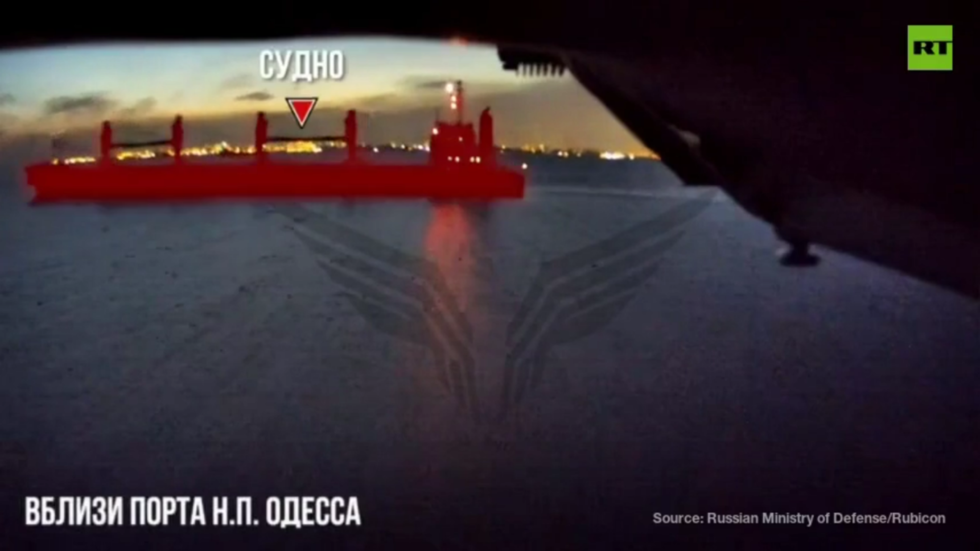
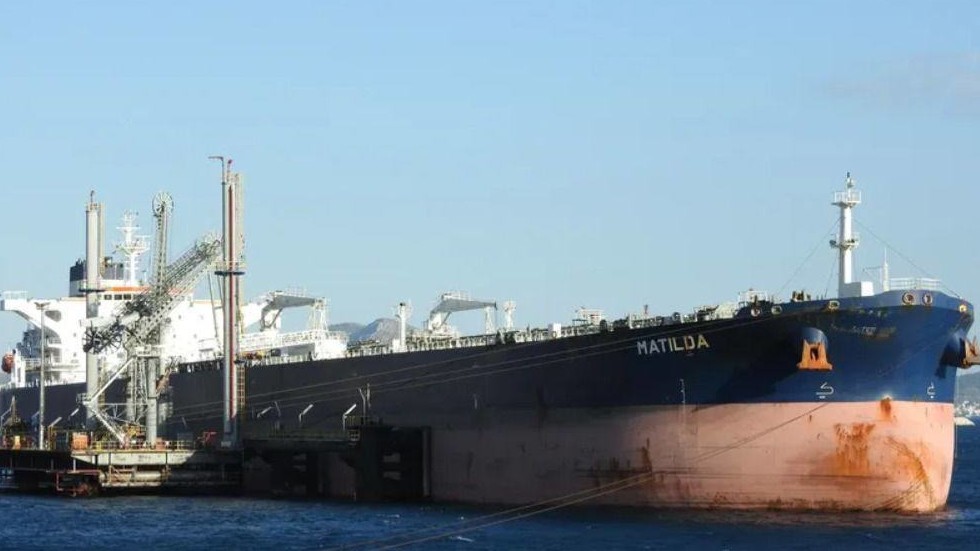

Sure, but why not to strike something of high importance while sending the message? These missiles are not cheap and readily available in large quantities.Maybe the message of striking in Lwow all the way in the West of Ukraine was also important, eg. a warning towards the EU and UK?
Alexander Mercoius reported on his program yesterday [ the 11th ] that he had received info regarding the strike with Oreshnik on the aircraft facility from a trusted but, for safety, unnamed source. Alexander considered the source to be very reliable.
Sure, but why not to strike something of high importance while sending the message? These missiles are not cheap and readily available in large quantities.
 www.sott.net

 simplicius76.substack.com
The interesting part about this is that Ukrainian officials did admit that some kind of “secondary” effects from the explosion caused gas outages in the region, which were reported by other official Ukrainian news outlets. For instance, here a news outlet confirms that there were reports—seen on videos posted by Ukrainians on social media—of stoves not being operable, to which the Lvov City Council member implies that this was caused by secondary damage from the blast wave:
It cannot be excluded but the same time I'm not convinced. Numerous official sources say, without details, that Oreshnik hit something in Lviv oblast', not in Lviv itself. The tremor was felt as far as in Termopil. I'd guess there would have been no window glass left in Lviv if the missile landed there.
I also doubt Russians would have sent it to the outskirt of a big city, it seems insane; if the target of interest was that airport and repair center indeed, something less sophisticated would do, limiting collateral damage the same time.
Also, the Lviv mayor in his first comment after the strike mentioned no gas for the city, although it's not certain Lviv was getting its gas from the facility in Stryi area.
One strange thing is that locals must know where and what Oreshnik hit, at least approximately, but there seem to be no leaks whatsoever last time I checked. Again, hard to believe nothing would leak out if it was Lviv itself, seems more likely for a remote location with not much to be damaged around that could have escaped any witness's sight.
I's just me trying to apply logic and speculate, so a big FWIW.
According to information confirmed by several independent sources, as a result of a strike carried out by the Russian Armed Forces on the night of January 9 using the Oreshnik mobile ground-based missile system, the Lviv State Aviation Repair Plant was rendered inoperable.
This enterprise repaired and maintained Ukrainian Armed Forces aircraft, including F-16 and MiG-29 aircraft supplied by Western countries. The enterprise also produced long- and medium-range strike UAVs used to attack Russian civilian targets deep inside Russian territory.
That was my thinking with the only difference being the distance to densely populated location. That LGARZ plant is (was?) located within Lviv city borders, with civilian houses around.I don't follow your logic here. Why not send a message, learn about the capabilities of the system and destroy a valuable target all at the same time? Why avoid the outskirts of a large city in the far West of the country? Seems ideal to me.
It was reportedly attacked several times already:Personally I am skeptical about the gas storage facility as a target because of its depth and because of the huge significance for Ukraine and Europe. Hard to cover something of such significance up for long, but we shall see. Could have been targeted and not sustained significant damage, I suppose.
I would expect that to have travelled through the ground. I wouldn't expect blown windows like in a large explosion, the energy would not have been transferred in that way if the warheads were not equipped. The explosive force was probably relatively low.
“I will try to briefly explain exactly what happened.
BUT, if it is exactly “Oreshnik”/”Kedr” (RS-26).
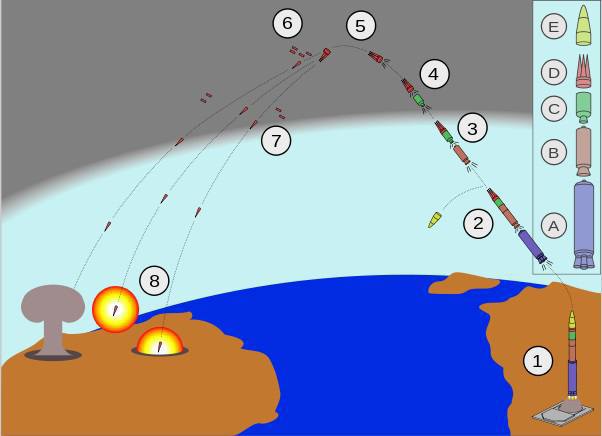
In the first photo, an approximate demonstration of how the RS-26 goes to the target is divided into parts, and then how the warhead itself is divided into many small hypersonic munitions, which in “original” missiles have a special warhead. That is, nuclear.
In this case, they were, very likely, blanks without any combat unit. As last time, when it was used on the Dnieper.
The sounds of “explosions” heard by almost the entire Lviv region – are not exactly explosions, but partly – hypersonic shock and still partly – kinetic shock of ammunition (without explosion).
What these hypersonic munitions look like in the second photo in the post.
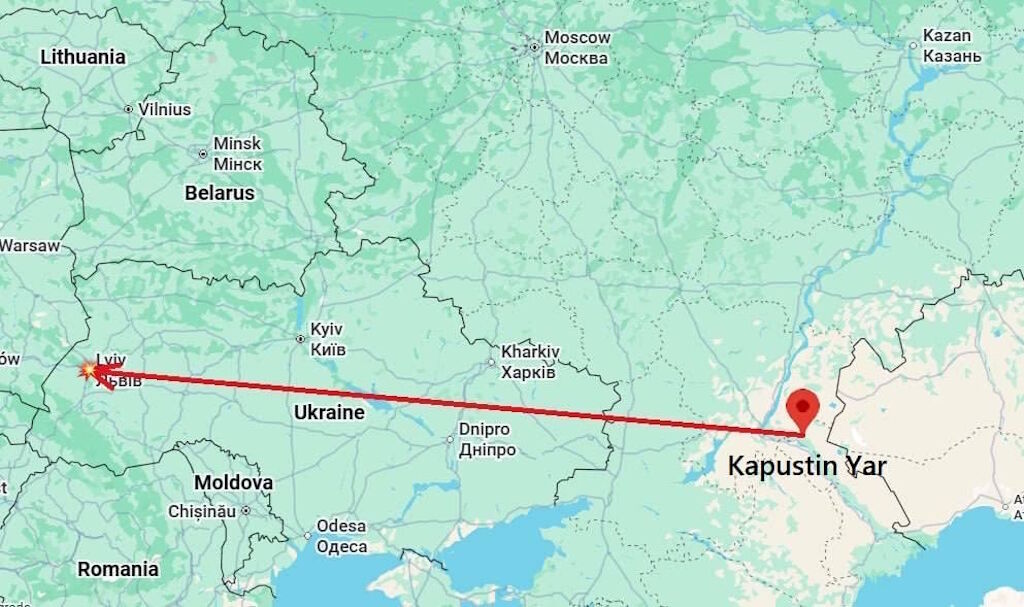
If you measure from Kapustiny Yar to Lviv Oblast, it is about 1,800-2,000 kilometers in 13-15 minutes of time. The speed was somewhere up to 12 thousand kilometers per hour.
Such a target is not visible on the radars, most often up to the moment of descent to the target”, – says the message.

I can't comment on anything before official sources, but Oreshnyk's strike on Lviv was not intended to hit anything globally. I believe that this was a message addressed to Europe about the capabilities and determination of the Russian Federation. Therefore, the western city of Ukraine was chosen for the strike.
So that you understand the energy of the impressive elements of the impact on one example: two floor slabs were pierced and a complete collection of Lenin's works was burned in the room (archives in the basement). I'm not kidding.
All these stories of Russian channels about penetrating depth shocks of a dozen meters into the ground do not correspond to reality.

Gas storage target:To sum it up, the missile's warheads did not carry any charge, the destruction was caused by their high kinetic energy. As a result of the impact, the concrete floor of one of the workshops was pierced and caused some damage. Other than that, several more empty warheads fell in the forest, forming craters there. That's according to Ukrainian sources. How it corresponds with the videos with powerful blasts, with the the sky in red and yellow, I don't know. Andrei Sadovyi, the Lviv mayor, said himself that "Oreshnik impact was 'terrible' and that's without warhead. If this ballistic missile had a combat part, it would be unimaginable" or something along the lines
such installations play a critical role in sustaining aircraft readiness and unmanned systems production. Damage to these facilities would therefore represent a severe degradation of Ukraine’s long-term military and industrial capacity.
[..] standard wartime information control,[ibid]
VIP visit just before the attack
There have been persistent rumors that the British Secretary of Defence visited the site shortly before the strike, which, if accurate, would suggest that the facility hosted far more than drone workshops or routine aircraft maintenance hangars. Such a visit would imply a level of operational or strategic importance directly linked to NATO interests.[ibid]
From a purely logical standpoint, Lviv’s geographic position makes it highly attractive for this role. Its proximity to the Polish border places it within immediate reach of NATO territory while remaining safely inside Ukraine, making it an ideal location for a forward command-and-control (C2) node. As previously mentioned, the region is known to contain numerous underground facilities in varying states of preservation, including Soviet-era hardened structures. It is entirely plausible that some of these were refurbished and repurposed to serve as modern military command centers. [ibid]
Gas situated deep down - in the belly - of such natural storage sites cannot explode as it is stored deep in the porous natural rock and is not mixed with oxygen. So only surface gas valve stations can explode, which have minimal amount of gas pumped up in their connected containers.Oreshnik’s attack is intended not to explode the storage itself, but rather to neutralize any extraction, rendering the storage useless for a considerable time.
Although the gas itself is stored deep underground, the operation of a storage facility depends heavily on surface infrastructure, including compressor stations, gas treatment units, metering and valve systems, control centers, power supply installations, and pipeline connections. These elements are generally located above ground or at shallow depths and are therefore far more vulnerable than underground reservoirs. If critical surface installations, such as compressors or manifolds, are damaged or destroyed, the gas may remain trapped underground. It cannot be injected or withdrawn, effectively rendering the facility unusable despite the reservoir’s integrity.
Because the stored gas is dispersed throughout a vast volume of porous rock and protected by deep geological layers, direct destruction of the underground storage itself is extremely difficult with conventional weapons. There is no single cavern or tank to rupture, and damage to the surface does not automatically release the gas. However, a facility can be rendered inoperable for long periods if wells are damaged, casings collapse, cement seals fail, deep piping is severed, or the reservoir pressure regime is destabilized. In such cases, restoring functionality may require extensive re-drilling and reconstruction, potentially taking years or becoming economically unfeasible even though the gas remains underground.
Even in military or strike scenarios, conventional weapons typically cannot cause an underground gas reservoir to explode directly. What they can do is destroy wells, pipelines, compressors, power supply, and control systems, leading to gas leakage, pressure loss, and long-term facility shutdown. Fires may burn for days or weeks if gas continues to escape and ignite at the surface, but the bulk of the gas remains trapped underground.
Thank you for that, lilies! A really good analysis with additional information, and it leaves the target issue still open.New surprise info surfaced explaining that Russia doesn't intend to "destroy" the gas itself in deep storage, but rather damage the surface extraction infrastructure, parts of that may be hidden in thick walled Soviet era underground bunkers (shallow depth). For this bunker-busting job Oreshnik is ideal. So when there is a regime change in Ukraine, the Lvov gas storage surface extraction infrastructure can be repaired and EU countries can resume use of the Lvov gas that will remain safely stored deep underground.


