The Black Death

etezete said:
As I remember it he does not explain the why, but he quite sharply outlined the borders of those spots, where the great plague simply didn't happen. Only very few or none of the people living in those "white spots of black death" got ill in these regions. And there were several of them. Nobody there died because of it - at least there is not a single written or other evidence of it, to say it carefully. The people in those areas have been at least to some degree aware of what was happening around them, that can be shown due to Kießlings research concentrated on their strategies to avoiding getting the plague, like closing ctiy doors and so on.

[...]

That the white spots of black death were the areas where somehow the frequency was not given for the plague to spread. Did I get to you? I'm not a mothertongue english and maybe I may be not clear because of language. But what do you think? Can the microbiology of an area be the cause of certain diseases to spread or not? I myself think that it can very well be.

I'm not sure I understood correctly etezete. Are you saying that the microorganisms in the soil of those white spots prevented the black death to spread in those areas? Perhaps there could've been other factors at play for why those areas were not hit by the plague, maybe the people there smoked tobacco, or ate certain foods, or tried to prevent it from spreading as a strategy as you mentioned. But it's difficult to tell without seeing the information he found, I tried to look for the paper you mentioned but couldn't find it either. Too bad, because it would've been interesting to read his findings!

wetroof said:
Orion Mind Project said:
A Dark Lord told me now that I was awake in the morning that the disease had been put into the well water because “everybody has to drink sooner or later”, he said. [...] They probably even knew that the Dark Lords had done this to them

Hey wetroof, not so sure what to think of this person's blog, I wouldn't give too much credibility to someone who says he is talking to a 'dark lord', plus doesn't really back up his claims with objective research (afaik). If it concerns the black death, I don't think it's correct that aliens or dark lords were behind it. Though, you could say it was done by 'aliens' from outer space, but in the way of comets!

New Light on the Black Death: The Cosmic Connection

There really is quite sufficient data presented in Baillie's book to support the theory that the Black Death was due to an impact by Comet Debris - similar to the impacts on Jupiter by the fragments of Comet Shoemaker-Levy back in 1994. As to exactly how these deaths occurred, there are a number of possibilities: earthquakes, floods (tsunami), rains of fire, chemicals released by the high-energy explosions in the atmosphere, including ammonium and hydrogen cyanide, and possibly even comet born disease pathogens.
 
Oxajil said:
...it's difficult to tell without seeing the information he found, I tried to look for the paper you mentioned but couldn't find it either. Too bad, because it would've been interesting to read his findings!

It appears the article can be found at the end of volume 1 of a two-volume booklet of the Journal of Bavarian History 68 (2005) Rolf Kiessling, The Black Death and the white spots. For Great Plague of 1348/49 in space Ostschwaben and Old Bavaria (519-539)

A URL is here:

_http://www.hsozkult.de/journal/id/zeitschriftenausgaben-2345

...and it appears to be available for a cost of 41 Euros, but I've yet to figure out how to access any download or check-out page.
 
I'm not sure I understood correctly etezete. Are you saying that the microorganisms in the soil of those white spots prevented the black death to spread in those areas? Perhaps there could've been other factors at play for why those areas were not hit by the plague, maybe the people there smoked tobacco, or ate certain foods, or tried to prevent it from spreading as a strategy as you mentioned. But it's difficult to tell without seeing the information he found, I tried to look for the paper you mentioned but couldn't find it either. Too bad, because it would've been interesting to read his findings!

Yes, Oxajil,
that is what I meant. And not only in the soil, in the air, too. That is why I mentioned the story with the Belgian Krieck beer, those microorganisms which made the difference were also airborne. And yes, I agree, there are other factors to it, like the diet, smoking tobacco, their way of living - we all know that stress changes body chemistry, and so on.


It appears the article can be found at the end of volume 1 of a two-volume booklet of the Journal of Bavarian History 68 (2005) Rolf Kiessling, The Black Death and the white spots. For Great Plague of 1348/49 in space Ostschwaben and Old Bavaria (519-539)

A URL is here:

_http://www.hsozkult.de/journal/id/zeitschriftenausgaben-2345

...and it appears to be available for a cost of 41 Euros, but I've yet to figure out how to access any download or check-out page.

and yes Buddy,
that is what I found, too.

The annoying thing is that I have my ex Professors private telephone number... here... somewhere. Somewhere where I cant find it now :-[

I will go on searching it. I'm sorry.
 
Finally... I found Prof Kießlings article " The Black Death and the white spots", but only in German.

I'm gonna read it now and will see if I can put together a little synopsis, maybe by tomorrow evening.

Here is the Link to the German text:

http://daten.digitale-sammlungen.de/~db/0006/bsb00069326/images/index.html?id=00069326&groesser=&fip=eayaxsqrsxdsydxseayaxdsydyztsxsxs&no=7&seite=529
 
An interesting new simulation is out about the collapse of global society via a virus, which is called "Collapse: The End Of Society Simulation". It is a promotion for a upcoming release of a video game with that same theme:

http://collapse-thedivisiongame.ubi.com/en/#

What I found particullary interesting: The simulation starts with yourself as the first person who has the virus and depending on your location and which places you go, the Virus effects and expands in slightly different ways worldwide. Also I'm wondering if the location output the simulation gives you, for different"vacination/emergency stations" in your immidiate area, is just based on radom google searches within the simulation, or if it is based on already existing plans (of the government) on where an how those stations will work when a virus hits? Or in other words: Is some of the information there based on inside knowlege?
 
An interesting new simulation is out about the collapse of global society via a virus, which is called "Collapse: The End Of Society Simulation". It is a promotion for a upcoming release of a video game with that same theme:

There is truth in what is said in it s trailer, notice the snow and ice age climate, and in the right corner 11 9 and take back at the end of it.

https://www.youtube.com/watch?v=yPq_NVi-TC4

It is only preparing people for what s to come to accept it as done deal.
 
Maybe an intentional miss diagnose.

GRAPHIC: Strep throat leads to amputation of dad's hands, feet / Video
http://www.wfsb.com/story/34936412/graphic-strep-throat-leads-to-amputation-of-dads-hands-feet
GRAPHIC
http://meredith.images.worldnow.com/images/13403130_G.png

(CNN) -- A Michigan man is feeling grateful after surviving a strep throat infection that led to amputations of parts of his hands and feet and nearly cost his life.

Kevin Breen, 44, developed an extremely rare strep infection shortly after his son fought off a case of strep throat. The infection, caused by streptococcal bacteria, typically affects the throat and the tonsils.

Around Christmas, Breen began to develop flu-like symptoms, and he visited an urgent care clinic with stomach pain. He tested negative for flu and strep. But his pain did not improve, and he went to the emergency room.

While there, his stomach began to enlarge and harden. Hospital staff thought it was a mild case of acute pancreatitis, according to Breen's wife, Julie.

He showed signs of shock, and doctors decided to take him into surgery to find the cause of his problems.

Medical mystery

During the surgery, doctors found 3 liters of pus surrounding his organs. They did not know where it was coming from.

"Normally, we have to look for things such as perforations. We look for holes in the stomach or in the small bowel of the colon, and nothing was found," said Dr. Elizabeth Steensma, an acute care surgeon at Spectrum Health Butterworth Hospital in Grand Rapids, Michigan.

After surgery, he developed a rash on his chest. Doctors feared it could be streptococcal toxic shock syndrome, a severe illness associated with streptococcal infection.

They took samples and discovered the bacteria that cause strep throat. Based on the sample, the rash on Breen's chest and his history, Steensma said, the pieces finally came together.

"That strep organism, that is really common, somehow that went from his pharynx in his throat and made its way into his abdominal cavity," she said.

Breen went into multisystem organ failure and severe septic shock.

Doctors worked quickly to treat him. The team "worked around the clock minute by minute for the next several days trying to keep him alive and get him home to his family," Steensma said.

Still, they weren't able to save his fingers and toes.

A rare, extreme case


Breen's severe case of septic shock, the toxins from the strep organism and medications he was on led to the need to amputate parts of his feet and hands, according to Steensma.

"It is extremely rare," she said.

For most who develop strep throat, it's little more than a temporary bother. But occasionally, strep can get into the bloodstream and cause a serious infection, according to Dr. William Schaffner, a professor of preventive medicine and infectious disease at Vanderbilt University School of Medicine.

"As (strep) travels through the body, it can set up housekeeping, if you will, in various locations in the body and cause damage at those locations," he said. Sepsis, a life-threatening complication caused by an infection, usually follows, and the body will go into shock.

Blood will then move to essential functions, such as the brain or heart, and away from blood vessels in the periphery. When this happens, the hands and toes begin to die, which sometimes prompts the need for amputation, Schaffner said.

Although these severe cases of strep are rare, he recommends seeking medical attention when an individual rapidly begins to feel unwell from a sore throat.

Symptoms of strep throat include pain when swallowing, swollen tonsils and lymph nodes, fever over 101 degrees Fahrenheit (38.3 degrees Celsius) and white or yellow spots on the back of a bright red throat. Strep throat can be passed between people through breathing, coughing or sneezing.

Handwashing is an effective way to reduce the risk of spreading the infection to others.

Road to recovery

Breen is back home with his family and on the road to recovery. He will be receiving a series of amputations, an estimated four total. Toes on both feet have already been amputated.

"I've become a full-time nurse," Julie Breen said. "We have quite a road ahead of us, but we're very, very thankful and very happy that we have a road ahead."

Kevin and Julie Breen are also thankful for the support they have received throughout his illness.

"We're just so thankful for the doctors that took care of him and the amount of prayers that went up," Julie Breen said. "We really feel strongly that God kept him alive for reason."

Even though Kevin Breen acknowledges that he has a long road ahead, he is keeping a positive attitude.

"We're just very grateful for all the prayers and all the support we've been getting from our families, friends and our church," he said.

Just Saying :whistle:

AMS
Events found: 11 in 2017 in MI - United States (US) with fragmentation
http://www.amsmeteors.org/members/imo_view/browse_events?country=236%7CUnited+States&state=MI&year=2017&options%5B%5D=frag&num_report=&event=&event_id=&event_year=&num_report=
Events found: 25 in 2017 in MI - United States (US)
http://www.amsmeteors.org/members/imo_view/browse_events?country=236%7CUnited+States&state=MI&year=2017&num_report=&event=&event_id=&event_year=&num_report=

Feb. 6 2017

Meteor falls through West Michigan Sky (Stat's for the MI area 2016 Mentioned)
Published on Dec 26, 2016
 
Maybe an intentional miss diagnose.

Possibly, but I did find that it is not unusual for strep to trigger sepsis. Found another instance where a child was diagnosed with a virulent form of strep that resulted in sepsis and the hospital amputated her feet and hands. This ‘more invasive’ form of strep can be deadly.

See _http://abcnews.go.com/Health/Wellness/long-er-wait-allegedly-resulted-loss-limbs-infant/story?id=12930923

In rare, more aggressive types of strep, the streptococcus bacteria that causes the illness can move from the throat to the bloodstream and the resulting sepsis can lead to the loss of extremities, says Dr. Ari Brown, a pediatrician in Austin, Texas, and co-author of "Baby 411."

"When the bacterial infection goes through the bloodstream, you have sepsis and a problem with your blood clotting ability. As a result, [the infection] cuts off the blood flow to the extremities and those areas die," Brown says.
[..]

When Strep Goes Awry

In most cases, strep results in fever and infections of the skin or throat, in what's typically called "strep throat." Patients usually recover after a dose of antibiotics. According to the Centers for Disease Control and Prevention, there are several million cases of this less-serious strain of strep reported each year. There is a more invasive group A strain of strep, however, and this afflicts about 9,000 to 11,500 people each year, resulting in about 1,000 to 1,800 deaths annually.

"Group A strep is very, very common," says Dr. Lucy Pontrelli , director of pediatric infectious disease at Maimonides Hospital in Brooklyn, N.Y. "The problem is that people become very afraid" when they hear the stories of the more aggressive strains of strep, "but most infections are benign and treatable."

In those cases when strep is invasive, however, the infection can progress rapidly, even in healthy patients, Pontrelli says. An 11-year-old boy showed up with invasive strep A last Friday at Maimonides, Pontrelli says, and had to be put into intensive care. Once stabilized, the boy was transferred to another hospital for surgery to remove the large blood clot.
 
aleana said:
Maybe an intentional miss diagnose.

Possibly, but I did find that it is not unusual for strep to trigger sepsis. Found another instance where a child was diagnosed with a virulent form of strep that resulted in sepsis and the hospital amputated her feet and hands. This ‘more invasive’ form of strep can be deadly.

See _http://abcnews.go.com/Health/Wellness/long-er-wait-allegedly-resulted-loss-limbs-infant/story?id=12930923

In rare, more aggressive types of strep, the streptococcus bacteria that causes the illness can move from the throat to the bloodstream and the resulting sepsis can lead to the loss of extremities, says Dr. Ari Brown, a pediatrician in Austin, Texas, and co-author of "Baby 411."

"When the bacterial infection goes through the bloodstream, you have sepsis and a problem with your blood clotting ability. As a result, [the infection] cuts off the blood flow to the extremities and those areas die," Brown says.
[..]

When Strep Goes Awry

In most cases, strep results in fever and infections of the skin or throat, in what's typically called "strep throat." Patients usually recover after a dose of antibiotics. According to the Centers for Disease Control and Prevention, there are several million cases of this less-serious strain of strep reported each year. There is a more invasive group A strain of strep, however, and this afflicts about 9,000 to 11,500 people each year, resulting in about 1,000 to 1,800 deaths annually.

"Group A strep is very, very common," says Dr. Lucy Pontrelli , director of pediatric infectious disease at Maimonides Hospital in Brooklyn, N.Y. "The problem is that people become very afraid" when they hear the stories of the more aggressive strains of strep, "but most infections are benign and treatable."

In those cases when strep is invasive, however, the infection can progress rapidly, even in healthy patients, Pontrelli says. An 11-year-old boy showed up with invasive strep A last Friday at Maimonides, Pontrelli says, and had to be put into intensive care. Once stabilized, the boy was transferred to another hospital for surgery to remove the large blood clot.

Thanks aleana. Septis is very real, and ongoing problem in major hospitals in the states. As having been informed. Interesting is how these two viruses appear to mimic each other.
 
I didn't know which section this belongs in and didn't want to be noisy so I'm placing this here.

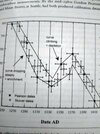
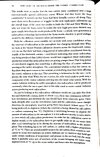
I'm reading Bailee's book. I'm either misinterpreting a concept or the words are mixed up or the chart is labeled incorrectly. I can't continue reading until I understand what's going on. Scanned with flat.

So the chart says that a descending pattern represents radiocarbon enrichment while an ascending pattern shows radiocarbon depletion.

Then on page 44 he says:

When we look at the Stuiver/Pearson calibration datasets across the fourteenth century (16) we see that there had been a long period of radiocarbon enrichment from the middle of the thirteenth century - enrichment indicating that more radiocarbon was being produced than Libby's theory would have suggested. More radiocarbon production means that radiocarbon dates are getting younger, faster.

From what I understand he is contradicting the chart.

"From the middle of the thirteenth century" indicates to me that he is referring to the ascending pattern that runs roughly from 1336 to 1370. And it seems to me he claims this is an enrichment period when the chart is clearly labeled otherwise.

Am I misinterpreting what's written or is this a writing error? I have a feeling if I don't lock down the concept I will be mixed up further on in the book. I appreciate any responses. I'll have to look through the forum and see if there's anyone I can help.

Thank you
 

Attachments

  • 20250219_205332.JPG
    20250219_205332.JPG
    1.5 MB · Views: 52
  • 20250219_211210922.jpg
    20250219_211210922.jpg
    866.9 KB · Views: 54
@Tuatha de Danaan you react to a lot of my posts and I know you've been in the community for many years. I don't know who to contact and I'm hoping a moderator can move my post above to the appropriate thread so I can gain clarification. Are you able to help me?
 
Back
Top Bottom