

XPan
The Living Force
Pico de Teide, Tenerife - Spain
29 Jan 2026
It appears that Pico de Teide's unrest continues - something which has been going on for several months. The last eruption occurred back in 1909 from the El Chinyero vent

 www.vulkane.net
Pico del Teide: Is a volcanic eruption imminent?
January 29, 2026 by Marc Szeglat
Earthquake activity on Teide fuels fears of volcanic eruption
The Teide volcano on Tenerife claims to be the largest volcano in Europe, along with Mount Etna. Viewed from the sea floor, Teide is actually significantly larger than Etna in terms of height and volume. However, Etna has been much more active, at least in recent centuries, and is therefore, in my opinion, the most powerful volcano in Europe. In addition, although Teide belongs to Europe politically, geologically it belongs to Africa. Apart from these considerations, there are growing concerns that Teide, which has been dormant since 1909, could erupt again soon. These fears are fueled by a high number of earthquakes beneath Teide: according to INVOLCAN, 2,320 earthquakes were recorded on Tenerife last year alone, most of them beneath the Las Cañadas caldera, where the famous Pico del Teide rises.

Earthquakes on Tenerife
The high level of seismic activity beneath Mount Teide appears to be continuing this year: on January 26, a seismic swarm of 59 weak tremors was recorded. The following day, there were 33 tremors, some of which showed the pattern of hybrid earthquakes and were concentrated in the southwest of the caldera. Hybrid earthquakes are related to fluid movements. The focal depths of the current swarms are around 12 kilometers and could have been caused directly by rising magma.
Due to growing concern
the volcanologists at INVOLCAN have now published a memorandum in which they classify the quakes, apparently in an effort to calm the rising tide of concern, which in my opinion is only partially successful. The volcanologists point to the increased seismic activity since 2016, which is associated with increased CO₂ emissions.
Uplift recorded
In addition, a slight uplift of the ground has been recorded. The volcanologists argue that the seismic activity is currently only slightly above average: statistically, there are 6.35 earthquakes per day on Tenerife. Since 2016, 130 earthquake swarms have been recorded, so the current activity fits into this pattern and there is no threat of a volcanic eruption in the short or medium term. In the long term, however, the situation looks different: even if the Teide is unlikely to erupt in the coming days and weeks, the situation can change rapidly within months and years, and an eruption can even be considered probable.
The attempts by volcanologists and authorities to reassure the public are once again typical of people who think in terms of terms of office and legislative periods. Although there is currently no reason to cause panic, in my opinion, the danger of a volcanic eruption at Pico del Teide should not be downplayed, but people should be prepared for it. Otherwise, there will be a big surprise if a disaster similar to the one on La Palma in 2021 occurs!
END OF ARTICLE
Photo Impressions
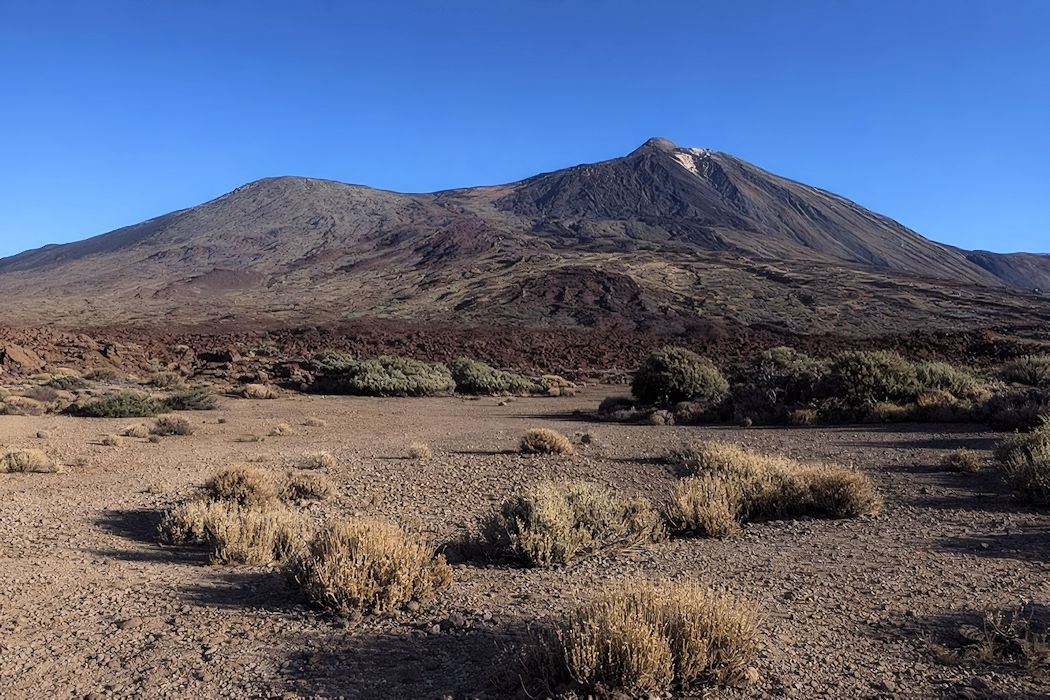
from 31 March 2014 in the evening at sunset, at 2200 meter height inside the caldera of Pico de Teide. It is a truly fascinating place, and the caldera is absolutely vast (9x16 km) !!


29 Jan 2026
It appears that Pico de Teide's unrest continues - something which has been going on for several months. The last eruption occurred back in 1909 from the El Chinyero vent
Pico del Teide: Droht ein Vulkanausbruch? - Vulkane Net Newsblog
Erdbebenaktivität am Teide schürt Angst vor Vulkanausbruch auf Teneriffa.
www.vulkane.net
Pico del Teide: Is a volcanic eruption imminent?
January 29, 2026 by Marc Szeglat
Earthquake activity on Teide fuels fears of volcanic eruption
The Teide volcano on Tenerife claims to be the largest volcano in Europe, along with Mount Etna. Viewed from the sea floor, Teide is actually significantly larger than Etna in terms of height and volume. However, Etna has been much more active, at least in recent centuries, and is therefore, in my opinion, the most powerful volcano in Europe. In addition, although Teide belongs to Europe politically, geologically it belongs to Africa. Apart from these considerations, there are growing concerns that Teide, which has been dormant since 1909, could erupt again soon. These fears are fueled by a high number of earthquakes beneath Teide: according to INVOLCAN, 2,320 earthquakes were recorded on Tenerife last year alone, most of them beneath the Las Cañadas caldera, where the famous Pico del Teide rises.
Earthquakes on Tenerife
The high level of seismic activity beneath Mount Teide appears to be continuing this year: on January 26, a seismic swarm of 59 weak tremors was recorded. The following day, there were 33 tremors, some of which showed the pattern of hybrid earthquakes and were concentrated in the southwest of the caldera. Hybrid earthquakes are related to fluid movements. The focal depths of the current swarms are around 12 kilometers and could have been caused directly by rising magma.
Due to growing concern
the volcanologists at INVOLCAN have now published a memorandum in which they classify the quakes, apparently in an effort to calm the rising tide of concern, which in my opinion is only partially successful. The volcanologists point to the increased seismic activity since 2016, which is associated with increased CO₂ emissions.
Uplift recorded
In addition, a slight uplift of the ground has been recorded. The volcanologists argue that the seismic activity is currently only slightly above average: statistically, there are 6.35 earthquakes per day on Tenerife. Since 2016, 130 earthquake swarms have been recorded, so the current activity fits into this pattern and there is no threat of a volcanic eruption in the short or medium term. In the long term, however, the situation looks different: even if the Teide is unlikely to erupt in the coming days and weeks, the situation can change rapidly within months and years, and an eruption can even be considered probable.
The attempts by volcanologists and authorities to reassure the public are once again typical of people who think in terms of terms of office and legislative periods. Although there is currently no reason to cause panic, in my opinion, the danger of a volcanic eruption at Pico del Teide should not be downplayed, but people should be prepared for it. Otherwise, there will be a big surprise if a disaster similar to the one on La Palma in 2021 occurs!
END OF ARTICLE
Photo Impressions
from 31 March 2014 in the evening at sunset, at 2200 meter height inside the caldera of Pico de Teide. It is a truly fascinating place, and the caldera is absolutely vast (9x16 km) !!






 .
.


