Volcanoes Erupting All Over

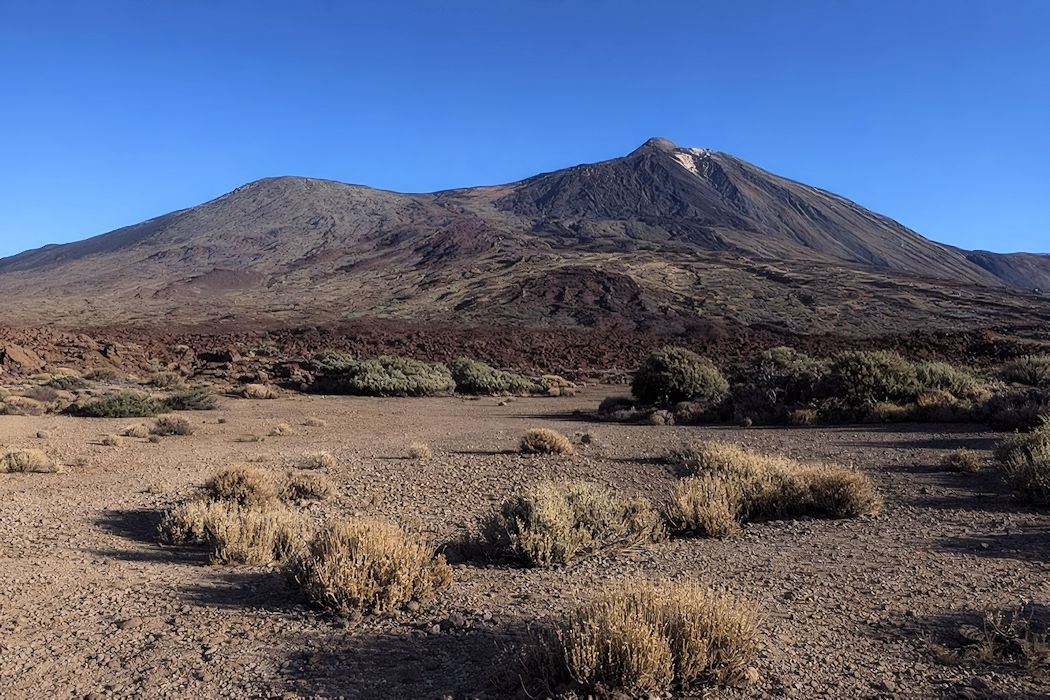
Pico de Teide, Tenerife - Spain
29 Jan 2026

It appears that Pico de Teide's unrest continues - something which has been going on for several months. The last eruption occurred back in 1909 from the El Chinyero vent


Pico del Teide: Is a volcanic eruption imminent?
January 29, 2026 by Marc Szeglat

Earthquake activity on Teide fuels fears of volcanic eruption

The Teide volcano on Tenerife claims to be the largest volcano in Europe, along with Mount Etna. Viewed from the sea floor, Teide is actually significantly larger than Etna in terms of height and volume. However, Etna has been much more active, at least in recent centuries, and is therefore, in my opinion, the most powerful volcano in Europe. In addition, although Teide belongs to Europe politically, geologically it belongs to Africa. Apart from these considerations, there are growing concerns that Teide, which has been dormant since 1909, could erupt again soon. These fears are fueled by a high number of earthquakes beneath Teide: according to INVOLCAN, 2,320 earthquakes were recorded on Tenerife last year alone, most of them beneath the Las Cañadas caldera, where the famous Pico del Teide rises.


tten1.png


Earthquakes on Tenerife
The high level of seismic activity beneath Mount Teide appears to be continuing this year: on January 26, a seismic swarm of 59 weak tremors was recorded. The following day, there were 33 tremors, some of which showed the pattern of hybrid earthquakes and were concentrated in the southwest of the caldera. Hybrid earthquakes are related to fluid movements. The focal depths of the current swarms are around 12 kilometers and could have been caused directly by rising magma.

Due to growing concern
the volcanologists at INVOLCAN have now published a memorandum in which they classify the quakes, apparently in an effort to calm the rising tide of concern, which in my opinion is only partially successful. The volcanologists point to the increased seismic activity since 2016, which is associated with increased CO₂ emissions.

Uplift recorded
In addition, a slight uplift of the ground has been recorded. The volcanologists argue that the seismic activity is currently only slightly above average: statistically, there are 6.35 earthquakes per day on Tenerife. Since 2016, 130 earthquake swarms have been recorded, so the current activity fits into this pattern and there is no threat of a volcanic eruption in the short or medium term. In the long term, however, the situation looks different: even if the Teide is unlikely to erupt in the coming days and weeks, the situation can change rapidly within months and years, and an eruption can even be considered probable.

The attempts by volcanologists and authorities to reassure the public are once again typical of people who think in terms of terms of office and legislative periods. Although there is currently no reason to cause panic, in my opinion, the danger of a volcanic eruption at Pico del Teide should not be downplayed, but people should be prepared for it. Otherwise, there will be a big surprise if a disaster similar to the one on La Palma in 2021 occurs!


END OF ARTICLE


Photo Impressions
from 31 March 2014 in the evening at sunset, at 2200 meter height inside the caldera of Pico de Teide. It is a truly fascinating place, and the caldera is absolutely vast (9x16 km) !!

2014-03-31-20-19-53.jpg


2014-03-31-20-41-46.jpg


2014-03-31-20-39-45.jpg
 
Pico de Teide, Tenerife, Spain
21 February 2025

There appears to be a lot of restlessness going on at Teide... Apparently magma is collecting in a depth between 8-12 km, since the hybrid earthquakes are indicative for such processess. German Vulkane.net has reported several times about the ongoing events in the past weeks at Teide.

2014-03-31_22-58-07Teide.jpg


Tenerife: Intense swarm of earthquakes continues
Ongoing swarm of earthquakes on Tenerife – More than 3,000 earthquakes beneath the Pico del Teide volcano

Pico del Teide on Tenerife remains the focus of geoscientists, who are monitoring the volcano and island closely and with growing concern: The earthquake swarm that began on February 18 continued yesterday.

Since then, more than 3,000 weak tremors have been detected. The events began to escalate on February 7, when the first volcanic-tectonic earthquake swarms began, during which two types of earthquakes were detected that are directly related to the movements of magmatic fluids underground. Since then, the Canary Islands measurement network of the Instituto Volcanológico de Canarias (INVOLCAN) has been in constant operation. The events are part of an ongoing trend of increased unrest that began at the end of 2016.


Seismic events
Initially, several low-frequency seismic events occurred—a type of signal associated with the movement of hydrothermal fluids such as water and carbon dioxide at great depths. Particularly notable was an episode on February 10: between 8:45 a.m. and 10:15 a.m., a continuous low-frequency signal was recorded, the duration of which had not been documented in this form since systematic observations began in 2016.

Hybrid earthquakes
At the same time, three hybrid earthquake swarms developed within a few days. The first lasted from February 12, 5:00 p.m., to February 13, 5:00 a.m., and included more than 800 individual events. The second followed from February 16, 6:00 p.m., to February 17, 8:00 a.m., with over 1,400 quakes. The third swarm began on February 18 at 11:00 p.m. and was still active on the evening of February 20; more than 3,000 microquakes have been recorded so far. All three series were located southwest of the Las Cañadas caldera at depths between 8 and 12 kilometers. Due to their very low magnitudes, they went unnoticed by the population.

The current weekly report “GUAYOTA” also refers to the archipelago-wide seismicity: between February 13 and 20, 315 weak earthquakes were recorded. The strongest event reached a magnitude of 2.4 and occurred on February 19 between Tenerife and Gran Canaria. The total energy released remained low.

The volcanic traffic light on Tenerife remains green
Experts from the scientific committee emphasize that the latest signals do not indicate an increased probability of a short- or medium-term eruption. Nevertheless, the development confirms the continuing pressure build-up in the volcanic-hydrothermal system under Mount Teide. In the long term, there is a high probability of an eruption on Mount Teide.

The last eruption on Mount Teide
took place on November 18, 1909. Although the first seismographs were already in existence at that time, they were not yet in use on Tenerife and were hardly capable of registering volcanic microquakes. Therefore, there is no data available on how exactly Mount Teide behaves before a volcanic eruption.

In recent years, data has been collected on the neighboring islands of El Hierro and La Palma, but since each volcano has its own individual characteristics, these findings cannot necessarily be transferred 1:1 to Mount Teide. Nevertheless, assuming that the situation is not completely different from that on La Palma, the situation could well come to a head in the medium term.

The current earthquake swarms indicate that magma is accumulating at a depth of 8 to 12 kilometers. Under certain circumstances, the final magma ascent from this depth can take place within a few days: on La Palma, just eight days passed between the onset of sustained earthquake swarms, the first ground uplifts, and the volcanic eruption.


END OF ARTICLE
 

Mud Volcano - San Juan de Urabá, Colombia

Uraba-27-26.png

An eruption of a diapir, or mud volcano, was recorded on Wednesday in the municipality of San Juan de Urabá, in the Colombian department of Antioquia.
“No injuries have been reported.” However, it was noted that several buildings in the rural area are located near the site of the emergency. Locals shared images on social media showing an intense column of fire and material ejected from several neighboring municipalities. The event occurred near the municipal aqueduct treatment plant, a populated area with sensitive infrastructure, which increased the concern of the local community.

The Municipal Council for Disaster Risk Management in San Juan de Urabá reported that this afternoon a mud volcano erupted near the municipal water treatment plant. Preliminary reports indicate that, although there are homes near the site of the emergency, no injuries have been reported, the entity said.
San Juan de Uraba.png

San Juan de Urabá is a municipality located in the department of Antioquia in northern Colombia, that forms part of the volcanic belt that extends to the Caribbean Sea. This region is known for its high geological activity. There are mud volcanoes (not lava) in constant activity, which continuously expel large amounts of water, gas (such as methane which is highly flammable and carbon dioxide), and clayey material due to the high pressure of the subsoil on the organic matter, which causes a network of fractures and bulges as an escape route to the surface.

Cecilia Bustamante, professor of Earth Sciences at the University of Antioquia, explains the formation of mud diapirism in the region:
"On the Caribbean coast, we have the convergence of three plates. The Caribbean plate pushes downwards; the South American plate pushes westwards; and the Nazca plate, which is the Pacific plate, pushes eastwards. This causes all these sediments to pile up on the continent and form the mountain range."
(...) “This material is sediment that has accumulated underground over millions of years. Rivers such as the Atrato and the Magdalena carry sand and clay from their source to the sea. This remains there for a long time until the tectonic plates push it upwards.”
According to records, this mud volcano had already erupted in 2006, 2007, 2010, and 2019, although never with as much force as now, according to authorities.
The most recent mud explosion in the area occurred on November 9, 2024, on the border between Turbo, Necoclí, and San Pedro de Urabá, when the El Aburrido volcano erupted. #1,646
Mud_Volkan_Uraba.png
El Totumo_MudVLK.png
Image of the 19 mud volcanoes known to date in the Urabá area of Antioquia-Colombian.

The secretary of government of San Juan de Urabá, José Ignacio Díaz Salgado said :
(...) According to the official, on Wednesday night, the local fire department was already present in the area and fighting the flames caused by the eruption. Least four homes had to be evacuated due to the emergency.
Although it is still too dark to compile a detailed inventory of the damage, Díaz added that some cattle have been found dead as a result of the eruption.

 
The Steamboat Geyser, located in Wyoming's Norris Geyser Basin, has been active since February 2026 on February 7, 9, 12, and 15.

Starting on February 16, eruptions began occurring every 2 to 5 hours.

As of today, a slight ground deformation has been documented.


March 2, 2026
Yellowstone Caldera Chronicles is a weekly column written by scientists and collaborators of the Yellowstone Volcano Observatory. This week's contribution is from Michael Poland, geophysicist with the U.S. Geological Survey and Scientist-in-Charge of the Yellowstone Volcano Observatory.

Norris Geyser Basin is known for being the hottest and most dynamic of Yellowstone National Park’s thermal areas—and that’s saying something! It is home to Steamboat Geyser, the tallest active geyser on Earth, and it contains an interesting and chaotic mix of acidic and neutral features in terms of chemistry.

In the Back Basin of Norris Geyser Basin, about 200 meters (660 feet) away from Steamboat Geyser, is Echinus Geyser. The name comes from mineralogist Albert Charles Peale, who visited the geyser in 1878 and thought the rocks around the geyser looked like sea urchins—a type of animal known as an echinoderm.

The geyser pool is about 20 meters (66 feet) across. Paradoxically, the geyser has an acidic chemistry, and it is the largest acidic geyser in the world. That sounds a bit scary, but the acid is not concentrated. Rather, it’s a bit like orange juice or vinegar.

Acid geysers are rare because acidic water can break down the rock that makes up a geyser’s plumbing system. At Echinus Geyser, however, the composition is due to mixing between acidic gases and neutral waters, and the acidity is not sufficient to eat away at the rock. The somewhat unique water chemistry results in interesting formations and compositions, including the red color (from iron, aluminum, and arsenic) that rims the geyser pool and the silica-covered spiny rocks that give the geyser its name.

The boardwalk around Echinus Geyser contains several benches and multiple tiers of platforms. Visitors to the geyser during most of the 21st century might have wondered why there were so many viewing areas, because eruptions are not common. But in the latter half of the 20th century, the geyser was a consistent performer, and visitors could get closer to an eruption there than almost anywhere in the park!

The geyser appears to have been mostly dormant with only occasional eruptions prior to 1948. In the 1970s Echinus Geyser was erupting regularly at 40–80-minute intervals. In the 1980s and 1990s, the eruption durations could be quite extreme, sometimes lasting more than 90 minutes!

Eruptions of Echinus Geyser varied tremendously when the geyser was vigorously active. Some were small while others reached about 23 meters (75 feet). They could be vertical or inclined, occasionally soaking onlookers with warm water, and could be regular enough that the park would sometimes post predictions—the duration of an eruption could often be used to forecast the timing of the subsequent eruption. By the early 2000s, however, eruptions started to wane, and activity became much less common.

In 2010, a temperature monitoring system was established in the outflow channel of Echinus Geyser as a means of tracking any changes. Data from that system recorded 15 sporadic eruptions during October 2010–January 2011. After that time there were a few eruptions here and there until the geyser came alive in 2017.

Screenshot 2026-03-02 at 14-25-24 Echinus Geyser is back in action! For now… U.S. Geological S...png

Sources/Usage: Public Domain. View Media Details

Temperature record from Echinus geyser outflow channel for October 17–20, 2017. The plot captures a time when the geyser went from occasional eruptions to semi-regular eruptions (signified by temperature spikes after about 12:00 on October 18) occurring about every 2 hours.

Starting in mid-September of that year, the temperature sensor recorded spikes followed by decreases happening many times throughout the day. These were associated not with eruptions but rather surges from the pool where the surface became agitated, releasing hot water down the channel, and then calming, with lower water levels that gradually returned to normal. In October, true eruptions started, indicated by higher temperature spikes as more hot water went down the channel. From October 18 to November 10, 2017, eruptions took place very consistently about every 2–3 hours. Then the activity suddenly stopped. There was one eruption in January 2018, one in January 2019, and two in December 2020. Then quiet.

Until now.

In early February 2026, repeated surges of the geyser began—as before, with the surface becoming agitated and releasing more water down the runoff channel. The first eruption since 2020 occurred on February 7, followed by additional eruptions on February 9, 12, and 15. Starting on February 16, eruptions began occurring every 2 to 5 hours. These eruptions last 2–3 minutes and reach about 6–10 meters (20–30 feet) in height. After eruption, the water level decreases significantly and doesn’t return to normal for about an hour. Overall, this pattern resembles that of late 2017.

1772490503989.png

Sources/Usage: Public Domain. View Media Details

Temperature record from Echinus Geyser outflow channel for February 6, 2026, at 8 p.m. MST to February 7, 2026, at 8 a.m. MST. The plot shows initial baseline temperatures, then two spikes to 50 °C representing water surges, then an eruption marked by a spike to 70 °C followed by a lull to 10 °C, and finally a return to baseline. Another surge is present at the end of the record. The eruption shown is the first recorded at the geyser since December 2020.

You can follow the activity of Echinus Geyser via the temperature graphs on the Yellowstone Volcano Observatory website—look for the spikes that reach about 70 °C (158 °F). Those are the eruptions! Spikes that reach 40–50 °C (104–122 °F) are the surges.

Will the eruptions continue into the summertime, allowing visitors to use the seating and viewing areas around the geyser for their intended purpose? It’s probably not too likely given the geyser’s tendency to wake up for a month or two before going back to sleep, and there were no eruptions during the last few days of February so it might already have gone quiet. But change is constant at Norris Geyser Basin, so perhaps the show will continue into the summer! Fingers crossed…

Acknowledgement: Some of the information for this article was derived from T. Scott Bryan’s The Geysers of Yellowstone, Lee H. Whittlesey’s Yellowstone Place Names, the online GeyserTimes database for Echinus Geyser, U.S. Geological Survey Professional Paper 1456, and research by M.A. Bellingham.

Yellowstone Volcano Observatory,
 
Back
Top Bottom