Watch the skies and land and oceans

Posted this in the session thread where the looping fireball is discussed, but figured I'd also post it here -


Looping Fireball near Dallas Texas this past Monday

Another 'looper'!

These were the two 'looping fireballs' in England that caught our attention a decade ago.

First one was filmed in Northampton in May 2014:


And the other in Brackley in July 2015:


Now get this: Brackley and Northampton are just 27km (17 miles) apart!
 
Historic heat continues across California and the West as records fall for multiple days in a row.

And of course, pay no attention to inner Earth core dynamics. Here's another update:

California is not just experiencing a heatwave on land. A Category 3 to locally Category 4 marine heatwave has developed off the Southern California coast. La Jolla in San Diego recorded a water temperature of 71°F (21.7°C) yesterday on the last day of winter. That's warmer than the average water temperature in August.
HD-PoeKaIAAYnkx.png


This is related to the green airglow over Colorado just the other day.

A record-setting ridge of high pressure has set up over the US west, creating a heat dome that meteorologists are calling "absurd" and "otherworldly." It might be partly responsible for last night's display of green airglow over Colorado.

And is related to this squashing sun photographed in San Francisco a few days ago and published on SpaceWeather.com on March 20th, 2026:

pancakes_strip.jpg


Witnessed posted:

"I have seen quite a few Novaya Zemlya sunsets, but the one I saw on March 17 was special," says Zinkova. "The refraction was so strong that the sunset was delayed for 14 minutes! At times, it felt as the universe was standing still."
 
You mixed up the explanations for two different phenomena in your post. The explanation for the anti-auroras are a separate discussion for a phenomena that is really not an aurora per se. It's not related to the South Atlantic Anomaly.

Yes i understand that it's 2 differents things.


When you replied to my post i went to read your linked message and, since they didn't provided a clear explanation about the phenomena, i tried to think of something that could explain the discrepancy between more charged particules count and less aurora in the anomaly. What came to my mind was that those particules were probably redirected by some "geomagnetic wizardry" toward the north, more active magnetic dipole. And it could explain why they reported more aural activity there too.
I stumbled next at one of your post about this anti-aurora thing and it was described as particules being "sucked" and leaving spaces whitout aural potential. This "sucking", or this idea of mouvement resonated a bit with what i was thinking about The South Atlantic geo-m. anomaly and promped me to wirte about it. But i might have confused the reader in the process !


On another note, maybe related to this Blob, or more generally something building up inside the earth in this area :

Sea levels around Africa are rising faster than the global average: What's behind this alarming trend

When we say sea level has risen, we're comparing it to a stable reference level, the distance between the satellite and the ocean surface.
I'm an oceanographer and geophysicist who specializes in these measurements. My research team and I analyzed ocean height measurements collected by radar instruments on orbiting satellites from 1993 to 2024, for all waters surrounding Africa.

Our analysis revealed that African seas have risen by approximately 11.26cm since 1993. This process is driven by warming waters and melting ice.

African sea levels are rising by approximately 3.54 millimeters each year, which exceeds the global average of 3.45 mm/yr. Perhaps more troubling is that the pace of rise is speeding up, especially in African waters. This acceleration is a long-term trend driven by ongoing ocean warming and ice sheet melting, and it persists regardless of whether any individual year features an El Niño or a La Niña. The ocean continues to absorb heat and receive meltwater from ice sheets year after year, and it is this relentless accumulation, not any single climate cycle, that drives the long-term acceleration.
[...]

What drives rising sea levels​

Two main factors drive sea level rise globally. First, as ocean water warms, it expands. Second, melting glaciers and ice sheets in Greenland and Antarctica add water mass to the oceans. Both are consequences of human-caused climate change.

This rise is not a natural cycle. While sea levels have fluctuated throughout Earth's history, the current rate of rise is far faster than anything seen in thousands of years, driven by the burning of fossil fuels and the resulting buildup of greenhouse gases in the atmosphere.

On the paper conclusions :

Looking ahead, regional adaptation strategies must account for both the accelerating trend and the amplifying shocks from ENSO, but also vertical land motions such as subsidence and tectonic uplift can significantly alter local manifestations of sea level change, causing coastal relative sea level trends to diverge from the global mean

Furthermore, our findings highlight the cascading socio-ecological implications of accelerated SLR. Coastal ecosystems, including mangroves, estuaries, and upwelling-dependent fisheries, are particularly vulnerable to the compound effects of thermal expansion, marine heatwaves, and subsidence, which threaten biodiversity and food security.

This thermal expansion is maybe related to what was exposed in this post ?

The following press release means that something is being currently expelled from inner Earth. They can't say it outright, otherwise the public will panic.

'Blackwater' lakes and rivers in the Congo Basin are now emitting ancient carbon into the atmosphere
 
A Green Fireball dazzles the West Coast.

Jim Todd with OMSI talks about meteor seen in Pacific Northwest
views 8 hours ago
People in the Pacific Northwest reported seeing a bright green fireball early Monday morning.
PORTLAND, Ore. (KATU) — Did you see a bright flash in the skies over the Pacific Northwest this morning?

ChimeIn | Submit your meteor photos and video

Several people reported seeing a bright green fireball around 6:06 a.m., according to Jim Todd at OMSI.

“Meteors, also known as shooting stars, are small celestial objects that enter the Earth's atmosphere,” Todd stated. “A fireball is a particularly bright meteor that can be seen from a distance of about 60 to 80 miles above.”

According to the American Meteor Society (AMS), people from Portland to Snohomish, Washington, reported the sighting.

“As a meteor travels through the atmosphere at high speeds, it creates friction, which heats the meteor and causes it to vaporize,” Todd said.

If you have photos or videos of the meteor this morning, send it to KATU via our ChimeIn page.

Events in 2026


We received 107 reports about a fireball seen over CA, NV, OR and WA on Monday, March 23rd 2026 around 13:06 UT.

Events in 2026


We received 297 reports about a fireball seen over AZ, CA and NV on Monday, March 23rd 2026 around 03:19 UT.
 
Last edited:
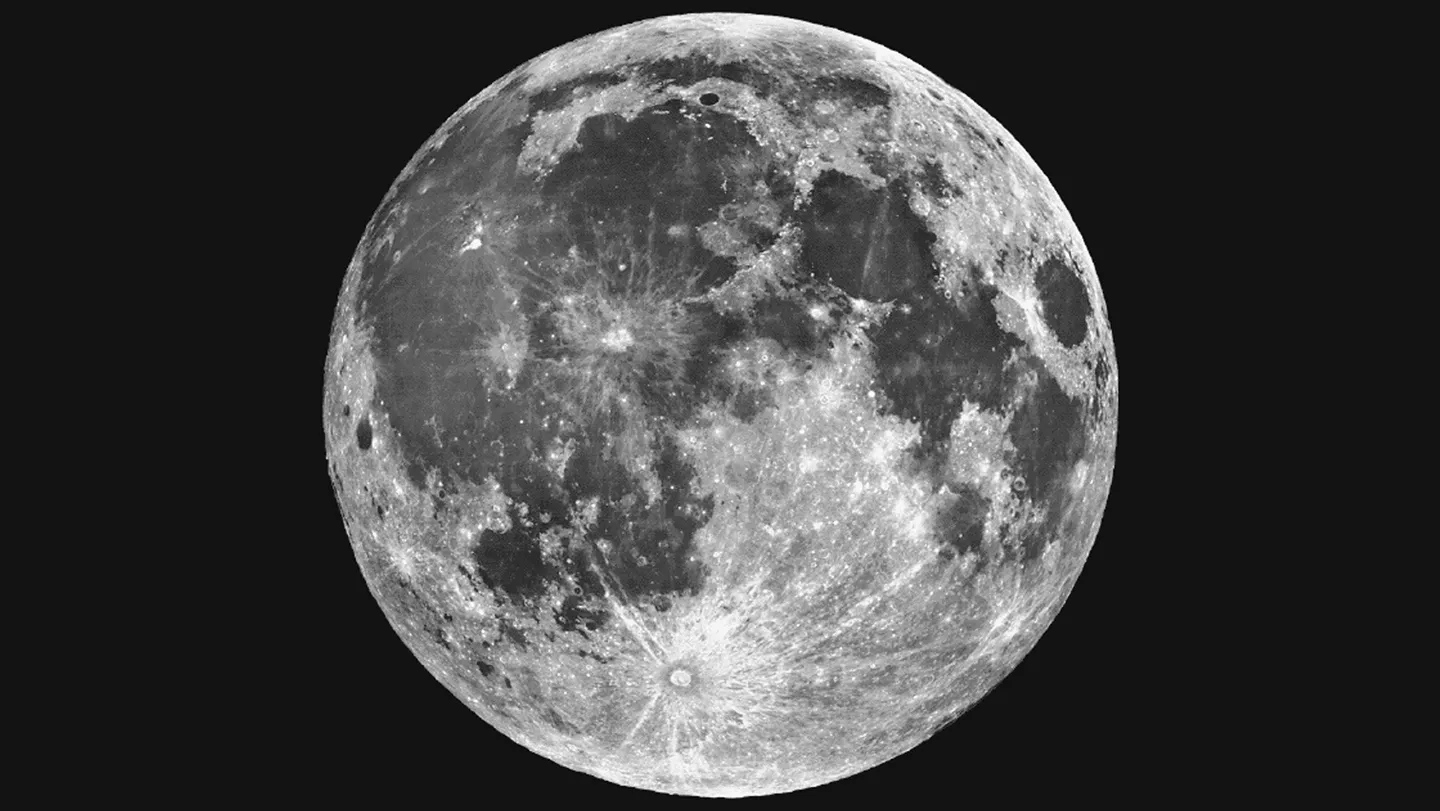
A recent meteor strike was detected in images taken by NASA’s Lunar Reconnaissance Orbiter on the Moon’s far side, occurring in April or May 2024.

The crater is 225 meters wide, a size expected only once every 139 years
By Lisa Grossman March 23, 2026, at 11:00 am

New-impact-crater-discovered-on-moon.webp
New 225 m (738 feet) crater discovered on the Moon. Image credit: Robinson et al.


A once-in-a-century crater formed on the moon right under our noses. A routine search of images from NASA’s Lunar Reconnaissance Orbiter camera found a fresh crater as wide as two American football fields, planetary scientist Mark Robinson reported March 17 at the Lunar and Planetary Sciences Meeting in The Woodlands, Texas.

The crater is 225 meters wide and formed in April or May 2024, Robinson said. According to predictions based on other lunar landmarks, a crater that big should form only once in 139 years. The discovery can help highlight the risks impacts pose to future astronauts

One of the first craters the orbiter spotted after it began its mission in 2009 was 70 meters wide, said Robinson, of Houston-based spaceflight company Intuitive Machines. “I used to joke with folks … that now the bar has been set, you have to find a 100-meter crater,” he said. “Now, lo and behold, we have 225 meters.”

The crater seems to have formed on a boundary between the cratered and craggy lunar highlands and a wide, flat mare, which formed from liquid magma pooling on the moon’s surface. Its depth, about 43 meters on average, and its steep edges suggest it formed in strong material like solidified lava. But its shape is slightly elongated, which suggests the ground beneath the crater is not all the same, Robinson said.

The crater is also surrounded by a bright blanket of ejecta — rock and dust that splashed out in all directions when the impact occurred — that extends hundreds of meters from the rim. Robinson and colleagues found other disturbances as far as 120 kilometers from the crater.

That could be bad news for future moon bases. Bits of rock ejected from impacts could hit lunar habitats at high speeds from very far away. Buildings will need to be designed to survive that. “You’ve got to protect your assets to withstand small particles hitting you at order of magnitude a kilometer per second,” Robinson said.

I say the odds are still being calculated and are not a certainty, given the latest session's insights


Update:

MASSIVE COMET! Will C/2026 A1 Break Apart in the Corona?
Mar 25, 2026 #NSN #NASA #Astronomy
A newly discovered sungrazing comet, C 2026 A1 MAPS, will pass extremely close to the Sun on April 4, 2026. Scientists are watching to see whether it survives and becomes briefly visible from Earth.Paperlink : http://www.aerith.net/comet/catalog/2...
00:00 Introduction
00:50 DISCOVERY
04:03 SCIENTIFIC IMPORTANCE & THEORIES
07:11 IMPLICATIONS & WHAT’S NEXT
10:13 Outro
10:37 Enjoy
 
Last edited:
● Spain

Rain and flooding today in the Canary Islands Disturbing images from #PuertodelaCruz on the island of Tenerife following a severe storm that caught a bus off guard; fortunately, there were no injuries reported

Storm #Therese is causing heavy rains and flooding in #GranCanaria and the El Risco area of #Moya. Dangerous flash floods are reaching the coast and sweeping away a car in the wake of the heavy rains.
In Tenerife, classes in schools have been suspended.

● Brazil
Heavy rains and severe flooding in Bauru, São Paulo, Brazil. March 25, 2026

● Oman
Heavy rains, rising rivers and streams, and flooding continue on the Arabian Peninsula
Footage from last night showing a flash flood sweeping through the Al Hawraa Valley in the Buraimi Governorate of Oman

● Strong Earthquakes in Tonga and Japan this week

M 6.2 - 102 km NE of Hihifo, Tonga
2026-03-22 06:15:36 (UTC)
15.382°S 173.047°W. 10.0 km depth
USGS earthquake alert
M 6.2 - 149 km SSW of Lotofagā, Samoa
2026-03-22 15:27:56 (UTC)
15.172°S 172.508°W. 10.0 km depth
USGS earthquake alert
M 6.3 - 144 km NE of Hihifo, Tonga
2026-03-22 15:30:37 (UTC)
15.226°S 172.683°W10.0 km depth
USGS earthquake alert
M 7.6 - 153 km W of Neiafu, Tonga
2026-03-24 04:37:50 (UTC)
18.700°S 175.435°W. 237.5 km depth
USGS earthquake alert
M 6.5 - 122 km E of Yamada, Japan
2026-03-26 14:18:50 (UTC)
39.446°N 143.372°E. 9.5 km depth
USGS earthquake alert
 
Whether this It could be a fake video- AI or a real disturbance in the sky or something related to the "the idea of national "gods" put forth in the OT [Old Testament]"* , although it's interesting that there are a lot of videos and a report in the Daily Mail about about it.

The skies over Tel Aviv were flooded with a sea of crows on Tuesday
A video showing large flocks of crows swarming parts of Tel Aviv has gone viral on social media, drawing widespread attention and speculation.

Q: (Joe) If Israel was to try, would the U.S., Trump government, whatever, intercede to stop that happening?

A: More complex than your thinking allows. Remember the idea of national "gods" put forth in the OT [Old Testament]. There are protections and vulnerabilities unknown to you at present. This is a conflict that will reveal and teach many. Do not be disheartened.

Q: (L) Well, you know what that concept of "national gods" is, don't you?

(Joe) Tell us.

(L) Well, if you think about the book of Daniel, and the angel that appeared to Daniel, and he said, you know, I would have come to you sooner, but I was supporting the army of whatever, fighting such and such a battle. And basically the idea is that these angels or archangels themselves battle against each other, and their hyperdimensional or fourth density wars, or fifth or sixth density, whatever they are, get represented as conflicts on the earth. So it seems that the conflict that's taking place right now is not just a simple…

(Andromeda) Not only on this level?

(L) Yeah, it's not just a simple money-grabbing, or regime-changing, or power-mongering, or resource-grabbing conflict as much as it is a hyperdimensional conflict between, I would say, good and evil. And since I think we all pretty much know that evil is Israel and the United States - at least its leadership - that has been coerced to support it, then obviously Iran, if not exactly "good", is at least... has its own archangel, or national god, or whatever.

(Niall) It kind of almost does with Shia Islam. I'm not saying it's that…

(L) I'm just going to ask this in regards to that. Am I close to correct on that, first of all?

A: Yes

Q: (L) And would Iran be stronger if it were still adhering to the Zoroastrian faith?

A: Yes!!
Session 28 February 2026
 
Whether this It could be a fake video- AI or a real disturbance in the sky or something related to the "the idea of national "gods" put forth in the OT [Old Testament]"* , although it's interesting that there are a lot of videos and a report in the Daily Mail about about it.

IIt's not fake, and people on X are interpreting it as an omen

Ravens as messengers of the Lord.​

[]A flock of crows appears over Tel Aviv, and people are saying it’s an omen of death.[/]
So, why are people saying this is a bad omen?

The Bible frequently refers to birds as a symbol of God’s providence. Providence refers to a prearranged plan or measure taken to achieve a goal, remedy a problem, provide a solution, or prevent an event. In law, it is a judicial ruling that initiates or advances a legal proceeding. In general, it refers to a preparation or resolution.

The Bible recounts that God provided food for Elijah by sending ravens to feed him (1 Kings 17:2–6). God uses ravens as providers, so they must not be eaten, for it is an abomination. (Leviticus 11:13-15) but He also uses them to expose wickedness and mete out punishment, according to Proverbs 30:17: “The eye that mocks a father and scorns a mother’s teaching—let the ravens of the valley snatch it away, and let the eaglets devour it.”

In this context, God had already sent a warning to Israel. In this video from August 2023, a crow can be seen knocking an Israeli flag off its pole. This occurred before the events of October 7 that led to the genocide in Palestine.
In Revelation 19:17 describes an angel standing in the sun, inviting the birds to "God's great supper", a macabre feast to devour the bodies of God's enemies.
 
Recently I was wondering if there could be a human-cosmic correlation between the recent geopolitical actions (the war against Iran) and other human activity shenanigans and the earth and cosmic weather, especially the meteor activity.

It seems that the first quarter of 2026 has registered a slightly higher rate of meteors streaking the atmosphere than the previous years, at least according to the american meteor society. What makes it different than the previous years it seems is the size of these meteorites, the explosion noise ratio and the high rate of eyewitnesses. Which makes the first quarter of 2026 pretty interesting.

We'll have to wait and see if the increasing chaos around the world will evoke even higher meteor activity and more serious earth/cosmic changes in general.

Here below I'm sharing an interesting article published on the American meteor society talking about the slightly unusual meteor activity for the first quarter of 2026. Unfortunately some charts and data have been pasted disorderly, if you're interested in reading the original article you can find it here:

Has Something Changed in the Near-Earth Meteoroid Environment?

The first quarter of 2026 has produced what appears to be a significant surge in large fireball events. The data, drawn from the AMS database going back to 2011, shows a pattern that warrants serious investigation. Here is what the numbers say, what they don’t say, and what we need to find out.
March 25, 2026 • By Mike Hankey assisted with ClaudeAI for the American Meteor Society
Since the start of 2026, the AMS has been fielding a growing number of inquiries from journalists, scientists, and the public about whether fireball activity has increased. The short answer is yes—but the details matter. We went to the data to understand exactly what has changed and, just as importantly, what hasn’t.
The AMS fireball reporting system has been in continuous operation since 2005 and reached maturity around 2016–2018, with annual Q1 event totals stabilizing in the range of 1,100–1,400 events. What follows is an analysis of Q1 data from 2011–2026, with particular attention to the 2021–2026 window where the reporting platform has been fully stable.

2,046

Total Events

Q1 2026

38

Events 50+ Reports

(vs. ~18 avg)

14

Events 100+ Reports

(vs. ~7 avg)

98.2°

Separation Between

Two Eucrite Falls

The Signal Is at the Top of the Distribution

The most important finding from our analysis is that the total number of fireball events is not dramatically unusual. Q1 2026’s 2,046 total events is the highest on record but only marginally above 2022 (2,037) and 2021 (1,947). If this were simply a matter of more people filing reports, we would expect a proportional increase across all witness-count thresholds. That is not what we see.
Fireball Events by Witness Threshold, Jan 1 – Mar 24
The anomaly intensifies at higher thresholds — the signature of physically larger events, not increased reporting
At the 25+ report threshold, 2026 has produced 61 events versus a 2021–2025 average of roughly 43—up about 42%. At 50+ reports, 2026 has 38 events versus an average of 18—more than double. And at 100+, the count of 14 is twice the average of 7. The signal gets stronger as the threshold rises, which is the hallmark of a genuine physical change in the incoming material, not a reporting artifact.

2011
2012
2013
2014
2015
2016
2017
2018
2019
2020
2021
2022
2023
2024
2025
2026

[th]
Year

[/th]​
[th]
Total Events

[/th][th]
Events
25+

[/th][th]
Events
50+

[/th][th]
Events
100+

[/th]​
[td]
346

[/td][td]
6

[/td][td]
4

[/td][td]
1

[/td]
[td]
446

[/td][td]
11

[/td][td]
6

[/td][td]
2

[/td]
[td]
757

[/td][td]
19

[/td][td]
11

[/td][td]
2

[/td]
[td]
813

[/td][td]
12

[/td][td]
7

[/td][td]
5

[/td]
[td]
784

[/td][td]
18

[/td][td]
8

[/td][td]
5

[/td]
[td]
1,175

[/td][td]
26

[/td][td]
14

[/td][td]
9

[/td]
[td]
1,155

[/td][td]
25

[/td][td]
12

[/td][td]
6

[/td]
[td]
1,200

[/td][td]
36

[/td][td]
17

[/td][td]
8

[/td]
[td]
1,385

[/td][td]
35

[/td][td]
18

[/td][td]
5

[/td]
[td]
1,458

[/td][td]
36

[/td][td]
17

[/td][td]
7

[/td]
[td]
1,947

[/td][td]
48

[/td][td]
26

[/td][td]
14

[/td]
[td]
2,037

[/td][td]
42

[/td][td]
13

[/td][td]
5

[/td]
[td]
1,765

[/td][td]
47

[/td][td]
20

[/td][td]
9

[/td]
[td]
1,614

[/td][td]
39

[/td][td]
21

[/td][td]
9

[/td]
[td]
1,807

[/td][td]
37

[/td][td]
15

[/td][td]
4

[/td]​
[td]
2,046

[/td][td]
61

[/td][td]
38

[/td][td]
14

[/td]​


March 2026: The Distribution Shifted Upward

Breaking Q1 2026 down by month reveals that January was mildly elevated, February showed a noticeable increase at the upper end, and March is where the signal becomes unmistakable.
Event Distribution by Witness Tier, March Only
March 2026 has five events exceeding 200 reports — more than all prior Marches combined since 2011
The key observation is that the base layer of activity (10–24 reports) is essentially unchanged at 21 events, virtually identical to every other year. What has changed is that a large fraction of events that would normally draw 25–49 witnesses instead drew 50, 100, or even 200+ witnesses. The distribution didn’t broaden—it shifted upward. Almost half of all March 2026 events with 10+ reports were seen by 50 or more people.
The March average witness count per event was 142.7—nearly three times the next-highest March on record (49.4 in 2021). Even removing the massive 3,229-report German event on March 8, the remaining 41 events average roughly 67 reports each, still more than double the historical norm.


Physical Characteristics: Sonic Booms Confirm Larger Objects

If the fireballs were simply being seen by more people due to favorable conditions, we would not expect changes in the physical characteristics reported by witnesses. But the data shows an elevated rate of delayed sound reports—sonic booms reaching the ground—which requires objects that penetrate deep enough into the atmosphere to produce pressure waves.
Large Events (50+ Reports) With Sonic Booms Reported, Q1
2026 combines the highest event count with one of the highest sonic boom rates
In Q1 2026, 30 of 38 events with 50+ reports (79%) produced sonic booms, placing it in the top tier historically. But what makes 2026 unique is the combination: prior high-sound years like 2021 and 2023 had elevated percentages but moderate event counts. In 2026, both the rate and the absolute count are high. Thirty large fireball events producing audible booms in a single quarter means roughly one every three days.
Meanwhile, the total number of individual long-duration sighting reports (witnesses reporting fireballs lasting 4+ seconds) reached 1,693 in Q1 2026—more than 2.5 times the previous high of 651 set in 2021.


The Remarkable Events of March 2026

While the aggregate statistics tell one story, the individual events of March 2026 have been extraordinary. Beginning with a massive European event on March 8 and accelerating through a sustained wave from March 11–24, the AMS logged an unprecedented concentration of major fireballs—many producing confirmed meteorite falls.
8
Mar
Daytime Bolide Over Western Europe — 3,229 Reports
A slow, long-duration fireball (avg. 5.5 seconds) visible across France, Germany, Switzerland, Belgium, and the Netherlands. 174 witnesses reported delayed sound. Recovered specimens have been identified as Diogenites—a rare achondritic meteorite type originating from differentiated asteroids in the Vesta family.
11

Mar
Major Fireball Over France & Spain — 236 Reports
A bright fireball visible across southern France and into Spain and Navarra, with 236 witness reports. This event marked the start of a sustained wave of large fireballs that continued through the rest of the month.
17

Mar
Daytime Bolide & Meteorite Fall Over Ohio — 222 Reports
A 7-ton, 2-meter asteroid entered over Lake Erie at 8:57 AM EDT, producing sonic booms across NE Ohio and into Pennsylvania. Energy release estimated at 250 tons of TNT. Recovered meteorites also confirmed as eucrites—the second eucrite fall in 9 days. Radiant: RA 112°, Dec +77°. Visible from 16 states and Ontario.
21

Mar
Daytime Fireball & Meteorite Fall Over Houston, TX — 181 Reports
A 1-ton meteoroid broke apart 29 miles above the Houston metro area at 4:40 PM CT, producing sonic booms and a 26-ton TNT equivalent airburst. A meteorite fragment penetrated the roof of a home in Ponderosa Forest. NASA tracked debris via Doppler radar. Preliminary identification suggests an ordinary chondrite.
23

Mar
Two Fireballs Over California — Event #1 with 306 reports & Event #2 with 122 Reports
Two separate fireballs on the same day. The first, a vivid green fireball visible from San Diego to Willits and east to Carson City, Nevada, drew 306 reports. A second event over CA, NV, OR, and WA drew another 122. Two additional fireballs were also observed over Germany on the same date.
24

Mar
Fireballs Over Michigan & Georgia — 111 & 20 Reports
A bright fireball visible across Michigan, Ohio, Indiana, Wisconsin, and into Ontario drew 111 reports. A separate event over the southeastern US (AL, FL, GA, SC, TN) was reported the same night. As of this writing, the wave continues.


Radiant Analysis: Enhanced Activity From Known Sources

When fireballs originate from a common parent body or debris stream, their radiants—the apparent points in the sky from which they travel—cluster together. We computed radiants for all 61 trajectory-resolved events in Q1 2026 and compared them to the 2021–2025 baseline. The results reveal meaningful clustering in two regions of the sky.
Radiant RA Distribution by Year, Q1
2026 (orange) shows elevated activity in the 90–180° quadrant, consistent with an enhanced Anthelion source
Radiant Sky Map: RA vs. Declination

Each dot is a fireball event plotted by its computed radiant. 2026 events (orange) show visible clustering near the Anthelion radiant and at high northern declinations. Scroll to zoom, drag to pan. Key events labeled.
Scroll to zoom · Drag to pan · Double-click to resetReset Zoom

Anthelion concentration. The Anthelion sporadic source—the region of the sky opposite the Sun, centered near RA 150–200°, Dec -5° to +20° during Q1—is the dominant source of sporadic fireballs in every year. But in 2026, activity from this region has approximately doubled. Twelve events fall in this tight zone in 2026, compared to 1–6 in prior years. The density of 9.6 events per 1,000 square degrees is twice the previous maximum. This cluster includes several of the quarter’s largest events, including the March 11 France fireball (236 reports), the March 9 East Coast event (282 reports), and the March 10 France event (145 reports).

Anthelion Zone
RA 150–200°, Dec -5–20°
High Declination
Dec > 70°
Broad Anthelion
RA 100–200°, Dec -20–45°

[th]
Region

[/th]​
[th]
2021

[/th][th]
2022

[/th][th]
2023

[/th][th]
2024

[/th][th]
2025

[/th][th]
2026

[/th]​
[td]
5

[/td][td]
6

[/td][td]
3

[/td][td]
1

[/td][td]
3

[/td]​
[td]
12


[/td]​
[td]
5

[/td][td]
2

[/td][td]
2

[/td][td]
0

[/td][td]
3

[/td]​
[td]
11


[/td]​
[td]
15

[/td][td]
17

[/td][td]
15

[/td][td]
12

[/td][td]
20

[/td]​
[td]
26


[/td]​

High-declination enhancement. Eleven events in 2026 originated from radiants above Dec +70°—more than double the next-highest year (2021 with 5). This cluster includes the Ohio eucrite (Dec +77°), the California fireball (Dec +81°), and the Feb 11 Ohio event (164 reports, Dec +80°). High-declination radiants correspond to objects on steeply inclined orbits relative to the ecliptic plane. An enhancement in this population is unusual and warrants further study.
The two HED falls remain unrelated. Despite both being rare achondrites , the Germany (RA 33°, Dec -11°) and Ohio (RA 112°, Dec +77°) events have an angular separation of 98.2 degrees—they came from opposite parts of the sky on unrelated orbits. Two HED falls in nine days is statistically remarkable, but they are not from a common stream.
Important caveat. These radiants are computed from witness-based trajectory solutions, not instrumental camera data. The typical uncertainty in witness-derived radiants is 10–20 degrees, meaning the apparent clustering could be tighter or looser than shown. Instrumental confirmation from allsky camera networks would substantially improve the precision of these results. The raw radiant data for all 255 events used in this analysis is available for download below.


What We Can Rule Out

Increased reporting or smartphone adoption. The AMS reporting platform has been mature since 2016–2018. The total event count for Q1 2026 is only marginally above recent years. The anomaly exists only at high witness-count thresholds—the opposite of what a reporting effect would produce.
A new meteor shower. No major showers are active in Q1 (the next is the Lyrids in April). The enhanced activity concentrates around the Anthelion sporadic source and high-declination radiants rather than a novel radiant position. This is consistent with an amplification of known sporadic populations rather than a new stream.
The “February fireballs” seasonal effect. The well-documented February fireball phenomenon—thought to be related to the Anthelion radiant reaching peak evening elevation—typically produces a 10–30% increase in bright sporadic meteors. Q1 2026’s 50+ event count is more than double the baseline, and the signal is strongest in March, not February. The Anthelion enhancement we observe may be related to this phenomenon but substantially exceeds its historical magnitude.
Time-of-day or geographic bias. The evening/overnight/morning distribution of events is statistically normal. The surge is global, with major events in both North America and Europe.


What We Cannot Yet Rule Out

AI-driven reporting amplification. One factor that has changed since 2023 is the widespread adoption of AI assistants. When someone witnesses a fireball today, they may ask ChatGPT, Siri, or Google’s AI “I just saw a fireball—where do I report it?” and be directed to the AMS. This would inflate witness counts per event without changing the actual number of fireballs—which is, notably, the exact pattern we observe: normal total event counts but elevated reports per event at the high end. We cannot quantify this effect with the data currently available, but it is a plausible partial explanation for the upward shift in the witness-count distribution. It would not, however, account for the elevated sonic boom rates or the recovered meteorite falls.

The Uncomfortable Questions

Understandably, dramatic fireballs over populated areas prompt speculation. We address two common questions directly.

Are these alien in origin?

No. Every fireball in the AMS database with sufficient trajectory data is consistent with objects on heliocentric orbits—material orbiting the Sun that intersects Earth’s path. Entry velocities, entry angles, and orbital characteristics match the known sporadic meteoroid complex. The recovered specimens from Ohio and Germany are achondritic HEDs with mineral compositions formed over billions of years on differentiated asteroids. These are rocks from the inner solar system. There is no evidence of anomalous trajectory behavior, controlled flight, or non-natural composition.

Could any of this activity be artificial?

For the events with recovered specimens—specifically the Ohio and Germany meteorites —the mineralogical evidence is definitive. These are natural extraterrestrial rocks with formation histories traceable to specific parent body types. However, not every fireball in the dataset has recovered meteorites, and the AMS trajectory computation system relies on witness reports, not instrumental tracking. For the events we cannot fully characterize, we simply lack sufficient data to make definitive statements about every single one. This is precisely why expanded instrumental coverage matters.

What We Still Need to Learn

The most honest answer to “why is this happening?” is that we don’t fully know. The data points to a genuine enhancement in the sporadic fireball background at the large-object end of the size distribution. Whether this represents normal statistical variance at the tail of the distribution, an uncharacterized debris population, or something else entirely will require continued monitoring and further analysis. Here is what would help:
Expanded allsky camera coverage. At the time of the Ohio fireball, there was only one AMS-affiliated camera station in the entire state of Ohio—and it was offline. A national allsky camera network would provide instrumental trajectory, velocity, and orbit data for every bright fireball, independent of witness reports. It would allow us to definitively classify each event and determine its origin. The case for such a network has never been stronger: in a quarter where the fireball rate at the 50+ witness level doubled, we need instruments that can tell us exactly what is entering our atmosphere and where it came from.
Laboratory analysis of recovered specimens. The Ohio, German and Houston specimens should be studied for cosmic ray exposure ages and orbital history. If the two HED falls share a common cosmic ray exposure age, that would indicate a recent disruption event on the parent body—even though their radiants differ.
Statistical modeling. A rigorous Poisson analysis of the full 2005–2026 dataset would quantify whether the Q1 2026 surge falls within expected variance or is anomalous at high confidence.
Cross-network sensor correlation. Data from NASA’s All-Sky Fireball Network, NOAA’s GOES satellite lightning mapper, infrasound arrays, and Doppler weather radar should be systematically cross-referenced with the AMS witness database. Several Q1 2026 events were detected by multiple sensor types; this multi-modal approach is the gold standard for characterizing bright fireball events.


What We’re Saying—And Not Saying

This is not evidence of an impact threat. The objects involved range from pebble-sized to a few meters across and are part of the normal continuum of material that Earth encounters. None posed a danger beyond localized effects (sonic booms, the rare roof strike in Houston).
What this is, is a measurable change in the AMS fireball data that we do not yet fully understand. After years of stable baseline activity, something appears to have shifted in Q1 2026, and the signal is consistent across multiple metrics: witness counts, sonic boom rates, long-duration sighting volume, and the distribution of event sizes. Whether this reflects a genuine change in the near-Earth meteoroid environment, an amplification of reporting through AI and social media, or some combination of both—we cannot yet say definitively. What we can say is that the question deserves both public awareness and scientific attention.

Supporting Data

In the interest of transparency and reproducibility, the radiant dataset used in this analysis is available for download. It includes event ID, date, year, witness count, computed RA and declination (degrees), azimuth, entry angle, ground-track distance, and start/end coordinates and altitudes for all 255 events from Q1 2021–2026 with 25+ witness reports and valid trajectory solutions.
ams-q1-2026-radiant-data.csv
255 events · 15 columns · Radiants computed via PyEphem from AMS trajectory solutions
Download CSV ↓
Radiants were computed using the same methodology as the AMS event processing pipeline: haversine ground distance between trajectory start and end points, entry angle from altitude difference, compass bearing from end point to start point, and conversion to equatorial coordinates (RA/Dec) via PyEphem’s observer model. The start altitude is a fixed assumption of 80 km in the trajectory solver; the end altitude is computed. Events where start and end coordinates were identical (degenerate solutions) were excluded. Note that these radiants are derived from witness-based trajectory fits and carry typical uncertainties of 10–20 degrees. We welcome independent analysis.
Edit: clarification
 
Last edited:
A once-in-a-century crater formed on the moon right under our noses. A routine search of images from NASA’s Lunar Reconnaissance Orbiter camera found a fresh crater as wide as two American football fields, planetary scientist Mark Robinson reported March 17 at the Lunar and Planetary Sciences Meeting in The Woodlands, Texas.
Famous last words!
One of the first craters the orbiter spotted after it began its mission in 2009 was 70 meters wide, said Robinson, of Houston-based spaceflight company Intuitive Machines. “I used to joke with folks … that now the bar has been set, you have to find a 100-meter crater,” he said. “Now, lo and behold, we have 225 meters.”
Careful with the 'once-in-a-century' narrative. Recently we've seen a change to "it's nothing unusual", so don't worry!
Here below I'm sharing an interesting article published on the American meteor society talking about the slightly unusual meteor activity for the first quarter of 2026:
It's hard to keep up with them. Reminds me the old postcard pic made for sott:

sott_city.jpg
 

Trending content

Back
Top Bottom