
In 2011 @Andrian wrote a post in question for the Cs section regarding Boading Balls !
From the article Andrian posted:
About the effect an thoughts about the Baoding balls, there was in the post:
Do the baoding balls have health effects? Yes
Session 25 February 2023
About Jade the Wiki says:
My own experience so far:
Having ordered some Baoding balls claimed to be made of Jade, after receiving them, I found a way to clear them. Only then have I begun to practice and exercise. It is fun to learn. About effects, the fingers of the hands have become more coordinated. An old injury to one finger is responding too. Encouraged I decided to begin a dedicated thread in the health section, in case somebody else would like to share their experiences with buying and of working with Baoding balls.
Warning - just in case
Baoding balls are somewhat heavy. They can break like other stones, they can also break something else if they fall down, or for that matter hurt bare feet. Therefore, it is safer to practice above a soft material like a thick carpet, a multi-folded large blanket, a mattress, some foam, a sand box, or similar as to prevent them from falling too far.
From the article Andrian posted:
As a comment, I would say, that anyone searching for or having a book about acupuncture points or reflex zones in the hands will find there are many. From this perspective exercising with Baoding balls should be helpful. Even if one leaves this consideration aside, there are physical health benefits on the level of exercising and training the muscles in the hands and fingers. By extension when health is better in one area of the body, it can affect others and the overall resistance increases.When the signs of stress are high enough, or prolonged, it can have very harmful effects on your health. One form of stress relief that people have turned to is stress relief balls, in particular, Chinese stress relief balls.
Chinese Stress Balls, or as they are sometimes referred to, Chinese exercise balls, Chinese health balls or Baoding balls are one of the legendary treasures of Baoding, China where they are referred to as ‘Miracle Balls’. They have been found in history since the Ming dynasty ruled China and when the handicrafts and other industries flourished under them. They are one of China’s most time-honoured products that have never ceased to claim all kinds of therapeutic relief to people around the world, and in particular for the relief of stress.
The Chinese Stress Balls come predominantly in the size of golf balls, but there are many different sizes to suit varying hand sizes. It is recommended that you start with a size that can be handled easily, and then work your way up to a larger size. The most common sizes range from a diameter of 1.25 to 2 inches.
They always come in pairs and are made of colored metal. Mostly in old traditional Chinese colors. Most of these Chinese Stress Balls emit a jingling sound when moved around. These stress relief balls are meant to be held in the palm simultaneously and rotated in clockwise and anti-clockwise directions alternatively.
The chiming can be used as an excellent enhancement for a deep meditation experience.
But just how can Chinese Balls reduce your stress? It seems too simple that these Chinese health balls can help relieve stress. Chinese Stress Relief Balls work in a very simple way. When the balls are rolled around and handled, it stimulates the various acupuncture points on the palms of the hand, that in turn passes healing effects onto various organs of the body that the acupuncture channels reach starting from the fingers through to the brain. This enhances a smooth energy flow through the body and is a very effective exercise when the signs of stress appear.
Chinese Stress Balls are believed to help reduce fatigue and worry, are claimed to prevent and reduce high blood pressure, and help with arthritis in the hands among other things. For some, the physical motion of using Chinese Stress Balls, helps release mental and emotional stress. Some may use visualization techniques to relieve stress when using the Chinese Stress Balls. They visualize the stress being transferred from their hands into the balls as they rotate them. As they become more proficient in the exercises, they also become better at their visualization technique, making stress relief more effective.
Chinese Stress Relief Balls are one specific way to reduce and relieve stress. They can be used in many different ways and each person who uses the balls can determine the best way for them to use them to their advantage. So for an inexpensive and convenient treatment for stress relief, using Chinese Stress Relief Balls could be the most beneficial exercise you have ever undertaken.
About the effect an thoughts about the Baoding balls, there was in the post:
The purpose of the post was to ask a question and many years later the opportunity came:What i wanted to ask is:is it possible that these chinese stress balls relieving stress,tension,relaxing and calming your mind can serve like a tool/shield of additional protection against psychic and emotional attacks?
Also i was wondering if C's can tell something about these boading balls.
Since cigarettes can be used as a tool relieving stress thus improving your psychical health i thought maybe these little chinese balls can protect also and if can then it can serve like an additional protective tool against psychic attacks.
I personally i'm using them about 4-5 years (not always regularly ) i didn't payed much attention till now a couple of months,starting to pay attention what really are the results if used regularly these stress balls from my direct observations i can tell that i felt relaxed,calm and even stress reduction,the mind more clearer but still i think it deserves further observations ,also i started to ask myself if they in some degree are relieving stress,tension, feeling more relaxed and calm then maybe thus they, to some degree can protect from psychic and emotional attacks(off course to some degree) ?
This is more a theory because it serves more direct observation, but if its true then it can be an additional protective tool, combined with daily praying and learning/reading/studying it can enhance the protective shield against psychic attacks.
Maybe its just a speculation and are for no use i really don't know, but if anyone has experience or some thoughts about boading/stress balls i would be very glad to know your thoughts about this.
Do the baoding balls have health effects? Yes
Session 25 February 2023
Most balls are not made with jade, but metal, wood, or some other stone.Q: (Andrian) Do the baoding balls...
(L) What the hell are baoding balls? [Laughter]
(Andrian) ...have health benefits?
A: Yes
Q: (Andrian) If so, what would be the optimal material of which the baoding balls are to be made?
A: Jade.
About Jade the Wiki says:
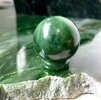
An article about the The Hardness of Fei Cui Jade — A Gemological Perspective shows that it can be difficult even for experts to describe what Jade is, because there are several minerals present.Jade is an umbrella term for two different types of decorative rocks used for jewelry or ornaments. Jade is often referred to by either of two different silicate mineral names: nephrite (a silicate of calcium and magnesium in the amphibole group of minerals), or jadeite (a silicate of sodium and aluminum in the pyroxene group of minerals).1 Nephrite is typically green, although may be yellow, white or black. Jadeite varies from white or near-colorless, through various shades of green (including an emerald green, termed 'imperial'), to lavender, yellow, orange, brown and black. Rarely it may be blue. Both of these names refer to their use as gemstones, and each has a mineralogically more specific name. Both the amphibole jade (nephrite) and pyroxene jade are mineral aggregates (rocks) rather than mineral species.
Nephrite was deprecated by the International Mineralogical Association as a mineral species name in 1978 (replaced by tremolite). 2 The name "nephrite" is mineralogically correct for referring to the rock. Jadeite is a legitimate mineral species, differing from the pyroxene jade rock. In China, the name jadeite has been replaced with fei cui, the traditional Chinese name for this gem that was in use long before Damour created the name in 1863..3
Jade is well known for its ornamental use in East Asian, South Asian, and Southeast Asian art. It is commonly used in Latin America, such as Mexico and Guatemala. The use of jade in Mesoamerica for symbolic and ideological ritual was influenced by its rarity and value among pre-Columbian Mesoamerican cultures, such as the Olmecs, the Maya, and other ancient civilizations of the Valley of Mexico.
Jade is classified into three main types: Type A, Type B, and Type C. Type A jade refers to natural, untreated jadeite jade, prized for its purity and vibrant colors. 4 It is the most valuable and sought-after type, often characterized by its vivid green hues and high translucency. Type A jade is revered for its symbolism of purity, harmony, and protection in various cultures, especially in East Asia where it holds significant cultural and spiritual importance. Types B and C have been enhanced with resin and colourant respectively.
Jade has a long and varied nomenclatural history, with its definition altered in the current age for practical and cultural reasons. This paper examines the hardness of "fei cui" (pyroxene jade) and presents the findings in a simplified format based on empirical evidence and theoretical principles, while also considering the jade hardness data available in literature.
Background
Several decades ago it was relatively simple to separate jadeite (a pyroxene jade rock) and nephrite (an amphibole jade rock). However the discovery that many gems labelled as "jadeite" also contain varying amounts of other clinopyroxenes (such as omphacite and kosmochlor) has complicated the situation considerably.
As with all rocks, jade is made up of an aggregate of many tiny crystals/grains; frequently these crystals/grains are made up of different minerals (see Appendix A for definitions). This makes the accurate determination of the exact end-member percentages of a rock extremely difficult and impractical. To what end should we as gemologists attempt to do this? It not only causes confusion but is also mostly irrelevant to the end-consumer.

My own experience so far:
Having ordered some Baoding balls claimed to be made of Jade, after receiving them, I found a way to clear them. Only then have I begun to practice and exercise. It is fun to learn. About effects, the fingers of the hands have become more coordinated. An old injury to one finger is responding too. Encouraged I decided to begin a dedicated thread in the health section, in case somebody else would like to share their experiences with buying and of working with Baoding balls.
Warning - just in case
Baoding balls are somewhat heavy. They can break like other stones, they can also break something else if they fall down, or for that matter hurt bare feet. Therefore, it is safer to practice above a soft material like a thick carpet, a multi-folded large blanket, a mattress, some foam, a sand box, or similar as to prevent them from falling too far.



 1.
1. 2.
2. 3.
3. 4.
4. 5.
5.

