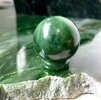
Baoding balls - Chinese health balls and their effects

thorbiorn

The Living Force
FOTCM Member
In 2011 @Andrian wrote a post in question for the Cs section regarding Boading Balls !
From the article Andrian posted:
When the signs of stress are high enough, or prolonged, it can have very harmful effects on your health. One form of stress relief that people have turned to is stress relief balls, in particular, Chinese stress relief balls.

Chinese Stress Balls, or as they are sometimes referred to, Chinese exercise balls, Chinese health balls or Baoding balls are one of the legendary treasures of Baoding, China where they are referred to as ‘Miracle Balls’.
They have been found in history since the Ming dynasty ruled China and when the handicrafts and other industries flourished under them. They are one of China’s most time-honoured products that have never ceased to claim all kinds of therapeutic relief to people around the world, and in particular for the relief of stress.

The Chinese Stress Balls come predominantly in the size of golf balls, but there are many different sizes to suit varying hand sizes. It is recommended that you start with a size that can be handled easily, and then work your way up to a larger size. The most common sizes range from a diameter of 1.25 to 2 inches.

They always come in pairs and are made of colored metal. Mostly in old traditional Chinese colors. Most of these Chinese Stress Balls emit a jingling sound when moved around. These stress relief balls are meant to be held in the palm simultaneously and rotated in clockwise and anti-clockwise directions alternatively.

The chiming can be used as an excellent enhancement for a deep meditation experience.

But just how can Chinese Balls reduce your stress? It seems too simple that these Chinese health balls can help relieve stress. Chinese Stress Relief Balls work in a very simple way. When the balls are rolled around and handled, it stimulates the various acupuncture points on the palms of the hand, that in turn passes healing effects onto various organs of the body that the acupuncture channels reach starting from the fingers through to the brain. This enhances a smooth energy flow through the body and is a very effective exercise when the signs of stress appear.

Chinese Stress Balls are believed to help reduce fatigue and worry, are claimed to prevent and reduce high blood pressure, and help with arthritis in the hands among other things. For some, the physical motion of using Chinese Stress Balls, helps release mental and emotional stress. Some may use visualization techniques to relieve stress when using the Chinese Stress Balls. They visualize the stress being transferred from their hands into the balls as they rotate them. As they become more proficient in the exercises, they also become better at their visualization technique, making stress relief more effective.

Chinese Stress Relief Balls are one specific way to reduce and relieve stress. They can be used in many different ways and each person who uses the balls can determine the best way for them to use them to their advantage. So for an inexpensive and convenient treatment for stress relief, using Chinese Stress Relief Balls could be the most beneficial exercise you have ever undertaken.
As a comment, I would say, that anyone searching for or having a book about acupuncture points or reflex zones in the hands will find there are many. From this perspective exercising with Baoding balls should be helpful. Even if one leaves this consideration aside, there are physical health benefits on the level of exercising and training the muscles in the hands and fingers. By extension when health is better in one area of the body, it can affect others and the overall resistance increases.

About the effect an thoughts about the Baoding balls, there was in the post:
What i wanted to ask is:is it possible that these chinese stress balls relieving stress,tension,relaxing and calming your mind can serve like a tool/shield of additional protection against psychic and emotional attacks?
Also i was wondering if C's can tell something about these boading balls.
Since cigarettes can be used as a tool relieving stress thus improving your psychical health i thought maybe these little chinese balls can protect also and if can then it can serve like an additional protective tool against psychic attacks.

I personally i'm using them about 4-5 years (not always regularly ) i didn't payed much attention till now a couple of months,starting to pay attention what really are the results if used regularly these stress balls from my direct observations i can tell that i felt relaxed,calm and even stress reduction,the mind more clearer but still i think it deserves further observations ,also i started to ask myself if they in some degree are relieving stress,tension, feeling more relaxed and calm then maybe thus they, to some degree can protect from psychic and emotional attacks(off course to some degree) ?
This is more a theory because it serves more direct observation, but if its true then it can be an additional protective tool, combined with daily praying and learning/reading/studying it can enhance the protective shield against psychic attacks.
Maybe its just a speculation and are for no use i really don't know, but if anyone has experience or some thoughts about boading/stress balls i would be very glad to know your thoughts about this.
The purpose of the post was to ask a question and many years later the opportunity came:

Do the baoding balls have health effects? Yes
Session 25 February 2023
Q: (Andrian) Do the baoding balls...

(L) What the hell are baoding balls? [Laughter]

(Andrian) ...have health benefits?

A: Yes

Q: (Andrian) If so, what would be the optimal material of which the baoding balls are to be made?

A: Jade.
Most balls are not made with jade, but metal, wood, or some other stone.

About Jade the Wiki says:
Jade is an umbrella term for two different types of decorative rocks used for jewelry or ornaments. Jade is often referred to by either of two different silicate mineral names: nephrite (a silicate of calcium and magnesium in the amphibole group of minerals), or jadeite (a silicate of sodium and aluminum in the pyroxene group of minerals).1 Nephrite is typically green, although may be yellow, white or black. Jadeite varies from white or near-colorless, through various shades of green (including an emerald green, termed 'imperial'), to lavender, yellow, orange, brown and black. Rarely it may be blue. Both of these names refer to their use as gemstones, and each has a mineralogically more specific name. Both the amphibole jade (nephrite) and pyroxene jade are mineral aggregates (rocks) rather than mineral species.

Nephrite was deprecated by the International Mineralogical Association as a mineral species name in 1978 (replaced by tremolite). 2 The name "nephrite" is mineralogically correct for referring to the rock. Jadeite is a legitimate mineral species, differing from the pyroxene jade rock. In China, the name jadeite has been replaced with fei cui, the traditional Chinese name for this gem that was in use long before Damour created the name in 1863..3

Jade is well known for its ornamental use in East Asian, South Asian, and Southeast Asian art. It is commonly used in Latin America, such as Mexico and Guatemala. The use of jade in Mesoamerica for symbolic and ideological ritual was influenced by its rarity and value among pre-Columbian Mesoamerican cultures, such as the Olmecs, the Maya, and other ancient civilizations of the Valley of Mexico.

Jade is classified into three main types: Type A, Type B, and Type C. Type A jade refers to natural, untreated jadeite jade, prized for its purity and vibrant colors. 4 It is the most valuable and sought-after type, often characterized by its vivid green hues and high translucency. Type A jade is revered for its symbolism of purity, harmony, and protection in various cultures, especially in East Asia where it holds significant cultural and spiritual importance. Types B and C have been enhanced with resin and colourant respectively.
An article about the The Hardness of Fei Cui Jade — A Gemological Perspective shows that it can be difficult even for experts to describe what Jade is, because there are several minerals present.
Jade has a long and varied nomenclatural history, with its definition altered in the current age for practical and cultural reasons. This paper examines the hardness of "fei cui" (pyroxene jade) and presents the findings in a simplified format based on empirical evidence and theoretical principles, while also considering the jade hardness data available in literature.

Background
Several decades ago it was relatively simple to separate jadeite (a pyroxene jade rock) and nephrite (an amphibole jade rock). However the discovery that many gems labelled as "jadeite" also contain varying amounts of other clinopyroxenes (such as omphacite and kosmochlor) has complicated the situation considerably.

As with all rocks, jade is made up of an aggregate of many tiny crystals/grains; frequently these crystals/grains are made up of different minerals
(see Appendix A for definitions). This makes the accurate determination of the exact end-member percentages of a rock extremely difficult and impractical. To what end should we as gemologists attempt to do this? It not only causes confusion but is also mostly irrelevant to the end-consumer.
2026-01-19 001828.png

My own experience so far:
Having ordered some Baoding balls claimed to be made of Jade, after receiving them, I found a way to clear them. Only then have I begun to practice and exercise. It is fun to learn. About effects, the fingers of the hands have become more coordinated. An old injury to one finger is responding too. Encouraged I decided to begin a dedicated thread in the health section, in case somebody else would like to share their experiences with buying and of working with Baoding balls.

Warning - just in case
Baoding balls are somewhat heavy. They can break like other stones, they can also break something else if they fall down, or for that matter hurt bare feet. Therefore, it is safer to practice above a soft material like a thick carpet, a multi-folded large blanket, a mattress, some foam, a sand box, or similar as to prevent them from falling too far.
 
In New Zealand the jade found in the South Island is called Pounamu and it is a taonga or treasure.

It is commonly known that it is a very powerful stone, and can carry all kinds of energy.

THE STONE​

Authentic New Zealand Pounamu tells stories of pride and understanding, strength, empathy and leadership. No two pieces are the same, no stone not treated with the utmost respect by those who source and carve it.

Renowned for its beauty and strength, the rare stone is highly valued by both Māori and greater New Zealand. While generically known as ‘greenstone’ Pounamu refers to the particular types of hard nephrite jade, bowentine or serpertine found in southern New Zealand.

With the strong spiritual connection Māori have with the stone a number of different stories and characteristics have been bestowed on the stone and it’s wearers over the generations.

This is just one of the reasons why Pounamu is described as taonga, or treasure, by those who know its qualities.

Pounamu has a diverse range of colours with a myriad of variations in colour and pattern combination. The strong spiritual connection Māori have with pounamu is reflected in the way the various stone types were named with - each pounamu type being given an identity that corresponded to the world Māori lived in. The stone was named after native birds, fish and plants. Others are linked to pakiwaitara or storytelling and others linked to specific locations.

Endless combinations of pounamu types occur, ranging from the yellow/orange enriched tones of flower jade to the rich green and white tinted snowflake jade. No two pieces of pounamu are the same, guaranteeing every carving is unique to you and your loved ones.

THE LEGEND​

SHE WAS TAKEN FROM THE SEA. HE WAS RUN INTO THE GROUND.​

This tale of a taniwha named Poutini and his taking of Waitaiki has been passed down by generations. Ngāi Tahu children grew up knowing of Tamaahua and his pursuit of his wife down through the islands. They learned how this legend shaped the natural environment, and why we cherish and protect our resources today.

HE ROIMATA TUTURU​

“MY SORROW HAS BEEN LEFT IN THE STONE”​

Poutini the taniwha swims up and down the west coast of the South Island, protecting both the people and the mauri of Pounamu.

Many of the oral histories of Pounamu revolve around Poutini coming across a woman bathing in the northern seas of the Bay Of Plenty. This beautiful woman, Waitaiki, enchanted the taniwha, who kidnapped her and fled south with his prize.

Waitaiki’s husband, the chief Tamaahua, discovered she was missing. Aided by a tekatekahe tracked them south. During Poutini’s flight the taniwha lit fires to keep Waitaiki warm. Amidst the charred remains of each fire, Tamaahua found precious stone.

The continued pursuit of his love was determined and unrelenting. Fearing the strength of his pursuer the taniwha took sanctuary on the West Coast of the South Island, eventually stopping in Milford Sound.

Realising that Tamaahua would not rest until he reclaimed Waitaiki, Poutini decided the only way to keep her forever was to turn the woman into his essence. The taniwha transformed Waitaiki into Pounamu, laid her in down within the riverbeds of the Arahura River and slipped downstream past the waiting Tamaahua.

When the chief discovered his wife turned to stone in the riverbed he let out a tangi - a tremendous song of grief. If you listen closely in New Zealand’s deep south you may still hear it echo through the mountains.
 
imoe --most commonly sold baoding balls are not made of real jade. they are typically made from hollow steel, chrome-plated metal, or other alloys, often with internal chimes that produce a ringing sound when rotated. these materials are more affordable and widely used in mass production. They can be made from solid materials like jade, agate, marble, or stone, such versions are less common and generally much more expensive. the majority of commercially available baoding balls prioritize function and cost-effectiveness over the use of precious materials.

In far eastern countries jade is deeply revered and holds profound cultural, spiritual, and historical significance.
 
A few years ago i've bought a pair of nephrite baoding balls from a Canadian company that owns a nephrite mine and is selling different jewelry made of nephrite.

These are the closest to "purity" that I could afford to buy because the jade as a gemstone its pretty expensive. I'm using them pretty regularly, I think that they do help me to stay grounded, helping to reduce the stress and probably stimulating various parts of the body through the pressure points located on the palms and the fingers.

It may be my imagination but, quiet a few times i've noticed that while using them I'd feel a strong heat and pressure building around my upper chest, slightly below my neck. I thought it interesting, don't know what it was though.

I do wonder if they could stimulate the energy centers/chakras of the body. Just a thought.
 
Edit: The following was posted before reading the previous post, but related to the content is that near the end some prices are given for Jade. It is a costly product.
Having ordered some Baoding balls claimed to be made of Jade
It was correct to use claimed. Though I still can not say exactly what kind of stone the balls are made of. I have done tests on the hardness, showing a steel blade from a knife with an estimated hardness of 5.5 on the Mohr's scale can scratch the material. But the jade related minerals and rocks are listed with hardnesses from 6-7 with the exception of Kosmochlor jade (5.5-6). Another test was to calculate the density using a scale, caliphers and mathematics. It turned out to be 2.72 g/cm3 which is less than the 2.9 g/cm3 for nephrite or the 3.25-3.50 g/cm3 for Fei Cui Jade.

This page, Mindat.org, says about Jade:
From "piedra de ijada", "stone of the flank", as it was thought to cure kidney pains.

A greenish black to creamy white ornamental stone or gemstone, highly valued in China and Korea.

Translucent emerald-green fei cui jade (known traditionally as 'jadeite jade' but this name is misleading as not all of this jade is mineralogically jadeite) is the most prized variety. Rarely also blue, lavender-mauve, black, red or yellow in colour, depending on mineralogy and impurity elements.

In 1863, French mineralogist Alexis Damour discovered that what at the time was being called jade, were in fact 2 distinct mineral species, namely jadeite and nephrite.

Many different rocks and minerals have been marketed as jade, especially jadeite, nephrite and serpentine, but also green quartz, vesuvianite (californite), carbonates (carbonate jade), Hornfels etc. Gemmologists, however, usually restrict the name to just jadeite and nephrite, both characteristically forming very tough, fine grained rocks. Nephrite is much more common than jadeite, and is a tremolite and/or actinolite-rich rock, and this is why it has been classified here as a type of metamorphic rock rather than a generic term.

Jade from Myanmar has been divided into five groups according to the main mineral constituent of the respective sample (Franz et al., 2014): (1) jadeitites with kosmochlor and clinoamphibole, (2) jadeitites with clinoamphibole, (3) albite-bearing jadeitites, (4) almost pure jadeitites and (5) omphacitites.
Notice above the difference between the rocks and minerals marketed as jade, and those that are considered jade by gemmologists.

Below is a picture of their classification of jade:
2026-01-19 215107.png


Below are some of the tests and arguments in more detail, in case someone wishes to test their own:
Determining the density:
Density is described by a Wiki as:
Density (volumetric mass density or specific mass) is the ratio of a substance's mass to its volume. The symbol most often used for density is ρ (the lower case Greek letter rho), although the Latin letter D (or d) can also be used:1

{\displaystyle \rho ={\frac {m}{V}},}

(the formula if it does not show amounts to ρ = m/V
where ρ is the density, m is the mass, and V is the volume.
Finding the numbers needed:
The weight of one pair was 332 grams. The average is then 166 grams.
The combined diameter of a pair 97.7 mm was measured using calipers his gives an estimated average for the radius of one ball to be 97.7/4 or 24.425 mm.
The formula for the volume of a sphere, V, is (4/3)*pi*(r^3). Inserting and calculating this gives a volume: of 61.0 cm^3
The density of the material of the ball is then ρ =166 grams/61.0 grams= 2.72 grams per cm^3.


This document: "Standard Methods for Testing Fei Cui for Hong Kong HKSM/FCT- 2016 Issued by The Gemmological Association of Hong Kong Limited" They say have the following overview of physical properties found among the variety of minerals categorized as Fei Cui:
2026-01-19 182742.png


Specific gravity or relative density, compares the density of the object with that of water. The numbers translate to Fei Cui being 3.25-3.50 times denser than water at 4 degrees Celsius, when one cm3 has a mass of 1 gram. Since the baoding balls, sold as jade have a density of 2.72 g/cm3, they are not heavy enough their volume considered by any listed standard.

Perhaps it is a variety of marmor, which is listed as having a density of 2.6-2.8 g/cm3? A pocket steel knife with a blade with a hardness of 5.5 on the Mohr's hardness scale can make a scratch. As seen in the table, all the recognized variety of jade were as hard or harder than 5.5, so again the same conclusion that is must be something else.

Under the Wiki for Jade, they mention another mineral, nephrite, that is not considered in the "Fei Cui" booklet. It has a density of 2.9 g/cm3 (2.85-3.05). Another page, says nephrite is also sold as white jade:

Color: green, yellow green,
Name:
"The name nephrite is derived from lapis nephriticus, which in turn is derived from Greek λίθος νεφριτικός; νεφρός λίθος, which means 'kidney stone' and is the Latin and Greek version of the Spanish piedra de ijada (the origin of jade and jadeite). Accordingly, nephrite jade was once believed to be a cure for kidney stones." (Wikipedia)

Nephrite is a rock comprising mostly massive microcrystalline to cryptocrystalline felted amphiboles of the actinolite-tremolite series.

Nephrite is one of the two rocks termed as jade, the other being jadeitite = jadeite jade, consisting mostly of jadeite (although the term fei cui jade is now preferred as the pyroxene composition may also include omphacite and/or kosmochlor). Both are extremely tough and resistant to fracture, such that they have been used for making choppers and blades since Neolithic times.

In addition to amphibole, nephrite can contain minor to trace amounts of diopside, grossularitic garnet, magnetite, chromite, graphite, apatite, rutile, pyrite, datolite, vesuvianite, prehnite, talc, the serpentine polymorphs and titanite.

White nephrite, termed white jade or mutton-fat jade, is nearly pure tremolite, while most nephrite is green owing to the Fe content in actinolite. Trace to very minor amounts of chromium (Cr3+) colours nephrite emerald-green (via a Na+-Cr3+ vs. Ca2+-Mg2+ substitution) and yellow to brown nephrite is stained by iron oxides and hydroxides introduced along grain boundaries.

[...]

Then there was this article:
Real vs. Fake Jade: Fucus on These Crucial 5 Differences
By Author Olena Rybnikova
Posted on Published: June 28, 2022 - Last updated: June 17, 2024
Jade, a prized gemstone steeped in history and cultural significance, is also one of the most frequently imitated. Its popularity has spawned a vast array of fakes, ranging from other minerals to glass and plastic. Even genuine jade can undergo various treatments, further complicating the issue. Understanding the key differences between real and fake jade is crucial for both buyers and enthusiasts.

Five primary characteristics distinguish natural jade from its imitators. Firstly, authentic jade comes in a rainbow of colors beyond the well-known green, including white, brown, red, orange, and black. Secondly, real jade is incredibly durable and resistant to scratching by steel or glass. Thirdly, genuine jade is free from bubbles and dye concentrations, showcasing a consistent appearance. Fourthly, natural jade does not exhibit fluorescence under UV light.

The list of jade simulants is extensive, with over 20 natural and artificial materials used to deceive unsuspecting buyers. Furthermore, around 15 misleading names like “Afghanistan jade” and “Transvaal Jade” add another layer of confusion to the market. This guide will delve into the diverse world of jade fakes and misnomers, highlighting the properties that can help you differentiate them.
The same author has a few other articles:
All Jade Color Varieties (Description & Explanation)
Step-by-Step Guide: How to Tell & Identify if Jade is Dyed
6 Factors Why Jade is Valuable (+ Prices for Colors & More) The last one is informative, as it can give an idea of what the prices of a jade baoding ball might be. First one would need to learn about different qualities and what adds value:
[...]
How Can You Tell if Jade is Valuable?
The value of jade is defined by the following qualities: colour, transparency, texture, clarity, artistry, and craftsmanship
. The more intense the green colour is, the more valuable the jade is. The best quality jadeite has an apple-green colour; it is semitransparent and has the finest texture.

There are six main factors of jade value:
  1. Colour
  2. Transparency
  3. Texture
  4. Clarity
  5. Artistry
  6. Craftsmanship
Colour

Colour is jadeite’s most important value factor. Because consumers traditionally associate jadeite with the colour green, it surprises some people to learn that it also comes in other colours—lavender, red, orange, yellow, brown, white, black, and grey. All of these colours can be attractive. But jadeite’s most desirable colour is, in fact, a very specific shade of green. If the hues are the same, darker tones are more valuable than lighter tones.

The finest-quality jadeite—almost transparent with a vibrant emerald-green colour—is known as “Imperial jade.”

Lavender is the next most valuable colour. Intense colours command a substantial premium over lighter and weaker colours. Black and orange to reddish jade are also popular, especially when these colours are not brownish.

Transparency

Jadeite’s transparency ranges from completely opaque to semitransparent. The best jadeite is semitransparent, meaning the text you can read through it would be slightly blurred. Because light penetrates below the surface, semitransparent jadeite has an alluring brilliance.

Texture

Jadeite has a smooth, even texture that makes people want to touch and hold it.
Depending on crystal size and hardness variations, Jadeite’s texture can be fine, medium, or coarse. These texture categories are sometimes called, respectively, old mine, relatively old mine, and new mine.

Additionally, jade can be valued for clarity, artistry, and craftsmanship.

Clarity

A clarity evaluation is based on the presence of coloured veins and fractures that might negatively affect the appearance or durability of a finished jadeite piece.

Artistry and craftsmanship

Artistry refers to the design quality of the finished product and whether the rough material is efficiently and effectively used. Craftsmanship focuses on the quality of the carving and polishing. Artistry and craftsmanship are essential in the evaluation of jade carvings.
[...]
Having and idea of how the quality of the stone is valued, next it is time to find out how such an assessment can influence the price.
[...]
Jade Value (Price) per Different Units

The price for jade strongly depends on the quality of the stone. Beginning from just $5 per carat, it can occasionally reach up to $3 million per carat. The price per gram ranges from $25 to 5,000. The price per kilo is the most common at Jade Auctions, which is $25,000 – 5,000,000 per kilo for rough.
[...]
5 USD per carat, one carat is 200 milligrams or 0.2 grams. This means one gram is 5 carats and that is how one arrives at 25 USD per gram.

Jade Value (Price) per Different Colors
[...]
There is a wide range of hues possible for jade. It can be everything from white to orange and red to green, brown, and even black. White, green, and lavender jade have extremely high prices. Green jade of superior grade can be purchased for $1500 per carat, lavender for $1400 per carat, and white jade for $300 per carat.

ColorPrice
white$500 – 1,500 per gram
black$5 – 100 per gram
red$10 – 80 per gram
purple$50 – 1,500 per gram
pink$30 – 1,200 per gram
lavender$1,400 per carat
$1,000 – 7,000 per gram
orange$70 – 1,600 per gram
spinach$350 – 2,200 per gram
dark green$30 – 800 per gram
mutton fat
(top-quality white nephrite jade)
$1,500 per gram
grey$7 – 60 per gram
light green$500 – 1,500 per gram
*up to $1,500 per carat
yellow$70 – 1,600 per gram
blue$50 – 1,500 per gram
brown$5 – 50 per gram
If the volume of one stone is 60 cm3 and we the density is 3.5 g/cm3 then the mass would be 210 grams, or for two it is 410 grams. If one wants the shape of a ball, one would need to buy some more, so what is not needed can be cut away. With one kg of rough material it should be possible to make a pair. Perhaps even 750 - 800 grams would be sufficient, then one can think of a kg and subtract one-fifth, or one-fourth.

Jade Value (Price) per Places of Origin

Jade quality, and therefore the price, depends on the place of origin. The most expensive is Burmese jade, which is priced from $1000 per carat up to $3 million per carat occasionally. Rough materials from Canada cost between $200 and $2,000 a kilo, and Siberian (Russian) jade reached a price of US$50,000 a kilo.

Place of originJade Value (Price) per Places of Origin
Hetian (the best quality nephrite jade)$300 – $39,000 per gram
Burmese$150 – 1,500 per carat
*$3 million per carat for exceptional quality
$750 – 5,000 per gram
Alaskanrough $50 – $500 a kilo.
Persian$5 – 400 per gram
Canadianrough $200 – $2,000 a kilo.
Chinese$25 – 5,000 per gram $30,000 per kilo
New Zealand$10 – 2,500 per gram
Mexicanrough $100 – $1,000 a kilo.
Russian (Siberian)rough $1,000 – 50,000 a kilo
Burmese means from Burma, though today, Burma is called Maynmar.
According to the table, the cheapest Jade would be from Alaska, with 50 USD, then Mexico with 100 USD, Canadian, with 200 USD, followed by Russian jade with 1000 USD per kg.

Much of what is passed of as jade might be something else. The author of the article has a few options.
Bonus tip: Trade names. This is not jade!
Sometimes, traders call other green materials jade to highlight similar colors. But for people, it may seem deceptive. The table below has some trade names, which include “jade” in a name, but it is an entirely different mineral.

Trade name NOT A JADEJade Substitutent
Malaysia jade or Korean jadeDyed quartzite
Australian jade or Queensland jadeGreen chalcedony
Transvaal jade and African jadeHydrogrossular
California jadeTranslucent greenish-yellow idocrase
Afghanistan jadeMarble
[...]
Having read this much, I wonder what the price of a pair of boading balls made of genuine jade class stone would be, and what difference it might make.
 
Last edited:
Edit: The following was posted before reading the previous post, but related to the content is that near the end some prices are given for Jade. It is a costly product.

It was correct to use claimed. Though I still can not say exactly what kind of stone the balls are made of. I have done tests on the hardness, showing a steel blade from a knife with an estimated hardness of 5.5 on the Mohr's scale can scratch the material. But the jade related minerals and rocks are listed with hardnesses from 6-7 with the exception of Kosmochlor jade (5.5-6). Another test was to calculate the density using a scale, caliphers and mathematics. It turned out to be 2.72 g/cm3 which is less than the 2.9 g/cm3 for nephrite or the 3.25-3.50 g/cm3 for Fei Cui Jade.

This page, Mindat.org, says about Jade:

Notice above the difference between the rocks and minerals marketed as jade, and those that are considered jade by gemmologists.

Below is a picture of their classification of jade:
View attachment 115257

Below are some of the tests and arguments in more detail, in case someone wishes to test their own:
Determining the density:
Density is described by a Wiki as:

Finding the numbers needed:
The weight of one pair was 332 grams. The average is then 166 grams.
The combined diameter of a pair 97.7 mm was measured using calipers his gives an estimated average for the radius of one ball to be 97.7/4 or 24.425 mm.
The formula for the volume of a sphere, V, is (4/3)*pi*(r^3). Inserting and calculating this gives a volume: of 61.0 cm^3
The density of the material of the ball is then ρ =166 grams/61.0 grams= 2.72 grams per cm^3.


This document: "Standard Methods for Testing Fei Cui for Hong Kong HKSM/FCT- 2016 Issued by The Gemmological Association of Hong Kong Limited" They say have the following overview of physical properties found among the variety of minerals categorized as Fei Cui:
View attachment 115250

Specific gravity or relative density, compares the density of the object with that of water. The numbers translate to Fei Cui being 3.25-3.50 times denser than water at 4 degrees Celsius, when one cm3 has a mass of 1 gram. Since the baoding balls, sold as jade have a density of 2.72 g/cm3, they are not heavy enough their volume considered by any listed standard.

Perhaps it is a variety of marmor, which is listed as having a density of 2.6-2.8 g/cm3? A pocket steel knife with a blade with a hardness of 5.5 on the Mohr's hardness scale can make a scratch. As seen in the table, all the recognized variety of jade were as hard or harder than 5.5, so again the same conclusion that is must be something else.

Under the Wiki for Jade, they mention another mineral, nephrite, that is not considered in the "Fei Cui" booklet. It has a density of 2.9 g/cm3 (2.85-3.05). Another page, says nephrite is also sold as white jade:


Then there was this article:
Real vs. Fake Jade: Fucus on These Crucial 5 Differences

The same author has a few other articles:
All Jade Color Varieties (Description & Explanation)
Step-by-Step Guide: How to Tell & Identify if Jade is Dyed
6 Factors Why Jade is Valuable (+ Prices for Colors & More) The last one is informative, as it can give an idea of what the prices of a jade baoding ball might be. First one would need to learn about different qualities and what adds value:

Having and idea of how the quality of the stone is valued, next it is time to find out how such an assessment can influence the price.
[...]

5 USD per carat, one carat is 200 milligrams or 0.2 grams. This means one gram is 5 carats and that is how one arrives at 25 USD per gram.


If the volume of one stone is 60 cm3 and we the density is 3.5 g/cm3 then the mass would be 210 grams, or for two it is 410 grams. If one wants the shape of a ball, one would need to buy some more, so what is not needed can be cut away. With one kg of rough material it should be possible to make a pair. Perhaps even 750 - 800 grams would be sufficient, then one can think of a kg and subtract one-fifth, or one-fourth.


Burmese means from Burma, though today, Burma is called Maynmar.
According to the table, the cheapest Jade would be from Alaska, with 50 USD, then Mexico with 100 USD, Canadian, with 200 USD, followed by Russian jade with 1000 USD per kg.

Much of what is passed of as jade might be something else. The author of the article has a few options.

Having read this much, I wonder what the price of a pair of boading balls made of genuine jade class stone would be, and what difference it might make.
I've bought my baoding balls from Jade mine Canada, they're claiming that their products are made of 100% nephrite.

On the following link you can find their online store. Attached a picture of the baoding balls they're selling.
 

Attachments

  • img_7599_900x.jpg
    img_7599_900x.jpg
    139.4 KB · Views: 3
I was wondering if it's worth asking the Cs if the baoding balls have any effect on the energy centers and the bioelectromagnetic field of the body?

I've searched online but didn't find any worth information on this matter. I think they may have an effect but that's just my speculation.
 
Back
Top Bottom