Brace Yourselves For War Between Iran and Israel

Honestly I wasn’t sure if this is the appropriate thread, but seeing as this is where the focus is, here goes.

Brian Berletic, as always, is continuing to hammer home his references to the policy paper Which Path To Persia. He makes a compelling point that if one zooms out and looks at the wide view, everything that the US is doing and has done, from Venezuela to Iran is in service to cutting off China. Unlike Andrei Martyanov, Berletic contends that Israel is in fact not “running the US” aggression towards Iran, but rather the blockades of both the Caribbean and the Persian Gulf are all steps in isolating the Chinese. The Strait of Malacca would be next, naturally.


So, when you say Trump has authorised pension funds to include alternative assets, I would need to know how Trump can override trustees' powers that are set out in the enabling trust deeds.

The two are not mutually exclusive.

As an example, here in Australia, when you run a Self Managed Superannuation Fund (SMSF), which is basically your own private pension plan, the government tells you what assets are eligible to be used in such funds, and which are not. In Australia, cryptos are not allowed in SMSFs, as far as I know. You are also not allowed to put you own dwelling into the account, etc.

Then the SMSF deed specifies which assets (among those eligible) will effectively be used, and in what percentage. Like for instance cash 0-100%, physical precious metals 0-75%, equities 0-100%, bonds 0-100%, etc.
 
The two are not mutually exclusive.

As an example, here in Australia, when you run a Self Managed Superannuation Fund (SMSF), which is basically your own private pension plan, the government tells you what assets are eligible to be used in such funds, and which are not. In Australia, cryptos are not allowed in SMSFs, as far as I know. You are also not allowed to put you own dwelling into the account, etc.

Then the SMSF deed specifies which assets (among those eligible) will effectively be used, and in what percentage. Like for instance cash 0-100%, physical precious metals 0-75%, equities 0-100%, bonds 0-100%, etc.

On this subject, Australia is set to use superannuation funds for defence spending. I'm sure that I've heard some Australian politician suggesting this as a possibility some time ago but I can't find any reference to an earlier suggestion.


From what I understand so far the idea is that defence investment from super funds will be voluntary. That's not the impression that I got from the earlier mentions that I recall.
 
Honestly I wasn’t sure if this is the appropriate thread, but seeing as this is where the focus is, here goes.

Brian Berletic, as always, is continuing to hammer home his references to the policy paper Which Path To Persia. He makes a compelling point that if one zooms out and looks at the wide view, everything that the US is doing and has done, from Venezuela to Iran is in service to cutting off China. Unlike Andrei Martyanov, Berletic contends that Israel is in fact not “running the US” aggression towards Iran, but rather the blockades of both the Caribbean and the Persian Gulf are all steps in isolating the Chinese. The Strait of Malacca would be next, naturally.


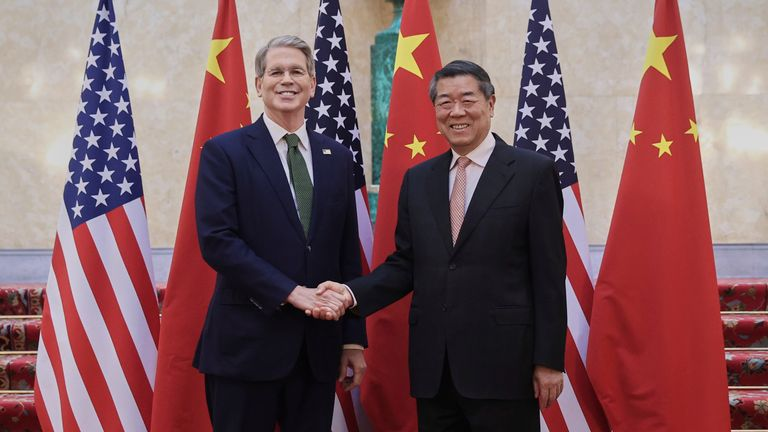
To add to this, Bessent recently sent out a warning that any institution helping Iran process oil funds will be sanctioned. To that tend, he sent some letters to a few banks in China, warning them that they will be sanctioned if they process Iranian funds. To be sure, the guy's some kind of economic genius. 'Since the sanctions on Russia and Iran worked so well - let's do China!'


Let me give you the bottomline up front… Despite positive developments in expanding the ceasefire to include Lebanon and Hezbollah, the Trump administration announced new sanctions on Iran that will end any chance of negotiations with Iran. Unless Trump reverses course, the US is likely to renew its attacks on Iran and will exacerbate the international economic crisis that was ignited by the closing of the Strait of Hormuz.

What a crazy day for intense diplomacy and deal making. Initially, there was a glimmer of hope. It started with the announcement of a ceasefire between Lebanon and Israel, but it was unclear whether that included Hezbollah. By 5 pm eastern daylight time, it was affirmed that this applied to Hezbollah and Israel, although the two sides continued firing at each other until the witching hour arrived.

Iran’s Foreign Ministry Spokesman, Ismael Baqaei, welcomed the development:

"The cessation of war in Lebanon was part of the ceasefire understanding between Iran and America.

From the very beginning, we emphasized the necessity of establishing a simultaneous ceasefire across the entire region, including Lebanon.

We commend the steadfastness of the Lebanese people and the resistance fighters in the face of aggression, and we thank Pakistan for its valuable efforts, especially during the past hours.

We express our solidarity with the Lebanese people and government and emphasize the necessity of the complete withdrawal of the Zionist entity from the occupied territories.

We stress the need for the release of prisoners, the return of the displaced, and the reconstruction of destroyed areas and infrastructure with the support of the international community."

While this is a welcome development, the Trump administration is rejecting another critical Iranian prerequisite for negotiations to end the war, i.e., Iran’s demand that sanctions be lifted. Instead of lifting sanctions, the US Secretary of the Treasury announced a new round of sweeping sanctions that are aimed at Iran and China.

Scott Bessent made several strong statements in on April 14–15 about intensifying economic pressure on Iran through sanctions, with a direct focus on China as Iran’s main oil buyer. Bessent described the new sanctions push as the “financial equivalent” of the earlier US/Israeli kinetic (military) strikes on Iran. He called it part of “Operation Economic Fury”, aimed at cutting off Iran’s revenue streams, especially from illicit oil sales and smuggling networks.

Bessent said that the US would impose secondary sanctions on any countries, companies, or financial institutions that continue buying Iranian oil or that allow Iranian money to flow through their accounts. He described this as a “very stern measure.” He explicitly warned: If Iranian funds are proven to be moving through a bank’s accounts, the US will apply secondary sanctions.

In the course of his diatribe, Bessent revealed that two Chinese banks have already received formal letters from the US Treasury. The letters state that if the banks are found processing Iranian transactions, they face the risk of secondary sanctions. He declined to name the banks. This comes alongside broader Treasury letters sent to financial institutions in China, Hong Kong, the UAE, and Oman.

Bessent went on to accuse China of hoarding oil during the conflict (instead of helping stabilize global markets), limiting exports of certain goods, and continuing to buy large volumes of Iranian crude (historically over 90% of Iran’s oil exports, accounting for about 8% of China’s energy needs). He compared this to China’s behavior during COVID-19 (hoarding medical supplies) and its past threats on rare earth exports, calling it a pattern of unreliability. Bessent stupidly believes the US naval blockade of the Strait of Hormuz, combined with the sanctions threat, will cause China to pause or stop buying Iranian oil. He stated that China “will no longer be able to obtain oil from Iran” under the new enforcement.

To make matters worse, Bessent announced that the Department of the Treasury is canceling sanctions waivers on Iranian (and Russian) oil, targeting Iran’s oil transportation infrastructure and elite smuggling networks (including the Shamkhani family), and working to freeze Iranian leadership funds held abroad. Gulf states are reportedly helping expose hidden Iranian accounts.

I want to emphasize that Bessent made these remarks during White House briefings shortly after a fragile ceasefire in the US-Iran conflict. He said that the goal is to maximize economic pain on the Iranian regime without necessarily resuming large-scale kinetic operations — essentially shifting from military strikes to “maximum pressure” via sanctions and blockades. China is the primary target because it has been Iran’s biggest customer for discounted oil. Bessent framed the policy as a coordinated whole-of-government approach under President Trump to cut off Iran’s funding for terrorism and proxies.

Unless Bessent reverses himself in the next 24 hours there will be no further negotiations between Iran and the United States. China played a critical role behind the scenes in bringing the US and Iran to Islamabad last Saturday for the first round of negotiations. Bessent’s explicit threats against China has enraged the Chinese and solidified their belief that the US is not a reliable negotiating partner. Nope… We’re the enemy.

Any hope that the US could use China to pressure Iran to open the Strait of Hormuz is dashed. This lame, feeble attempt to bully China is backfiring as I write this. Chinese financial analyst, Sean Foo, is gobsmacked by the audacity of Bessent’s threats. China has received the message. Unless the US reverses course, there will be no meeting between Xi Jinping and Trump in China.
 
To add to this, Bessent recently sent out a warning that any institution helping Iran process oil funds will be sanctioned. To that tend, he sent some letters to a few banks in China, warning them that they will be sanctioned if they process Iranian funds. To be sure, the guy's some kind of economic genius. 'Since the sanctions on Russia and Iran worked so well - let's do China!'

Larry Johnson, on the money!
 

Strait of Hormuz open for everyone – Iran​

Tehran has announced the complete reopening of the waterway for the entire duration of the ceasefire in Lebanon
Published 17 Apr, 2026 13:04 | Updated 17 Apr, 2026 13:39
Strait of Hormuz open for everyone – Iran

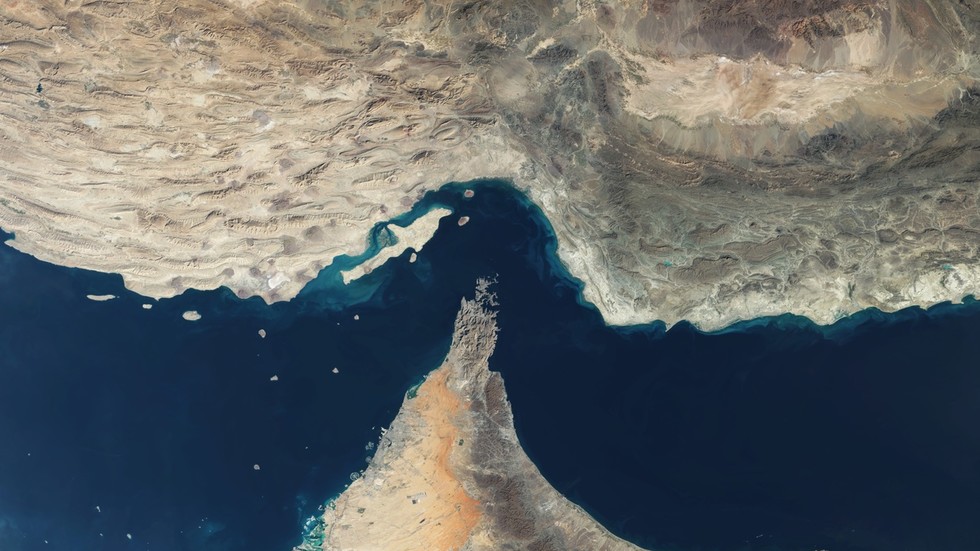
A satellite view of the Strait of Hormuz. © Getty Images / Gallo Images; Orbital Horizon; Copernicus Sentinel Data 2025
Passage for all commercial vessels through the Strait of Hormuz is now completely open, Iranian Foreign Minister Seyed Abbas Araghchi declared on Friday. He added that the waterway will remain open for the remainder of the ceasefire in Lebanon.

Araghchi’s announcement came shortly after a 10-day truce came into force between the Israel Defense Forces (IDF) and the Hezbollah militant group in Lebanon, which has been one of the major obstacles to a peace deal between Iran and the US.

Writing on X, the Iranian minister stated that “in line with the ceasefire in Lebanon, the passage for all commercial vessels through Strait of Hormuz is declared completely open for the remaining period of ceasefire.”

He noted however, that the vessels would be allowed to move along the “coordinated route as already announced by Ports and Maritime Organisation of the Islamic Rep. of Iran,” suggesting that the strait will remain under Tehran’s control.

Israel-Lebanon ceasefire takes effect: As it happened
Read more
Israel-Lebanon ceasefire takes effect: As it happened

US President Donald Trump has responded to Araghchi’s announcement on his Truth Social account, appearing to thank Tehran for fully reopening the “strait of Iran.”

The Strait of Hormuz has been shut down ever since the US and Israel launched an unprovoked attack on Iran in late February. The closure has driven up energy prices and rattled the global economy, disrupting one of the world’s most important trade arteries, which handles around 20% of global crude exports.

In the minutes following Araghchi’s announcement, oil prices plummeted by more than 10%, with Crude oil dropping to just over $83 per barrel and Brent coming in at around $88.
 
Brian Berletic, as always, is continuing to hammer home his references to the policy paper Which Path To Persia. He makes a compelling point that if one zooms out and looks at the wide view, everything that the US is doing and has done, from Venezuela to Iran is in service to cutting off China. Unlike Andrei Martyanov, Berletic contends that Israel is in fact not “running the US” aggression towards Iran, but rather the blockades of both the Caribbean and the Persian Gulf are all steps in isolating the Chinese. The Strait of Malacca would be next, naturally.
Yeah, I like Brian but I listen to him much less now because I think he does a lot of 'reductionism' into those policy papers (and he repeats himself a lot). Obviously they are important data points but they are not the only variable. Because he focuses so much on them he totally dismisses the influence of Israel in the US, which is a very real thing, among other factors.
 
Strait of Hormuz open for everyone – Iran
Markets are pricing in this news, with cryptocurrencies in the green. However, I have in mind that some remote viewers, when making predictions for April, saw a drop and recovery in regard to price action around the second week, which might be a proxy for "bad news." So, I did a quick check of Israeli media, and they aren't happy!

Israeli Perspective on Hormuz Ceasefire — Apr 17, 2026

Context: Iran's FM Aragczi announced Hormuz fully open for commercial shipping during ceasefire (expires Apr 22). Trump confirmed, oil dropped 10%. But the US naval blockade on Iranian ports remains. Trump publicly "PROHIBITED" Israel from bombing Lebanon. Meanwhile, Iran is removing sea mines with US assistance — effectively disarming its own defensive perimeter in the strait.

The question: what does this look like from the Israeli side?

The mood is NOT victory. It's fury, fear, and feeling boxed in.

1. IDF on high alert — ready to resume fighting
"Military ready to return to fighting with force on both fronts; officials assess Iran will quickly start to rebuild capabilities, despite estimated $100 billion in damages"

The IDF doesn't see this as over. They're on a hair trigger across BOTH fronts (Iran + Lebanon). The assessment that Iran will "quickly rebuild" means the military brass knows the ceasefire is a pause, not a resolution.

Source: Times of Israel

2. Israeli public: despair, anger, confusion
"Most picked either despair, anger, or confusion as a dominant emotion, and didn't believe claims that Iran is now very weak after bombing campaign"

The Israeli street isn't buying Trump's victory lap. They think Iran is still a threat. That's domestic pressure on Netanyahu to DO SOMETHING — exactly the kind of pressure that leads to unilateral action.

Source: Times of Israel

3. Iran feared Israeli assassination of negotiators
"Iranian delegation expressed concern Israel might assassinate them, but regional diplomat says Islamabad insisted on escort after 'hypothetical' threat was raised"

Pakistan had to provide air force escort for Iranian diplomats because they feared ISRAEL would hit them during peace talks. That tells you everything about how Iran perceives Israel right now — as a rogue actor operating outside US control. And honestly? They're probably right to worry.

Source: Times of Israel

4. Trump HIJACKED Israeli foreign policy
"Netanyahu can't convince the Israeli public that the war's goals were achieved, with Hezbollah not disarmed and the Iranian regime still largely intact"

Haaretz says out loud what the Israeli establishment is thinking: Trump took over, Netanyahu is a passenger, and the war objectives (Hezbollah disarmament, Iranian regime change) were NOT achieved. Netanyahu went to the security cabinet and tried to spin it as "aligning on Iran" — they didn't buy it.

Source: Haaretz

5. "BETRAYAL" — opposition + northern residents
"We oppose any cease-fire that doesn't include Hezbollah's complete disarmament"

Northern Israel was getting hit by Hezbollah for 6 weeks straight. Now Trump tells Israel to stop bombing Lebanon. The residents feel betrayed. The opposition is weaponizing it. The word "betrayal" is in the Haaretz headline — not from fringe voices, but from elected officials and community leaders.

Source: Haaretz

6. Bazan refinery relocation — long war planning
"30 months of war underline need for continuing local production of petroleum products rather than dependence on imports"

Israel's Energy Ministry is relocating (not closing) the Haifa refinery that Iran targeted. That's a country preparing for a LONG war, not a ceasefire.

Source: Times of Israel

The picture

Israel is:
  • Publicly muzzled by Trump ("PROHIBITED from bombing Lebanon")
  • Domestically furious (polls: despair, anger, confusion — majority don't believe Iran is weakened)
  • Militarily on high alert (IDF ready to resume "with force" on both fronts)
  • Strategically boxed in (war goals unachieved, Hezbollah intact, Iranian regime standing)
  • Planning for continued conflict (refinery relocation, capability rebuild assessments)
This is a cornered animal. Netanyahu can't claim victory, can't defy Trump openly, and can't satisfy his domestic hawks. The Iranian delegation literally needed fighter jet escorts because they thought Israel might kill them DURING PEACE TALKS.

 
And here's Iran's media digest on the whole thing:

Iranian Perspective on Hormuz Ceasefire — Apr 17, 2026

Context: While Trump declares "Hormuz is open, THANK YOU!" and frames Iran as cooperating under pressure, Iranian state media is telling a completely different story. The Iranian narrative is not one of capitulation — it's one of controlled strength, tactical superiority, and strategic preparation for what comes next.

Sources: PressTV, IRNA (Islamic Republic News Agency), Iran Press, Tehran Times — all state-controlled or state-aligned outlets. This IS the voice of the regime.

The Iranian narrative: "We won. We opened it because WE control it."

1. IRGC locked 16 cruise missiles on US warships — Americans fled
"The IRGC Navy locked more than a dozen cruise missiles onto aggressive US warships moments before they hastily retreated."

According to Iranian military sources, US warships disregarded initial warnings in the strait. The IRGC then placed 16 cruise missiles in locked firing position with an ultimatum: leave within minutes or we fire. The US requested 15 minutes to communicate with command. The standoff lasted less than one hour before American destroyers "rapidly departed."

Post-incident, a senior Iranian military official stated that civilian passage through the strait now requires IRGC coordination — only civilian ships are permitted through designated routes with IRGC permission. In other words: Iran is running Hormuz like a checkpoint, not surrendering it.

Whether this happened exactly as described is debatable — Iranian state media isn't Reuters. But the fact they're publishing this on the SAME DAY as "Hormuz is open" is the tell. The message to the domestic audience: we didn't capitulate, we're opening it because WE control it, not because Trump told us to.

Source: Iran Press
Source: PressTV (exclusive)

2. Iran pre-positioned 174 million barrels beyond US Navy reach
"Iran has shifted roughly 174 million barrels of its oil into offshore storage, positioning its tankers in a way that would make a potential U.S. maritime blockade ineffective and securing nearly 80 days of continued exports."

This one has real teeth — sourced from DropSite, an independent energy tracking firm, not Iranian propaganda:

  • 15 tankers near Chabahar port (outside the Gulf, Indian Ocean side)
  • 96 vessels stationed off Malaysia's coast (completely beyond US Navy interdiction)
  • Multiple tankers in the Strait of Malacca
  • 23 million barrels east of the "US toll line" in the Gulf of Oman

Iran pre-loaded at three times the normal export rate before tensions escalated. This provides approximately 80 days of continued exports without loading a single barrel from Iranian ports. The blockade Trump is bragging about is primarily symbolic — Iran's actual export capacity was pre-positioned beyond interdiction range. China is still getting supply via Malaysia.

Source: Iran Press

3. "Second US carrier burns" — fleet crumbling narrative
"Another US supercarrier has suffered a fire-related incident, marking the latest in a series of operational failures plaguing American naval assets since Washington launched a war of terrorism with Israel on Iran."

PressTV reports a second carrier fire incident, framing it as systemic degradation of US naval power under the strain of sustained operations. The narrative: America's fleet is overstretched, aging, and breaking down. Whether exaggerated or not, this is what Tehran is telling its people — the Americans can't sustain this.

Source: PressTV

4. Iran REJECTS temporary ceasefire — demands permanent end
"Iran's Deputy Foreign Minister has stressed that the Islamic Republic opposes any temporary ceasefire and insists the cycle of war must end permanently."

This is the critical one. The Apr 22 ceasefire expiry isn't a deadline Iran accepts as a framework — they want permanent terms or nothing. A new Hormuz "protocol" is being floated as a possible alternative to the current arrangement. Iran is psychologically prepared for the ceasefire to collapse.

Source: PressTV

5. "Finger on the trigger" — IRGC ready for "regret-inducing response"
"The Army and the IRGC have their 'finger on the trigger' and are prepared to deliver a powerful, destructive, and regret-inducing response to any aggressive or criminal action by the US-Israeli enemy."

Published today. Same day as the Hormuz opening. Same day Trump says "GREAT AND BRILLIANT DAY FOR THE WORLD." The IRGC is publicly stating it's ready for the next round — in the same news cycle as the supposed peace breakthrough.

Source: IRNA

6. IRGC dismantling US-Israeli terror cells inside Iran
"The IRGC has dismantled several terrorist teams linked to the Israeli regime and the United States in Iran's southeastern province of Sistan and Baluchestan."

Internal security operations framed as counter-espionage. The regime is telling its people that even as ceasefire holds externally, the US and Israel are running covert operations inside Iranian territory. This keeps the war footing alive domestically.

Source: IRNA

7. Ceasefire framed as "Axis of Resistance victory"
"The ceasefire is a direct outcome of Washington and Tel Aviv's failure to achieve their goals."

Iran is framing the ceasefire not as a concession but as proof that the US-Israeli campaign failed. Hezbollah is being credited for forcing the Lebanon truce. Yemen's Ansarullah (Houthis) and Palestinian factions publicly hailed it as a victory. The regime narrative: we stood firm, they blinked.

Source: IRNA

8. Iran rejects UAE "maritime corridor" proposal
"Iran has vehemently rejected a UAE-backed proposal adopted by IMO on a 'maritime corridor' in the Strait of Hormuz."

Iran shot down a UAE-backed proposal at the International Maritime Organization to create an internationally managed "maritime corridor" through the strait. Message: Hormuz is Iranian sovereign territory, not an international commons. Nobody else gets to write the rules.

Source: PressTV

The contrast: two parallel realities
Trump's RealityIran's Reality
"Hormuz is open, THANK YOU!""We locked 16 missiles on their ships, they fled"
"Iran's Navy at bottom of sea""Second US carrier burning, fleet crumbling"
"Deal almost done""We reject any temporary ceasefire"
"Iran removing mines cooperatively""Finger on trigger, ready for regret-inducing response"
"War very close to over"Pre-positioned 174M barrels for 80-day siege
"Iran agreed to NEVER close Hormuz again"Rejected UAE maritime corridor — Hormuz is ours

Both sides are telling their domestic audiences they WON. Both are simultaneously preparing for the next round.

Tactical assessment: denial to control

Iran is playing a double game:
  1. Publicly cooperating — opening Hormuz, removing mines, talking peace through Pakistan
  2. Privately preparing — missile locks on US ships, 80 days of pre-positioned oil, IRGC on full alert, rejecting temporary ceasefire
  3. Controlling the narrative — we faced them down, they retreated, we opened Hormuz on OUR terms
The mine removal might be real, but if Iran pre-positioned 174M barrels offshore and is claiming missile superiority in the strait, they may be trading a defensive asset they no longer need for diplomatic breathing room. The mines were useful when Iran needed to BLOCK the strait. If Iran's new play is CONTROLLING the strait (IRGC checkpoint model), mines are actually a liability — they block everyone including your own ships.

The mine removal isn't necessarily capitulation. It could be a tactical pivot from denial to control. Which is actually MORE dangerous for the post-Apr 22 scenario — because a controlled strait with IRGC missile batteries is harder to challenge politically than a mined one. Mining is an act of war. "Coordinated maritime routes with IRGC permission" is sovereign policing.

Key takeaway
The ceasefire is a repositioning pause, not peace. Iran is preparing for a long game (80 days of offshore oil reserves), rejecting Trump's framework (no temporary ceasefire), maintaining military readiness (finger on trigger), and reframing the narrative (Axis of Resistance victory). Apr 22 ceasefire expiry remains the critical inflection point.

Sources
 
Markets are pricing in this news, with cryptocurrencies in the green. However, I have in mind that some remote viewers, when making predictions for April, saw a drop and recovery in regard to price action around the second week, which might be a proxy for "bad news." So, I did a quick check of Israeli media, and they aren't happy!

Probable cause of Trump is latest post.
THE STRAIT OF HORMUZ IS COMPLETELY OPEN AND READY FOR BUSINESS AND FULL PASSAGE, BUT THE NAVAL BLOCKADE WILL REMAIN IN FULL FORCE AND EFFECT AS IT PERTAINS TO IRAN, ONLY, UNTIL SUCH TIME AS OUR TRANSACTION WITH IRAN IS 100% COMPLETE. THIS PROCESS SHOULD GO VERY QUICKLY IN THAT MOST OF THE POINTS ARE ALREADY NEGOTIATED. THANK YOU FOR YOUR ATTENTION TO THIS MATTER! PRESIDENT DONALD J.TRUMP
 
Markets are pricing in this news, with cryptocurrencies in the green. However, I have in mind that some remote viewers, when making predictions for April, saw a drop and recovery in regard to price action around the second week, which might be a proxy for "bad news." So, I did a quick check of Israeli media, and they aren't happy!
...
The question: what does this look like from the Israeli side?

The mood is NOT victory. It's fury, fear, and feeling boxed in.

2. Israeli public: despair, anger, confusion


3. Iran feared Israeli assassination of negotiators


Source: Times of Israel

4. Trump HIJACKED Israeli foreign policy


5. "BETRAYAL" — opposition + northern residents


6. Bazan refinery relocation — long war planning


The picture


Israel is:
  • Publicly muzzled by Trump ("PROHIBITED from bombing Lebanon")
  • Domestically furious (polls: despair, anger, confusion — majority don't believe Iran is weakened)
  • Militarily on high alert (IDF ready to resume "with force" on both fronts)
  • Strategically boxed in (war goals unachieved, Hezbollah intact, Iranian regime standing)
  • Planning for continued conflict (refinery relocation, capability rebuild assessments)
This is a cornered animal. Netanyahu can't claim victory, can't defy Trump openly, and can't satisfy his domestic hawks. The Iranian delegation literally needed fighter jet escorts because they thought Israel might kill them DURING PEACE TALKS.
I guess some VERY high level chess game going on. I suspect Russians are guiding them or Iranians quickly learned it. But, once can't underestimate cornered "Bibi".
 

The most powerful military in the world just ran out of lunch. Photographs that spread across the internet showed soldiers aboard USS Tripoli and USS Abraham Lincoln eating near empty trays. A dry meat patty. A grey slab of processed meat. A small handful of boiled carrots. One tortilla. This was not a diet plan. This was a warning.

The father of a Marine stationed on the USS Tripoli described seeing a photo of his daughter's meal tray, two thirds empty, carrying one small scoop of shredded meat and a single folded tortilla. His response cut through all the diplomatic noise: "We have the strongest military in the world. You shouldn't be running out of food."

He is right. And it does not stop there.

Sailors aboard these warships sent messages home describing a rationing system born out of desperation. Crew members ate when they could and divided portions among themselves. Supplies, they warned, were going to get "really low." Morale was heading to an "all time low." Families tried to send care packages, snacks, hygiene products, basic essentials, only to find that military mail services to 27 military zip codes in the region had been suspended entirely. The US Postal Service cited airspace closures and logistical chaos. The packages sat. The soldiers went hungry.

If America cannot feed its own troops at war, the question is not whether this shortage spreads. The question is how fast.

Britain already has the answer, and it is not a comfortable one. Senior government officials from No. 10, the Treasury and the Ministry of Defence quietly ran a war game called Exercise Turnstone. The scenario was set in June 2026, with the Strait of Hormuz still closed and no peace deal in sight. The conclusion was stark.

CO2 supplies could fall to just 18 per cent of normal levels. That sounds technical until you understand what CO2 actually does. It is used to slaughter nearly all pigs and more than two thirds of chickens in Britain. It preserves packaged meats, salads and baked goods. Without it, shelves do not just look sparse. They look post apocalyptic. Chicken, pork and a wide range of supermarket staples face genuine shortages by summer. Food inflation is forecast to reach nine per cent by December. The government restarted a mothballed bioethanol plant in Teesside to produce more CO2. That is not a plan. That is a patch on a burst pipe.

The food crisis is serious. The jet fuel crisis is arguably more immediate.

Europe gets 75 per cent of its jet fuel from the Middle East. The Strait of Hormuz, the narrow waterway through which one fifth of the world's oil and gas normally flows, effectively shut when Iran closed it following US and Israeli strikes. The head of the International Energy Agency delivered the number that silenced a room: Europe has roughly six weeks of jet fuel left.

The benchmark European jet fuel price doubled from 831 dollars per tonne before the war to an all time high of 1,838 dollars. KLM cancelled 160 flights. Lufthansa shut down an entire regional airline. EasyJet absorbed 25 million pounds in extra fuel costs in a single month. Smaller airports will feel the squeeze first. Then the bigger ones follow. Summer holidays, already booked and paid for, face real cancellation risk, not because of bad weather but because there is simply no fuel to burn.

The oil crisis underneath all of this shows no sign of easing. Two thousand vessels sit stranded. Rerouting ships around Africa adds weeks to delivery times and sends shipping costs soaring. Iran's oil exports collapsed. Qatar's LNG facility took damage that experts say will take three to five years to fully repair. Even optimistic analysts say full recovery from this supply shock takes 12 to 18 months at minimum.

The soldiers on those warships did not start this war. They are simply the first people the world watched go hungry because of it. The rest of us are standing in the same queue, just a few places further back.

The war needs to stop. Everything else depends on it.
 
Iran announced it had fully reopened the Strait of Hormuz to commercial vessels following a pause in fighting in Lebanon. Trump stated that the American blockade on Iranian ships and ports would remain in full force, while the IRGC declared that their hands remain on the trigger. The Israeli military said it is on high alert and ready to resume fighting amid fragile ceasefires in Iran and Lebanon.
 
While the world watches the Strait of Hormuz, China is quietly taking control of the South China Sea. Chinese ships and floating barriers have appeared at Scarborough Reef, which is disputed between Beijing and Manila. Entrance to the atoll is blocked.

A third of global maritime trade—worth $3.3 trillion annually—passes through the South China Sea.

China is setting a trap while the US is bogged down in Iran. And no one even utters a word.
 
Back
Top Bottom