Nayib Bukele, the savior of El Salvador?

However, narrative-wise, the reasoning that it's a bad idea to really do something about the cartels because 'the cancer has become so bad' seems quite crazy to me. Continuing the analogy, it's like condemning a patient to die.

Actually, El Salvador was in a worst shape than Mexico when it comes to how controlled the country was from La Mara. Continuing to that analogy, was in a “stage 4” cancer. I knew people from there who were telling me stories that had a big impact on me about how can someone live under those circumstances.
Yes, Mexico have war-like armed cartels, but the quality of life isn’t as bad as how it was in El Salvador.
 
But wait... there's a distinction to be made here.

Generally when one uses the word "dictator" one uses it to mean something along the lines of: a leader who has usurped power and uses whatever means necessary to remain in power and rule by force, torture, lies, corruption, etc, and AGAINST the will of the population for his/her own selfish reasons, which happen to go against the well being of the population that he rules.

What people in Russia and El Salvador have decided is that they like the direction in which their country is moving, and so allowing for consecutive terms so that things remain moving in that direction is within their right, isn't it? isn't that the expression of democracy?

So is he staying in power longer than AMLO for instance? sure.. but is he unpopular? only outside of El Salvador, at which point, who cares? He committed to please and enhance the lives of Salvadorians, not to please anyone else on earth. As I see it, which is probably the reason people are calling for the same approach in Ecuador, Peru, Mexico etc, is.. the choice El Salvador had at some point was: We either uphold the current law and nothing changes, or... we allow this one guy to bend it and change it but things improve, and things improved.

Many in Mexico would've liked AMLO to remain, and Petro in Colombia to remain for instance, but upholding the constitution was more important, so they got what they wanted.. criminal stability and a nice breather of a few years, then right back to status quo which in El Salvador, was the rule of gangs which do, by the way, rule as dictators with cruelty and do not give a damn about the constitution.

Is this guy a saint? I do not know, but I am sure that he's got human flaws, and he may at one point falter, but right now.. people in El Salvador love what he's done for their country and in the balance, to uphold a corrupt constitution which allowed for their country to be ruled by gangs or to break it up a bit but regain that sense of safety and security, I'd vote for safety and security. So I get why he's popular.

So, I don't think it's controversial to call him a dictator, I mean sure, let's call him a dictator, so what? I think all that matters is whether Salvadorians like the country that they live in or not, that's the bottom line.
 
The cost of security

Murder, torture, and disappearances: a group of experts accuses Bukele's government of crimes against humanity before the UN. They are not talking about the treatment of MS-13 members, but of ordinary people who fell into the hands of the Salvadoran police on "suspicion of having committed a crime."​

The state of emergency has allowed President Bukele’s government to concentrate absolute power, under the cover of which serious, widespread, and systematic human rights violations have been committed that could
amount to crimes against humanity. Emergency situations cannot justify the suspension of non-derogable human rights or the dismantling of the essential principles of the rule of law.
Due Process of Law Fundation

El Salvador has carried out massive human rights violations under its State of Exception public security policy over the past 4 years. A group of experts investigated and analyzed whether those abuses are crimes against humanity.

El Salvador likely committed crimes against humanity during state of emergency, jurists say

A group of international jurists on Tuesday accused Salvadoran authorities of committing crimes against humanity in a report filed with the ‌Inter-American Commission on Human Rights.
The complaint alleges systematic acts of torture, murder, and forced disappearances under the country's controversial state of exception, which the government of President Nayib Bukele imposed four years ⁠ago on March.


  • The report claims there are "reasonable grounds" to believe crimes against humanity, as defined by Article 7 of the Rome Statute of the International Criminal Court (ICC), are occurring.
  • It alleges the violations are part of a state policy "known and even promoted by the highest levels of President Nayib Bukele's government."
  • President Bukele's ‌government ⁠first implemented the state of exception on March 27, 2022, to combat a wave of gang violence that left 87 people dead in one weekend.
  • Under the emergency ⁠decree, authorities have detained over 90,000 people, and approximately 500 of those detainees have died in state custody.
  • Homicides have ⁠fallen by more than 90% since Bukele took office, according to government figures.
  • Salvadoran Public Defender General ⁠Rene Escobar denied the claims, saying the government rejects any policy of "forced disappearance, torture, sexual violence, or arbitrary executions."

Better to remain silent and safe.

The Chapultepec Index of Freedom of Expression and the Press is an annual indicator produced by the Inter-American Press Association (IAPA) According to this Index El Salvador ranked third from last in Freedom of Expression and Press Freedom 2026, falling two places from the previous edition. It ranks only above Nicaragua and Venezuela.
El Salvador ranks among the countries "without freedom of expression," according to the Inter-American Press Association's 2025 Chapultepec Index of Freedom of Expression and Press Freedom.

The country scored 24.49 out of 100 points, falling two places. It ranked third from last, above only Nicaragua and Venezuela.

The report indicates that the branch most involved in situations unfavorable to freedom of expression is the executive branch, "with a strong average influence in this type of action."

The president of @apeselsalvador, Sergio Arauz, denounced an "escalation of repression" in the context of the state of emergency imposed by the Bukele administration. He explained that the use of the Foreign Agents Law, coupled with judicial harassment against media outlets and journalists, has forced around 50 journalists into exile in the last year.
The Chapultepec Index records a serious decline in press freedom in the Americas

Other countries with high restrictions in the Americas: Mexico, Cuba, Ecuador, Bolivia, and Peru.
 
The cost of security

Murder, torture, and disappearances: a group of experts accuses Bukele's government of crimes against humanity before the UN. They are not talking about the treatment of MS-13 members, but of ordinary people who fell into the hands of the Salvadoran police on "suspicion of having committed a crime."​


Better to remain silent and safe.

The Chapultepec Index of Freedom of Expression and the Press is an annual indicator produced by the Inter-American Press Association (IAPA) According to this Index El Salvador ranked third from last in Freedom of Expression and Press Freedom 2026, falling two places from the previous edition. It ranks only above Nicaragua and Venezuela.


Other countries with high restrictions in the Americas: Mexico, Cuba, Ecuador, Bolivia, and Peru.

@Puma, digging a little deeper with AI, this is what I found from the Due Process of Law Foundation (DPLF).

The Open Society Foundations (the network founded by George Soros) has been one of the main funders of the Due Process of Law Foundation (DPLF). In fact, DPLF was founded in 1998 with the initial support of the Open Society Institute.

On page 14 of the document, you can see that Open Society Foundations is listed as a donor to DPLF, and if you look at the end, you'll also see USAID.

DPLF.jpeg


Just to have a little look around this environment...
 
On page 14 of the document, you can see that Open Society Foundations is listed as a donor to DPLF, and if you look at the end, you'll also see USAID.

The DPLF report is based on the report by the
International Group of Experts for the Investigation of Human Rights Violations under the State of Emergency in El Salvador (GIPES, which also receives funding from OS)

The DPLF report states​
This report is supported by the Due Process of Law Foundation (DPLF); the International
Federation for Human Rights (FIDH); the International Commission of Jurists (ICJ); InterJust; the IMPACTUM Research Project and the Program for the Study of Human Rights in Context, of the University of Ghent (Belgium).​

OK they are all funded by OS

According to El Salvador government, around 86,000 gang members have been arrested or imprisoned under the state of emergency in force since March 2022, with Mara Salvatrucha being one of the groups.

GIPES documented: 403 deaths in state custody (including 4 children) up to August 2025 and 540 forced disappearances up to February 2025. The vast majority of these victims were not active or confirmed gang members, but ordinary citizens or people with no proven links to organized crime.

One of the most high-profile cases in El Salvador is that of Ruth Eleonora López, a lawyer and human rights defender. López was head of the Anti-Corruption and Justice Unit at Cristosal, one of the leading human rights organizations in El Salvador. There, she investigated cases of government corruption, assisted relatives of victims of the state of emergency, and denounced systematic abuses.

She was arrested on May 18, 2025, at her home in San Salvador by the National Civil Police. The prosecutor's office initially charged her with embezzlement and then illicit enrichment.

She is one of at least 86 political prisoners documented as having been persecuted for political reasons under the Bukele administration.

The Nayib Bukele administration has severely restricted access to Salvadoran prisons, particularly for independent international observers seeking to speak freely with inmates.

Ok Nothing to see here. Bukele said they are all criminals​
This is a good time to remember that, without knowing it, I responded to 100% of the accusations made today by those who ONLY defend the human rights of criminals, which I do not deny they have, but it is strange that they are the ONLY PRIORITY of these organizations.​
Screenshot_20260312-043503_X.jpg


He slso blames Soros​
It's  funny to see all the NGOs, think tanks, media outlets, and journalists paid by Soros attacking in unison and in an obviously coordinated manner. I would be concerned if it weren't so.It means we're on the right track. Thank God.​
Screenshot_20260312-043950_X.jpg


I wonder why Soros wants to attack Bukele and El Salvador? Bukele describes it as part of a "perverse global agenda" of elites, globalists, and leftists who promote chaos to maintain influence.

It is a polarized narrative typical of current politics: "they attack us because we work" vs. "it is authoritarianism disguised as populism." Left or right the enemy is always out there. Meanwhile, civil rights are slowly and progressively being undermined from within for our own good. What the Cs referred to as a situation of the boot on the face.​
 
🚩 THE DICTATOR #BUKELE IS AMUSED BY THE SERIOUS ACCUSATIONS AGAINST HIM!

When mockery replaces a response...
By Reyzope
03/12/2026

While an international group of experts presented a report to the Inter-American Commission on Human Rights @CIDH detailing arbitrary detentions, torture, forced disappearances, and deaths in custody under the Bukele government, the dictator's reaction was not an explanation, a detailed refutation, or a gesture of institutional concern. It was mockery.

"It's funny," he wrote on social media, referring to the NGOs, journalists, think tanks, and media outlets that have covered the allegations. According to Bukele, they are all acting "in unison" and in a "coordinated" manner, insinuating the old conspiracy narrative about George Soros' financing.

But we are not talking here about minor criticism or just another media controversy. The report presented to the Inter-American Commission on Human Rights argues that the state of emergency has led to systematic human rights violations that would fall under Article 7 of the Rome Statute, that is, in the category of crimes against humanity.

This is an extremely serious accusation.

Faced with something like this, any democratic government would respond with data, investigations, transparency, or at least with language of institutional responsibility. Bukele chose another path: sarcasm and mockery.

He does not dispute the facts. He does not respond to the figures. He does not explain the deaths in custody or the allegations of torture. Instead, he turns the debate into a conspiracy theory in which all critics are part of the same "Sorosian plot."

The strategy is well known: discredit the messenger to avoid responding to the message.

But there is something deeply disturbing about the tone chosen. Because when a president declares himself "amused" by accusations of torture, disappearances, and deaths in custody under his government, the problem ceases to be merely political.
It becomes moral.

The allegations may be investigated and confirmed over time. That is what international bodies are for. But the attitude toward these allegations reveals something immediate: the way a dictator relates to the gravity of what is at stake.

And when the most serious accusations a state can face provoke laughter in those who govern it, the signal to the country and the world is not one of strength. It is one of contempt for the seriousness of the allegations.
 
According to El Salvador government, around 86,000 gang members have been arrested or imprisoned under the state of emergency in force since March 2022, with Mara Salvatrucha being one of the groups.

GIPES documented: 403 deaths in state custody (including 4 children) up to August 2025 and 540 forced disappearances up to February 2025. The vast majority of these victims were not active or confirmed gang members, but ordinary citizens or people with no proven links to organized crime.

One of the most high-profile cases in El Salvador is that of Ruth Eleonora López, a lawyer and human rights defender. López was head of the Anti-Corruption and Justice Unit at Cristosal, one of the leading human rights organizations in El Salvador. There, she investigated cases of government corruption, assisted relatives of victims of the state of emergency, and denounced systematic abuses.

She was arrested on May 18, 2025, at her home in San Salvador by the National Civil Police. The prosecutor's office initially charged her with embezzlement and then illicit enrichment.

She is one of at least 86 political prisoners documented as having been persecuted for political reasons under the Bukele administration.

The Nayib Bukele administration has severely restricted access to Salvadoran prisons, particularly for independent international observers seeking to speak freely with inmates.

I'm not saying that I don't agree with what you write @Puma, but I can't accept a fact if we are only based on opinions.
Is it possible that you provide links to this information?
With AI it is very easy to achieve it.

Personally, I cannot feel EMPATHY and respect for the lives of the criminal-gang members who would not hesitate to kill Innocents.
But the speech of the murdered children that you describe, that is serious.
 
Is it possible that you provide links to this information?

I have provided links and there is information you can find on your own. Here is a report from the U.S. Department of State

2023 Country Reports on Human Rights Practices: El Salvador
Under the state of exception, reports of gang violence decreased significantly, allowing citizens to exercise their right to life, liberty, and security of person, and to engage in daily activities and commerce without the constant threat of violence and extortion. Arbitrary arrests and mass pretrial hearings, however, undermined due process and exacerbated historically difficult conditions in overcrowded prisons.

Significant human rights issues included credible reports of: unlawful or arbitrary killings; enforced disappearance; torture or cruel, inhuman, or degrading treatment or punishment by security forces; harsh and life-threatening prison conditions; arbitrary arrest or detention; serious problems with the independence of the judiciary; arbitrary or unlawful interference with privacy; extensive gender-based violence, including domestic and sexual violence, and femicide; substantial barriers to sexual and reproductive health services access; trafficking in persons, including forced labor; and crimes involving violence targeting lesbian, gay, bisexual, transgender, queer, or intersex persons.

The government took credible steps to identify and punish officials who may have committed human rights abuses.

But the speech of the murdered children that you describe, that is serious.

GIPES reports four children dead. The US Department of State noted in the same report above
On July 24, the newspaper El Faro published an interview with a released prisoner who gave birth while in prison. She reported being held in a unit with 150 other pregnant women in the Izalco prison farm, with two doctors assigned to them. She reported receiving only sporadic prenatal care and extremely limited access to medicine. Cristosal published a statement from a released prisoner who reported many pregnant women miscarried due to a lack of medical care.

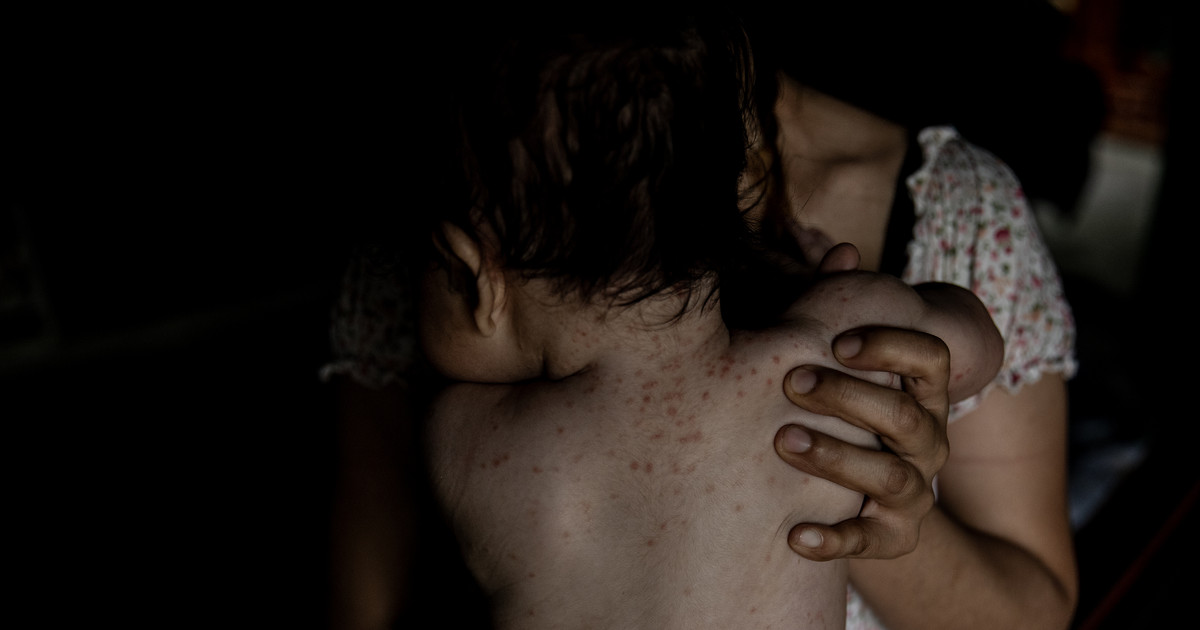
Young babies often stayed with their mothers in prison and received limited medical care, despite widespread scabies and other communicable diseases. The newspaper El Diario de Hoy reported that on May 17, a girl, age one, died of pneumonia after being held in Apanteos prison with her mother for six months. Socorro Jurídico Humanitario reported a baby, age six months, born while his mother was held in Izalco, died of kidney failure, liver failure, and pneumonia on June 26, six days after he was transferred from the prison to the care of other members of his family.

Personally, I cannot feel EMPATHY and respect for the lives of the criminal-gang members who would not hesitate to kill Innocents.

No one feels sorry for them, but we cannot lump together people who were arbitrarily deprived of their liberty and disappeared.

The charges of crimes against humanity against the Bukele administration are not subject to a statute of limitations. And he will have time to defend himself with facts, not conspiracy theories on social media.

All in all, my only intention is for us to continue looking at the reality of the right and left as recommended by the Cs. Bukele, like other global leaders, has his nuances.
 
All in all, my only intention is for us to continue looking at the reality of the right and left as recommended by the Cs. Bukele, like other global leaders, has his nuances.
I completely agree with this point, but I’m asking you: how have Putin in Russia and Bukele in El Salvador done it in the 21st century? Could you tell me which other president has had the courage to radically improve living conditions in his country?

GIPES reports four children dead. The US Department of State noted in the same report above
This is the article you mentioned. It seems serious to me, but excuse me, @Puma these healthcare failures happen in many countries around the world. Why is this only being publicized in El Salvador?

Let me give you an example: in other parts of the world, poor sanitation in women’s prisons is a constant issue, and we’re talking about countries like Japan, the UK, the US, etc. I did a search on Perplexity AI and found this:

I've found several articles in English about similar cases of poor sanitation in prisons around the world, where mothers and babies face deficient hygiene, lack of soap, poor sanitation, and neonatal health risks, analogous to the use of bleach in El Salvador.

Sub-Saharan Africa

In prisons in countries like Cameroon, Chad, Côte d'Ivoire, and Zimbabwe, mothers and children live in unsanitary conditions with poor sanitation, overflowing shared bucket toilets, and lack of soap or detergents, causing diarrhea and respiratory illnesses in infants.
A study details that over half of 27 countries report inadequate hygiene, with children exposed to gastrointestinal pathogens due to lack of clean water and dirty bathrooms.

Asia (Japan and Philippines)

In Japan, pregnant women are shackled during labor and postpartum, separated from newborns, and face inadequate care, including hygienic neglect abuses.
In the Philippines, detention centers lack prenatal equipment like ultrasounds, delaying care and exposing mothers and infants to health risks.

North America (US)

In US jails, such as in Texas and migrant detention centers, children lack soap, toothpaste, or showers from the border, with constant stench and overcrowding limiting toilet access.
Reports highlight black mold, clogged toilets, and lack of basic hygiene, violating constitutional rights.

South America (Brazil)

In Brazil, mothers in prisons struggle for diapers, sanitary pads, and soap, with endemic tuberculosis and scabies, plus inadequate nutrition for pregnant women.

Europe (UK)

In UK prisons, lack of maternity facilities causes premature births in cells (11% of cases 2016-2019) and missed appointments due to hospital access barriers.

These cases highlight global prison hygiene issues for mothers and infants. For more details:

I’d take anything published by this institution with a grain of salt...
Country Reports.jpeg
 
All in all, my only intention is for us to continue looking at the reality of the right and left as recommended by the Cs. Bukele, like other global leaders, has his nuances.

Well, the reason I asked you in the first place was because it seemed to me that you had already made a decision on the matter. It didn't read as "he has his nuances". You are usually very balanced in your views, so this surprised me a bit. And a high percentage of what you linked to was from sources that may well have an agenda to make people think Bukele is the spawn of the devil.

Personally (and I think @Sindy-T.S.R would agree), anything coming from those US entities (famous for their double standards!) as a critic to Bukele, is probably a sign that he is doing the right thing. Is it perfect? Of course not. Has he had to make some "deals" to get crime under control? It would be surprising if he didn't. But when you see what he had to fight against.... El Salvador was literally a nightmare, now it's not. He has said himself (paraphrasing) that in some cases, the choice was difficult, but that when it came to defending the rights of innocent civilians vs. those of serious criminals, he had chosen the lesser evil. Some civil right activists say that is not okay. But I think the situation is too complex to judge one way or another with simple statements such as "he's a dictator" or "he's a saint". Nuances have to come from analyses as well as understanding them in people themselves. OSIT.
 
Well, the reason I asked you in the first place was because it seemed to me that you had already made a decision on the matter. It didn't read as "he has his nuances". You are usually very balanced in your views, so this surprised me a bit. And a high percentage of what you linked to was from sources that may well have an agenda to make people think Bukele is the spawn of the devil.

It’s clear that @Puma sees it from a different perspective, but what if we added the LOOSH factor to this dilemma of whether Bukele has done more harm than good to his people?
For example, I’m using a bit of deduction here I have no proof that my reasoning is 100% accurate.
But before Bukele, was El Salvador’s LOOSH production the same or higher than it has been in the few years since Bukele took office?

I’m leaving these threads about LOOSH here for reference:


  • Like
Reactions: Chu
Back
Top Bottom