Session 18 July 2015

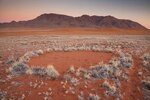
(Perceval) What are those so-called "Fairy Circles" in the desert in Namibia?

A: Related to fungal spread under surface.
____________

I find that odd. Most of researchers point to the cause as either plant competition for water and/or termites.
Some studies did mention fungi might play a secondary role, but I didn't find any claiming they are the main cause.

In Australia there is a similar phenomenon and, notably, there are no termite species there! This points to the plants' competition for water as the cause.

The leading hypothesis is, basically, plants that grew first will get all the water, thus leaving the surrounding soil drier for would-be plants.


I just think that if fungi really were the main cause, there would be a significant amount of it, and researchers wouldn’t overlook it.
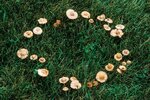
 
Well, those mushroom fairy circles are indeed caused by fungi.

But these circles free of vegetation in arid lands, well, if we were to follow the extant studies; it's highly unlikely fungi are the main cause.

The comparison with those of Australia really points to mere plants competition, what leaves the soil drier.
 

Attachments

  • fairy_ring.jpg
    fairy_ring.jpg
    450.8 KB · Views: 7
  • images - 2026-02-21T091613.630.jpeg
    images - 2026-02-21T091613.630.jpeg
    48.6 KB · Views: 7
Talking of vegetation. There are two other interesting ones without definite explanation:

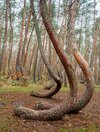
1) The forest of Crooked Trees, in Poland. They get a shape of candy cane.

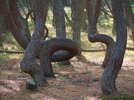
2) Dancing Forest, in Kaliningrad, not very far way from the Polish Crooked Trees forest, but not the same thing. The trees here grow in a loop pattern.
 

Attachments

  • Crooked_Forest.jpg
    Crooked_Forest.jpg
    1.4 MB · Views: 7
  • Bäume_im_Tanzenden_Wald_September_2019.jpg
    Bäume_im_Tanzenden_Wald_September_2019.jpg
    418.7 KB · Views: 7
Well, those mushroom fairy circles are indeed caused by fungi.

But these circles free of vegetation in arid lands, well, if we were to follow the extant studies; it's highly unlikely fungi are the main cause.

The Namibian ones are interesting:
1771718612513.png


In the UK and over in Canada and very likely the U.S., fairy circles are all over, including in forests - with different fungal species.

There is even something called Forest Ring that can be seen in the Boreal forests:

The origin of forest rings is not known, despite several mechanisms for their creation having been proposed. Such hypotheses include radially growing fungus, buried kimberlite pipes, trapped gas pockets, and meteorite impact craters.

Little video here on Fairy Ring:

 
The Namibian ones are interesting:
View attachment 116262

In the UK and over in Canada and very likely the U.S., fairy circles are all over, including in forests - with different fungal species.

There is even something called Forest Ring that can be seen in the Boreal forests:


Little video here on Fairy Ring:


The main hypothesis for forest rings nowadays are bacteria, not fungi.

I don't think they could compare to Namibian circles because we are talking of very different environments and plants.

The Namibian ones really seem to be caused by the plants competing for water. It would be very hard to overlook fungi if they were indeed the cause.
 
There are types of fungi that live in the soil in the desert areas of Australia. In dry times there is only evidence of fine filaments in the soil. They fruit and spore after rainfall only to seemingly disappear until the next rainfall.

The most obvious is the desert puffball but some have no fruit that can be seen and the only hint that it is there in the soil is was when pets develop fungal skin or airway/lung infections after rain. The pets that were born and bred in the desert seemed to have immunity, but those that were moved to the area were more prone to infection.
 
Back
Top Bottom