Celestial activity for twenty-twenty-six. Interesting is the
path the Eclipse takes across the USA.
So, get ready to watch the skies with us! Here are the top astronomical events happening this year:

www.nasa.gov
January 16, 2026
This year will be busy for avid skywatchers, with some incredible opportunities to view meteor showers, planets, and the Moon in the night sky.
In 2026, we will also mark the 20th anniversary of
NASA Marshall Space Flight Center’s Observatory. Originally established as an engine test site in 1958, it was converted to a solar observatory in 1968 to study the sun. In 2006, it was transformed into a lunar and meteor observatory, marking the beginning of its modern era. Today, the observatory plays a crucial role in monitoring the Moon for impacts, studying eclipses, tracking comets, and measuring meteoroid production through advanced telescopes and cameras.
So, get ready to watch the skies with us! Here are the top astronomical events happening this year:
February 28: Planetary Parade
On February 28, we will see not one, not two, but six planets in the evening sky.
Mercury, Venus, Neptune, Saturn, Uranus, and Jupiter will appear shortly after sunset. Four of those planets will be visible to the unaided eye, weather permitting, but only those with optical assistance will be able to view Uranus and Neptune (Mercury can sometimes be harder to spot, too).
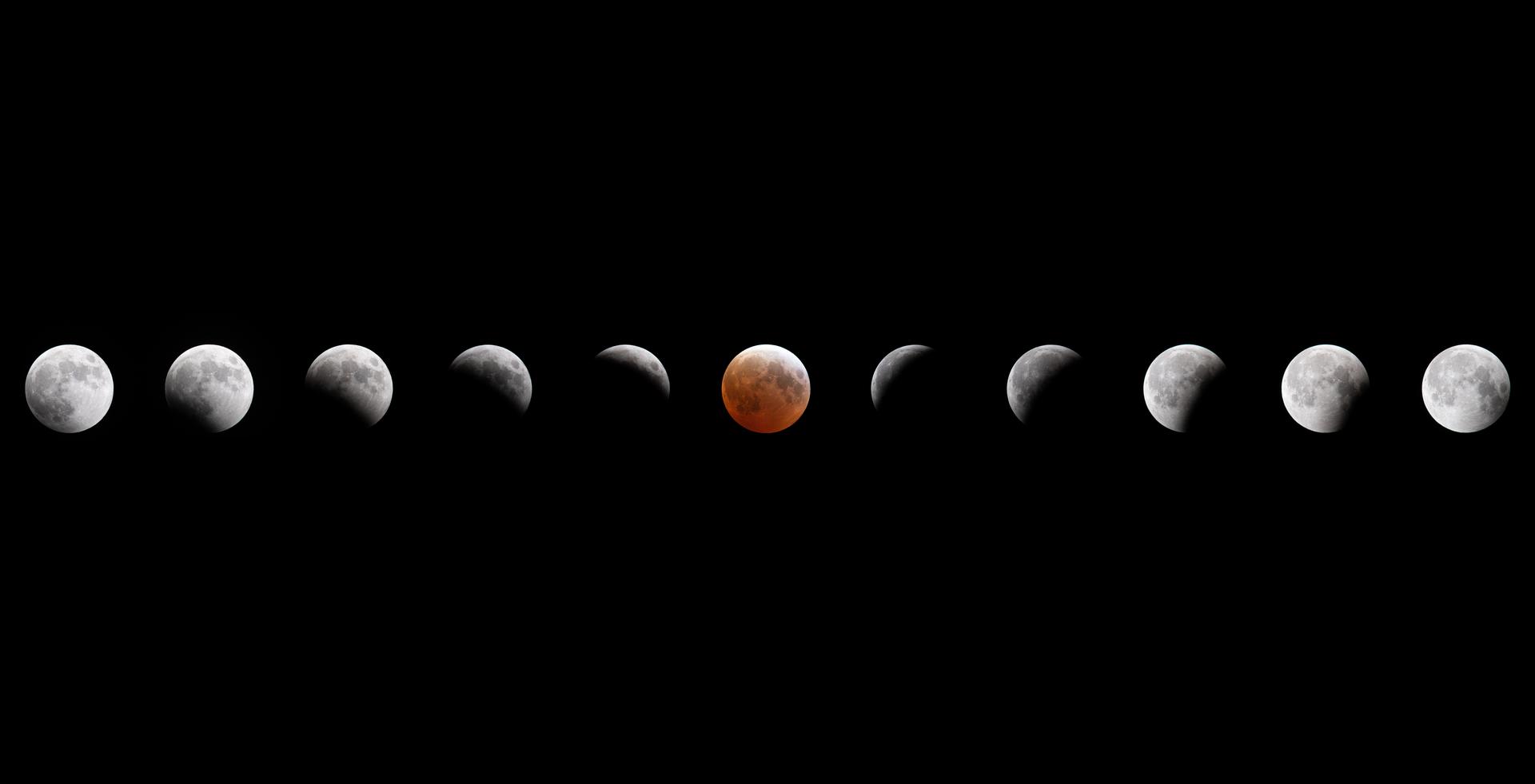
- March 3: Total Lunar Eclipse
In March, a total lunar eclipse will be visible for those in
North America – especially for those on the West Coast. This event is for the earlier risers, as it will occur right before sunrise on the 3rd. Lunar eclipses occur when Earth is positioned precisely between the Moon and Sun – shading the Moon in Earth’s shadow.
A Blue Moon signifies the rare occasion of having a second full moon in one month – hence the phrase “once in a blue Moon”. We will get one of these rare Blue Moons at the end of May –
meaning we will have a total of 13 full Moons in 2026. But don’t be fooled by the name – this moon will not actually be blue in color.
- June 8-9: Venus and Jupiter Conjunction
We will be treated to another special planetary event this year when the two brightest planets in the sky – Venus and Jupiter – will appear only a pinky finger apart in June. No telescopes will be required for this one!
- August 12-13: Perseids Meteor Shower
The best annual meteor shower is ready to put on a show this year. With a New Moon in the sky, we should have excellent viewing opportunities across most of the world – weather permitting.
- December 13-14: Geminids Meteor Shower
Another great annual meteor shower – the Geminids – will also show off for us this year. Step outside right after midnight to catch these famous “green” meteors streak across the sky.
To end the year, we are being treated to a special
Christmas Eve Supermoon. A “supermoon” occurs when a full Moon is closest to Earth – making it appear bigger and brighter. So don’t worry kids, Santa will have lots of light to deliver all his toys.
Other 2026 Sky Events
- January 2-3: Quadrantids Meteor Shower
- January 3: Supermoon
- January 10: Jupiter at Opposition
- February 17: Annular Solar Eclipse (Visible in Antarctica)
- March 20: March Equinox
- April 21-22: Lyrids Meteor Shower
- May 5-6: Eta Aquariids Meteor Shower
- June 21: June Solstice
- July 30-31: Southern Delta Aquariids AND alpha Capricornids Meteor Shower
- August 12: Total Solar Eclipse (Visible in Greenland, Iceland, and Spain)
- September 23: September Equinox
- September 25: Neptune at Opposition
- October 4: Saturn at Opposition
- October 7: Draconids Meteor Shower
- October 21-22: Orionids Meteor Shower
- November 4-5: Taurids Meteor Shower
- November 17: Leonids Meteor Shower
- November 24: Supermoon
- November 25: Uranus at Opposition
- December 21: December Solstice
- December 21-22: Ursids Meteor Shower
More from Watch the Skies
Citizen Science Highlight #3: Planetary Defense

8 new main-belt shape models were created with the help of our data
These main-belts were picked because they are relatively young (<10 million years) and dynamically fresh.
The broader research goal is to study the link between asteroid fragmentation (which is what created these main-belts) and meteorites reaching Earth.
To study this we need to know the same physical characteristics that go into determining the shape model through lightcurve inversion
22 flyby events were observed this year
Davin Potts observed the full Eros lightcurve (4 hours) 5 times
Top observer - Darren Rivett with 101 observations
Target with most observations - Eros with 194
Total observations - 1603
Here's to another year discovering the universe with YOU

#citizenscience #year2025 #planethumans #Earth
That’s a wrap on 2025! Every year, SETI Institute &
@Unistellar
Network observers amaze us with their dedication to the skies above — and
2025 truly raised the bar.
In 2024, the Network submitted just over 10,000 citizen science observations, a record-breaking feat.
In 2025, that number jumped to more than 15,000 observations, making this our biggest year yet.
Every scientific program grew, with exciting new opportunities across the board. We even launched a brand-new Satellites program,
while comet observations more than doubled compared to the previous year.
From distant exoplanets to
fragmenting comets and high-energy cosmic explosions, citizen scientists helped produce results that are pushing the frontier of what community-driven science can achieve. Let’s break it down by science case!
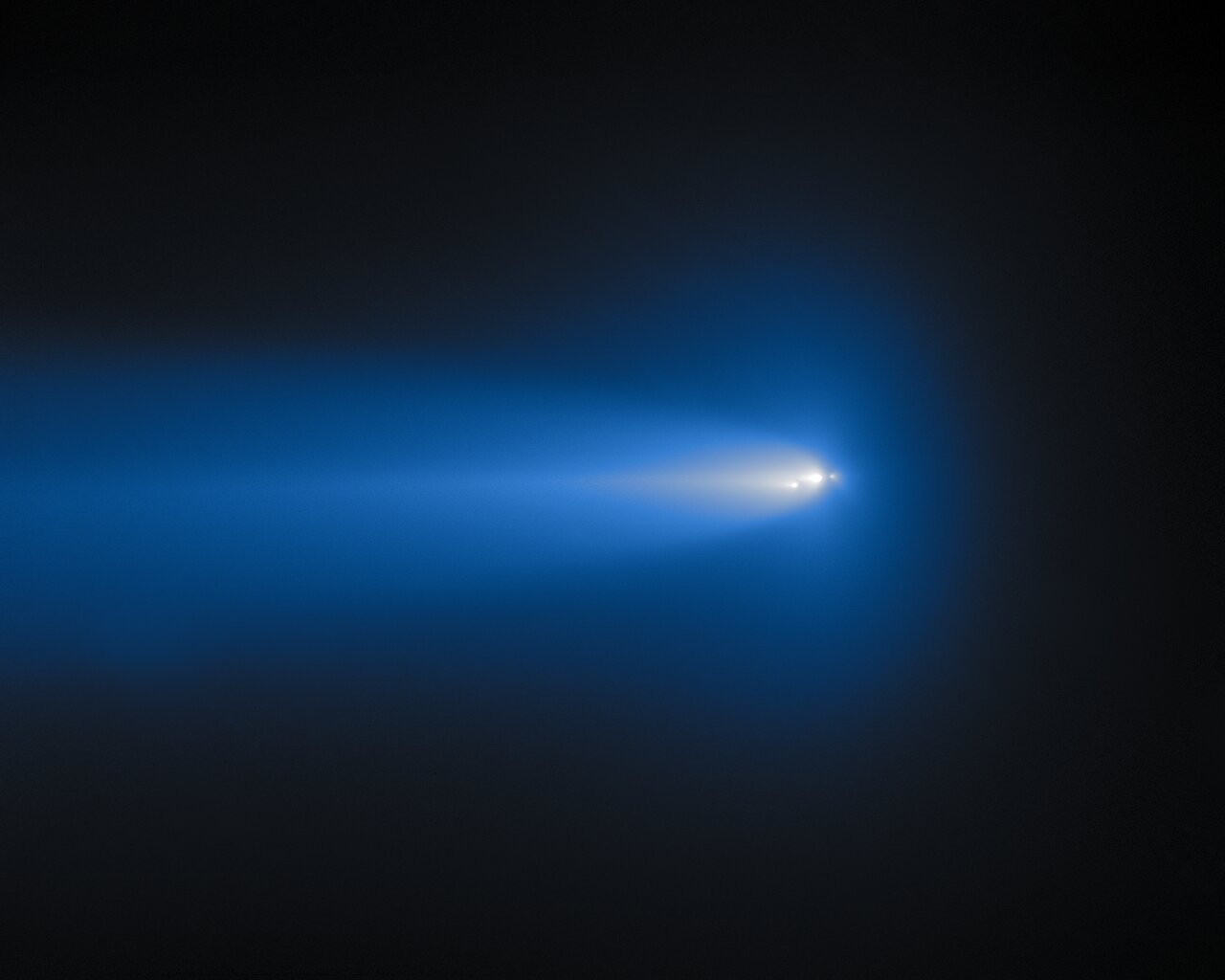
Gemini North Catches Crumbling Comet C/2025 K1 (ATLAS)

noirlab.edu
2:17 AM · Jan 29, 2026
On 11 November and 6 December 2025, the
Comet C/2025 K1 (ATLAS) soared in the skies above Maunakea, Hawai‘i, where
Gemini North captured it in action! Gemini North is one half of the
International Gemini Observatory, supported in part by the U.S. National Science Foundation and operated by NSF NOIRLab.
Comet C/2025 K1 (ATLAS)’s
nucleus started breaking apart as early as
October 2025. Three of the suspected fragments are visible in this image. Each piece makes an exciting show as it fluctuates in brightness, density, and position from night to night. You can view images of this
here.
C/2025 K1 (ATLAS) originated in the
Oort cloud and surprisingly survived its closest approach to the Sun in October 2025. But now that it has experienced the intense heat and gravity of the Sun, it’s struggling to hold together, leading to the crumbling that we’re witnessing now. View the trajectory of C/2025 K1 (ATLAS)
here.
Credit:
International Gemini Observatory/NOIRLab/NSF/AURA/B. Bolin
Image Processing: J. Miller & M. Rodriguez (International Gemini Observatory/NSF NOIRLab), T.A. Rector (University of Alaska Anchorage/NSF NOIRLab), M. Zamani (NSF NOIRLab)
Acknowledgments: PI: Bryce Bolin (Eureka Scientific)
Usage of NOIRLab Images and Vide


apnews.com