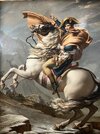
It is not as simple as finding a definition for it, but just for the sake of approximating the concept, it could be a combination of many characteristics that you mention and, in a certain way, an act of free will on the part of the individual in question. As I understand it, they are real Agents (Smith :+)) of flesh and blood, in-carnated, Sargon, although sometimes they are hybrids, as in the case of Nefertiti-Helen-Sara.
I think it's much more complicated when a person focuses in on the particulars of a phenomenon, as they can endlessly find examples of it here, there, and everywhere, all presenting with varieties that can confound the imagination. In doing so, however, they never approach the actual idea, or identity of what is being transpired.
You noted three feminine characters. The third time is the charm, one would hope? For once is an accident. Twice is a coincidence. And the third time is definitely enemy action. What would hundreds of thousands of iterations all across time and memory actually indicate to you?
A humorous tangent: It's always women, no? It's almost as if women are the source of man-kind's sorrow, alienation, and pillaging of spirit. The same could be said of men, in the opposite perspective.
The adage, or maxim, goes like this. Birds of a' feather, flock together. As those three were apparently of the same feather, then their consorts are unfortunately also guilty, by association. Furthermore, their milieu of associates and associations, should also be considered in the same boat. For a single person does not cause a conflagration of chaos in society. A group of them however do, and when they are working towards common objectives, yet also retaining some sort of memories regarding personal relationships, then you would see infighting among the allotment, sooner or later. This is known in strategy as a concentration of force. You do not divide yourselves in different locales to then attack an enemy individually, rather you convince or coerce an opposing force to act on such notions, or be lured into a stratagem, for them to lose the confrontation entirely. For Napoleon, you see them in the Directory, emerging as the governing entity, all filled with curious rascals who themselves ended up at the guillotine; his Marshals; notable luminaries which influenced the philosophical thought for the time to come; other happenings within history concurrently (like the American Revolution in the preceding years (George Washington is a good candidate, if you look behind the legend, and instead at the man, among others). I'm looking for patterns, and this is a pattern that fits the mold, of such interests emerging throughout history, grouping up, and then proceeding along the course of actions with which they have such preference. This is why I look to
literary figures and literary tools, because their presence is my focus of pattern recognition. You can be dazzled by their multivariate presentations everywhere, yet you will never come to an understanding that they are real. This is why historians have been so focused on the theory of great personalities, and on it they have lost possibility of novel discovery by missing out on the presence of the patterns themselves.
I'll give a note on my focus on literary figures themselves. If the inspirations for the mythic dispositions of the subsequent "characters" are even a partial representation, then there may be a thread of truth within.
What are literary figures?
Rhetorical or literary figures are stylistic devices used in written and spoken language to beautify expression, generate a deeper impact on the recipient, or transmit ideas and emotions in a more effective and creative way.
So, it is precisely as simple as it sounds; but this concept of simplicity only resides within the domain of fables, and the particular intricacy in that they maintain complex-multivariate relationships between many things all at once, as potentially depicted as a character, in example from a given mythic cycle, or the entirety of that mythic cycle itself (being everyone involved and/or named).
However, within the realm of fable, what is usually seen in many-a-work, is the particular tendency of literary reference, or cryptic allusions to other fables themselves that the author esteems, along with the entire array of particular tools that the poet has at their disposal. These are only truly knowable to the poet themselves, and/or their fellow artisans during the time with which they existed, so there is bound to be lots of confusion, at a later period of examination.
So we have recurring historical patterns. We have recurring mythic patterns. I would say we also have recurring incarnation patterns, wherein the same "souls" are imparting similar effects on those not-of-their-kind. I'll be using this perspective in this part, to which I'll move on to something new.
But from the noted passages, the C's didn't exactly give any positive or negative answer, and for a correction, it's not much of a correction. I'll show you why, but be warned, as things may get
weird in this one.
* * * * *
As another word of
caution .... I'm only picking on a certain identity, because I read and referred good leads from the transcripts as applicable. These leads unfortunately came up rather late this year, as I was perusing my reading lists. Now, to make an example of something, you need something to be used as an example, and of course, this is FAR from definitive. But compare this promotion from the producers of
Iron Sky, the
details in this satire, and compare that with what some of us have seen on Russian televised state-media. I just find it funny.
That was to refresh the air in here, so to speak.
Anyways, I shall be going philosophical on this part, and the first segment is in regards to some of the C's answers given
in respect of the character aforementioned, rather than
in regards the character themselves. Two things caught my eye:
From
Session 29 December 2018
(L) Yeah. Not to mention reality itself. Well, anybody got any more questions? I'm getting tired.
(Chu) The thing about the 4D labs... We were talking earlier about free will and all that. So, how would it work at a practical level? Are there Good Guys Labs, Bad Guys Labs, and the bad guys interfere as much as they can, while the good guys are not allowed to interfere, but just to protect? Or because the person asks?
A: When asked and when it will not cause a disturbance in life lesson plans.
Q: (L) So in a certain sense...
(Joe) It's dependent on the person's life lesson plan. If their plan is to experience something nasty, then they're probably not gonna get any help. If it's part of some maneuver by some other forces trying to subvert that life plan, then you get help.
A: Yes exactly.
Q: (L) So, basically from what I've been putting together from our discussions over the past few years, it seems that there are beings in 5D who can share their lessons and energy with us if we're connected in some way like genetically or some spiritual connection or whatever – really, almost like ancient ancestor worship. Then there are beings in 4D who are basically like angels and demons who can help or harm. So, some of the ancient depictions of life and spiritual realities aren't that far off. Is that what we're saying here?
A: Yes
From
Session 26 February 2022
Q: (Altair, Cosmos, Gawan) What do the C's mean that Putin has higher help? From whom?
A: Ancestors and himself in the future and a lot lot LOT of knowledge and awareness.
To have a firm understanding of ancestors, the associated concepts must also be included. If you have ancestors, you
may also have descendants. I point this out in particular, since the concept follows naturally in the physical sense; however it does not follow in the spiritual, or higher density sense, if spirituality is just part of it, and if we take a purely physical notion of the words, particularly in a modern connotation. They use this term over ... and over ... and over again to the point where its distinction becomes
blatant. For instance, they could have used offspring, or progeny, or even scion, per a
thesaurus (Priory of
Sc
ion/Sion anyone? The phonetics are the same, and hence the term is also the same, in one sense).
From
Session 24 September 1995
Q: (L) They said it was the Orions. Are the Orions these secondary creators? (RC) Well, I read that it was the Pleiadians. And the Hebrews were originally the Hoovids who came from Sirius...
A: Here comes a shocker for you... one day, in 4th density, it will be your descendants mission to carry on the tradition and assignment of seeding the 3rd density universe, once you have the adequate knowledge!!!
This usage does not make syntactical, semantic or semiotic sense. Since when is it the mission of offspring to carry out some task, when their parents have learned the knowledge for said task, but whose parents aren't endowed with the mission itself, nor are the children required to learn such knowledge for themselves?
This is very weird. The same goes for the usage of the term "genetics", wherein similar tendencies may be lying in wait, however it is beyond the scope of this to look in that.
All of this indicates some sort of tradition, which was before a few months ago, basically unbeknownst to myself. However when I was perusing through some of James Morgan Pryse's work,
particularly '
Reincarnation in the New Testament (1899)' (permalink in my signature, of about 100 or so pages), I came across the same terms, connecting the use of ancestors, descendants, and the Underworld (not the "underground"). He uses the last two differently, and furthermore he wasn't around the time wherein such novel concepts as deep underground bases existed in the modern mind, so you can't blame him.
Due to the nomenclature of the time, his use of ancestor, descendant, lineal transmission of a family line, and such for, are
in a spiritual notion, wherein the soul itself partakes in a myriad of reincarnations, or in-dwellings, in which its previous iteration was the ancestor of it's next iteration, or descendant, whereupon the soul successively innovates upon it's soul group, or family, putting it in the modern use here. I would recommend his other extant works to be read and taken in totality, as there are details for things which appear more elaborated therein.
From the Start of the Book
THERE are a number of highly important passages in the New Testament bearing directly upon the relation of the life in heaven to the life on earth, the full significance of which seems hardly to have been grasped. ‘The striking statements contained in them might well rivet the attention of even the casual reader; yet, though they deal with, and throw light upon, one of the most vital problems of human life, they have been but little commented upon, and the only legitimate conclusions that can possibly be drawn from them have almost universally been ignored. Among others the following may be instancéd:
*** Citations and Quoted Text Excised. Read it on the PDF ***
In the above citations the following facts are brought out, either by direct statement or by necessary implication: Jesus emphatically declared that John the Lustrator was Elijah. As John, the son of Zacharias and Elisabeth, had been born in the usual way, the emphatic, unqualified statement of Jesus can have no other meaning than that the soul or inner Self of Elijah was incarnated in John, as the Angel Gabriel had announced to Zacharias before the birth of his son. Elijah, who had been translated to heaven many centuries before, had therefore returned to earth by assuming a new body; in other words, he had reincarnated.
The people who knew of the works performed by Jesus took it for granted that he was a reincarnation of one of the Seers, Prophets or Wonder-workers of olden times: they were indulging in speculations as to which of these ancient worthies he might be. Those who held that he was John must have believed either that the latter had been restored to life after his beheading, or that it was possible for the soul of a dead man to replace that of a man still in the flesh.
There is no suggestion whatever that reincarnation was regarded as unusual or extraordinary; it was taken for granted, the sole point at issue being the identity of the individual who was reincarnated. The interest centered wholly in his being a Seer and a Magician, from which it was inferred that these powers were brought over from a past incarnation.
The pupils of Jesus tacitly concurred in all this; so far from disputing the point, they also, it is clearly implied in the narrative, had been indulging in similar speculations.
Jesus understood that such surmises would be made, as shown by his abrupt question, “ Who do the crowds say that I am?” He made no comment on the popular belief in reincarnation, and by his silence sealed it with his approval. The essential fact that he was one of the ancient Seers reincarnated he did not deny; on the contrary, he encouraged his pupils in their speculations by asking, “ But who do you say that I am?” And a little later he partially gratified their curiosity by volunteering the information that John was Elijah.
To be consistent with the context, the question asked by Jesus has to be understood as, “Of whom do you say that I am the reincarnation?” What, then, could be the meaning of Peter’s seemingly irrelevant reply? If it were only an assertion of Jesus’ Messianic office, it was an evasive answer; and the subject opened up by Jesus, and discussed by him and his pupils, was brought to an unsatisfactory conclusion, save in the question concerning John the forerunner, which was only a side issue.
From the foregoing considerations the following inquiries naturally arise:
Are any other cases of reincarnation instanced in the New Testament besides that of Elijah as John? Was Jesus in fact a reincarnation of one of the ancient Seers, and if so, does Peter’s answer or any statement made in the New Testament indicate which of them had been re-manifested in his personality ?
To what extent is the once universally accepted belief in reincarnation admitted or endorsed by the New Testament? Does it recognize the principle as applied to all men, as was anciently held, and in that case what bearing does this fact have upon the teachings concerning right-conduct in the present life, the fate of the soul in the afterlife, the mission of Jesus as a Saviour, and the nature and conditions of the salvation offered?
These questions call for a critical examination of all passages in the New Testament that relate directly or indirectly to reincarnation. This, however, can be done more advantageously after first reviewing the principal conceptions of reincarnation as taught by the ancient mystics and philosophers.
Thereafter, From the Start of the Book
THE views of the ancients with regard to reincarnation are inseparable from the fundamental propositions of the old philosophy, which asserts the identity of the spiritual principle in man and the spiritual principle pervading the whole universe, and predicates that man is a lesser world, manifesting in himself all the elements, forces and processes of the universe in its entirety, material and divine. This philosophy affirms the spiritual unity of all beings, and does not regard Nature as separate from Deity. It holds that God is in and through all things, present in every atom of even the material universe.
The highest realm of Nature is a divine Unity, or true Being, undifferentiated, limitless, timeless, itself un-manifested, yet the source of all manifestation. Existence, or manifested life, is the going outward from this realm of true Being into the spheres of change and time, and Nature is Deity in manifestation. ‘True Being is changeless, Nature is ever changing; Deity for ever is, the universe is for ever becoming. Yet the universe is as eternal as Deity: there is an endless succession of worlds outbreathed into Space and again indrawn, and these worlds are of every degree of spirituality and of materiality, for the essence of Being is one, and matter is but spirit outermost from its source. Below the realm of true Being is that of pure spirit, containing the types of all things that are to come into existence, the ideas or souls of all beings and things as formed by the divine Thought, and constituting the model of the universe. Below this is the psychic realm, in which these ideas or souls become clothed in the ethereal elements, and from this realm emanates the material universe, that of the gross elements.
The soul of man, the real Self of him, is therefore identical in essence with Deity, or the one universal Self; and in each realm of existence the soul has a form or body appropriate to that realm. Thus man has a physical body for the material world, a psychic body for the psychic world, and a spiritual body for the spiritual world. Even though he knows it not, man is in reality an inhabitant of the three worlds. That he is unaware of this, in his outer consciousness, is because these bodies are not duly correlated, his inner faculties remaining latent and undeveloped.
Existence being thus the outbreathing and inbreathing of the divine Life, it follows that all forms of existence are subject to cyclic action, the cycles taking place in time, space and substance. ‘This law applies to the universe in its entirety, and to every part of it. While the real Self of man is eternal,—which means not only that it shall never cease to be, but also that it never began to be, but is self-existent,—his outer life is a series of cyclic progressions. At death the soul is indrawn toward its real centre of life, and the physical body is resolved into its elements, but the soul still dwells in the psychic world, functioning through the psychic form. That in turn being abandoned, the soul is again indrawn, continuing its activity in the spiritual world, where it is consciously immortal, being purified from all the grosser forms of substance, and free.
The soul reposes after its day of toil in the field of earthly existence, but that rest being ended it must return to its unfinished task; it emerges again upon the psychic plane, and is reborn in the physical world. The real life of the soul is continuous, its individuality imperishable, and in the whole series of its incarnations there is an unbroken sequence of causes and effects. Every action, however small, produces its proportionate results, whether in the same or in a Subsequent incarnation, these effects reacting upon the individual by whom they are originated, good for good, and evil for evil. Thus each man is the maker of his own destiny, inasmuch as his character, good or bad, and his environment, favorable or unfavorable, are the direct outcome of his own thoughts and desires, deeds and misdeeds, in his past lives, as well as in his present life; and, similarly, his future will be of his own making.
This “wheel of birth” pertains only to the physical and psychic elements of man’s complex nature. His inner or spiritual Self is ever free, though the outer self which it has projected into the “spheres of becoming” is in bondage. It has been formed “of the dust of the ground” through long cycles of evolution, passing through all the lower elemental kingdoms ere it became the likeness of its spiritual prototype, the eternal Self that breathed into it the Breath of Life. Ultimately it must become one with that Self, but not until it reaches the perfecting-period at the end of its long cycle of earth-lives.
Material existence is therefore a process of discipline. The soul retains the memory of all its incarnations, but this memory can be transmitted to the external consciousness only when the outer life is sufficiently purified; for it is by such purification alone that the inner and the outer natures become correlated, enabling the soul to manifest fully in the lower world. Remembrance of past lives is claimed to have been possessed by many, and will eventually be gained by all. Each human being has lived in all the great races of the past, and will live in those of the future also. History in repeating itself has the same actors, constantly rehearsing the great drama. But vast though it is, the cycle of incarnations is not endless: as a period of rest succeeds each incarnation, so at the completion of the entire cycle humanity collectively will regain the purely spiritual state, that of supreme beatitude.
Such being the beliefs of the reincarnationists, if remains to inquire how far they are sustained and justified by the New Testament.
At The End of the Book
That reincarnation, not only in the case of particular men, but also as a law of life that applies to all men, is distinctly taught in the New Testament, has been shown. To dispute this point is to deny that the authors of that collection of writings meant what they said in unmistakable language. To reject reincarnation is to impugn their teachings.
What changes, then, must necessarily be made in the current interpretation of Biblical doctrines, once reincarnation is admitted to be one of those doctrines? Concisely stated, the Biblical account is this:
The Master-God “formed Adam [the first man] of the dust of the ground, and breathed into his nostrils the Breath of Life”; and having “planted a garden eastward in Eden,” he placed Adam in it, and commanded him, under penalty of death, not to eat “of the tree of the knowledge of good and evil.’’ He then created Eve as “a help meet for him.” The serpent tempted the woman; she “saw that the tree was good for food, and that it was pleasant to the eyes, and a tree to be desired to make one wise.” She and Adam ate of the fruit of that desirable tree. They were ejected from the garden, not so much for a punitive as for a precautionary measure, for the Master-God said: “The man is become as one of us [Gods], to know good and evil; and now, lest he put forth his hand, and fake also of the tree of life, and live for ever,” therefore the Master-God “sent him forth from the garden of Eden, to till the ground from which he was taken.”
The results of the disobedience of the primal couple were: enmity between the woman and the serpent; the woman was thereafter to suffer the pangs of childbirth, and to be ruled over by her husband, presumably because of her physical weakness; Adam was to till the ground for a living, which was accursed for his sake, and would bring forth thorns and thistles; and his body was to return to the ground, being resolved into the dust out of which he had been formed. Of the fate of the “Breath of Life” that had been breathed into him nothing is said. Subsequently God entered into four contracts, or agreements, with the descendants of Adam, successively with Noah, Abraham, Isaac, and Jacob, and then a fifth contract with Moses. Each of these contracts was no more and no less than to preserve and multiply physical bodies, and to bestow material benefits, the means of living, upon the people, if they, on their part, would obey the will of God and follow the moral code he laid down for them. The people are especially enjoined to “be fruitful and replenish the earth.” So far the Old Testament (palaia diathéké, “ contract of olden times”).
Next God entered into a further agreement, through Jesus,“ the New Testament (kainé diathéké, “new contract”), by which people are to be emancipated from the physical body and restored to the state of purity which was that of the soul before its fall, or descent into material existence. The language of Genesis, though poetically euphemistic, distinctly indicates that this fall, resulting in death, was the evolution of the generative function; and this “sinful generation” “ must “pass away ” before the “presence” of the Anointed can be manifested on earth.” In fact, the New Testament teachings concerning “sin” are summed up in the words of Calderon, “The greatest guilt of man is that he was born.” The “old contract” related to generation; the “new contract” to regeneration, the “birth from above.” Therefore the injunction to “be fruitful and replenish the earth” has no place in the teachings of Jesus; on the contrary, he inculcated celibacy, and was himself a celibate—the significance of which fact can not be overlooked, inasmuch as he was the pattern to be followed by all who would attain to eternal life, since he was “the Way, the Truth, and the Life.”
It may clearly be inferred from the narrative in Genesis that before eating of the tree Adam and Eve were without “the knowledge of good and evil,” and hence morally irresponsible. They gained wisdom by eating of that tree, and if they had eaten of the other tree the evil results of eating of the former tree would have been annulled. They would have lived for ever instead of becoming the prey of death. But the Master-God guarded against their obtaining this antidote, and nothing is said about the tree of life in the contracts made in olden times. But in the Apocalypse it is said to be in the “new Jerusalem,” and is described as “bearing twelve fruits, yielding its fruit every month; and the leaves of the tree were for the healing of the nations.” And Jesus says of it: “Immortal are they who wash their robes, so that theirs shall be the authority over the tree of life.” And again he says: “To the conqueror I will give to eat of the tree of life, which is in the Paradise of The God.” Manifestly, therefore, the one tree, that with which the “old contract” was concerned, typified generation, the multiplication of physical bodies, requisite for the many successive lives on earth, by which knowledge of good and evil is gained through experience; while the other tree, that of the “new contract,” stood for regeneration, emancipation from the “wheel of birth,” and restoration to the purely spiritual and divine state. Having eaten of the first tree, that is, having fallen into generation, man was not to eat of the tree of life, that is, become consciously immortal, until he had passed through the vast cycle of reincarnations, tilling the hard soil of material existence, which, indeed, brings forth the “thorns and thistles” of sorrow and suffering.
Such is the Biblical allegory in its sublime simplicity. But the commonly received theological version of it is about as follows:
Adam and Eve committed the “original sin,” for which they and all their descendants were sentenced to eternal punishment in unquenchable fire. This notwithstanding the irresponsibility of Adam and Eve, who, like new-born babes, had no knowledge of good and evil, which extenuating circumstance, together with the fact that it was their first offense, surely entitled them to a recommendation to mercy. And in condemning their descendants the Lord went beyond the rule he subsequently laid down for himself of “visiting the iniquity of the fathers upon the children unto the third and fourth [generation].” All the generations from Adam went down to endless torment, until the “new contract” was made through Jesus, who (himself perfectly innocent) was offered as a substitute for the countless millions of human beings who in a ceaseless stream were descending into the bottomless abyss (bottomless, surely, or it soon would have been filled), to expiate in eternal woe a crime that few of them had ever heard of, and which had been committed ages before their souls had been created and before their bodies had been born—the most perfect alibi the mind of man could conceive. Yet not one could be saved from eternal torture unless, while still in the physical body, the pitiful prison of clay, he heard of and believed in Jesus, whether with or without any evidence upon which to base his belief. Before ever the Savior had come, great nations rose and fell, the populous earth for ever pouring its mighty tribute of countless souls into the nether abyss, with no possible salvation for any save, perchance, for a few Seers whose eyes had gazed into the future; and during and after his coming the sacrifice of the God-Man availed not for the many: out of non-being they come into existence for a few short years on earth, only to be hurled into the bottomless pit to undergo eternal agony. “Be fruitful and replenish the earth,” and by so doing supply fuel for the quenchless flames! “Look now toward heaven,” said the Lord to Abraham, “and tell the stars, if thou be able to number them; so shall thy seed be”—in the Netherworld of Eternal Woe. Not theirs the everlasting bliss reserved for a few “saints” and “believers,” who, according to some of the theologians, had been “predestined” or “foreordained” before the hapless Adam and Eve had come into existence, and even before the Spirit of God had moved on the Waters of Space.
If it be contended that this is the old-fashioned theology, and that it has been lightened somewhat of its gloom by later sects, what, then, are the modifications that have been made? The theological scheme has been so constructed that each part of it is dependent upon the others, so that if any part of it is removed the whole structure collapses. If all men prior to the time of Jesus were saved, then by coming he saved no one, but brought condemnation upon all who, after his coming, might not hear of him, or who, hearing, might not believe. If all those never hearing of him are saved, and none are lost except those who hear and disbelieve, then usually it would be a misfortune to hear of him. In that case ignorance is not only bliss, but eternal bliss. If the dogma of eternal punishment is wholly rejected, then of whom and from what is Jesus the “Savior”? The crux of theology is this: no damnation, no salvation; no hell, no heaven. To introduce varying degrees of happiness into heaven is only to erase the boundary line between it and hell, for relativity in heaven would mean that evil as well as good obtains there.
Now, the whole tissue of horrifying beliefs which theology has woven, and which all right-minded Christians of to-day are anxious to cast aside, if they can do so without at the same time giving up the realities of religion, has been fabricated upon the erroneous theory that man has but one life upon earth. Not having eyes to see the plain statements of reincarnation contained in their Bible, the professional expounders of that book have denied even the preexistence of the soul. They have asserted the doctrine of “special creation,” claiming that God makes a new soul for each body that is born, thus regarding the body as of paramount importance. The oddity of this theory is at once apparent, for it would naturally seem that while mortal bodies might become the temporary dwellings of immortal souls, there is a ludicrous incongruity in having an immortal soul created for the benefit of each mortal body that happens to be generated. Again, according to this theory, the souls are not derived from Adam and Eve, but come fresh from God, and are therefore pure and blameless; yet they are placed in bodies that are descended from the pair of original sinners, and when the bodies return to dust the souls are sentenced to eternal punishment for the sin of those primal parents. It would seem that absurdity could go no further than this; but, in fact, the most serious objection to this doctrine of “special creation” is yet to be stated. If the soul thus has a beginning, it must necessarily have an end. Eternity is not an indefinite extension of time, nor can it be expressed in such terms as past, present and future. The soul, if eternal, is beginning-less and endless.
To say that the soul is “created,” that it has a beginning, is to deny that it is immortal. To assert that it comes into being because of the generation of the physical body is to make the flesh superior to the spirit and degrade every concept of spiritual life. There is no possible authority in the Bible for this doctrine of “special creation”; the Breath of Life that God breathed into Adam is un-create, eternal. That Spirit being embodied in Adam, he “became a living soul,” the soul being therefore a manifestation of the Spirit in the outer worlds. The universe itself is said in the New Testament to be “born,” to “become,” or “come into existence ”; it is only in the uninspired and not very conscientious authorized translation that it is “made” or “created.”
From the one-incarnation dogma comes the curious notion, held by many, that after the death of the physical body the soul remains in a comatose state until the “end of the world,” when it is wakened for its final judgment on the “last day.” However, it would be an almost endless task to point out the absurdities that have arisen from attempting to interpret the New Testament teachings apart from reincarnation, when reincarnation is in fact the basis of those teachings. And all these difficulties vanish when reincarnation is accepted. Then the principal doctrines may be defined thus:
The “original sin” was the descent of the soul into the material world, and the generation of physical bodies, man being thenceforth a God dwelling in the animal form.
The “curse” is the vast cycle of incarnations through which the soul must pass before it can regain the divine state. Yet, as the “prodigal son,” 1t receives more honor on its return than does the soul that has not gained power and knowledge by this journey through the lower worlds.
The “Underworld” (hadés) is the world in which the soul makes its stay between incarnations. This world is of a dual nature, Paradise (the “ pleasure-grounds ”) being the abode of the souls of the good, and Gehenna? (the “burning valley”) that of impure souls.
“Heaven” is the final state of bliss attained by the soul when freed from the “wheel of birth,” and is the same as the Nirvana of Buddhism.
“Perdition” (apéleia) is the “eighth sphere,” or receptacle of the unspiritualized residue of humanity after the seven great racial periods which comprise the Avon have run their course, this residue being the bestial portion of human nature. What Paradise and Gehenna are in the cycle of a single incarnation, Heaven and Perdition are in the vaster cycle of the Æon.
The “Æonian Life” is the consciousness of immortality consequent upon the recovery of the memory of past incarnations, man’s life being then one of unbroken continuity throughout the Aeon, even though his outer existence continues to be a series of incarnations on earth.
The “Second Death” is the dissolution of the psychic self of the irredeemably evil person, the soul thereby falling out of the evolutionary cycle through such loss of its vehicle for manifesting in the lower worlds. It is also the passing away of the physical and psychic worlds (“ Death and Hadês”) at the end of the Æon.
“Resurrection” (anastasis) is any ascent from a lower to a higher state of existence, whether of individual man or of the entire race.” As relating to the Aton, or world-period, the “first resurrection” is the awakening to spiritual life, during the cycle, of the “just men” who have been “made perfect” ; while the “second resurrection ” is that of all mankind at the close of the world-period, when they are “judged every man according to their works.”
“Salvation” is freedom from the bondage of rebirth. Jesus is represented as a Savior in that he taught and exemplified the right-conduct that alone can emancipate the soul from the material, animal existence, and awaken it to the realities of the spiritual life.
“Faith” is intuitive knowledge, the dim reminiscence which the soul retains of its pristine state; true faith, instead of being but ignorant opinion, is the beginning of spiritual wisdom, “an assurance of things hoped for, a proof of things not seen.”
“Righteousness” is right-conduct, the perfect performance of duty in the light of a purified conscience.
“Baptism,” or lustration, is a ceremonial rite of purification, symbolizing successive degrees of initiation into the divine Mysteries. ‘The exotericist, or “earthy man” (choikos), when he first comes to recognize the reality of the spiritual life, becomes a “believer” (pistos); by the lustration of Water he becomes a “psychic” (psuchikos); by that of Air (pneuma), a “spiritual person ” (pneumatikos); by that of Fire, a “ perfect man ” (teleios); and by that of Blood (ether), a full Initiate or Christos.}
The “Atonement” is the union of man’s purified human self with his spiritual and divine Self; it is “vicarious” in the sense that the sinless spiritual Self is incarnated for the salvation of the animal-human creature formed “of the dust of the ground”—that is, evolved from the elements.
“Regeneration” is the “birth from above,” when the soul, freed for ever from the prison of clay, puts on its “first garment”—the deathless glorified body of the Initiate.
The use of the 'underground' term, by Pryse, is within the confines of them being subterranean chambers, usually located physically below some of those large
mound-works, for initiatory rites, as also detailed within Lynne Kelly's book,
The Memory Code (also in my signature, but the book's in copyright so I can't offer it here).
Those initiatory underground chambers were also connoted
symbolically, and
esoterically, as the Underworld in mythic fable,
and as being within the confines of a person's psychic/spiritual self. In the histories, it is repeatedly ... but not always ... denoted as a journey into
Egypt. This is where it gets interesting, as it's where Rosicrucian methods apply -- those methods outlined in Paul Foster Case's book,
The True and Invisible Rosicrucian Order. I rely on it for its succinct
interpretation on Jewish Qaballah, as it was the preferred method in older times, but in that method, I'm looking at names, for names have meanings and qualities, and are not simply token identifiers per literary figure.
Take Sargon of Akkad. Sargon -- 'Rightful King'; Akkad (or
Achad) -- Unity; also in a corrupted form,
Pachad -- Fear. The rightful king who unifies through fear? Mmm.
Take our favorite group. It's cognate is
Musawd -- it denotes a "sure foundation", and within the particular method employed in that tradition, the foundation is a working of
agencies, qualities, functions and natures of
intelligences (plural). What it denotes is nothing constructed physically, as it refers to spiritual and ethereal natures of righteous, just, understanding and wise virtues of one's soul. When corrupted, the thing that is built on such said foundation crumbles, or is destroyed.
Take Nefertiti.
Nefer can be constructed as Nether. Furthermore Nefer corrupted, changes harmony/balanced into an unbalanced and disharmonious idea. It is also an allusion to being entranced with superficial presentations, assuming them to be the entirety of what is presented, without regard for anything else.
Nefer
The name Nefer originates from ancient
Egypt and is primarily used as a feminine name.
In the Egyptian language, "nefer" (nfr) means "good," "beautiful," or "pleasant." It was a common element in personal names, reflecting the desire for the individual to embody these positive qualities. The term was associated with
harmony, balance, and aesthetic appeal, which were highly valued in ancient Egyptian culture. The name can be associated with names like Nefertari and Nefertiti, which incorporate the element "nefer" to convey beauty and goodness.
Several figures in ancient Egyptian history bear names containing "Nefer." Nefertiti (c. 1370 – c. 1330 BC) was the Great Royal Wife of the Egyptian Pharaoh Akhenaten. She and her husband were known for their
radical religious changes, which centered on the worship of Aten, the sun disc. Her bust is one of the most iconic symbols of ancient Egypt. Nefertari (c. 1295 – c. 1255 BC) was the Great Royal Wife of Pharaoh Ramesses II and is one of the most well-known Egyptian queens, celebrated for her beauty and diplomatic skills. Her tomb in the Valley of the Queens is renowned for its stunning and well-preserved wall paintings.
There is also a particular distinction, in that the link between Nefertiti, Helen, and Sarah was made. It is a triptych, and I have to include the particular reservation from Case, that he says of things experienced, or desired in "
Egypt".
But on that triptych, it is one of presentation only. Interpretation has to be inferred, and it being interpretation, it cannot be the only explanation.
Paul Foster Case: The True and Invisible Rosicrucian Order: Part I The Rosicrucian Allegory
The psychic powers of "Egypt," the region under the surface of the earth, or beneath the plane of ordinary sensation, are powers unquestionably marvelous. They need investigation, but that investigation should not be unduly prolonged. Hence, Patanjali tells us that the Siddhis, as the Hindus call these powers, are actually an obstacle to real advance along the Path of Liberation. So the Fama says C.R.C. spent no long time in Egypt. Truly are the powers of this region described as "darkly splendid." Note that they are associated with Hades, the Greek name for the abode of the spirits of the departed. Thus, "Egypt" is to be understood as that region of activity that is commonly the field of investigation in psychic research. It is also the region whence come the powers of mediumship exploited by Spiritualism. There is a tremendous attraction in these powers, and their dark splendor has lured many a seeker away from the true path.
The Oracle says truly that this region is the abode of an evil and fatal force. For the powers of subconsciousness, developed during stages of evolution below that of humanity, are evil in the sense that it is always evil to go back to a lower level of development. They are powers, moreover, that work according to a Law of Averages from which man escapes by exercising his power of conscious self-direction. They are powers belonging to what Jacob Boehme calls "the astral sphere," from which the higher wisdom releases us.
The ladder of seven steps leading down into this region is the same ladder up which these powers, in a right system of occult training, are made to ascend. The warning is that we should not descend the ladder, that we should not stoop down. The rungs of the ladder are the interior centers otherwise represented as the churches in Asia, as the interior stars, or as the chakras. The purpose of the warning is that the ladder should be ever one of ascent, permitting the rising or sublimation of the "Egyptian" powers.
The greater number of "occult failures," as they are called, are persons who have gone down into "Egypt" and have been fascinated by the lure of its shadowy glamour. In the Bible they are personified by the Israelites whose prolonged sojourn in Egypt led to their being subjected to intolerable slavery. Occult failures are often persons who attract attention by exercising psychic powers that really belong to lower than human levelsof evolution.
Psychism of this kind is so great an obstacle to liberation that Buddha not only agreed with Patanjali as to its dangers but actually made the exercise of such powers in any form of miracle working cause for expulsion from the Buddhist brotherhood. Yet C.R.C. goes to Egypt for a short time. Psychic powers must be investigated, and the laws of the subhuman forces that are part of our makeup must be understood. There is a danger here, but it must be met, not avoided.
Cowardly refusal to make oneself acquainted with subhuman powers is not the way to mastery. We must know them in order to control them. The business of the occult teacher is to warn his pupils against the dangers of "Egypt," and even Buddha's strict rule is only against the public performance of marvels of thaumaturgy and against public claims to the possession of the Siddhis. But that teacher is remiss in his duty who utters words of discouragement. It is both false and cowardly to make people afraid of the "powers of Egypt." It is even worse to malign those powers as being in themselves evil. We repeat, the evil is in returning to the level represented by those powers, not in the powers themselves. What is a positive good for a tiger or an elephant becomes an evil for man, if the exercise of that power lowers the man's consciousness to the elephant or tiger level. Readers with some degree of discrimination soon learn to detect the difference between honest warnings against the dangerous glamour of "Egypt" and the sort of thing so often said by persons whose principal stock-in-trade is a false pretense to the possession of some measure of psychic power, which pretense they protect from exposure by the transparent device of telling their dupes that only after incarnations of preparation may such powers be safely exercised. In effect they say: "We have these powers, of course, but you must not expect to develop them. No, just you rely on our revelations. We'll tell you all about the Masters. We'll let you into the secrets of the invisible. We'll let you buy our books and fill your minds with fancy pictures of angels and elementals and mysterious 'initiations.' But whatever you do, don't think of looking for yourself! You're not ready!"
Even when this sort of thing is not merely a device to prevent the exposure of pretenders and is uttered by persons who sincerely believe in their own psychic powers, it is pernicious. For it has a tendency to encourage reliance on the authority of others in those who pay attention to it, and it undermines the student's self-reliance. If to such warnings there is added, as often happens, outright condemnation of psychic forces as intrinsically evil, even more harm is done.
A
false distinction, between Nefertiti, Helen, and Sarah, is that they represent a triple focus of a human manifestation in life. Nefertiti represents the subconscious, and also the psychic elements at play. Helen represents the experiential consciousness, or the regular conscious of Earthly life, in that we make choices. Both the interplay with each other, in that conscious activity affects the subconscious domain, and things in one's subconscious affect your habits, and perceptions, among many things, in your conscious existence. Sarah was mistaken by Abraham as his route towards correspondence with divinity, a la, the "higher self", in that she was seen as
noble, but in reality wasn't. The same interplay is seen within the other characters, although it might have been dressed up beyond the point of notice.
So what is otherwise acceptable in an individual examination, is not acceptable when multiplicities of similar things are arrayed.
Sarah
From the Hebrew name
שָׂרָה (Sara) meaning "lady, princess, noblewoman". In the Old Testament this is the name of Abraham's wife, considered the matriarch of the Jewish people. She was barren until she unexpectedly became pregnant with Isaac at the age of 90. Her name was originally
Sarai, but God changed it at the same time Abraham's name was changed (see Genesis 17:15).
Now these sorts of distinctions are never made between physical polarities, or genders in physical existence. Instead they are presented in the ideal or activity of an individual, usually in the masculine sense, while the effects or manifestations of one's choices are particularly denoted in the feminine sense. This concept is reflected in Daoism in the yang/yin, un-manifest and manifest, with all of the intonations of that tradition, as potentially applicable to western notions of not only fable, but also of spirituality.
Since the nature of these stories involve a deception, a decision to partake in the pleasures, presentations and delights of materialistic and sensual existence, they necessarily connote a state of non-celibacy. You are what you eat, as they say. Nefertiti/Sarah/Helen and Akhenatun/Abraham/Paris had their spiritual progeny stolen, or given away to another. The duality of the individual, as being presented in the many
combinations of man and woman, was deceived by physical presentations, and was ignorant of spiritual realities, and hence the individual failed in their task of learning the lessons of 3rd density; therefore, no spiritually everlasting and ever-remembering state for you, hence no descendants.
Furthermore ... yes, furthermore ... there is also another distinction. This partaking in the pleasures, presentations, and delights of the materialistic and sensual existence,
also applies in stratum. For in Pryse's work on revealing the
interpreted Greek meanings, or cognates, of the oldest surviving Christian manuscripts, as ordained in Nicea, there is not only the physical body of existence. Man as a multi-form and multi-variate emanation, has a physical body, a
psychic body, and a
spiritual body, and there are
requirements for the subsequent two, in order for them to be re-generated.
On the surface, as we know humans, they should only have physical bodies. But as we have been told, those under-grounders are just "built different". This notion of multiple, overlying, and rather undetectable processes, as so far un-discovered by modern medicine, can be rendered as a
hybrid co-existence and manifestation. Furthermore, this line of
relation, and not conflation, holds congruity in the stuff I've been reading (signature, again).
Futurama might be an alternate take of the same thing, but it is comedy, as broadcast to everyone in the United States.
However, we're at the end of the first segment, of this second part. I have to divvy it up into at least another segment, as it's already too long for a single post. In the next segment, I will go over that aforementioned congruity, and with my
interpretation: describe what these under-grounders actually are, note how they are being controlled by 4D STS deceptions and their failings, and demonstrate exactly that I think they are.
What happens when you try to something over, and over, and over again, to no effect? It sounds to me like they are dazzled and enamored by things that they don't understand, for in being psychic, they have one form of perception, however they have never learned how to see, and thus they engage in the same repetitive and insane patterns that entrap them, which afflict all of us here.
It will take a few days, or so, to draft up. And it will be nuanced, so discernment is required. But the language is all there, including the interpretations.
A spoiler, that really isn't a spoiler at all. Sometimes you are told things straight in life, however the ability of the one saying such things may be limited due to recurrent patterns of dim-wit prevalent in those who speak, and also in those who listen to what is said. This problem compounds through generations. The video is from the producers of
The New Pope, being the title sequence. If you've seen The Young Pope, then this is the second season of the series.
For what it's worth: Thor's Pantheon is amazing, isn't it?